15 Best New Video Game Franchises Of The Decade
These newcomers defined the 2010s.

The video game industry isn't one to let bankable franchises slip through its fingers. As a result, the 2010s have seen plenty of legacy brands continue to flourish that were started the decade prior or even long before then, with age old classics like The Legend of Zelda proving they're not ready for retirement yet, and big hitters like God of War proving they have what it takes to grow and evolve with the times.
Of course, players crave new things, especially if there's a new console generation in sight, and the PS4 and Xbox One launching in 2013 brought with them a whole host of original new franchises. There have been some stinkers in there, but when the decade is taken as a whole, a good chunk of the games that define the past 10 years come from franchises birthed during this period.
Also, just so I'm not arguing the criteria in each entry, a 'franchise' only counts if two games have been released this decade and sub-series from established brands launched this decade totally count as well.
15. (Honorable Mention) Red Dead Redemption

Red Dead Redemption is here as an honorable mention purely because it wasn't worth the headaches it would cause in the comments.
The Red Dead franchise technically started in 2004 with Red Dead Revolver, a Western shooter originally set to be released by Capcom, but which was sold on to Rockstar, who stitched the troubled project together and pushed it out to market.
The thing is, despite bearing the same name as the following games, it isn't anything like Rockstar's own in-house take on the genre. They delivered two of the best, most lifelike open-world experiences of all time, while Revolver was nothing more than a (admittedly charming) linear shooter that was closer to a parody of Western media.
It's a strange heritage that needs to be addressed, and considering Dark Souls couldn't make it onto the list because of Demon's Souls releasing in 2009, it would feel like cheating to give Red Dead a podium spot where it would belong.
14. Watch Dogs

Watch Dogs hasn't had an easy life. It was one of the first next-gen games players were shown, and its gorgeous graphics and fascinating hacking-centric gameplay got everyone frothing at the mouth over how the medium was going to innovate going forward.
However, the final release was mired in controversy surrounding a visual downgrade, criticisms labelled towards the overly-serious story, and The World's Most Boring Man, Aiden Pierce, who was pitched as the protagonist.
That took the focus of media headlines, but there was clearly a solid foundation for a franchise here. The hacking itself was still completely unique (if a bit undercooked), while the open world was gorgeously realised.
Ubisoft came back a few years later with a sequel which directly addressed the problems of the first game, and doubled down on everything it did well. It was awesome, but the bitter taste still remained, and fans were much more cautious about jumping back in.
That's a shame though, as it was a huge step forward for a series with so much potential yet to be tapped.
13. Five Nights At Freddy's

While a bunch of franchises born out the PC horror boom near the start of the decade have petered out, Five Nights at Freddy's remains as popular as ever.
The original releases were simple and accessible enough that even non-gamers could give them a try, which also meant they became huge in the streaming scene, because it turns out not everyone loves being scared, but everyone loves watching other people get scared.
Due to that, it's sometimes disregarded by players as being 'for the kids' or whatever, but the ability for this franchise to survive and improve when so many have crumbled shouldn't be undermined.
12. Dishonored

Arkane Studios came out of nowhere in 2012 to deliver the original Dishonored, a stealth game that embraced the idea of player freedom.
Though a bunch of titles at the time were trading linear corridor design for open-ended experiences that put the player first, Dishonored put them all to shame with the sheer amount of variables each level and mission had.
On top of that there was the gorgeous design, with this cartoony, steampunk inspired alternate reality flying in the face of the 'gritty' action games at the time.
The sequel dropped a few years later and improved on the already strong foundations, delivering a bigger, meaner game for next-gen consoles.
Sadly, neither release exactly set the world on fire, and it's unclear if Dishonored will survive the transition into the next decade.
11. Splatoon

In Splatoon you can be a kid now and a squid now, and it is absolutely glorious.
The original game had no right to be as good as it was; this was Nintendo attempting to prove they could make a compelling multiplayer shooter under their kid-friendly framework, swapping out AK-47s for blunderbusses that fired paint, with a theme song catchier and more annoying than the Disney Channel original shows you secretly used to love watching - and it was somehow incredible.
Splatoon 2 proved the original wasn't just a fluke, and is an absolute must-play for anyone who owns a Nintendo Switch.
10. Destiny

Destiny might not have lived up to Bungie's past, and there's a good chance you're reading this and thinking it's the worst new franchise of the entire decade, but you can't deny just how influential it's been, and how millions of players can't bring themselves to put either of the games released so far down.
And that's partly because, while it launched initially as a disappointing product, the developers have made an admirable effort to improve the experience through expansions and updates. They might have made a few mistakes along the way, but getting into Destiny's rhythms can be genuinely rewarding, and it's all backed up by combat as good as you'd expect from the people who made Halo.
The future looks bright as well, as now Bungie have separated from Activision they've promised to be even more receptive to fans and continue to support the franchise with huge new expansions like the recent Shadowkeep.
9. Black Ops

The first sub-series on this list, there have been so many Call of Duty games this decade that you might have forgotten the original Black Ops actually debuted at the very start of it. It was a landmark release for a couple of reasons: not only did it give players arguably the best storyline in a COD game, but it acted as the formal passing of the torch from Infinity Ward to Treyarch as lead developer on the entire franchise.
The devs went from strength to strength, dropping a sequel a few years later that dropped the Cold War-era setting in favour of a near-future backdrop, with all the new weapons and tech that comes with that switch.
Though fans would get frustrated with sci-fi Call of Dutys, Black Ops 2 benefitted from being the first one to really push forward in that direction. BO3 made some controversial changes, but still gave fans the solid experience they expected, with some cool new features added to the multiplayer to boot.
BO4 dropped the ball a bit, and now that Modern Warfare is back the torch may be returned to Infinity Ward, but Call of Duty's 2010 run has been defined by Black Ops.
8. The Evil Within

If you've read my articles before, you'll probably know I adore The Evil Within 2. For my money it's the best survival horror game of the entire decade, blending a genuinely creative horror plot that takes inspiration from Twin Peaks to Shutter with gameplay that pushes the genre out of the comfortable framework it's been in for a while.
The jump to small open-world areas could have been a disastrous mistake going into the sequel - as horror works so well when it's tightly scripted and paced - but TEW 2 somehow managed to pull it off, with the freeform level design making the experience more terrifying because it wasn't signposted when a scare was incoming.
The original game is solid as well, but it's clearly a starting point that allowed the stellar follow up to be so confident.
7. Fortnite

Mentioning Fortnite around 'hardcore' gamers instantly inspires tirades about how the game is the worst thing of all time and actively destroying the industry and probably culture as a whole and also probably the entire world, somehow.
And yes, it is true that the title has inspired absolute abominations like 'flossing' and wears its abject commercialism on its sleeve, but Epic's shooter is also one of the biggest phenomenons of the decade for good reason.
Though nobody cared about the original PVE version of the game, the Battle Royale spin-off had the perfect cocktail for success. It was free, it was jumping on a budding new genre before the biggest name in that scene had made it to consoles, and it boasted a cartoon art style that made it instantly visually appealing.
Still, it takes more than being in the right place at the right time to make a great franchise, and Epic should be commended for constantly updating the game and making it better, creating cultural touchstones through updates like the recently released Chapter 2.
6. Injustice

NetherRealm have been absolutely smashing it out the park this decade. At the end of the 2000s, the developer best known for Mortal Kombat could have gone under, but after being picked up by a new publisher they rebooted their classic franchise and made it better than ever.
It's Injustice, the new fighting series they debuted in 2013, that's perhaps most indicative of the studio's success though. The original came out of nowhere, giving superhero fans the DC fighter that they didn't know they needed, and suddenly justified the weird MK vs DC Universe crossover that came out a few years prior.
It was Injustice 2 that really made the series something special though. It nailed the scale of superhero bouts like nothing else, and packed so much content into its bevy of modes that it put every other fighter to shame.
5. Metro
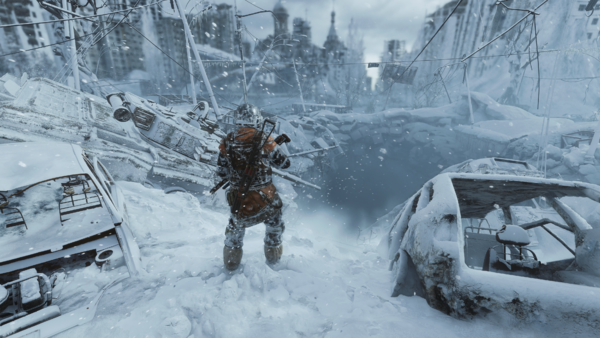
The Metro games haven't enjoyed massive success over this decade, but all three releases have given shooter fans the kind of intense, atmospheric, story-driven experiences that the genre has mostly moved away from.
The original game, Metro 2033, was rough around the edges but had so much charm because it dared to be different. It was hardcore, more about immersion than twitchy shooting, and that made the scary parts downright terrifying, and the gunplay incredibly visceral.
Last Light refined those rougher edges and lost some of the lovable quirks, but the trade off was worth it. This time everything was more confident, the story more engaging, the gunplay more responsive, and the haunted underground metros and ravaged cities above more hauntingly beautiful.
Exodus pushed the series forward again in 2019, jumping up to the surface and this time opting for an open-world structure. It was a risk that paid off, and it cemented the series as the most underrated shooter of the decade.
4. Titanfall

It's a crime Titanfall isn't bigger than it is. The original backed the wrong horse by getting into bed with Microsoft to become an Xbox One exclusive, while the sequel was smothered by its own publisher, released right between Battlefield 1 and Call of Duty: Infinite Warfare, and neither found a huge audience as a result.
That sucks, because both games offer some of the best multiplayer suites of the decade. The original was multiplayer only (which also put players off), but its brand of 6v6 mech and on-foot combat was thrilling and kinetic, exactly as refined as you'd expect considering it was from the guys who were in charge of Call of Duty 4: Modern Warfare.
Its sequel was even better, improving the online suite while also delivering a campaign that was low-key one of the best of that year.
3. Forza Horizon

Froza Horizon has become such a dominant force in the racing genre that it's easy to forget it's actually one of the youngest in that circle.
While the core Forza franchise was established in 2005, the Horizon sub-series immediately marked itself out as a completely different kind of racing experience, swapping out the tight tracks of those titles in favour of gorgeous, vibrant open worlds that revelled in free-form anarchy than in the simulation aspects of its sister series.
The same attention to detail and overall quality remained though, and as sequels continued to release, Horizon even managed to overtake the series it spawned from in terms of relevancy in innovation.
Both are awesome, but this new series broadened the brand's horizons (sorry) so much that it was hard to look back.
2. Overwatch

While Blizzard has only released one Overwatch game so far, it absolutely is a franchise. The original title is pitched as being a platform more than a single release, to the point where the sequel won't even touch the core competitive multiplayer that's still growing in that game, while some of its new features will actually be patched into the first title as well.
Ever since it launched in 2016, Blizzard have constantly updated it with new maps, heroes and ways to play, building a brand that is way more than just the one thing. Between graphic novels and other tie-ins, the world of Overwatch is ever expanding, and fans ravenously consume every single piece of it.
That wouldn't be possible if the actual game wasn't fun though, but Overwatch is so good it almost single-handedly brought an end to the modern-military boom, and ushered in a world of faster gunplay complimented by imaginative areas and characters bursting with personality.
1. Minecraft

Without a doubt, Minecraft is the most important video game of the entire decade. Over the past nine years, the original building sim has transformed massively without losing the charm that made the original release (all the way back when the IP wasn't owned by Microsoft) so damn appealing.
Though it's only enjoyed one 'main' release in that time, what Minecraft is and can be has changed drastically. Likewise, it's lived on in spin-offs, proving just how malleable this colourful, blocky world actually is. Telltale's Minecraft: Story Mode somehow managed to make the building sim into a damn fine narrative-driven adventure game for instance, something which absolutely should not have worked, but which totally did.
Minecraft has introduced an entire generation of people to video games, and its sheer scope to act as both great entertainment and a smart educational tool is unrivalled.
It's one of a kind.