15 Hidden Video Game Design Secrets That Are Total Genius
"Mind = blown" was invented for moments like this.
It's very easy to forget just how meticulous, multifaceted and belaboured the process of making a video game is. When the likes of Lawbreakers starts to see its sales and reputation slide after only a month of release, thinking of it as "Cliffy B's latest isn't doing so well" belies the fact that an entire team of people devoted their lives to coding various levels, physics models, characters and scenarios from nothing, into a workable, playable product.
By extension, video game design teams are the biggest unsung heroes of the industry, and whilst that doesn't take away from the Hideo Kojimas, Ken Levines or Neil Druckmanns of the world, once you start looking into the nitty gritty of how some of the most successful games actually tick, then it gets mighty interesting.
How does the game know when to throw you some more enemies vs. hinting at where to go next? How does a boss or specific enemy's A.I. work so the player naturally figures out what to do, and doesn't feel lost?
Once you start having these conversations, it brings about the fact that overall, we very rarely see what should be "behind the scenes making of" documentaries centred on our favourite games, though like with any film release's set of special features, they're always truly fascinating.
--
Note: The vast majority of insight was gleaned from a wonderfully unique game developer chat that recently happened on Twitter.
15. Horizon Zero Dawn Only Renders The World You Can See
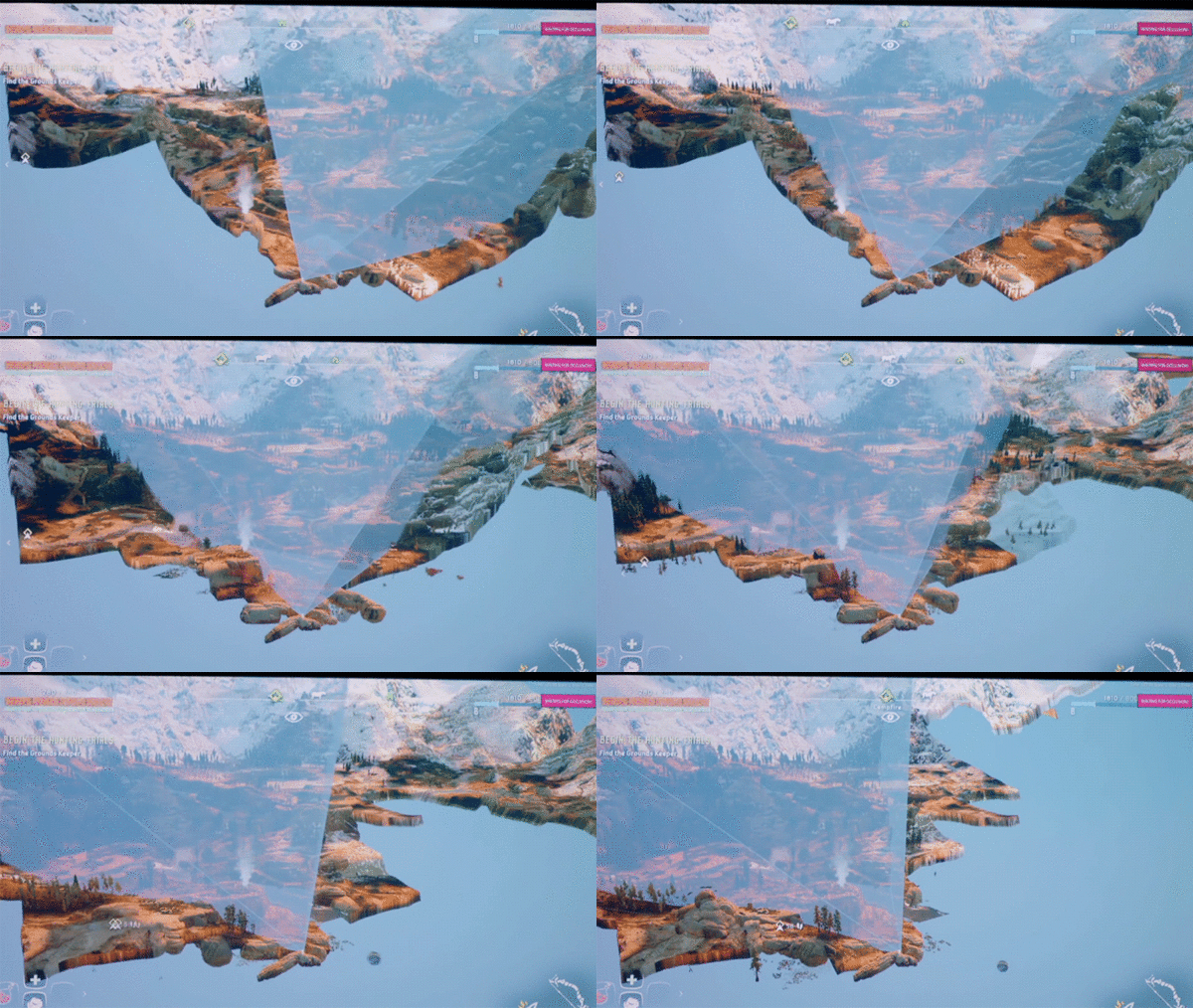
A technique first popularised by the original Crash Bandicoot trilogy, Naughty Dog discuss in their 30th Anniversary art book about how object distance can affect the 'priority' of detail i.e. the further away something is, the less likely the player is to notice, or even sometimes even care.
This allowed them to make things like Crash Bandicoot 3 look stunning for the time, and now we're seeing far larger-scale productions like Horizon Zero Dawn do the same.
Guerrilla Games have easily created one of the best-looking games of all time; a sumptuously rendered post-apocalyptic landscape that upholds a steady frame rate throughout - and they do so by only rendering the world environment the player is looking at, as seen above.
Though it'll feel a bit weird knowing your game world is only really a 'triangle' emanating from your cone of view, this can also be seen in landmark releases like The Elder Scrolls: Oblivion and Skyrim, where fire effects and waterfalls seem to fill in or 'come to life' after-the-fact, as the game is 'catching up' to your POV.
14. Alien Isolation's Xenomorph Has Two A.I. Brains Trying To Find You

Creative Assembly's work on Alien Isolation was one of the most out-of-left-field releases of 2014, executing on a brilliant horror concept of knowing there's a preternatural hunter forever baying for your blood, yet never knowing precisely how it thinks.
To achieve this effect, the devs actually created a 'dual A.I.' system where the Xenomorph has two 'brains': One that knows where you are, and one that controls the movement of the alien's body in random directions. The key, is having the former give 'hints' to the latter based on where you might have been previously, what noises you've made, whether you sprinted recently etc., resulting in pretty dynamic gameplay as you naturally try to hide your footsteps and evade when necessary.
Also key, is that with these dual systems in place, the 'body brain' slowly learns from its own mistakes, meaning if you hide in the same place twice - or the same 'types' of places, like lockers or under tables - the Xeno will remember and seek you out faster.
13. DmC's Off Screen Enemies Slow Down So You Can Avoid Being Blindsided

No one - besides Dark Souls fans - likes being mobbed by tons of enemies at once, though it's always necessary in many action games to create the illusion that the hero can take everybody on at once.
First seen in The Legend of Zelda: Ocarina of Time - and is one of the many reasons Nintendo's monolithic release is one of the best games of all time - it's key that the enemy A.I. doesn't all rush in at once. Where Zelda's solution was to only 'activate' whichever foe you were manually targeting (with any others standing by and watching/waiting their turn), Ninja Theory's DmC: Devil May Cry utilises the camera instead.
Adapting Horizon's 'sight line approach', any enemies not in Dante's field of view will be 'slowed down' quite considerably, allowing you to focus on the most noticeable threats. It means that when you do start to pan the camera around, there's always a feeling of group combat, but this makes the encounters far more manageable and fun.
12. Various Platformers Have "Coyote Time" To Allow For Mistimed Jumps

Take note, Vicarious Visions, as this was one of the most crucial components missing from the Crash Bandicoot N. Sane Trilogy: Being somewhat forgivable when it comes to pinpoint platform accuracy.
Though the term "coyote time" is more an in-house joke inspired by Wile E. Coyote and mentioned by designer Chevy Ray, it represents the crucial allowance for an 'invisible platform' outside of the environment, that the player can still leap off to make a necessary jump.
Too much and the game would look broken, but too little and those who aren't timing their button presses perfectly fall to their death. Chances are your favourite platformer includes this as standard, and its omission from the N. Sane Trilogy was single-handedly the main reason why this remake felt so hard in comparison to Naughty Dog's original.
11. Far Cry's Difficulty Curve Is Directly Related To How Well You Play
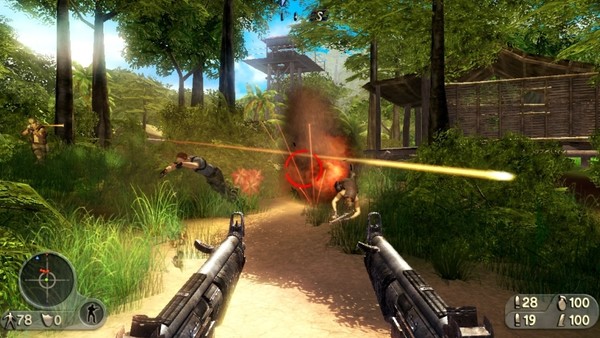
As you'll find when looking into various 'one person against the world' games, the developers need to make sure that - in the case of a shooter especially - you don't get riddled with bullets every 10 seconds.
To do so in Far Cry's case, it involves the game making a series of checks and balances whenever you hit a specific checkpoint. Taking into account things like how much damage per second you were dealing and how many deaths per minute you had accrued, the game could adaptively lower enemy health and accuracy to give you an easier time.
Amazingly, whilst this could've led to a drastically easier game, once you then got through a section and started playing better, those same stat checks reworked so the A.I. could restore the original "designed" challenge, creating a difficulty curve that only makes allowances where necessary.
Very clever.
10. Halo Has Dynamic Audio, Changing The Score As You Fight

Coming under a variety of different terminologies, more than ever this generation we're seeing "biomes" comprising a game's level structure, enemy layout, colour palette etc. directly relating to the score in the background. A recent example would be No Man's Sky pulling from an audio bank of thousands of compositions to dynamically mix something for combat or exploration, though a far more positively received choice was the original Halo.
Composer Martin O'Donnell recorded a variety of pieces with the idea being that they would be able to segue between one another as gameplay dictated. It meant that there was a demonstrable shift in tone between driving the warthog and leaping into battle, hearing the music crescendo as enemy numbers dwindled and you fought on to win the day.
Again, a more common practice over time, but one of the more subtly effective reasons why Halo was received so exceedingly well.
9. Half-Life 2's Ledges & Railings Attract Enemies So They Flip Over More Frequently
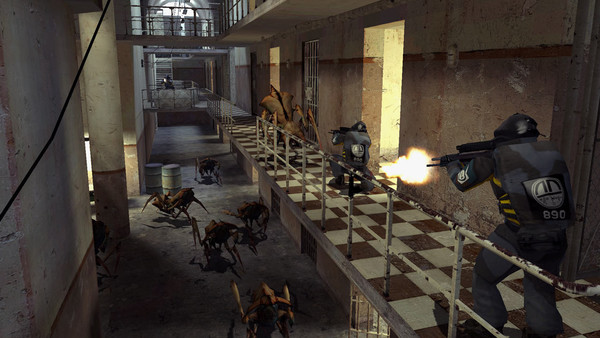
Lovingly nicknaked "ragdoll magnets", if you thought Half-Life 2's glorious physics-based combat was resulting in one-off experiences just for you, many of these things were actually coded into the game.
It's purely down to the mastery of Valve's design department that such 'features' weren't too obvious or went on to feel parodic, but the team actually made it so after enemies' health is depleted, they'd occasionally flip over a nearby railing or plummet off a ledge, rather than just ragdoll down to the ground. Not only that, but for any bullets that missed, they'd really miss, punctuating fractured pieces of the environment, causing explosions or helping bring down towers of smaller items.
For more ragdoll magnet'ing see Metal Gear Solid 2's guards reaching for ledges to die in style, or Rockstar, who have started putting this in their past few games too, resulting in - in Red Dead Redemption's case - many fantastic moments where gunfights are peppered by pirouetting bodies falling all around.
8. Losing Soldiers In XCOM Ups Your % Chance Of Hitting

If you're screaming "I KNEW THOSE PERCENTAGES WERE A LIE!", then prepare to feel vindicated, as though Firaxis should continually be praised for making the best turn-based strategy games on the planet, there's more going on than meets the eye when it comes to lining up a shot.
Thanks to a Gamefaqs post breaking down the specifics, we know that the more dire your circumstances get i.e. if you go down to three or less members, your chances of connecting with subsequent shots and dodging enemy fire increase.
Going as far as adding a boost of +30% if you were already sitting on 50% or more, reducing enemy shots by 25% and making any 100% shot a 95% for the opposition only, it factors into the very essence of XCOM: Scraping by on just a hope and a prayer, and seeing a new rookie win the day despite all odds.
7. Forza Manufactures Speed With Subtle Screen Effects
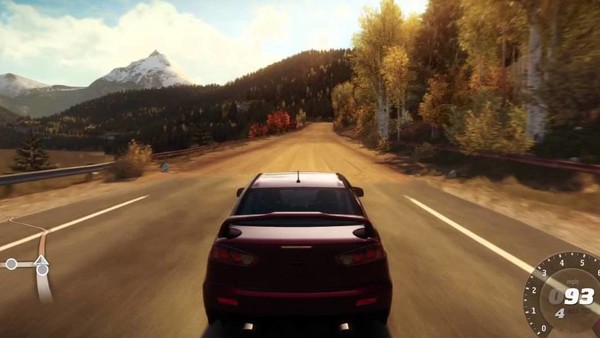
Here's a question to break your mind - how do you know how fast you're going in a game, and what correlation does a speedometer actually have if you start crunching the old speed=distance/time formula?
Well, luckily, various developers get around such things by creating the illusion of speed - something the Burnout franchise perfected, but is seen more uniquely in more recent Forza titles.
Literally down to the game camera pulling focus and framing the action with a very light vignette effect (you can see above on the bottom of the shot), it goes hand in hand with something like the speedometer and your car's engine firing on all cylinders, to psychologically convince the player they're achieving impressive speeds.
The faster you go, the more the screen represents tunnel vision, and the more you'll struggle to maintain control - quite the effective trick.
6. Uncharted's Enemies Intentionally Miss More Than They Hit
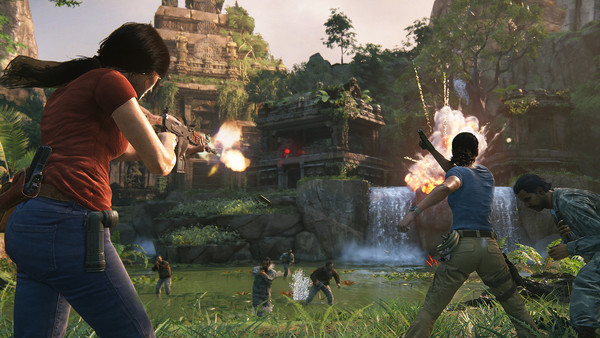
Though Uncharted 4 had one too many instances of plonking Drake on an outcrop of land before attempting to let you face 100 guys at once, overall the franchise has a trick up its sleeve when it comes to imitating Hollywood.
Essentially in place to replicate those moments where the bad guys just can't quite get their bullets to catch up to the hero, Uncharted is coded so that whenever you leave cover, there's a 100% chance that an enemy's first two shots will miss.
Of course, it's designed to keep the tension sky-high and bullets whizzing past your head at all times, but something like Red Faction Guerrilla actually went one further, back in 2009.
Designing their own A.I. to not kill the player too fast, Volition made it so closer proximity enemies would not only be inaccurate at the beginning of a fight, but even if they did tag you over time, it'd then make them just as prone to missing once again.
Put in place to force you into seeking cover, it's a smart way of letting you overcome those pesky endless goons whilst constantly feeling empowered.
5. Thumper's Level Number Mimics Its Musical Time Signature

Now this is just plain brilliant. The already-spectacular rhythm violence game Thumper is a fantastic mesh of button-timing and cerebrally challenging imagery, but its pounding, industrial score actually changes in time signature as you advance from level to level.
Designed to mimic progression through the game and provide a sense of challenge, it boils down to having more notes per measure - or in gameplay terms, more complex arrangements for you to land on, evade or combo together, to get through in one piece.
What that looks like, is each time signature IS the level number, so 1/4 for the first, 2/4 for the second, 3/4 for the third and so on. Many of your favourite songs will most likely be in 3/4 or 4/4 if you want a simple comparison, but once you start getting into the polyrhythmic delights of 7/4 and beyond, well, you'll see how much timing can mess with your mind.
4. Skyrim Generates Quests To Make Sure You See The Whole Map
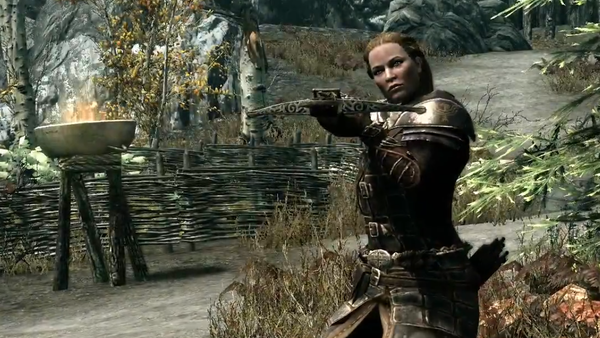
Named 'Radiant Quests', this was a purely genius move on Bethesda's part.
Basically stemming out of a need - or an encouragement on behalf of the art and coding departments - for you to see every last square inch of the monolithic world the team had designed, Bethesda coded Skyrim to scan the game world for locations you're yet to visit, and then present a new quest.
It's why things like random NPCs sprint out the undergrowth to tell you about a kidnapping or a treasure location at random, why a certain book may need retrieving or a rogue vampire needs putting down. The beauty in the design is unlike other developers' procedurally generated structures that build quests from scratch, many of Bethesda's retain authorship and voice acting, with only the destination or item itself changing.
That way, the illusion of handcrafted 'design' is maintained, yet the game can produce what feels like an endless amount of missions, goals and rewards, for as long as you'd like to keep playing.
3. Mario Kart's A.I. Always Keeps Up No Matter How Far Ahead You Are

Certainly one of the most famous examples in gaming history, 'rubber banding' is present in everything from racing games to SSX Tricky, FIFA/PES and much more.
As a term and implementation, it describes the idea of oppositional A.I. never truly being that far behind, receiving an offscreen, non-telegraphed 'boost' to perhaps catch up to you in first place, for example, or in sports' games cases, to nail a tricky shot and equalise the score going into the final 10 minutes.
Going back to the origin though, Nintendo pioneer yet again, as this technique was first clarified in 2003's Mario Kart: Double Dash, despite many gamers complaining about A.I. qualms for years prior.
Overall it contributed exponentially to helping this once experimental kart racer take the world by storm, giving even those who were playing solo some diehard competition to overcome.
2. Dark Souls 3 Bosses Attack In Time With The Music

Rather like the earlier Halo example designing its world around all manner of dynamic encounters and then composing music on the fly, Dark Souls' various battles have the music set in place, but then see their bosses attack, hang back, circle you or go in for the kill right when everything feels the most intense.
Possibly down to why the Souls series is so beloved, and its boss battles are so popular and iconic, this technique means that when something like the Asylum Demon or Iron Golem swing their hulking weapons, the resulting cacophony of noise is not only meant to represent the gnashing of steel, but comes backed by a rise in strings and instrumentation.
It may not literally be 'on the beat', but the result is genuinely phenomenal, and as FromSoftware started designing more spectacle-filled fights - like Dark Souls 3's Dragonslayer Armour or The Nameless King - they were able to ratchet up the purely epic nature of these encounters like nothing else.
1. Assassin's Creed & DOOM Value Lower Health More, So You "Just Make It Through" Fights

Ever have that feeling of JUST getting through a fight, knowing that if it had gone on for but a second longer, you would've bit the dust and gone back to the beginning?
Yup, even those moments are designed.
Though it's commonplace across many action games as a way to increase tension and concentration - and eventually relief and celebration - Assassin's Creed and DOOM have the upper echelons of their health bars get chipped away faster, almost always putting you on the back foot around the mid-point of a fight.
It of course means you'll then try harder and push through to survive - which is exactly what the devs intended - though you needn't worry, because those precious few last segments of points are worth more overall than the majority of the life bar itself.
Next time you're playing DOOM, take note of your health - even if you're near death, there's still every chance you'll live to fight another day.
--
Are there any other really cool 'behind the scenes' type coding tricks you've picked up on? Let us know in the comments!