15 Most Disappointing Video Game Sequels Of The Decade (So Far)

How do you get something so right, and then SO wrong?!
For the most part, the run up to the release of a popular sequel is often a double-edged sword; for every piece of hype and press a new game in a franchise gets, more and more pressure is added to the developer to deliver an experience that can live up to often impossible expectations. As a result, a lot of sequels to popular games leave players with a feeling of disappointment, and whether a franchise sticks too close to its roots or diverts too far in a new direction, pulling off a great sequel is an incredibly difficult task. But some games feel like they wouldn€™t have been good experiences even without this over-mediated burden. More than just slight disappointments that didn€™t live up to the original game, these titles delivered experiences that were so haphazard, confused and muddy that they call the integrity of the entire franchise into question. While sequels to beloved games will never be able to please every fan of the originals, these games felt like such a step backwards and featured so many questionable design changes that it became impossible to come away from them feeling anything other than deflating and bitter disappointment. The tail end of the last generation saw plenty of games take a nose-dive in quality all round, and with a new generation signalling the rise of new and original IPs, unfortunately there€™s a good chance that a lot of these games will be the final word for their respective franchises.

15. Ninja Gaiden 3

With the franchise being handed over to a new director, expectations for Ninja Gaiden 3 before release were mixed to say the least. While there were fears that the inherently hardcore Ninja Gaiden experience would be changed for a wider audience, some hoped that the addition of new blood would be a breath of fresh air for this action series. Can you guess who was right? Ninja Gaiden 3 released to negative reviews across the board, with journalists and gamers alike lamenting the lack of depth and complexity all round. Not only was the difficulty reduced and the combat toned down, but the fair challenge and sense of progression inherent to the series was completely missing in this title, replaced by a more 'accessible' focus on spectacle over fighting that required little actual effort.

14. Aliens Vs. Predator

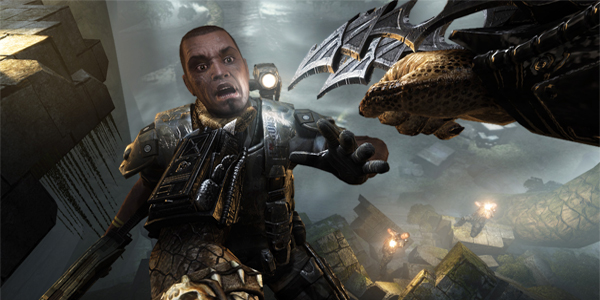
It wouldn€™t be a disappointing video game list without an entry from an Aliens game, would it? While it wasn€™t quite Colonial Marines bad, Aliens vs. Predator is probably even more disappointing because of just how much it squandered the potential of the series. Sequel to the popular '90s PC games, 2010€™s Aliens vs Predator is essentially the same game as the previous entries in the series, which would be fine€ if players hadn't experienced ten year€™s worth of video game development in the meantime. Because of the time-gap between instalments, 2010€™s AVP felt like an old school experience, and not entirely in the good nostalgic way. Throw in some just plain odd design choices (seriously, why can€™t the Marines crouch?), and the entirety of of the game feels like poor attempt to reinvent an aging franchise.

13. Marvel Ultimate Alliance 2

A spiritual successor to the brilliant X-Men Legends games released on the PS2, Marvel Ultimate Alliance attempted to expand on the great idea of picking a personalised team of heroes €“ and in a stroke of genius €“ didn€™t just limit your choices to X-Men characters, but the entire Marvel Universe as a whole. It was a winning formula, but by the time Ultimate Alliance 2 had rolled around, players had been treated to essentially three games that all played exactly the same. This second entry into the series desperately needed to expand and bring something new to the gameplay, but with a less impressive visual style and a less prominent set of characters, Ultimate Alliance 2 seemed to do the exact opposite. Which is unfortunate, because the game took one of the best superhero comic storylines in the Civil War arc and adapted it, which in theory could have provided some of the best never before seen superhero-on-superhero battles, yet in the end you'll still rarely find such a great concept utterly wasted in every respect.

12. Crysis 3

The Crysis series has always been revered for its looks rather than its gameplay. While the first and second games gave players plenty of options for stealth and gun-toting action, by the time the third instalment rolled around its iterative and mostly unchanged gameplay didn€™t really set the world on fire when games like Far Cry and Deus Ex were doing the same thing but better. And when a sequel releases and most of the press that surrounds it focuses on a single feature, you should be incredibly wary of what it has to offer that the previous entries in the series don€™t. When Crysis 3 was making the media rounds, almost every news story focused on the addition of a crossbow. A crossbow. One crossbow. But this addition wasn't a terrible choice in itself €“ well, it wouldn't have been if every other game at the time wasn't falling over itself to add bows and arrows to their games. From Tomb Raider to The Last of Us, every game in 2013 became somehow desperate to include this weapon, so when that was the only thing Crysis 3 had to offer, there€™s no wonder why many people chose to ignore the game altogether.

11. Splinter Cell: Conviction

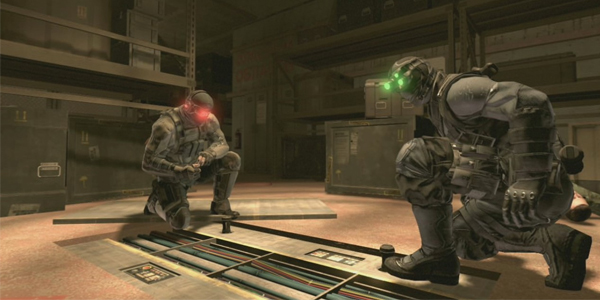
Being sent back to the drawing board as many times as it was and the time that it actually took for Splinter Cell: Conviction to be released, there was simply no way that the title could have ever lived up to the amount of hype and fan expectation that surrounded this series overall. While deviating from the core Splinter Cell experience wasn€™t the problem in itself for this new title, the fact that Conviction replaced the classic Splinter Cell gameplay with a shallower, easier and less skilful approach to combat meant that the huge re-structuring of the series ultimately did nothing but hurt it in the long run. Fortunately, developers at Ubisoft managed to achieve the lofty aspirations that this game failed to reach in its 2013 sequel Blacklist. Unlike Conviction it managed to blend the new action approach with the more tactical and classic gameplay through a natural and innovative way meaning Blacklist provided enough content to appeal to fans both old and new.

10. Crackdown 2

Handing the franchise over to a different developer, Crackdown 2 felt more like an expansion pack than it did an actual true sequel. That€™s not even being too hyperbolic about it either, ignoring for the most part the gang-centred nature of the original game, part two opted to deliver a campaign that focused on a city overrun by mutants and zombies, featuring a supernatural twist on an otherwise straight sci-fi experience €“ something pretty much every DLC at the time was doing. With no real upgrades to the city or the way you could cause havoc in its sandbox outside of a wingsuit to get around, when Crackdown 2 released it felt more like a stop-gap title to cover ground between the first game and a true sequel that's still never managed to materialise.

9. Ghost Recon: Future Soldier

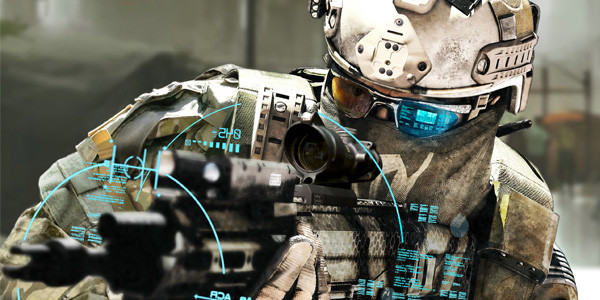
In the same vein as Splinter Cell: Conviction, Future Soldier planned to adapt the classic Ghost Recon franchise in a modern gaming context €“ and just like Conviction, it also released while hyping a lot of great ideas that ultimately weren€™t fully realised in the final build. But Future Soldier wasn't a bad game per se, it just did nothing to stand out from the other shooters it was competing with. The teammate interaction featured in previous entries of the series was limited, the guns - while plentiful - all acted too similar to each other, and while the base gameplay was mostly sound, the lack of variety meant that it got too repetitive too quickly. With Splinter Cell and then Ghost Recon, Ubisoft is now two for two when it comes to failing at rebooting their popular franchises as best they could, so while the upcoming Rainbow Six: Siege looks great in pre-release footage, let€™s just hope it isn€™t cursed to repeat the same mistakes as these two disappointing entries into otherwise great franchises.

8. Dead Space 3

Similar to the Resident Evil series, the further the Dead Space franchise strayed from its horror roots, the worse its games became. Although Dead Space 2 is considered the pinnacle of the series and progressed intuitively upon the original game, the third entry into the franchise felt like a step in the wrong direction. While the addition of co-op diluted the horror as much as it did in Resident Evil 5, the more action-centred focus meant that Dead Space lost that flair of originality and personality that pulsed through the original two games. More than other series', Dead Space€™s transition to straight up third person action shooting felt completely unneeded. Dead Space 2 both sold well and became a critical darling, and still stands today as one of the most definitive modern survival horror games ever put to disc. Therefore this third entry's awkward transition into something more generic and mainstream felt entirely oppositional to everything the Dead Space series stood for.

7. Battlefield 4

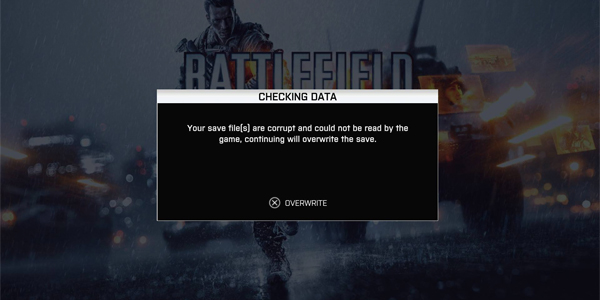
Battlefield 4 provided some of the best high-octane action in the series; from frantic gunfights erupting on rooftops to high-speed chases across gorgeous woodlands, this fourth entry into the popular Battlefield franchise was an invigorating and brutal first person shooter €“ when it worked. Unfortunately, BF4€™s release was a mess. With glitches, crashes and awful rubber-banding, Battlefield 4 was virtually unplayable on release, a sure sign that the game was rushed out the door in order to hit its hugely important fall release date. Even the single player campaign suffered from a massive amount of bugs out of the gate, perhaps the most grievous being a fault that deleted your saved progress, forcing you to start over from scratch each time you booted the game up. Thankfully, today Battlefield 4 is as good as it should have been when it first released in stores and stands as one of the most enjoyable entries in the entire series €“ but for some players, finally completing your game a year after it's been on the market is too little, too late.

6. Thief

The Thief reboot didn't quite mark the return to former glory fans of the series were hoping for. Featuring mostly dumbed down gameplay compared to its predecessors and an incredibly generic gruff and gritty story, this reshaping of the popular stealth franchise came out the gate already in many players€™ bad books. With less creative level design than previous instalments, this entry into the series felt immeasurably more restrictive in its gameplay. The smaller maps themselves could have provided intoxicating tightly-knit and risky gameplay if executed right, but in the end these tiny and often linear pathways felt mostly unimaginative and limiting when it came to how the player could sleuth their way through them. Which is a shame, because Deus Ex: Human Revolution proved that a classic series like Thief could be rebooted and streamlined for a mainstream audience without losing its inherently hardcore charm. Throw in a multitude of bugs and glitches and 2014€™s Thief reboot failed to attract new fans to the franchise while also alienating those who were hotly anticipating a return to form for this revered series.

5. Battlefield: Hardline

In what should have really been its own original game separate from the baggage of an established franchise, Battlefield Hardline nonsensically butchers what could have been a genuinely interesting and unique cops and crooks experience. By sticking too close to the established Battlefield formula, Hardline suffers from a massive identity crisis, and in its attempt to be both a fully-fledged Battlefield title as well as a cops and criminals game of cat and mouse, it ultimately fails at being either. But the most disappointing aspect of this release is that the Hardline concept is actually really interesting when it works. At certain moments in the campaign and even when the multiplayer itself clicks into place, Hardline can be a visceral and exciting experience. It€™s just a shame that this amounts for 1% of the overall gameplay, and the other 99% is made up of haphazard and half-baked ideas.

4. Assassin€™s Creed 3

Connor Kenway Assassin's Creed With Assassin€™s Creed 2 Ubisoft managed to do what few sequels could. Not only did the title re-invent the the formula of the entire franchise, but it did so by taking all of the criticisms from the first game to heart and not rushing out half-baked follow-up, but a carefully considered, fully loaded and epic experience. But when Assassin€™s Creed 3 released years after the second entry into the series, it suffered massively from not having that same mystique and surprise factor. By the time the third entry came out, Assassin€™s Creed as a franchise had become annualised, and thus fans and players rightfully expected the third entry to provide a huge leap forward away from the gameplay they were so used to. Sadly, other than a new setting and a new character, there wasn't much to separate Assassin€™s Creed 3 from Revelations, which only came out one year prior. The problem is that with essentially four version of the same game €“ and with the general quality lowering for each release €“ franchise fatigue had well and truly set in and it seemed obvious that Assassin€™s Creed 3 was coasting through and resting way too much on its laurels.

3. Resident Evil 6

ResidentEvil6SecondTrailer-600x300 As much flack as Resident Evil 5 gets today, the reception for the game at the time was actually quite positive, and although the game was derivative, its main crime was that, if anything, it didn€™t do enough to differentiate itself from the fourth entry. Unfortunately, Resident Evil 6 did too much to differentiate itself. But it's not entirely fair to completely trash the game outright, because Resident Evil 6 is a great experience €“ well, one third of it is anyway. But for as much as Leon€™s campaign gets right, the other 2 campaigns get horribly wrong. While there is some fun to be found here and there, there hasn€™t been a video game ever released that tries to hit so many marks but actually only manages to achieve so few. Bordering on either being a numbing and lifeless third person shooter or an incredibly asinine and frustrating co-op experience, Resident Evil 6 completely dive-bombed a series that was already in free-fall.

2. Dragon Age 2

With the back-to-back release of Mass Effect 3 and Dragon Age 2 it was starting to look like the inevitable end for developers Bioware. Both follow-ups to extremely popular and critically acclaimed games, each title felt like a huge step-back for both franchises. Unfortunately for players, while Dragon Age 2 had a decent amount of quests to partake in, none of them really felt substantial or important to the overall game. The story itself felt small in scope, and the environments and gameplay similarly followed suite. Featuring a boat load of lazy design decisions; the obvious reusing of assets, inconsequential quests and copy-and-pasted dungeons, Dragon Age 2 felt like it featured barely half of the content that the original and sprawling Dragon Age: Origins boasted. While Dragon Age 2 wanted you to spend a lot of time in its world, it just quite simply provided no incentive to do so. With no interesting loot, characters or places to see, the entirety of Dragon Age 2 felt like a forgettable side-mission occurring inside of a much, much better game.

1. The Sims 4

The Sims 4 If The Sims 4 came out before The Sims 3 it might have been considered a great game. But when your sequel provides so much less content, gameplay abilities and customisation than its preceding entry, you have to know that you€™re going to piss off a huge number of your fans. While functional in its own right, The Sims 4€™s biggest mistake was that it simply took away too much content that was included in the previous game. There was no longer a large and interconnected map, gone were many of the items and jobs you could perform in your day-to-day, and hell, glaring and seemingly easily included omissions such as the ability to install a swimming pool were nowhere to be found in this reductive title. Because The Sims 4 seemed to focus on taking away things away from the player rather than giving them more options, the game simply provided no incentive for players to pick it up over its better, and by then cheaper, preceding entry. What's been your most disappointing sequel since 2010? Let us know in the comments!

Contributor

Josh has over 11 years of experience as a published writer, having worked nine of those years as a full-time content producer at WhatCulture. In that period he has created hundreds of articles, videos and podcast episodes for multiple WhatCulture channels, specialising in gaming, horror and film & TV. He now primarily works as a senior content producer and presenter on WhatCulture Gaming where he co-hosts the WhatCulture Gaming Podcast, a top 3 UK most listened to gaming podcast that he co-created in 2018. Over the years he has reviewed several high-profile gaming releases, covered industry events with on-site reporting, opined on breaking news, and even kicked off his interviewing career by chatting to childhood hero, Tommy Wiseau.