20 Best Open-World Video Games Since 2000

Started by GTA, perfected by someone else.
Ever since Rockstar broke the mould with the unbelievably influential GTA III, every idea within has been extrapolated out in a million directions. Mostly that's meant scattering your quest-markers across a hugely expansive world for the sake of it, but it takes real skill and a perfect sense of immersion to make the most of what the genre can really offer. That said, what makes you class something as a truly brilliant open-world game? One that makes the most of its setting and layout to get across the sensation that you really are moving through an entire world of content? Which games had the most vibrant cityscapes, most well-designed fiction and most robust character-sets that felt as though they were going about their business as you were yours? In short, which open-world titles by genre transcended the label into being portals into their respective universes, with all the trimmings that come alongside? Rockstar have certainly continued to iterate on their cast-iron template, slotting things of varying importance in and removing others along the way - but the fact remains that like almost every artistic endeavour; the people who get there first are rarely those who stay on top as years of competition-bred innovation overtakes them. So, with GTA III launching in 2001 and marking the turning point of the century in more ways than one, which developers applied everything about its design to their own properties the best?

20. Assassin's Creed: Black Flag

When it comes to franchises like Assassin's Creed or GTA that have had multiple instalments over the years, they really have to offer something substantial from the other instalments to stand out. And, although there's another landmark AC release later in this piece, Black Flag was the one that expanded on the game world considerably. It introduced the series' first vehicular transport option in the Jackdaw ship, letting you traverse an entire sea, visit multiple cities, some shanty towns and much more along the way. Gameplay-wise it was the one that 'saved' the series after the very buggy, phoned-in feeling that AC III left behind, and by factoring in a number of awesome dynamic aspects into the world like tackling other pirate ships, deep-sea diving for treasures, plundering caves and encampments etc. it really tapped into a sense of embodying your character in a unique way that had been previously absent.

19. Fable II

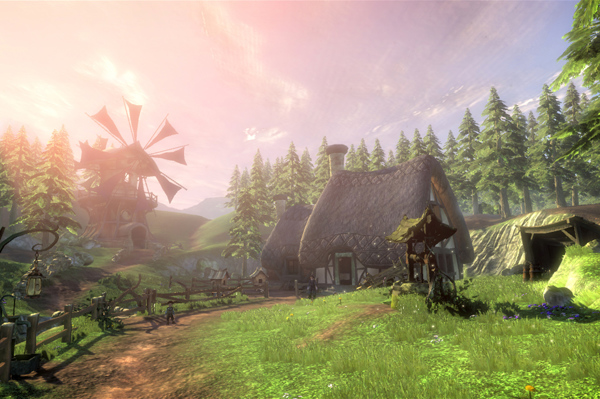
For many franchises it's the middle-child of a given trilogy that's the best of the lot. Free from being too stressed out making an initial impact, loaded up with plenty feedback to apply to a framework the team are more familiar with and distanced from the pressure of wrapping anything up for eternity, it's these sophomore entries like Fable 2, Mass Effect 2, Uncharted 2 etc. that excel far and beyond expectations. It's the bucketloads of charm that sell Fable far and above any shortcomings it may have had depending on how much you bought into the PR spiel Creative Director Peter Molyneux was spouting in the lead-up to release. In the end Fable 2 is simply the nearest approximation gaming has got to living out your own storybook-style fantasy tale; replete with brilliant animation, loveable side characters, your own dog for company - and humour that's more English than John Cleese riding a giant scone to a tea party.

18. Far Cry 4

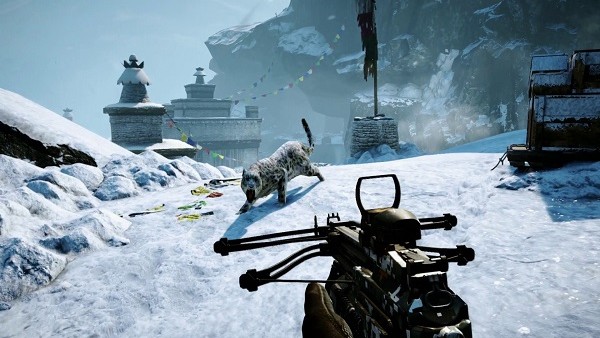
It's easy to forget about Far Cry when so many other Ubisoft titles tend to command the spotlight - despite them being of varying quality upon release - and even though FC 3's Vaas was one of the most memorable villains in recent memory, he was completely under-utilised, giving the edge to 2014's release in every respect. Essentially it was more of the same - albeit with a gorgeous lick of paint coated over the top - but the setting of Kyrat and its Himalayan mountain ranges that both packed out the vistas behind you and doubled as some of the best places to engage in multiple firefights were the icing on the cake. Far Cry remains one of the only Ubi franchises that plays like a dream, knows exactly what it is and can offer in terms of free-roaming enemy encampment-thwarting gameplay - and when part four in particular has a stupidly fun villain in the aristocratic tendencies of Troy Baker's Pagan Min, it bolsters the main campaign in every way FC 3 fell down.

17. Batman: Arkham Asylum

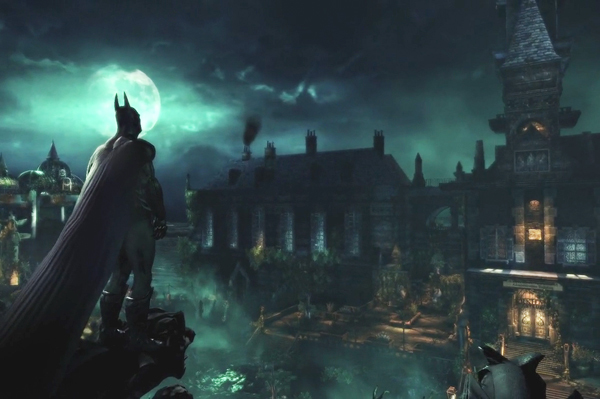
Remember a time when Rocksteady weren't one of the most beloved developers around? You need only go back to pre-2009, as their signing on to do a seemingly random Batman tie-in didn't generate a whole lot of hype - until it launched and genuinely redefined the superhero genre for the first time since Spider-Man 2. Suddenly Batman himself genuinely felt like the muscle-stacked powerhouse he was regularly portrayed as, sd a new fighting system saw you able to break bones with ease, deflect any incoming shots from all directions with the press of a button, and even bust out the occasional gadget for good measure. Followup Arkham City is the more 'obvious' take on the open-world genre thanks to its size, but considering how well-told Asylum's story is, how enjoyable uncovering every inch of the island can be and just how much of an all-round impact this made right out the gate, it's always this inaugural instalment that reigns supreme.

16. Prototype

Pure power fantasies and total guilt-free escapism is something you rarely get now that gaming has matured enough to tell stories as incredibly nuanced and introspective as The Last of Us, Gone Home or Papers, Please - but for developers Radical Entertainment they did away with all that, putting you in the shoes of an experiment-gone-wrong and simply letting you tear everything within eyesight right in half. Releasing at the same time as the brilliant (but flawed) first Infamous title, many chose to plump for the gorgeous graphics and animation of Sucker Punch's release, missing out on the unabashed teenage-dream anarchy of Prototype in the process. With Radical having worked on the excellent Hulk: Ultimate Destruction one-off, you can tell they carried forward all the sensibilities of that game's love of letting you do everything from elbow-dropping tanks to wrenching fighter jets out the sky with your bare hands. Prototype's powers extended to giving you all manner of bladed weapons and explosive attacks too, but it was in combining them with a solid stealth system, traversal that made Assassin's Creed look like a pensioner ambling down the street and that brutal limb-severing melee combat that really elevated the whole thing into 'very-shiny-underrated-gem' territory.

15. Grand Theft Auto V

So high up for GTA V? Yes, because although the revamped city of San Andreas is absolutely, unbelievably detailed, all the tricks and selling points within GTA outside of being "Just another one" have been done previously - and arguably better - by the preceding titles on the last generation. The positives though, as that world really can't be understated. Rockstar forever prove that although there might not be as many incentives or core gameplay hooks embedded within to make you want to explore every nook and cranny on offer, those who did were completely blown away. Animation and characters are at a whole new level too, with the lovably disgusting Trevor, half-baked family-man Michael and 'gangster-no-more' Franklin really coming across as living beings within the city - something that's expertly compounded by letting you switch between them on the fly. Considering the crazily high amount of hype surrounding V and coming off the back of IV's mixed reception it's a wonder this turned out as well as it did - surely now it's time Rockstar turn their hand to something like Red Dead or Bully?

14. Sleeping Dogs

United Front Games' revival of what was once a corpse of a game (the third in the True Crime series, left out in the wilderness for the vultures to pick at) turned into one of the best open-world titles in recent memory, thanks to a whole bunch of reasons that rarely get discussed. Mainly it was the interlocking gameplay systems of brutal Batman-style combat, some arcady driving that bolted you to the road but allowed you to know exactly how to handle a high-speed car chase - and shooting that mixed Gears of War's cover system with Max Payne's slow-motion bullet time. The smaller components that made up SD's world were far more immediately enjoyable than those of GTA's, and when the city itself is peppered with a huge variety of missions, the story tells a very tense tale of an undercover cop torn between multiple alliances and the overall feel of everything is a breath of southern, Hong Kong air - it's exactly what's needed.

13. Minecraft

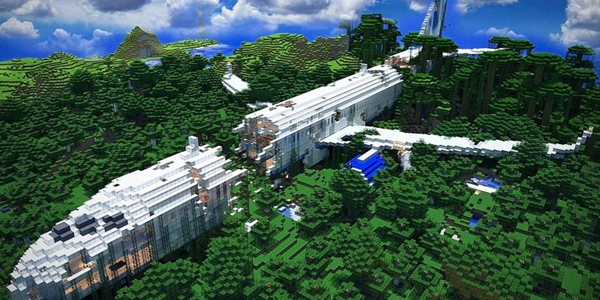
Mojang's greatest achievement - and the one that created one hell of a rags-to-riches story in the process - is a weird one. To some the very mention of Minecraft brings about stories of it being factored into their school curriculum, news pieces on how it aids those with disabilities or troubles understanding certain physical properties of the world etc. - but with others it's a game they've simply never given the time of day. Those who have got stuck in have produced some phenomenal works of creativity, art and honest-to-goodness hard work in the process, as Minecraft has evolved from a survival-based experience into something that's essentially the new-age version of Lego.
Its primitive graphics may still put plenty people off, but purely as a creative tool that lets you live in a fake world, forage for hidden items, build literally anything that comes to mind and feel might impressed by the end of it, Minecraft is unbeatable.

12. Spider-Man 2

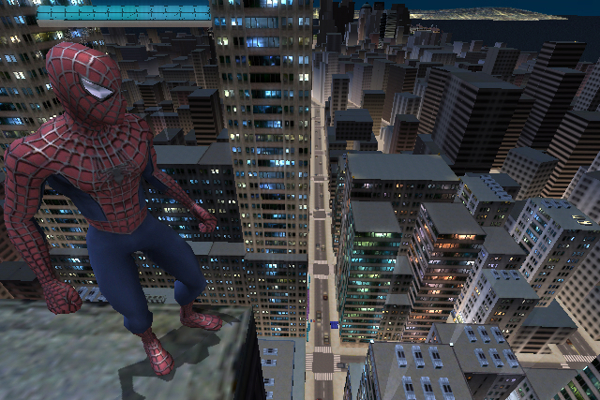
The first superhero title to really make it feel like an entire city was depending on you for protection, Spidey's second official movie tie-in also broke the mould that movie-based games 'had' to be unanimously terrible. It was basically Grand Theft Spidey in as much as your quests were dotted around New York and the minimap in the corner kept track of side missions and random events nearby, but it was realising of your own accord you could make it across to the Statue of Liberty by swinging on a series of helicopters, stopping a bank heist on the way to another mission or just feeling the blur of the ground rush up after a leap from the Empire State Building that's never been beaten. 2008's Web of Shadows would come mighty close, but it was this game's feeling of genuine discovery that made you get to grips with what Spidey was capable of - just like in all of his various origin stories - that elevates Treyarch's take on the Web-Head into legendary territory.

In this post: 
Skyrim
 
Posted On: 
Gaming Editor
Gaming Editor

WhatCulture's Head of Gaming.