20 Best PS1 Games Of All Time

The industry as it stands just wouldn't exist without Sony's little grey powerhouse.
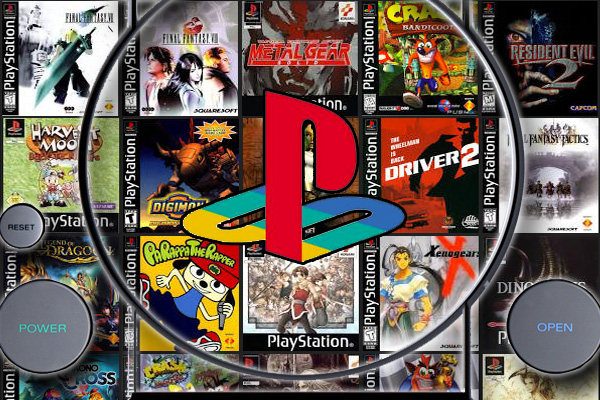
The original PlayStation was possibly the most important games consoles of all time. Spawned from the ashes of a dispute between Sony and Nintendo about incorporating a CD drive into the Super Nintendo, the PS1 propelled video games into the realm of 3D graphics, polygons, cinematic storytelling and fully-voiced characters. Such a seminal role in the games industry has also proven to be a bit of a curse, as its rudimentary 3D graphics haven't stood the test of time as well as the pretty pixellated games of the consoles that preceded it. But it more than made up for these pitfalls by imbuing titles with narratives, atmosphere, and soundtracks that continue to enthral gamers today. These games set the scene for many of the legendary games that came out in subsequent years, and in some cases even offered experiences so groundbreaking at the time that modern games struggle to emulate them to this day. The PS1 was a truly special console, and this is a tribute to its greatest gifts to gaming.

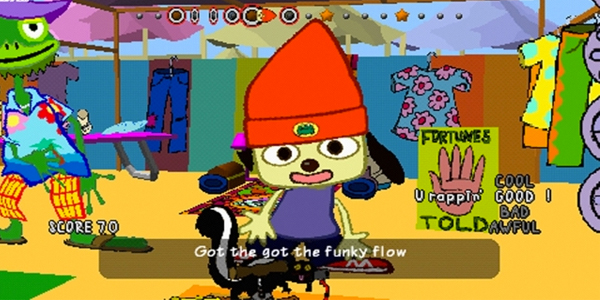
20. Parappa The Rapper

"Kick, punch. It's all in the mind. If you wanna test me, I'm sure you'll find the things I'll teach ya is sure to beat ya...". If these lyrics mean anything to you, you've most likely already been overcome by a wave of nostalgia for the most innocuous, lighthearted rapper of all time. Parappa the Rapper was simple and catchy - a rhythm game that pretty much anyone could play as it was a simple matter of pressing the right buttons at the right time. While the gameplay may look basic, it's here that the rhythm game genre really started to take hold, so Guitar Hero, Rock Band et al. should all reverently bow before this unassuming hip-hop pup. The cardboard cutout look of the game is irresistibly endearing, and each stage has a unique theme and oddball characters that keep it feeling fresh despite a short length. Even going back to it today, Parappa's a sweet, relaxing experience that once you pick up, you'll happily bop along with right through to the end. While other PS1 games may have captivated you more with their stories or high-intensity gameplay, Parappa was always there to kick back with whenever you felt like it.

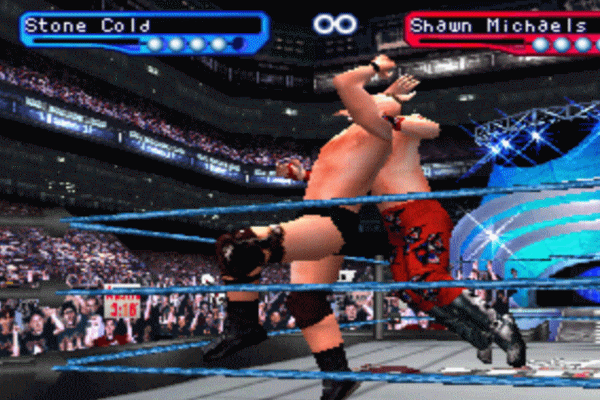
19. WWF SmackDown! 2: Know Your Role

Many wrestling games had come before, and the N64 had already established a foothold for the 3D wrestling genre with the excellent WCW/NWO games and WWF No Mercy, but it's Smackdown for the PlayStation that really captured the intensity, the ecstasy and the macho madness of wrestling - in the glorious days of WWF's down-and-dirty Attitude era, no less. SmackDown 2 refined the brilliant formula of its predecessor in many ways. Wrestler entrances were accompanied by high-quality theme songs and FMV Titantron videos, the ring and ropes shook with the impact of body slams and power bombs, and finishers felt as overblown and momentous as they did watching then-named WWF on TV. The all-important presentation of the world's most scantily-clad melodrama was done to perfection. But even for the non-wrestling fan, SmackDown 2 was one of the best multiplayer experiences around on the PS1. The variety of match types and ability to play through entire seasons in multiplayer meant that you could huddle around the game with your buddies all night without the it feeling repetitive. You could have eight players competing in a round-robin King of the Ring tournament, for example, or for all-out chaos just engage in a hardcore fatal four-way. Add to that a robust create-a-wrestler mode, and you had a complete fighting game package like no other. No games since the original SmackDowns has managed to feel as revolutionary for its time, and it's hard to imagine that any wrestling ever will.

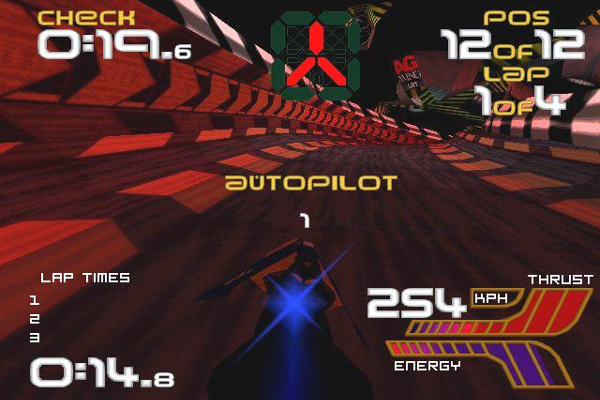
18. Wipeout XL/2097

Mario Kart was lovely, and F-Zero may have beaten Wipeout to doing the whole superfast futuristic racer thing, but Wipeout took things that step further with its gritty polygonal graphics, and soundtrack from big electronica artists like Leftfield and the Chemical Brothers. While in many cases polygonal graphics just don't look as good as they used to, the clinical, industrial look of the second entry in the series, Wipeout XL, still has a certain rustic charm today, combining with a wide range of dystopian tracks, power-ups and metallic vehicles to embody that ravey cool-kids appeal of the PS1. The original Wipeout may have started the futuristic-racer revolution, but it was second game in the series, Wipeout XL, that was the most impressive, with much-improved steering and proper split-screen multiplayer support. The game's pace genuinely made us grit our death and hold our controllers in a white-knuckled death grip, taking us to extremes that no other racing game up to that point had.

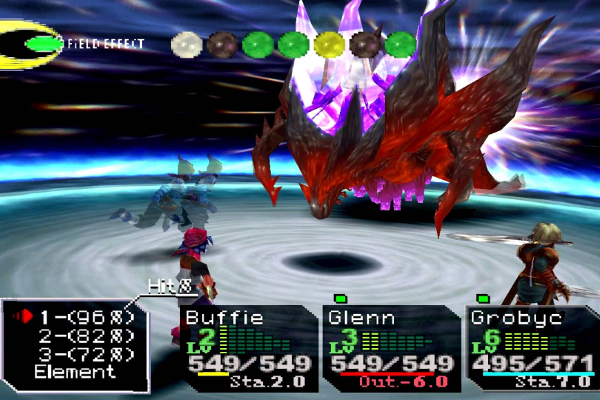
17. Chrono Cross

The relative obscurity of this Square RPG can be attributed partly to its arrival late in the PS1's life cycle, and also due to the Final Fantasy series' relentless success, which overshadowed most other JRPGs of the time. But neither of those things should take away from this sequel to Chrono Trigger, which takes you on an inter-dimensional journey as Serge, a 17-year-old boy who tears away from his peaceful beach-bum life to traverse both the world and a parallel dimension in which he is dead. The turn-based battle system incorporates a stamina bar, adding an extra layer of depth to the already fantastic combat that will otherwise be familiar to Final Fantasy fans. The variety of the combat is bolstered by the fact that there are an incredible 45 possible party members to hook up with, each bringing their own moves and backstories to your adventure. Chrono Cross thrives across the board - as a spectacle, a video game, and a coming-of-age story. While fans of the original game may bemoan its divergent story, and the oddball characters and story may be a bit too strange for some people to embrace, that shouldn't stop JRPG fans from experiencing one of the overlooked masterpieces of the genre.

16. Spyro The Dragon (Trilogy)

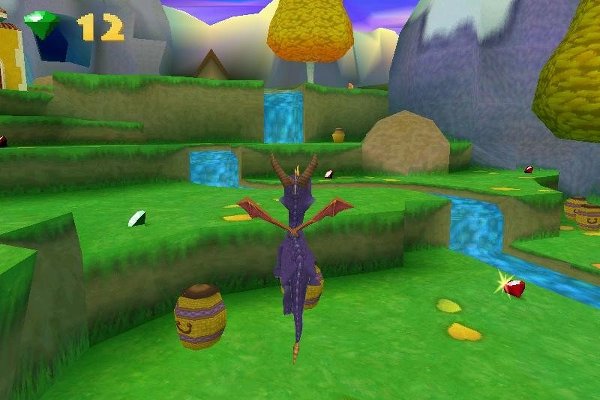
The Spyro series had the unenviable task of being the PS1's answer to Mario 64 and Banjo-Kazooie on the N64. While Crash Bandicoot was content to keep gameplay simple and linear, Spyro ventured out into the open-world realm, bringing us vast, beautiful playgrounds filled with puzzles, platforming challenges, and of course opportunities to fly around and incinerate your enemies. Looking incredible at the time, Spyro was immensely playable despite being not offering analog stick support. The world was vast and varied, with spectacular environments ranging from Arabian Nights-style towns to medieval keeps. Exploring it all was all the more joyful thanks to its great presentation, entailing well-written comical characters and a catchy rock soundtrack from Police drummer Stewart Copeland. What's particularly endearing about the PS1 Spyro trilogy is that it reflected the underdog nature of the protagonist. Spyro was neither as cool as Crash, nor as cutesy as Banjo-Kazooie. Its visual style and design were great, but not as vibrant as Crash, nor were its open levels as well designed as those of Mario 64. Despite that, Spyro kept going for a whole trilogy, and by the time of the third game - Year of the Dragon - it had evolved to one of the great 3D platformers of all time.

15. Tenchu: Stealth Assassins

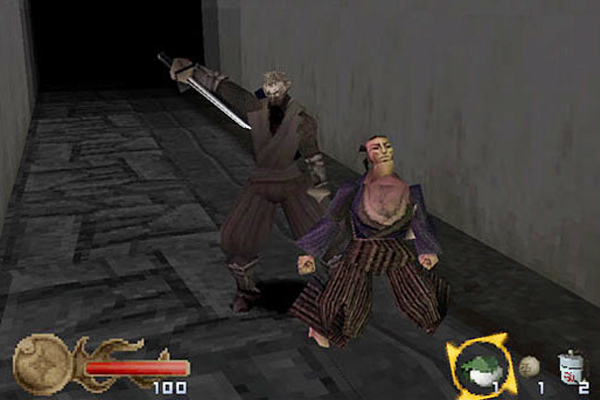
Back in the 90s, getting into that first ninja-sword encounter in Tenchu was a massive shock to many gamers' systems. The blood spraying on and trickling down the walls, the screams, the brutal, precise combat mechanics were all things that games never really did before Tenchu, making the ninja-assassin game feel new, dangerous and impressively realistic. But Tenchu isn't all about the combat. It's first and foremost a stealth game, offering players the incredibly liberating feeling of running across the tiled rooftops of feudal Japanese towns, using ninja ropes, throwing stars and other paraphernalia to take out your targets as quietly as possible. Tenchu was the first game to realise a dark, adult version of all those childhood fantasies we all had of being ninjas - complete with ludicrously stereotypical Japanese accents that seem to have become more absurd and comical with time. If you haven't played Tenchu yet, then doing so today would be comic gold just on account of its voice-acting (not that that's the only reason you should play it, of course).

14. Tekken 3

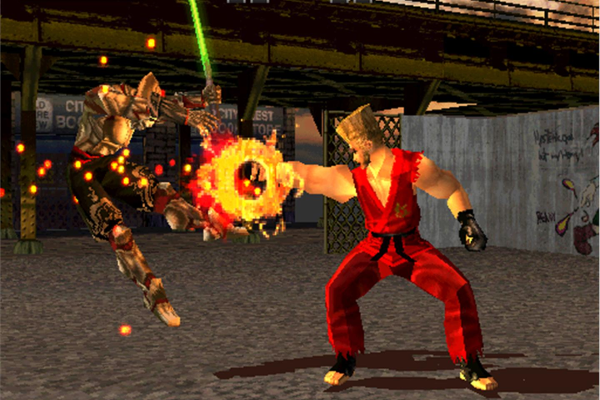
Today, it looks like fighting games have mostly accepted that the 2D plane works best for them, with big names like Street Fighter and Mortal Kombat returning to the 2D realm after brief forays into 3D back around the turn of the millennium. But there was a time in the late 90s when you'd have been forgiven for thinking that the future of the genre lay in 3D, thanks to the incredible experience offered by new kid on the block, Tekken - or more specifically Tekken 3. The animations were smooth, different combos flowed seamlessly into each other, and during more elaborate holds and throws, the camera would even change angle to give the action an incredibly cinematic feel. While the big fighting games of recent years - including the Tekken series - have been incrementally tweaking and refining their formula with each successive game, Tekken 3 felt like a huge jump on everything that came before it both mechanically and visually. Tekken 3 was truly breathtaking, and until the excellent Street Fighter IV, it was the most impressive fighting game of all time. Tekken 3 broke the Mortal Kombat-Street Fighter hegemony over fighting games in the late 90s, and with its realistic moves, close-up combat and stunning presentation dominated its genre during the PS1 era.

13. Tony Hawk's Pro Skater 2

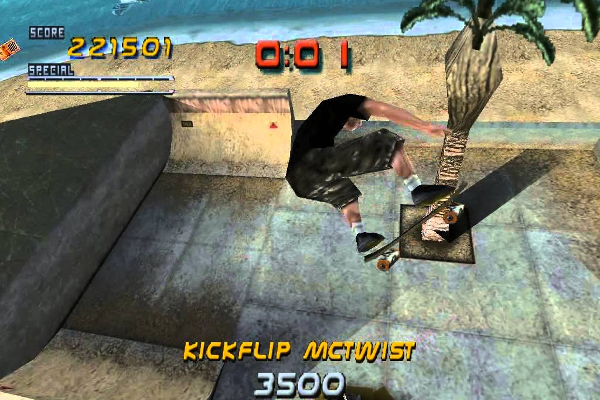
If you were a gamer in the 90s, then hearing someone say that Tony Hawk's games used to among the best video games around will sound like more than just a sardonic joke. The statement is true. The first two Tony Hawk's games are the stuff of legend, transcending the skater demographic to appeal even to people who believed that the best thing you could do with a skateboard was sit on it and go really fast down a hill (in fairness, bum-boarding really is a very fun and imaginative way to use a skateboard). Tony Hawk's took the successes of the first game - the soundtrack, the tight mechanics and fantastic level design - and amplified them for the sequel. Pro Skater 2 had more of everything, including bigger, brighter levels, more skaters and an improved split-screen multiplayer mode. There were even RPG elements thrown in, as you could customise and level up your character, and even create your own skate park - which was nothing short of revolutionary at the time. The fact that Tony Hawk's was a 'skateboarding' didn't feel significant, because most importantly it was just an excellent game overall. The thrill of building up your skill level until you're landing those most elusive tricks, figuring out paths on each level so you can flow from one to the next and rack up huge points - it's gaming at its finest, and everyone embraced it. Yes, Tony Hawk's games really used to be among the best around, just wipe THPS 5 from your memory.

12. Crash Team Racing

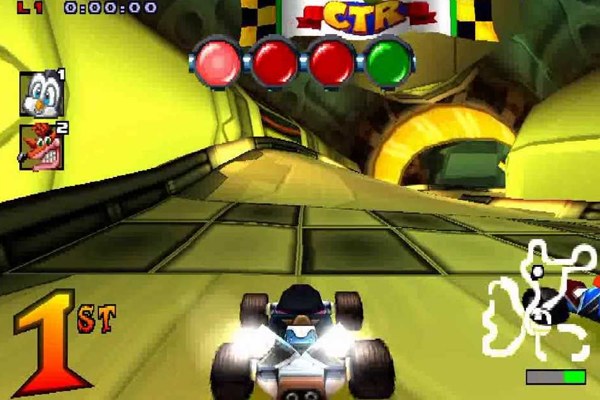
It may have been a direct response to the roaring success of Mario Kart 64 and Diddy Kong Racing on the N64, but Crash Team Racing was far more than just an easy cash-in on the kart-racing video game trend of the time. Naughty Dog's last ever Crash game brought together the wacky, colourful characters they'd created throughout the Crash Bandicoot series in a zany, charming kart racer that was a worthy - if under-appreciated - rival to its N64 peers. The xylophone-heavy soundtrack, the eclectic courses spanning from ancient ruins to techy science labs, and that trademark visual style with echoes of Tom Ruegger cartoons like Tazmanian Devil and Pinky and the Brain all combined for an awesomely playable package celebrating a franchise that was a mere three years old. Pay no heed to N64 fanboys who claim that the N64 ruled on the kart racing front. CTR's environments made Mario Kart look bleak by comparison, and its pace felt far more dynamic than anything Diddy Kong could come up with. Crash's wacky racing was up there with the best of 'em.

11. ISS Pro Evolution 2

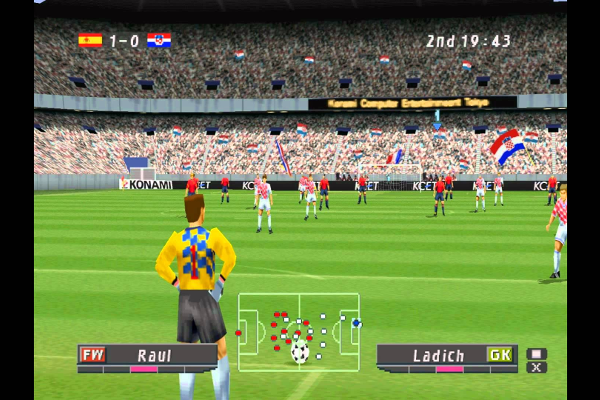
You've just split the defensive line as Michael Owen after you embody Paul Scholes to thread a perfect through ball between the two centre-backs. It's just you and the goalkeeper now in the dying moments of the match. You're sprinting with the ball at first, but then remind yourself to keep cool and slow down so you can pick your shot. The goalie starts closing you down, you do a little feint, catching the keeper off-balance, then dink the ball into the net over his shoulder. Moments like this (minus Owen and Scholes) are commonplace in the footy games of today, but it's with the Pro Evo PS1 series that the truly realistic football game was born. This sequel was more of the same but with more licenses, more skills to pull off like the aforementioned chip shot, and a general tightening of the game mechanics. It may not have been a huge improvement on its predecessor, but that was fine because the extent to which it realised the beautiful game was still unbelievable at the time. As is often the case with football games, ISS Pro Evo 2 flourished in multiplayer, as you and a few friends could compete in two-on-two matches, or take your national team on the road to World Cup glory. That first World Cup multiplayer win in this game no doubt remains among many gamers' fondest memories. Where prior football video games were good fun, it's only ISS Pro Evo that captured the spirit of football, turfing the pitch for the refined footy games of today.

10. Ape Escape

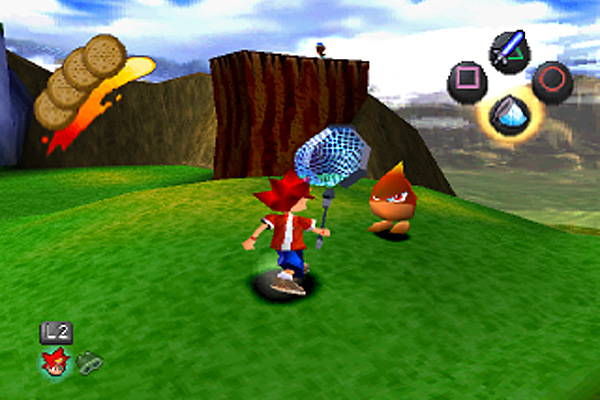
Why are more people not talking about Ape Escape in conversations about the greatest PS1 games ever? One of the first titles to use the innovative Dual Shock controller, Ape Escape tasked you with running around gorgeous 3D environments and using an assortment of gadgets to capture a bunch of mind-controlled that have been sent back in time to rewrite history in favour of the apes. On the face of things, it looks like a pretty standard 3D platformer, as you explore a colourful range of brightly themed worlds in search of the mischievous monkeys, while evading the other indigenous creatures and nasties that populate the levels. Ape Escape may have had an advantage over its PS1 peers thanks to Dual Shock support, but it was also a brilliantly creative and unique platformer in its own right, with a great sense of humour, plenty of unlockables (such as a completely unexpected skiing mini-game), and terrible voice-acting - which we all love, right?

9. Fear Effect

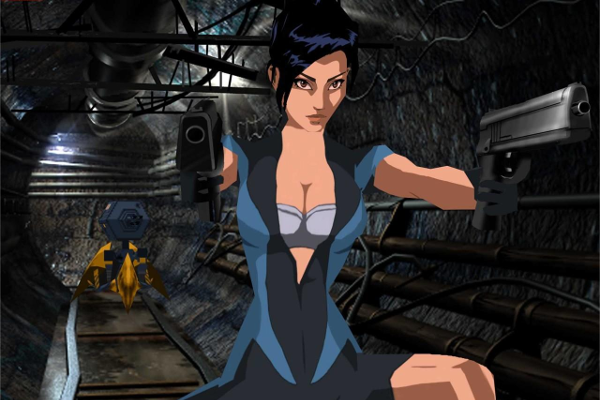
Fear Effect is a beautifully drawn cel-shaded action game that takes you from the streets of Hong Kong right through to the bowels of hell. With its fixed angles and pre-rendered backgrounds, it does the 'survival horror' thing that was so popular at the time, though the gameplay is integrated with story and cut-scenes much better than most of its peers. Throughout the game, you control three likeable, well-written characters, blasting your way with dual pistols through enemies that span the gamut from gangsters, to zombies, right through to high-tech aircraft. By today's standards, it looks and plays much better than many of its contemporaries. Even though the backgrounds are pre-rendered, they're alive with additional lighting effects, such as beams of light scanning the skies over dystopian cities, mist rising from ventiliation shafts, and billboards flickering on background buildings. The game was - and still kind of is - visually jaw-dropping, and the witty writing and cinematics (which looked great without relying on FMV) make it a joy to play through.

8. Final Fantasy IX

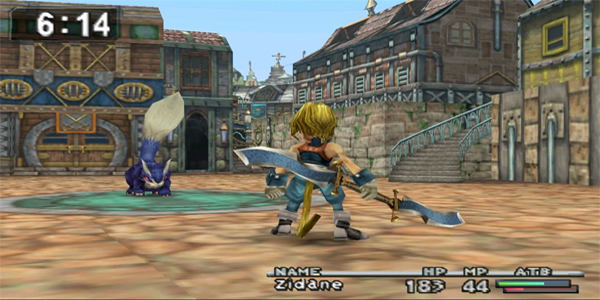
The ambition of Final Fantasy IX to fuse together all the things that people loved about the series up to that point was a lofty one, and there are still plenty of people who question whether it really achieved that. But whatever the case, at the best of times this game's ambition shines through in its stunning storyline moments, jaw-dropping cut-scenes and fantastic soundtrack. Final Fantasy feels first and foremost like a love story between rakish protagonist Zidane Tribal and the Princess Garnet, who he initially kidnaps but soon dedicates his life to protecting against a world-threatening evil. It's arguably the best-written game in the series, and while it does away with some of the more daring themes of its predecessors, it's filled with humour and some powerful moments (the image of Alexander's giant wings emerging from behind Alexandria Castle is one that will stick with us forever) Aside from the addition of an extra party member during battles and a return to the steampunky fantasy world after the futuristic vibes of VII and VIII, Final Fantasy IX plays things safe and doesn't try doing anything too fancy. Instead, it focused on polishing the things that VII and VIII introduced, making it easily the best-looking, best presented and most refined Final Fantasy game of the PS1 era. A worthy swansong for both the PS1 generation of Final Fantasy games, and the console itself.

7. Oddworld: Abe's Exoddus

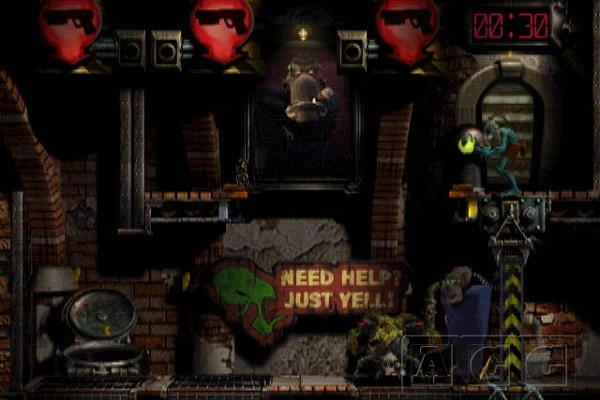
Some games entrench themselves in our memories for the impact of their incredibly imagined world designs more than their actual gameplay, as is the case with the Oddworld series. And that's more a compliment for Oddworld's atmosphere than a sleight on its quirky platforming gameplay, which focuses on puzzle-solving, communication with your fellow Mudokons, and cunning rather than direct combat. Abe's Exoddus sees you reprise the role of one of gaming's ugliest yet also most endearing protagonists, the stitch-mouthed Mudokon Abe, who is a hero to his race after the events of the first game, and must head out to save more of his fellow people from enslavement by the evil Glukkons. Exoddus is a tough, sometimes frustrating, game, but its presentation and off-the-wall gameplay mechanics encourage you to keep pushing forward to see more of it. As you traverse the levels, each screen features a unique puzzle for you to solve, whether it's luring a Glukkon into a Meat Grinder, telepathically taking control of them to kill other Glukkons, or using the voice commands to entice enslaved Mudokons to follow you to safety (if all else fails, give them a slap). Putting a single foot wrong will lead to a quick, brutal death for Abe, or for those you're trying to rescue - after which the game continues, leaving you with a sickening feeling of guilt and failure. Like its predecessor, Exoddus was unafraid to be different, making it one of the all-round cleverest games on the PS1.

6. Silent Hill

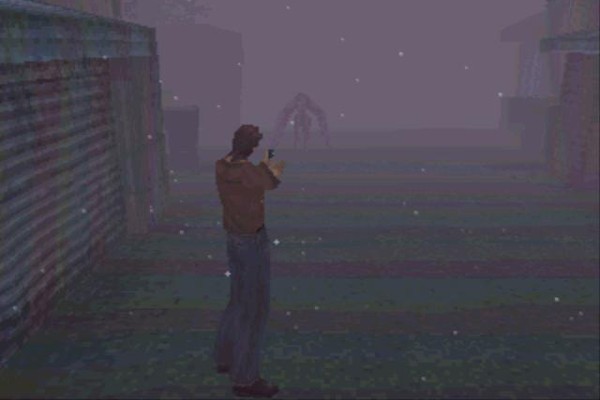
It's a testament to the incredible efforts of Konami's development team that rewatching videos of the original Silent Hill today can still give us the willies. From the eerie, organic musical score of Akira Yamaoka, to that all-invasive fog effect and grainy filter - which were applied due to the technical limitations of the PS1 but add to the sense of claustraphobia pervading the game - Silent Hill is a perfect harmony of brooding horror. While Resident Evil may have been mechanically better (which says a lot about Silent Hill's dreadfully clunky combat) and offered more carnal horror thrills, Silent Hill stuck to delivering spine-tingling dread; you felt genuinely uncomfortable as you wandered through the rotten, forlorn halls of a school building, or as you went deeper and deeper into that darkening alley in the legendary intro sequence, with the wheelchair... and the children... It's just too harrowing to recall... The gameplay may not have aged well, but Silent Hill's atmosphere endures to this day, and should forever be referred back to as a shining example of horror game design with limited technological resources. For the first time, gamers felt terrified on a deep, cinematic level, as the Silent Hill raised the bar for games' potential to mess with our emotions.

5. Crash Bandicoot (Trilogy)

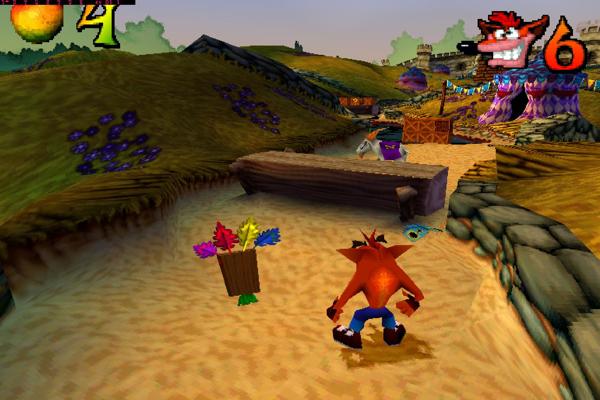
What a way to announce a new generation of console gaming than with a platformer that kept all the fundamentals that defined the genre beforehand; fun themed worlds, constant forward-momentum through levels, elaborate verticality - but bringing it all roaring into the third dimension. Suddenly, we were moving into the screen rather than from left to right, and Crash made this experience felt immediately familiar yet also breathtakingly new. While gameplay-wise the Crash trilogy didn't really evolve substantially as it progressed (aside from the inclusion of a couple of branching paths and fancy new attacks), its linear style gave it a unique identity that hasn't really been succeeded by anything else. In that sense, the game's stood the test of time better than its more open rivals, which feel rudimentary when compared to the open-world platformers of today. Within just a few short years and a trio of games, Crash had embedded itself in gamers' memories as the quintessential PlayStation platformer. These games were cool, concise and dynamic, as you span and bounced through levels that offered you the simple, joyous challenge of overcoming whatever silly obstacles were in your path. Such gameplay has helped Crash remain immortally playable to this day.

4. Castlevania: Symphony Of The Night
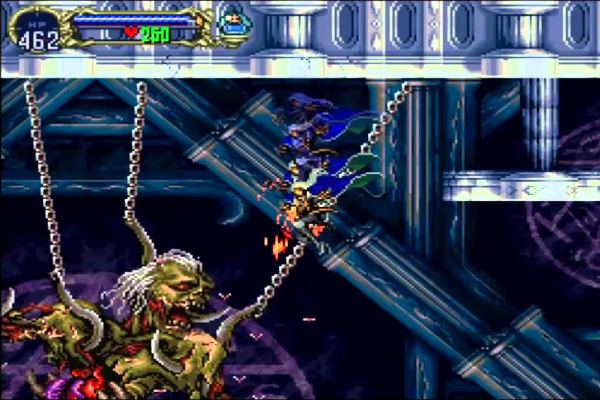
In the PlayStation's heyday, for a game to completely eschew all 3D polygonal graphics in favour of a fully pixellated 2D look was seen as a maverick - even foolhardy - move. 3D undisputably seemed like the future, so why make a throwback to what at the time seemed like a bygone era? But looking back today, pixels helped the game feel just aas good today as it did back then. Pixels alone, of course, wouldn't be enough to cement Symphony of the Night as a classic. You can put that down to its gruelly 2D platforming gameplay and charmingly gawdy character. It was campier and more eccentric than its predecessors, with delightfully kitsch Gothic environments, and a soundtrack that ranged from 'spoooooky' choral singing to twangy Goth Rock numbers.. Despite its new look, Symphony held onto the notoriously tough gameplay that brought its predecessors to fame, punishing mistakes but rewarding composure and skill with its pinpoint mechanics. Alongside Alucard's trademark whip, you can use a variety of weapons such as swords, bombs and gauntlets to take on the diverse enemies - which range from your classic witches-on-broomsticks, to menacing bosses such as the brilliantly designed Beelzebub (pictured). Symphony of the Night proved that a 2D game could be just as riveting and complex as a 3D one, and it's thanks to timeless games like this that we've seen a resurgence of Metroidvania-style 2D platformers in recent years.

3. Final Fantasy VII

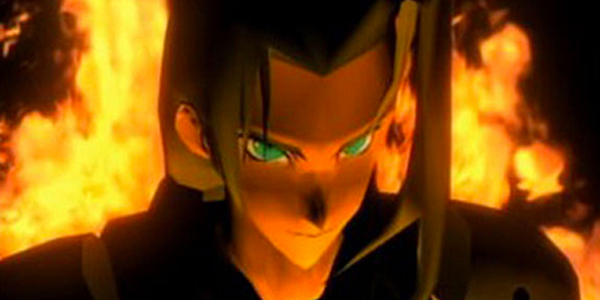
Is Final Fantasy VII the greatest game ever made? Taking into account the significant jump the game had made on anything before it, in terms of storytelling, presentation, graphics and gameplay, it has a strong case. The first 3D entry in the much-loved Final Fantasy series redefined gaming, and the things we thought possible in the medium. Rather than sticking to the familiar high-fantasy setting of its predecessors, Final Fantasy VII took us to the high-tech planet of Gaia - a world crippled by exploitative corporations, but filled with different cultures, larger-than-life characters and distinct locations varying from ski resorts to medieval towns. The gorgeous, almost dream-like settings were the perfect backdrop for a story that took us on an emotionally-involving journey like nothing we'd seen before, giving many fledgling gamers playing this back in the 90s their first teary moment ever caused by a game (you know which...). Many Final Fantasy fans see VII as the pinnacle of the series, and Square Enix has finally responded to calls for a remake by announcing last year that it was inbound for the PlayStation 4. But with the remake seemingly having a more action-oriented, real-time focus, it'll have a hard time racapturing the magic of the original.

2. Resident Evil 2

The first Resident Evil brought a new kind of horror to video games. It was tense, terrifying and atmospheric, combining fixed camera angles and pretty pre-rendered backgrounds with 3D character models to evoke a fantastic zombie-horror atmosphere. But it was Resident Evil 2 that perfected the formula, and it's safe to say that no successive game in the series has been as successful in delivering a true survival-horror experience. Resi 2 may have been more action-oriented than something like Silent Hill, but it was a game in which every bullet counted, forcing you to consider whether you want take out a room full of zombies, or try to weave around them, knowing that there's only a finite amount of ammo in the game world. The ruined Raccoon City setting was also one of the first times we played a horror game that ventured beyond the cliched haunted house.The horror was in the streets, in police stations, and in sewage plants. The environments felt more varied and real than ever before, thanks in part to the excellent pre-rendering job done on them. Sure, you can criticise the sclerotic tank controls and obscure puzzles, but these didn't detract from making Resident Evil 2 the most complete survival horror package of its time - if not ever.

1. Metal Gear Solid

There was never any question about it. Pretty much the first thing that was put down when conceiving this list were those three big words; words that are completely nonsensical to the average person on the street, but to gamers evoke visions of memorable boss fights, strangely convoluted yet endlessly rewarding storylines and a unique gameplay style that helped mould an entire genre. Metal Gear Solid was the start of cinematic gaming. While barely a year earlier Final Fantasy VII already took video game storytelling and presentation to new heights, Metal Gear Solid went a step further and felt like it could've been a full-blown Hollywood movie. The drama and intensity of Solid Snake's first outing was expertly interwoven throughout every aspect of the game. The codec conversations, the cut-scenes and the brilliantly designed gameplay itself all felt like part of one seamless creation, creating something that was far more than just the sum of its already impeccable parts. On a purely gameplay level, MGS was revolutionary. Evasion was essential, guards responded to the sounds of knocking and footsteps and cameras constantly looked out for anything suspicious. It's here that the stealth genre was popularised, and that games began to be acknowledged as a valuable artistic and storytelling medium. MGS is one of the biggest assets to the games industry's development, and indisputably the best PS1 game of all time. Or is it? Which PS1 classics are closest to your heart? Let us know in the comments, or if you want your opinions read by millions of people each month, have a go at writing for WhatCulture yourself!

Contributor
Contributor

Gamer, Researcher of strange things. I'm a writer-editor hybrid whose writings on video games, technology and movies can be found across the internet. I've even ventured into the realm of current affairs on occasion but, unable to face reality, have retreated into expatiating on things on screens instead.