20 Mind-Blowing Gaming Facts You Probably Never Knew
Prepare to be astonished.
 Kojima ProductionsOf all the mediums we rely on for our entertainment and emotional nourishment, gaming is without question the most diverse and exciting: while we pretty much know what we're getting with a book, song or a movie these days, gaming continues to evolve in unpredictable ways, and we can't wait to see what the future serves up. As the eighth gaming generation slowly begins to gain traction with the Xbox One, PS4 and Wii U finally starting to release killer titles, what better time to comb through the annals of gaming history and discover some mind-melting facts even the most hardcore gamers typically don't know about? We've got peculiar omissions in popular games, the origins of classic video game characters revealed, original designs that were (thankfully) thrown out, awesome cameos, ridiculous easter eggs and practically everything you could think of in-between. If there's one thing the gaming medium does more than any other, it's surprise us, and here we've come up with 20 bizarre, hilarious and astounding facts that summarise every good and bad thing about being a gamer. Got any of your own fascinating tidbits that we didn't catch? Which facts surprised you the most? Let us know in the comments below!
20. The Creator Of Tetris Didn't Earn Royalties From It Until 1996
 Alexey PajitnovTetris was created in 1984 by Russian programming prodigy Alexey Pajitnov, yet because he conceived it while working at the Academy of Science of the USSR, the rights belonged to the state of Russia, and as such, Pajitnov didn't see a single cent of residual revenue from the game throughout the 1980s, even as the game dominated the home computer and arcade markets. It wasn't until 12 years later in 1996 that the rights finally reverted to Pajitnov, at which point he was able to found The Tetris Company and began hauling legal a**, filing copyright notices left, right and center, and ensuring himself a massive income for the rest of his natural life. We can't imagine Pajitnov is too bitter about those 12 years: after all, considering how Tetris continues to be one of the most popular video games in history, him, his children and his children's children are no doubt minted forever more.
19. The Fallout & Elder Scrolls Games Don't Have Any Climbable Ladders
 Bethesda Game StudiosHave you ever noticed how Bethesda's flagship franchises Fallout and The Elder Scrolls don't feature ladders you can climb? For all of the immersion their sprawling, epic worlds create, there's nary a fully functional ladder to be found, and why is this exactly? A few years back, Bethesda's director-producer Todd Howard explained it away as a technical issue: "One day, we tried to figure out why we wanted ladders so bad because we don't really need them...It just felt like we're game development p***ies because we can't do ladders." Apparently, introducing ladders that could be climbed caused AI problems, and so they were left out. Still, considering how basic a function it seems, it's pretty amazing that developers of Bethesda's caliber couldn't make it work, especially when taking into account the complexity of the game as a whole. Playing these games will never be the same again...
18. Mario Is Named After The Landlord Of Nintendo America's First Office
 NintendoEver wonder where the name of Nintendo's greatest mascot came from? Did the company just pick the stereotypical Italian name out of a hat or what? The answer lies in Mario Segale, the landlord of Nintendo's first American office in the early 1980s, and after he became disgruntled about their failure to make rent payments on time, Nintendo of America's President at the time, Minoru Arakawa, subsequently decided to rename Donkey Kong's protagonist from Jumpman to Mario. As for Segale? He has mostly distanced himself from the association, though in an interview did hilariously declare that, "You might say Im still waiting for my royalty checks." In 2010, Kotaku discovered that the now-elderly Segale, rather than mooch off his potential fame, is working hard as a property developer in Washington. Still, whether he likes it or not, his grandest legacy is destined to be known as part of the inspiration behind one of the most beloved and lucrative pop-culture creations in history.
17. Lawsuits Against Grand Theft Auto Have Totaled Over $1 Billion
 Rockstar GamesWith its enormous popularity and controversial content, the Grand Theft Auto franchise is an easy target for enterprising conservative lawyers to take out their anal-retentive frustrations, attempting to sue the gaming giant into oblivion for a number of apparent "offences" mostly related to taste, decency, the influence the game purportedly has on society, and the accessibility of the game to minors. Jack Thompson's bone-headed crusade to get the series banned is surely the most highly-publicised stand made against the games, though the various litigious movements against GTA have totaled an asking price of over $1 billion, which just so happens to be the amount that the latest game, Grand Theft Auto V, made within the first three days of its release. Of course, these suits are usually frivolous and idiotic enough that they're easily dismissed, though just yesterday, news broke that Lindsay Lohan will be suing Rockstar for reportedly using her likeness for the character Lacey Jonas in GTA V. Jonas is a vapid, debauched actress in the game, and while her character is obviously a parody of Lohan and people like her, the visual likeness is not substantial enough to warrant a suit. As for anything else? It's safely covered under two beautiful words: fair use.
16. Gordon Freeman Was Originally A Ginger, Bearded Dude Nicknamed Ivan The Space Biker
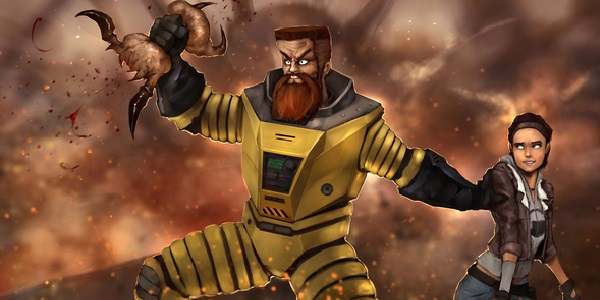 ValveBelieve it or not, the bespectacled, goatee-clad nerd we know as Gordon Freeman was not how the character was originally designed. Rather, his first character model looked more like he belonged in Road Rash than Half-Life: with his flat ginger hair, large beard, distended stomach and demented eyes, he better resembles a mental hospital outpatient or a homeless man than an esteemed theoretical physicist. Rather aptly, the design has since been affectionately nicknamed "Ivan the Space Biker". Imagine if Half-Life had been released with Ivan as the protagonist instead of Gordon: would it have ever caught on in the same way as it did? Though the gameplay would've gone virtually unchanged (considering that we never see Gordon throughout the game), seeing that fat, hairy biker-looking dude on the front cover just wouldn't be as appealing as the down-to-Earth nerd we ended up with. A decision for the best, then.
15. Play Metal Gear Solid With A Mono TV And You'll Have A Bad Time
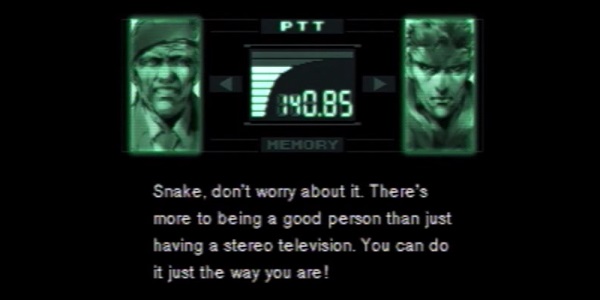 KonamiThe Metal Gear Solid franchise is full of brilliant, often hilarious easter eggs, and one of the best is one that practically nobody talks about. If the player changes the game's sound from stereo to mono and calls Colonel Campbell twice just as Snake prepares to battle Liquid's Hind D helicopter, it will trigger an amusing conversation as Campbell explains that the player should be able to tell where the Hind is by the sound of the chopper's rotor blades. Campbell then realises you're using mono and declares, "Huh? Snake, you're not using a stereo TV!?", and Mei Ling interjects to declare, "It can't be!" After Naomi also confers with the pair, Colonel concludes with the hilariously patronising remark, "There's more to being a good person than just having a stereo television. You can do it just the way you are!" Surreal little touches like this are what makes the MGS franchise what it is, and without them, it just wouldn't be a Hideo Kojima game...
14. Michael Jackson Composed Most Of The Music For Sonic 3
 SegaFor years Internet investigators have claimed that Michael Jackson worked as a composer on Sonic 3, kick-started in part after Sega Technical Institute director Roger Hector claimed in 2005 that Jackson did initially work on scoring the game, though dropped out after the 1993 child abuse allegations against him came to light. Examinations of the chord progressions in numerous Sonic 3 songs appear to resemble songs that Jackson himself later released, namely the game's ending theme's likeness to Jackson's Stranger in Moscow. As if that wasn't enough, in 2009 Jackson's tour keyboardist Brad Buxer went on the record that Jackson worked on the game, though dropped out after finding himself dissatisfied with the Mega Drive's ability to replicate his arrangements. Jackson did, however, allow the songs to remain in the game, while choosing to go uncredited, and this was apparently completely unrelated to the scandals surrounding him at the time. While investigating the story last year, GameTrailers spoke to an anonymous source who also confirmed these claims.
13. Minecraft Is Part Of The School Curriculum In Stockholm
 MojangDid we ever think we'd see the day when video games would become part of the school curriculum? Probably not, and alas, it's all that much sweeter that those lovely Swedes in Stockholm decided to make sandbox indie game Minecraft part of their syllabus for 13-year-old students. So, what's the reasoning behind it? A teacher at the school claimed that, Its their world and they enjoy it...They learn about city planning, environmental issues, getting things done, and even how to plan for the future." The school even went so far as to not just encourage playing of the game, but they made it compulsory, and despite an uproar from some parents, the piloted scheme apparently went off with few hitches, and may well be expanded to other age groups in the future. Now, if only they allowed kids to play even better games during "learning" time. What about a round of Grand Theft Auto V after lunch to learn about the importance of heist planning? No?
12. Chinese Prisoners Are Forced To Farm World Of Warcraft Gold
 BlizzardSeeing the government-run education sector make use of games is one thing, but what about the penal system? In China, some prisoners are reportedly forced to work in tough labour camps during the day, and during their "downtime" periods, will then be additionally coerced into mining gold from the mega-popular MMO World of Warcraft, which prison guards would then trade for real currency. In an interview with The Guardian, one of the former worker drones claimed that, "Prison bosses made more money forcing inmates to play games than they do forcing people to do manual labour...There were 300 prisoners forced to play games. We worked 12-hour shifts in the camp. I heard them say they could earn 5,000-6,000rmb [£470-570] a day." Over the years, China has become a notorious hot-bed for the trading of virtual currencies such as this, and with up to 100,000 Chinese citizens working as gold farmers full-time, it's clearly a lucrative business, especially if you can use incarcerated individuals who may well have the perception that they have no right of refusal. Of all the corrupt schemes we expected to hear about in Chinese prisons, this certainly wasn't one of them...
11. Simlish Is A Combination Of Ukrainian, French, Latin, Finnish, Icelandic, English, Fijian, Cebuano, and Tagalog
 MaxisSimlish is EA's fictional gibberish language created for their line of Sim games and most commonly associated with their blockbuster franchise The Sims, introduced by creator Will Wright who suspected that using actual English would prove repetitive and irritating to gamers (and he's almost certainly right). Though to the untrained ear Simlish appears to be nothing but pure gobbledygook, it is actually rooted in fragmented aspects of a whole host of languages, such as Ukrainian, French, Latin, Finnish, Icelandic, English, Fijian, Cebuano, and Tagalog. Of course, opting for a nonsense language proved to be a highly savvy move for the franchise, as it's not just one of its most recognisable aspects, but it also allows players to project their own thoughts and interpretations onto the sounds they hear, combined with the actions of each Sim. Still, we just assumed it was some drunk guy bleating into a microphone, rather than a halfway-considered mish-mash of several very real languages. More the fool us...
10. Sonic Can't Swim Because A Programmer (Incorrectly) Thought Hedgehogs Can't Swim
 SegaIn fairness, much like Sega, we assumed that hedgehogs can't swim, so we totally understand why they didn't bother conducting research and just assumed it to be gospel. In a peculiar 2009 interview with the original game's lead programmer, Yuji Naka, he confessed that he simply assumed that hedgehogs couldn't swim, and that's the reason why Sonic can't in the games. However, in the words of Naka's translator, "Recently he saw a photograph in Germany of a hedgehog swimming, so that isn't quite accurate! Apparently hedgehogs can swim, but they can't climb out of water." Still, we can't just blame Naka: presumably nobody on the development team attempted to correct him during the game's production, nor anybody in the intervening years between Sonic's release and this 2009 interview. Even if he'd known, though, it probably wouldn't change the fact we'd still have to put up with that terrifying "your a** is about to drown" music in the Labyrinth and Aquatic Ruins Zones. Even now the mere thought of that alert jingle makes our hairs stand up on end...
9. Modern Warfare 2's "No Russian" Mission Is Excluded in Russia, Heavily Modified in Japan & Germany
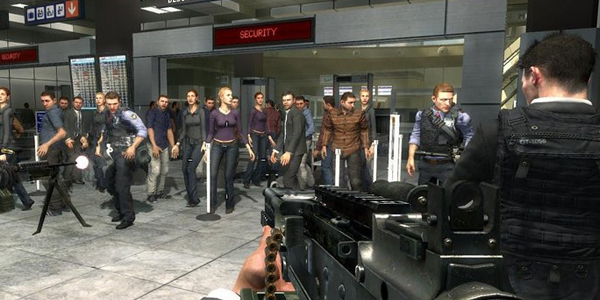 Infinity WardOne of the most controversial sections of any video game in recent history is the "No Russian" mission from Call of Duty: Modern Warfare 2, which sees the player taking part in a massacre of Zakhaev International Airport as an undercover member of Vladimir Makarov's terrorist outfit. The sequence sees Makarov's men mow down scores of civilians as they stalk through the airport, though the game does offer the player two outs: a) they can choose to skip the mission, and b) they don't have to fire a single round themselves, and can simply watch the carnage rather than participate in it. The harrowing level is completely excised from the Russian version of the game for obvious sensitivity reasons, while it has been heavily modified in the Japanese and German versions of the game, whereby killing even a single civilian will result in a fail, along with a "You killed a civilian!" prompt. Though the mission is extremely provocative, doesn't neutering it so badly make it pretty pointless? It removes the player's choice, and as such they should've probably just cut it entirely from the Japanese and German versions if that was their attitude.
8. Buzz Aldrin Has A Voice Cameo At The End Of Mass Effect 3
 BioWareNow, here's something to make your day. Mass Effect 3's climax may be regarded as a crushing disappointment to most players, but there's one thing it got right: the casting of the second person to ever walk on the moon, Buzz Aldrin, in a small but significant role at the game's finale. If players opt to have the game end with the Crucible being activated, we see an elderly male (called the Stargazer) telling the tale of "The Shepard" to a young boy, suggesting that despite a clear passage of time, Shepard's legacy has endured. It's not an immediately obvious cameo to anyone but the most devoted NASA nut, but considering Aldrin's immortal status in the realm of science and space, it's a fitting role, and one that Aldrin delivers beautifully despite the ending's other misgivings.
7. Halo Was Originally A Real-Time Strategy Game
 Ensemble StudiosBelieve it or not, in its early stages of development, Halo was planned to be released as a Real-Time Strategy game for the Mac and PC. Granted, the series eventually went that route in 2009 anyway with the acclaimed RTS Halo Wars, though we for one can't imagine that the series would necessarily have taken off if it started out as an RTS: the genre's a notoriously difficult nut to crack, and the series would never have garnered the popularity that it managed as an FPS. It's easy to imagine that the original game would probably have ended up a lot like Halo Wars, so in a sense, Microsoft got to have their cake and eat it, setting Bungie up with the big-hitters and then farming out the RTS to Ensemble Studios.
6. In Metal Gear Solid 4's Final Boss Fight, Ocelot Will Kiss You If You Don't Fight Back
 Kojima ProductionsThe superb Metal Gear Solid: Guns of the Patritots is a Hideo Kojima game, so of course, it's got to have a wildly eccentric sense of humour. During the epic final battle between Old Snake and Liquid Ocelot, players are able to allow Liquid to give them a friendly smooch on the cheek. How is it done? The battle goes through three "phases", each reflecting one of the first three games, and in the third, Snake Eater-focused phase, if the player doesn't fight back against Liquid, they will end up in a headlock, get a kiss, and receive the "You're Pretty Good!" trophy. If the stress of the awesome final fight is getting to you, it's a great way to relieve some tension and inject a little levity into the situation, and of course, it's completely in step with Kojima's idiosyncratic and very, very Japanese sense of humour.
5. The Legend Of Zelda Exists Because Shigeru Miyamoto Had Careless Parents
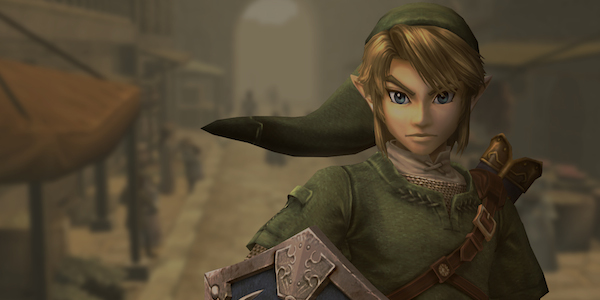 NintendoA provocative title, perhaps, but we'll let you judge just how good Shigeru Miyamoto's parents were for yourselves. In a revealing interview with The New Yorker, the genius behind The Legend of Zelda franchise confessed that he'd often wander off on his own in his rural hometown of Sonobe as a child. Tell us if the following snippet sounds familiar to you. "One day, when he was seven or eight, he came across a hole in the ground. He peered inside and saw nothing but darkness. He came back the next day with a lantern and shimmied through the hole and found himself in a small cavern. He could see that passageways led to other chambers. Over the summer, he kept returning to the cave to marvel at the dance of the shadows on the walls." The visual of a young Shiggy going off on little adventures of his own is undeniably delightful, and we're glad he transitioned into adulthood unscathed, though basically, we're left to deduce that his parents were probably pretty irresponsible in allowing such a young kid to saunter off on their own. Still, had Shiggy not fallen in love with this cave as a child, perhaps The Legend of Zelda wouldn't exist, or at least not in the form that we know it. Yay for bad parenting, right?
4. Donkey Kong Was Originally A Popeye Game
 Nintendo & King Features SyndicateDonkey Kong is the game that started it all: it introduced us to both its title character and lovable, rotund Italian plumber Mario, kick-starting a wildly lucrative franchise in its stead. However, in a 2009 interview, the game's creator Shigeru Miyamoto confirmed that Donkey Kong started life as a Popeye game, amazingly enough. Shiggy said, "I sketched out a few ideas for games using Popeye...But while I can't recall exactly why it was, we were unable to use Popeye in . It really felt like the ladder had been pulled out from under us, so to speak." Still, they came up with Donkey Kong and Mario, and all ended up right with the world. Would the game have been any worse had it been Popeye-related? Gameplay-wise probably not, but we simply cannot fathom living in a world in which Mario and DK don't exist.
3. Devil May Cry Started Out As Resident Evil 4
 CapcomYou may be well aware of the arduous development cycle of the eventually ground-breaking Resident Evil 4: it went through several incarnations before series creator Shinji Mikami finally intervened and got to work on the version that was eventually released. What's less-commonly known is that Capcom's frenetic action game Devil May Cry was in fact originally created as Resident Evil 4, but due to its sharp artistic departure from the franchise, was eventually re-purposed as a new flagship franchise which, of course, went on to enjoy enormous success. The game's developers struggled to make their hyper-cool, somewhat tongue-in-cheek tone fit in with the serious-mindedness of the Resident Evil franchise, and with some changes here and there (such as changing the protagonist's name from Tony to Dante), Mikami eventually convinced them to convert it into an entirely new IP, again highlighting Mikaki's superb knack for shrewd creative decisions. With Capcom's history of scrapping numerous half-finished Resident Evil games, we're glad that Mikami saw enough promise in it not to deprive gamers of it...
2. Goldeneye 007's Multiplayer Mode Was Made In Just 6 Weeks
 RareHold onto your hats. Despite being undeniably dated, Goldeneye 007 still stands tall as one of the greatest console FPS games ever made, heralded largely for its insanely fun 4-player, split screen multiplayer mode. Surely it took them months of designing and quality testing to perfect it, right? Nope. The game's composer Grant Kirkhope said of the multiplayer that, "The multiplayer was put in literally in the last six weeks, it was right at the very very end and no one wanted it. Rare didnt want it, but the team got it going and put it in the game at the end and said "look, it is good! Look at this!"...But no one wanted it when they suggested it, they said it was a stupid idea." Six...weeks? In little over a month, the game went from being an impressive movie adaptation to an impressive movie adaptation with one of the greatest multiplayer games of the 1990s and beyond. That it was cobbled together so fast and isn't rife with bugs is nothing short of a miracle, and a testament to how awesome Rare were as a studio...at least before Microsoft bought them...
1. Silent Hill Is Set In The Same World As The Movie Kindergarten Cop
 Universal Pictures & KonamiAnd we conclude our list with one of the most weird-a** cases of intertextuality in the history of pop-culture. We've all been scared out of our wits playing Konami's masterful survival horror Silent Hill, and one of the creepier sections is the early encounter in Midwich Elementary School, as we desperately search for Harry's missing daughter Cheryl. However, someone, somewhere, somehow noticed that the school is modeled exactly after the school from the classic Arnold Schwarzenegger movie Kindergarten Cop. In addition to this, various fliers and signs are exactly the same as they appear in the movie, to the extent that it's really, really damn creepy. This can only mean one thing, right? Kindergarten Cop isn't set in Astoria, Oregon: it's set in Silent freaking Hill. Seriously, though, what possessed the game's developers to reference the movie in such an oblique way, but also in a way that required so much developmental effort? Sure, Konami probably had to use a school for reference purposes anyway, but wouldn't it have been easier for the Japanese dev team to just get someone back in the U.S. to scout a real American elementary school rather than use screen grabs from a movie? Either way, we're glad this piece of baffling trivia exists, and frankly, more than a little weirded out by it. Did we miss any of your favourite mind-blowing gaming facts? Let us know in the comments!