20 Nintendo Games You Must Play Before You Die
Mario, Zelda, Samus and MANY more.

Few companies can claim to have defined quite as many childhoods as Nintendo, the firm that put home consoles on the map and created some of the most cherished and enduring video game characters of all time.
The Big N has come a long way since it was founded as a playing card brand back in 1889. It hit the stratosphere almost a century later after breaking into consumer electronics and blazing a trail in the emerging field of interactive entertainment.
Early innovations such as the handheld Game & Watch and arcade classic Donkey Kong were followed by creations that changed both hardware and software as we know it. The Game Boy, NES and Super Nintendo defined their generations and the characters these machines introduced to the world remain gaming icons to this day.
Mario, Zelda, Donkey Kong and the rest of Nintendo's colourful crew have single-handedly reshaped genres over the years, clinging onto popularity after the N64 took them into 3D territory and remaining influential into the Switch era.
Even when Ninty has struggled to compete with Sony and Microsoft on the hardware front, the developer's ability to churn out world-class games that everyone should experience at least once has never diminished.
20. Super Mario Bros. 3 (NES)

After dreaming up the template for the quintessential side-scrolling platformer with the original Super Mario Bros in 1986, Nintendo perfected it when it released Super Mario Bros 3 on the NES several years later.
The company mascot's third adventure was bigger and better than its predecessors in virtually every respect. Its visuals were more colourful with a level of detail that pushed the 8-bit hardware to its limits, and many of the new features it introduced became staples of the series for generations to come.
The overworld map, the Koopalings and power-ups that grant Mario and Luigi flight capabilities made their debuts right here.
Like most core Mario games, this winning sequel hit that sweet spot between accessibility, playability and challenge; qualities which made it impossible to put down.
Super Mario Bros 3 is, in many ways, the definitive side-scrolling platformer, and although there have been countless attempts to replicate its magic over the years, the only ones that have succeeded came from Nintendo itself.
19. Zelda: Link's Awakening (Game Boy)

Nintendo has many accomplishments worth bragging about under its belt, from kickstarting the home console movement to creating the world's most recognisable gaming mascot, but cramming the Legend of Zelda formula onto a humble Game Boy cartridge deserves pride of place on that list.
The Big N pulled off that incredible feat with few concessions in 1993 when Zelda: Link's Awakening hit the handheld system, with all of the depth and sophistication of its SNES predecessor A Link to the Past, albeit in a less colourful package.
Link's Awakening was streets ahead of anything else on the Game Boy. The story was gripping, the in-game world absorbing and never once did it feel like you were playing anything less than a full-fat Zelda title.
Sure, the formula was scaled back here and there, but the concessions were so shrewd that you barely noticed them, and when the DX edition arrived on Game Boy Color in 1998, the gulf between Link's Awakening and the home console Zeldas narrowed even further.
18. Super Metroid (SNES)

After finding platforming success with Super Mario Bros and redefining the adventure game with The Legend of Zelda, Nintendo married the two approaches and created Metroid, a series that really came into its own during the 16-bit age.
Super Metroid had it all: vast levels, head-scratching puzzles, addictive side-scrolling shooting and a kickass female protagonist long before Lara Croft made them trendy.
Samus Aran was a refreshing change from the princesses in peril usually found in '90s Nintendo titles, and the world she existed in felt atmospheric and huge, taking platforming fans outside of their comfort zone.
With Super Metroid, Nintendo proved it was capable of delivering compelling female characters and platformers with more substance than the block-breaking, Goomba-stomping thrills of the Super Mario series.
17. Mario Kart 8 Deluxe (Switch)

Every gamer should take in the thrills and spills of the Mario Kart series at some point, and the definitive way to experience them is with its latest instalment, Mario Kart 8 Deluxe on Nintendo Switch.
The Wii U port is the most complete entry in the racing series, coming with a jam-packed character roster, beautifully polished graphics and shrewd gameplay tweaks which breathe new life into the existing tracks, such as the zero-gravity segments.
Mario Kart's accessible yet fiendishly addictive formula has barely evolved since the original game rolled onto the SNES in 1992, from a gameplay standpoint at least, and sticking to its guns is the secret to its success.
Whether it's Battle Mode (which was reintegrated in Mario Kart 8 Deluxe) or a vanilla race to the finish line, there are few better games to beat your friends and family at.
16. Pokemon Gold And Silver (Game Boy Color)

Nintendo has filled entire generations with a burning desire to 'catch 'em all' with its Pokemon series, and the fever hit critical mass at the turn of the Millennium when Pokemon Gold and Silver arrived on Game Boy Color.
These titles refined the formula they inherited from the original Game Boy hits and touched down when the series was at the height of its popularity. The chance to snare 100 all-new Pokemon was too tantalising for an obsessed fan base to pass up.
New features including an in-game clock that enabled players to catch a plethora different monsters by night went down a storm.
Revamped editions of Gold and Silver were released in 2009 when Nintendo remade them for the DS in the shape of Pokemon HeartGold And SoulSilver.
Not only did the new versions sport the same 3D graphics engine from Pokemon Diamond, Pearl and Platinum, they came bundled with a physical pedometer which allowed players to exercise their Pokemon by heading out for a stroll in the real world.
Features like this positioned Nintendo as one of gaming's greatest innovators, and the fact games like Pokemon Go have since exploded into the mainstream proves just how forward-thinking the developer has always been.
15. Zelda: Ocarina Of Time (N64)

Zelda: Ocarina Of Time arrived during an age when 3D gaming was in its infancy and helped the industry take great strides towards a future where it was the norm.
In many ways, the Nintendo 64's opus was a giant leap forward for interactive entertainment. From its sprawling overworld to its meticulous level design, Ocarina of Time was, and still is, a masterclass in video game development.
So many of the game's innovative features became industry standard shortly after its release in 1998, but at its heart was an epic time-hopping story set against a rich fantasy backdrop that's never anything less than a joy to revisit.
Ocarina Of Time has remained the pinnacle of the Zelda series in the eyes of many, which is quite the accomplishment considering the games it's up against.
Many of the key ingredients that make Breath of the Wild such a phenomenal experience have roots in this N64 masterpiece.
14. Super Mario 64 (N64)

The 3D gaming movement didn't begin with Super Mario 64, but the Nintendo mascot's first foray into another dimension did show the world how it was done.
After the portly plumber made his N64 debut, platforming was never the same again. Everything from the intuitive control system to the open level design set new standards for the genre and it wasn't long before they were imitated far and wide.
If you play only one 3D Mario title, make it this one; the game that started it all. Although the series, and the platforming genre in general, have evolved since, the underlying principles that made Mario 64 an instant classic are plain to see it modern greats like Super Mario Odyssey on Switch.
The fact Nintendo was able to crack the tricky 3D nut at the first time of asking is testament to its brilliance as a games developer.
13. EarthBound (SNES)

EarthBound seemed like a rare misfire for Nintendo when it was released in the US in 1995. The game was roundly ignored by the public and divided reviewers at the time, but it has since established itself as a true cult classic.
It comes as little surprise that the game was under-appreciated, since it was lightyears ahead of its time. The RPG shunned the genre's usual fantasy setting in favour of real-world backdrops. Monsters made way for stray dogs, swords were replaced by baseball bats and phonebooths served as save points.
The story followed a young boy named Nes and his friends on a journey to thwart an alien invasion in suburbia. Don't let the cute, colourful visuals fool you. There were dark, Lovecraftian themes residing at EarthBound's core.
EarthBound is one of Nintendo's most daring offerings and it's testament to the variety the firm has always offered. Quirky and original in equal measure, it flipped a genre on its head in the 1990s and still offers unique experiences by modern standards.
12. Super Mario RPG (SNES)

Mario can turn his hand to almost anything: plumbing, moonlighting as a doctor and even starring in a bona fide role-playing game.
The rotund platforming hero had that honour during the SNES' twilight years when Nintendo teamed up with Square Enix to release Super Mario RPG, a Final Fantasy-like title starring Mario and his friends.
Don't let the Mario branding fool you. This was a fully-fledged role-playing game with as much depth and complexity as Square's previous offerings. Mario became entwined in a complex plot which had him teaming up with arch-nemesis Bowser to thwart an alien invasion. New friendships were forged and rivalries borne.
Super Mario RPG is graphically superior to almost anything else on the SNES. It really put that 16-bit hardware through its paces with the kind of 3D visuals that wouldn't have looked out of place in the next hardware generation.
On top of that, Nintendo's collaboration with Square struck a balance between delighting Mario fans with its handling of the series' colourful cast, presenting them in a fresh light, and pleasing avid role-playing fans alike.
Mario RPG never made it to the UK when it was originally released, but the good folks at Nintendo have since made it available to download via the Virtual Console service and included it as one of the Super NES Classic Edition's built-in games.
11. Zelda: Breath Of The Wild (Switch)

Link finally came of age in Zelda: Breath Of The Wild. This was the moment when Nintendo ditched the series' tried and tested template and went full open world.
There's brilliance to be found in every corner of the game's rich sandbox, whether you're lost in off-the-beaten-track exploration or ticking off the story quests. Where Breath of the Wild borrows existing ideas, it polishes and perfects them. The rest of the time it's introducing players to all-new ones.
The Zelda series had already raised the bar staggeringly high, but with Breath of the Wild and its sandbox of delights, Nintendo did what was seemingly impossible by taking the franchise above and beyond.
This fresh approach was as bold as it was necessary. In a world where The Witcher 3 and Skyrim had already happened, the Big N needed to reinvent Zelda to keep it relevant, and the way it went about that was both evolution and revolution in motion.
10. Donkey Kong (NES)

No Nintendo history lesson is complete without a namedropping Donkey Kong, the arcade smash that introduced the world to two of the most iconic video game characters ever conceived.
Both the eponymous ape and Mario (under the moniker of Jumpman) made their debuts when this coin-op hit took the world by storm in the early '80s.
Donkey Kong was one of the earliest examples of a game with a storyline that unfolds on screen, and it showed the world what Nintendo was about: barrels of fun. Guiding Mario up that scaffolding is no less engaging today than it was in 1981.
The platformer came along at a time when the Big N wasn't exclusively developing for its own-brand hardware, so it appeared on multiple formats following its arcade debut. The definitive version, however, was the NES port that arrived several years later.
9. Super Smash Bros. Melee (GameCube)

One of Nintendo's greatest strengths is its ability to boil genres down to their essence, making them more fun and accessible. Mario Kart did this to the racer, and the Super Smash Bros. series saw the studio give the same treatment to the brawler.
GameCube instalment Smash Bros. Melee is the pinnacle of the series, which has been pitting Nintendo's most iconic characters against one another in no-holds-barred fights to the finish since the N64 era.
Beating the snot out of Mario with Link, or clobbering Pikachu into next week as Donkey Kong is about as satisfying as console gaming gets (especially if one of your friends was happened to be controlling the character on the receiving end of the punishment), and Melee was the definitive way to do these things.
The GameCube classic did what any good versus fighter sequel should: add tonnes and tonnes of new stuff. The way it improved on its N64 predecessor with additional characters, new gameplay modes and features still marks the biggest leap forward for the series to date.
8. Super Mario World (SNES)

Super Mario Bros. 3 was platforming perfection, but perfection can occasionally be improved upon, especially with more powerful console hardware at your disposal.
If ever there was a game that deserved to score 11/10 across the board at the time of release, it's SNES masterpiece Super Mario World. The gaming icon's 16-bit debut took everything that was great about the NES platformers and multiplied it by a mind-boggling figure.
Everything from the graphics to the sound was vastly superior, which came as no surprise considering the game was designed to showcase the capabilities of the SNES, but the vintage Mario gameplay had also been polished up to the extent that could see your face in it.
Dino-riding, spinning jumps and new power-ups were just a few of the shrewd tweaks that made an already-winning formula even better, compelling enough to keep players hooked until they'd found all of Super Mario World's 96 exits.
7. Zelda: A Link To The Past (SNES)

Any list of Nintendo's greatest accomplishments will be chock full of Zelda, and there's a good reason for that. Every one of Nintendo's consoles names one of Link's adventures among its very best games, and the SNES was no exception.
Just as it did with the Mario formula, the 16-bit hardware elevated The Legend of Zelda above and beyond its NES roots. Not only did A Link To The Past offer more depth, sophistication and colour than its forbears, it introduced many of the series tropes the future 3D games would be built around.
A Link To The Past was the pinnacle of Zelda's top-down era, and this makes it an important piece of Nintendo history, but it remains a fantastic game in its own right. Seeking out the Master Sword, warping to Dark World and finally taking down Ganon are still thrilling experiences by any standards.
Although Zelda would go on to become 3D, cinematic, and later open-world, there are many fans who swear it didn't get any better than this. And in some respects, they might have a point.
6. Metroid Prime (GameCube)

When Nintendo and Retro Studios successfully reimagined the Metroid series as a first-person shooter, it proved two things: the versatility of Samus Aran and Ninty's ability to put its own unique stamp on any genre.
There was nothing contrived about this attempt to take an existing property into radically different territory. Metroid Prime felt every inch authentic, no less atmospheric or vast than the world of Super Metroid before it.
Players were invited to step directly into the armoured suit of the heroine they had controlled from the side-on in the 16-bit era in this GameCube hit, the edgy maturity of which proved Nintendo were serious about appealing to a broader audience.
Metroid Prime went on to spawn two decent sequels and a fourth game, which is in the pipeline for the Nintendo Switch, is hotly anticipated by the fans.
5. F-Zero X (N64)

If regular old driving games aren't fast enough for your liking, Nintendo's F-Zero series is the place to turn. The SNES original put the futuristic racer on the map and its N64 sequel built on that.
F-Zero X was a 64-bit speed demon which ran faster and smoother than its predecessor. What it lacked in visual polish, it made up for in raw adrenaline and challenge.
Packed with tracks and brimming with vehicles, F-Zero X was a refreshing alternative to the endless stream of bog standard driving games that were around during the era where the PlayStation and N64 fought tooth and nail for market domination.
Sadly, the series has remained dormant since the launch of the Japan-exclusive F-Zero Climax on Game Boy Advance, but with any luck, that will change during the Switch's lifecycle.
4. Wii Sports (Wii)

Mini-game compilations are often dismissed as novelty trash, but the fact the Nintendo Wii is synonymous with one is far from a damning indictment of the console.
Wii Sports gave motion controls to the masses, and as a result brought gaming to new demographics. Entire families played tennis, baseball, bowling, golf and boxing together. Even grandparents who'd never touched a control pad in their lives could get involved, promised a smooth learning curve by the Wii's accessible interface.
Granted, it wasn't all killer content. Some of the mini-games were stronger and more balanced than others, but at a party where the alcohol was flowing freely, that didn't matter one jot.
Nintendo's objective at the time was to bring gaming to new audiences and gain a foothold in the emerging casual market. Thanks to Wii Sports, it was mission accomplished.
3. Splatoon (Wii U)
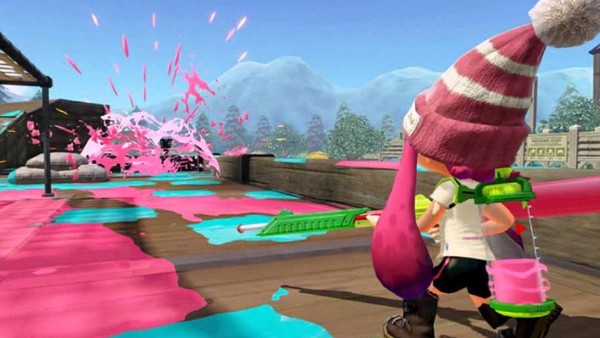
Ninty surprised everyone when it launched a team-based shooter, but Splatoon is further proof that the gaming giant is capable of reshaping any genre it chooses.
Like Mario Kart and Smash Bros, this ink-em-up is an accessible alternative to its category's usual offering. Guns and ammunition makes way for ink blasters, and harrowing war-torn backdrops are replaced by tapestries of vivid colours.
Nintendo is often criticised for leaning too heavily on its flagship franchises, but games like Splatoon prove it's capable of delivering a fresh and interesting take on existing concepts. Turf Wars mode, for instance - which has players compete to colour in as much of the map as they can within three minutes - is the kind of thing you won't find elsewhere.
Splatoon isn't perfect - the inclusion of voice chat would have made it a more complete multiplayer experience, for starters - but it's another great example of Nintendo running a tired blueprint through its colourful filters to create something unique and universally accessible.
2. Star Fox 64 (N64)
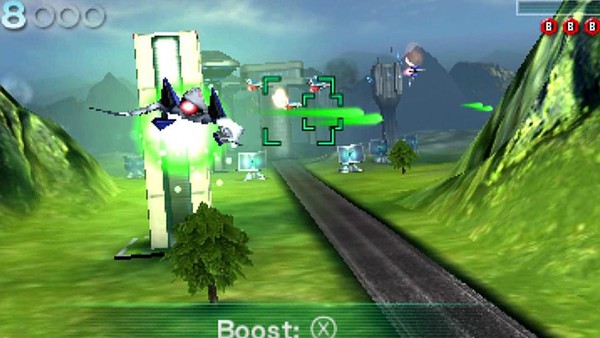
Four years after Nintendo's successful foray into space shooting and anthropomorphic animals with SNES classic Star Fox, the developer rolled out the game's long-awaited sequel for the N64.
Star Fox 64 - or Lylat Wars, as it was known in Europe - was a showcase for the 64-bit machine's capabilities. It was fast, hard hitting and boasted some of the finest 3D visuals around at the time. On top of that, it was the first game to come bundled with a Rumble Pack and was one of the few cartridge-based titles to feature full voice acting.
Granted, Star Fox 64 was a little on the easy side, but it made up for that with the amount of variety each level offered. Players had the chance to explore multiple paths, making subsequent play-thoughts a different experience.
The space fox has been on numerous adventures since this one - most recently in the lukewarmly-received Wii U title Star Fox Zero - but rarely have they lived up to the liberating blastathon that was Star Fox 64.
1. Super Mario Bros.

Super Mario Bros. is far and away one of the most important games ever released. Although Nintendo has since refined its formula for platforming success, none of the subsequent Mario games or their countless imitators would have been possible without the blueprint they inherited from the NES original.
Boiled down to its essence, this revolutionary platformer is underpinned by a design philosophy that continues to inspire developers today. It starts out by teaching the player a set of base skills and encourages them to hone them over time. New ones are drip-fed to equip Mario for the new challenges he will face in later levels.
Super Mario Bros. came along at a time when many of the most popular games were designed to cheat players out of pocket change in arcade parlours with challenges that put them at a serious disadvantage, but the Mushroom Kingdom was a place where you could test your skills. If you missed a jump there, it was on you.
From Bowser and the Koopa Troopers, to Toad and Princess Peach, many of gaming's best known characters made their debuts here, as did the legendary Mario theme tune and countless series tropes. Games don't come more influential.
That said, it's more than just a piece of gaming history. Qualities such as its masterful level design and flawless controls make Super Mario Bros. a timeless offering.