5 Reasons It’s Impossible To Make A Great Tolkien Video Game
Even the best Middle Earth games don't understand it properly...
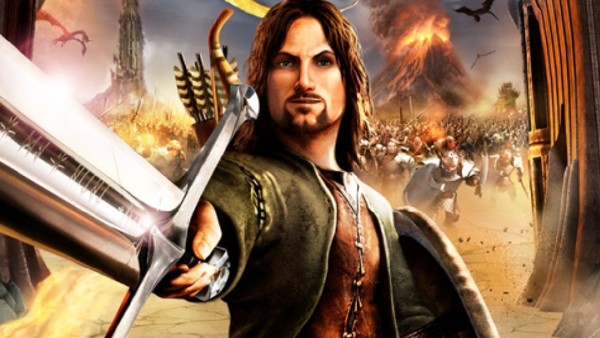
It’s been over 65 years since the Lord of the Rings was published and 19 years since the first Lord of the Rings film was released. In that time, at least 40 Tolkien video games have been released. J.R.R Tolkien’s works have been translated into action games, role-playing games, card games, and mobile free-to-play titles. And yet, so few of these games really capture the essence of Tolkien’s world.
That’s not to say there haven’t been good Tolkien games. It’s generally agreed that Return of the King, Shadow of Mordor, The Battle for Middle Earth, and The Lord of the Rings online are excellent and that list is certainly not exhaustive. But when you compare the games that have really captured the essence of, say, Star Wars - the games that have really felt like they belonged to and stayed compatible with the message of that world - to the ones that have done the same for Middle Earth… well, there’s really no comparison.
After all, where a lot of Star Wars games are widely acknowledged to have captured Star Wars’ identity and translated it into gameplay, game developers have had a much more difficult time doing the same for Tolkien. Even as Tolkien games often follow or at least neatly fill gaps in the storylines of the source material, they tend to have difficulty adapting the unique dynamics and morality of Tolkien’s world into gameplay.
There are a few key reasons why developers have had and will continue to have such a hard time doing so.
5. Adapting Tolkien Isn’t So Much About Nailing A Particular Aesthetic

Continuing the Star Wars comparison, a video game like the original two Star Wars Battlefront games are successful adaptations in part because those games nail the aesthetics of Star Wars. They don’t comment on the value of mercy or contain a whole lot of messaging about balance or anger or moral corruption, but because so much of Star Wars’ appeal lies in its aesthetics, then a game getting this right largely amounts to a good adaptation.
Before its microtransaction-related woes, the most recent Star Wars Battlefront game was praised heavily for looking and sounding like Star Wars and that, as a result, it felt like Star Wars. And that makes sense. Star Wars is remembered for its particular visual style - the semi-battered look of an X-Wing or the Shiny Vader armour - as well as its sounds - the hum of a lightsaber or John Williams’ score. These recognizable aesthetics are perhaps what those films do best and what any game hoping to be a good adaptation of them has to get right.
Lord of the Rings is somewhat different in this regard. The films have an amazing visual style, one that most Lord of the Rings games since have been keen to adapt. The ones that have done this well have allowed you to feel like you are walking around in the set of the films. However, Middle Earth’s literary origins have made nailing a particular, pre-set aesthetic less of a factor in how a Tolkien game will be received. After all, the Shadow of Mordor games, while certainly drawing from the look of Peter Jackson’s adaptation, definitely seem aesthetically different, like they exist in a slightly different universe from the films.
As we get farther and farther away from release of the films, we’re going to see games depart further and further from their particular aesthetic. That means that the success of these games as adaptations will rest less and less on a particular aesthetic in the way that Star Wars games will continue to be. Their success will rest more on capturing ideas from the source material. That is a lot more difficult to define and capture.
4. In Middle Earth, Mastery Is Bad (Or Is At Least Highly Suspect)

“He that breaks a thing to find out what it is has left the path of wisdom,” Says Gandalf to Saruman in The Fellowship of the Ring. Trying to pull something apart to completely understand it and therefore better exert your power is the domain of the baddies in The Lord of the Rings. And yet, this is normally how we play video games, isn’t it?
Video games are often about understanding and exploiting systems. Think of nearly every fantasy RPG: you want to understand how the game works so you can get just the right skills, attain just the right weapons, pick just the right enchantments, and therefore maximize your power. In essence, from a gameplay perspective, it’s best for you to figure out exactly how the game works, (mentally) pull it apart to see how you can optimize your choices going forward, and exploit these systems to get your desired result.
The thing is, this kind of mastery turns people evil in Tolkien’s world. It’s the Sarumans and the Saurons and the Morgoths who want to pull apart the world, to understand it in a masterful way, to see how they can best use its workings to exert their power on the world and accomplish their objectives.
Something nearly every hero in the Lord of the Rings has to come to terms with is that there are things they cannot understand and certain forces that they should not exploit. The particular way we usually get good at video games, mastering the game’s systems and achieving a complete understanding of the rules of the world to multiply our power, just isn’t all that compatible with what actually happens in The Lord of the Rings.
3. If You Are Dominating Others, You Are Probably Bad

People who wish to dominate others are so often the bad guys in fiction, but the idea that it is evil to exert your power over the will of others is so central to Tolkien’s mythology. This creates an interesting challenge for anyone wanting to translate these works to video game form.
We can perhaps see why this is such a challenge by looking at how the ring itself is perceived in the source material versus a video game. The ring is a dominating force. It is the central symbol of evil in The Lord of the Rings and one of its main traits is trying to dominate the will of people who wear it.
However, if you are playing a game where your goal is to get more powerful and beat your foes, the ring would be the most coveted item in the game. Such is the case in Battle for Middle Earth 2. In The Lord of the Rings, taking and using the ring is almost universally a bad thing, especially if you’re using it to empower yourself and dominate others. In this strategy game, getting the ring in a skirmish match allows you to spawn an absurdly powerful hero to use battering your enemies. The ring in the novels and film allows you to dominate others and ultimately dominates you. In games where exerting power over others is how you win, it’s hard to get that message across when using the ring would be the quickest way to victory.
Gaining dominion over others is, of course, the central game dynamic of the Shadow of Mordor series, where you literally gain dominion over the minds of your foes. And while there may be story events that show how doing so is bad, the central gameplay loop contradicts that message.
Also, think of any strategy game, where the goal is almost always to wrest control of something from foes. That’s your goal in the amazing The Third Age: Total War mod for Medieval 2: Total War. You build armies and you conquer the lands of your enemies. Throughout all of this, you are accruing power, developing your territory (which might ignite some of the source material’s rage against industrialisation), and, if you’re doing a good job, bringing more and more people and lands under your control.
The mod is fantastic, but it’s essentially pushing you, through its gameplay, to conquer and exert your own control over as much territory as possible. The methods of winning most strategy games and most games in genres amenable to a Middle Earth game set gameplay against a central tenet of the original works.
2. You Are Probably Not Enough To Win

When we play games, or at least those where there are victory and defeat conditions of some kind, our win or loss is determined by our actions. We have the power to win or lose. This is reflected in video game stories: Joel and Ellie in The Last of Us are the primary decision makers when it comes to whether humanity will be saved or not. The galaxy’s fate rests on Commander Shepard’s shoulders. It’s up to Mario to save the princess.
In Tolkien’s fiction though, our protagonists, on their own, are not enough.
Let’s look at Frodo specifically. He’s at the heart of the story of Lord of the Rings. The success or failure of the good guys basically boils down to whether or not he can destroy the ring. And he cannot. When he gets the chance to destroy it, he can’t bring himself to. He doesn’t have the will. He’s still super heroic, but his abilities alone can’t win the day. That goes for any number of these heroes. Aragorn, Gandalf, and the gang are powerful, but they’re never going to be powerful enough to defeat Sauron and his minions. That kind of flies in the face of the way we usually play games.
Think of Dark Souls as an example: you fight against incredibly hard enemies in those games, but the goal is to upgrade your character enough and become skilled enough to beat them. Ultimately, unless you quit or destroy your controller, you’ll eventually be enough to defeat whatever the game throws at you. That’s kind of the point. However, in a good adaptation of Lord of the Rings, you’d probably be forced to realize that you aren’t enough, no matter what you do.
There’s a kind of despair baked into Tolkien’s world that no video game adaptation I’ve played has been able to capture. I mean, the Lord of the Rings: The Return of the King game keeps in the part where Frodo refuses to destroy the ring, but when Gollum then takes the ring, the game returns control to you and you wail on him and push him into a volcano. The focus is back on you and your ability to beat enemies and win the day.
Which leads us to...
1. Because You Are Not Enough, You Are Going To Need A Miracle

Think of when Gandalf shows up at just the right moment with reinforcements to win the Battle of Helm’s Deep or how Rohan rocks up to Minas Tirith at just the right moment to save Gandalf, or how Aragorn arrives at the same place at just the right moment to bail everyone out again, or how the Goblin army appears at just the right moment in The Hobbit to get the Elves and Dwarves to unite instead of killing each other.
These are all events that, though they wouldn’t be possible without our human (or human-like) protagonists, also cannot be entirely attributed to their own labour and skill. Aragorn didn’t choose the moment he showed up to Minas Tirith and the good guys could not possibly have planned for the goblin army to show up and inadvertently save the day.
Tolkien cited the concept of eucatastrophe as being central to his stories, which is basically the opposite of a catastrophe. And it determines that the heroes receive some undeserved grace that enables them to avoid a terrible, probable doom. They happen all the time in Middle Earth stories - the central conflict of the story in The Lord of the Rings is resolved not because Frodo is able to destroy The Ring, but because Gollum happens to come at (again) just the right moment to bite his finger off and then fall into Mount Doom. And this is just somewhat at odds with how and why we usually play video games.
Without eucatastrophe, without that underserved grace that comes at just the right moment, the protagonists lose. And that’s just hard to do in a satisfying way in a game. In fact, many of the underserved graces we receive in games (for example, the last bit of health in Assassin’s Creed games lasting significantly longer than the rest of the health bar), are made to be invisible, to reinforce the power fantasy that we can accomplish our objective if we try hard enough.
In Tolkien’s works and in the films, the dependence of a happy ending on eucatastrophe isn’t hidden though. It is front and centre in these stories and I’m honestly not sure what it would look like for a game to try to do the same. It would be really interesting to see an adaptation try to work this into its gameplay in a meaningful and fulfilling way. In any case, there are going to be no shortage of Tolkien video games going forward, so we may just get to see someone try.