5 Reasons Why Final Fantasy VII Is The Best Post 9/11 Commentary We Have
5. Growing Economic Divide
 Perhaps the least contemporary but conversely more universal theme on my list. Poverty and excessive wealth are no strangers to FF7's world. A giant plate above the mega-punk slums of Midgar, we're told, houses the city's wealthy. Chimney's billow smoke above ramshackle huts to be lead, we assume nowhere but back down, blackening the lungs of each nameless sector's helpless inhabitants. Advertisements and neon do little to distract from the cynicism forced into play. In one section a young woman spends all her time scouring the ground for anything dropped. Not far a poor mumbling fool, we'll later deduce is a veteran, will probably die in a dingy pipe. Just another nameless soldier in a world with no further need of him. The upper world is barely seen. It's the dregs we're privy too, our only access; prostitutes, pimps, low-lives. Bulky tough guy and Mr.T lookalike Barrett Wallace has his roots in the peaceful coal mining village of Corel. When the corporate honchos at "Shinra Electric Power" propose the building of a new energy reactor, they're met with open arm by most of the town's people. In spite of their hope for prosperity, their new reactor explodes. The company blames the people, burning their village to the ground. What's left: a ruinous tent city, a giant golden arcade hovering above their heads, their former home converted into a prison just below. While examples this extreme feel few and far between - in our world - by any meaningful comparison anyway. Anyone who's felt the crippling struggle of our economic times, and looked out at bankers with record bonuses, can certainly relate to the feeling.
4. Global Warning
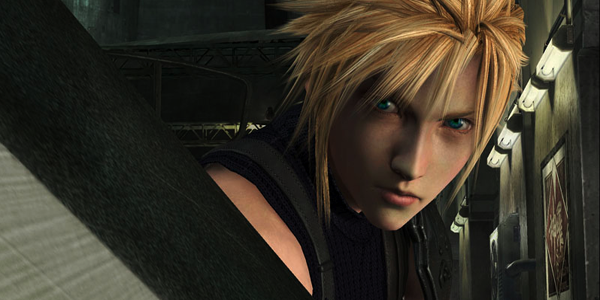 The energy Shinra Electric Power (actually a weapons manufacturer) wields is a liquid energy source, drawn from inside the earth. When burned it fuels cars, powers homes... and endangers the planet. A cross between oil with the added dangers of nuclear waste, most of the game's people are not unfamiliar with the risks accompanying "mako" energy. Vegetation and wildlife die in equal measure around reactors. But it's the people's bread and butter. "Thanks to Mako energy, life's pretty darn convenient. Thanks to Shinra. Don't you think?" One die hard asks, "...How would we get by without ?" Another villager asks of a rumor that Shinra has built a monster, no matter your response she replies "... either way, as long as we're using the reactor, we can't stand up to Shinra." In the blink of an eye they've become dependent on an energy source they were previously unaware of, and despite ever present toxic warning signs, like a good (and very very bad) drug, they just can't kick the habit. No matter how bad it gets. They go on. Burning through resources to the end of the line, and when the final drop is drawn, it's said, the world will fall to ruin. An apt metaphor if ever their was one. Cars, planes, rockets and the gas that fuels them, all came to us seemingly in the blink of an eye too. We too burned our way toward quickly dwindling resources with little regard for the environment. The result we're often told will eventually be climates to harsh for most of us to live in. But if you're reading this right now you know... We just can't seem to let it go. With data collected and wars begun, we look at our convenient, temporary lives and ask "Is it really wrong if things are more convenient for me right now?" Not always realizing that there are people suffering - that will suffer if nothing is done.
3. Holy War
 FF7 has a lot of seemingly Judeo-Christian stuff going on. Central to the plot are a group of nomadic spiritual and nearly extinct people referred to simply as "The Ancients." (or sometimes "Cetra") The ancients had wandered the Earth in search of the "Promised Land". Sephiroth, the game's biggest, baddest heavy and - world's greatest soldier - discovers not only that he and his mother have been experimented on, like lab rats, by Shinra, but also that they are the descendants of this ancient race of peoples. Whom the normals have genocidally brought to near extinction, out of fear and ignorance. That's the catalyst for his psychotic break, and there's no stopping him from there, not even the truth; that he's not an "Ancient" after all. It doesn't matter to him. His war is more important. His name "Sephiroth" is even Hebrew for the physical manifestations of God, and many other elements of his story mirror those in Judeo-Christian legend. But players might forget that AVALANCHE, the terrorist cell that Barrett Wallace heads up, is religiously motivated as well. When arriving at Cosmo Canyon Barrett has a spiritual connection to the locale. He says it is here AVALANCHE was born. Cosmo canyon is where he first learned that mako energy is actually the Earth's life force, and that dwindling it to nothing will leave it a lifeless crumbling heap. True as it appears to be in the narrative, it's taken on faith by our heroes. Since preventing this apocalypse is central to the narrative, we never quite see it in practice, and so can't be (entirely) certain of it's authenticity. Yet they believe it, and they're willing to kill for it. Of course, so is Shinra. Who believe that discovering the promised land will lead them to the greatest supply of oil they've ever seen. - Mako... I mean mako...
2. Corporate Government
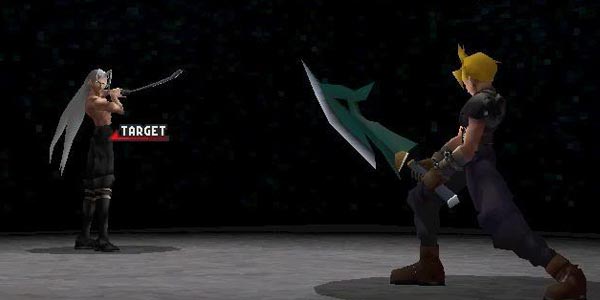 Here in the states it has been ruled that corporations are people with unalienable rights, money is free speech, and bankers who launder money to potential enemies, and drug cartels cannot be held accountable. We the people must be responsible for our behavior AND theirs. While sequestration sets in, and cuts are made to social programs and the like, the military industrial complex (congress in this instance) pushes tanks on our army that military brass THEMSELVES say they don't need. CNN writes: "If the U.S. pauses tank production and refurbishment it will hurt the nation's industrial economy, lawmakers say." While suggestions are made by our President to gradually cut Social Security to lower the deficit, we're consistently made to leave enough leg room in the budget for saber rattling. America's defense from terror or foreign governments is of the utmost importance, maybe not so much; starvation or exposure to the elements. Lastly, our democratic institution failed recently to pass a gun control bill that an estimated 90% of our countrymen, and the majority of the Senate favored. It would appear the Hill has been hijacked by special interest groups. If: in the world of Final Fantasy VII, it sounds suspiciously like a corporation runs everything, that's because it does. See, while many of the real world examples I listed above are part of a complex system whose well has been gradually poisoned, this is a point where FF7 is quite a bit simpler than reality. Shinra, built the biggest weapons, when it discovered the world's energy source they exploited it, fought for it, and provided the world's people with it. Who now depend on it. Shinra continues to harvest it, and build more powerful weapons out of it. The strength of their military, combined with their monopoly of energy makes them the natural lawmakers. There's no one in place to take them to task. It's just a corporate government, and they don't pretend to be anything but. They are the military industrial, oil, manufacturing, and governmental complexes all rolled into one. And decisions are made on profit, and profit alone. The interests of the people be damned. I guess sometimes a lack of subtlety is the best way to make your point.