5 Unlikely Pop Culture Influences On Nintendo Games

It's often easy to forget the geniuses who put together our favourite titles were influenced by others too.
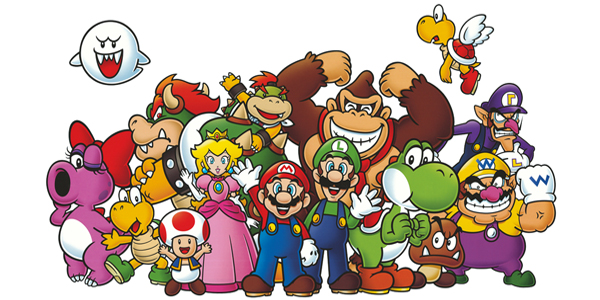
In 2014 the generations that grew up on video games, Nicktoons, and even first generation Pokemon are now of age and looking back upon their more innocent years with a new perspective. Most pop culture references, homages, and borrowed tropes flew over our heads back in the day; for example were we aware that the Squeaky Boots episode of SpongeBob SquarePants was in fact one big Edgar Allan Poe reference? That A Bug's Life was essentially Akira Kurosawa's Seven Samurai...with bugs? Or how about the constant pop culture references batted over our heads in Earthbound? Nintendo games were the lynchpin of many of our collective childhoods; no matter what time period over the past twenty five years you were born, you probably have a Nintendo game console to identify with (okay, maybe you were into Sega or PlayStation, but play along). And while we were just dumb, uncultured little kids enjoying the brutal massacre of thousands of harmless turtles and weird mushroom things with dental problems, you gotta remember the teams who made these games were grown men and women sitting around a conference table spouting off ideas, possibly with the help of mind-expanding substances (you know, like caffeine). They carried a vast knowledge of pop culture from decades past, so in many cases these influences were absorbed into the game development process. Here's just a few similarities between Nintendo games and outside sources you may not have noticed before.

5. Independence Day

Welcome to Corneria! Yes, you might have noticed this one before, but the classic 1996 sci-fi war movie by Roland Emmerich greatly influenced one level in Star Fox 64 set on the planet Katina. You find yourself fighting alongside pilot Bill Grey, named after Robert Loggia's character William (Bill) Grey in Independence Day. In fact, both of the lead actors in Independence Day are also Bill: Bill Pullman and Will Smith. Taking the Independence Day reference even further, the enemies you dogfight are modelled after the alien craft in the film... and then an alien saucer lifted straight from the movie arrives and attempts to destroy the player's base in a manner also taken from the film. Interestingly, the 2006 DS game Star Fox Command seems to once again refer back to this original; when battling alien motherships, the trick to defeating them is to kamikaze your ship straight into the craft's underbelly, not unlike the climax of Independence Day. One can only hope Nintendo will get off their butts and be inspired make a new Star Fox game after Independence Day 2 releases. Yes, if you haven't heard, that's happening, albeit minus Will Smith.

4. Hard Rock/Heavy Metal

Shigeru Miyamoto is a proclaimed fan of rock music. He was once quoted as saying, "video games are bad for you? That's what they said about rock and roll." Though he probably didn't name them himself, five of the Koopalings, Larry, Wendy O., Iggy, Roy, and Lemmy, borrow names from hard rock and heavy metal music. Specifically, Iggy Pop of The Stooges, Lemmy of Motörhead, Larry Mullen Jr. of U2, Roy Orbison, and Wendy O. Williams of the cult punk band The Plasmatics. Many of their namesakes' personalities contrast with the child-friendly demeanour of Mario games; that is, Lemmy being a notorious womaniser and drug user, Iggy Pop being a sex-and-violence fuelled onstage maniac who would cut himself and Wendy O. being known for destroying equipment and being arrested for public indecency. Similarly, the Reznor dinosaur mini-bosses found in Super Mario World are in fact named after Trent Reznor of Nine Inch Nails fame. Interestingly, the game was released in 1990, a few years before 1994's The Downward Spiral catapulted Reznor to being a household name. The band's first album, Pretty Hate Machine, had come out a year before Super Mario World, though it would take a few years for the album to really gain traction, in part due to The Downward Spiral's success. Since evidently, the development team behind Super Mario World knew about Nine Inch Nails before anyone else, does that make them proto-hipsters?

3. Twin Peaks

The team behind The Legend of Zelda admitted to being obsessed with David Lynch's TV drama Twin Peaks, the world's obsession in 1990 before simmering away in June 1991. They admitted to modeLling the cast of characters in Link's Awakening after the "shady" types found in Twin Peaks; that is, quirky individuals populating a small town who outwardly appear to be normal citizens, yet harbour a dark secret which unravels over time. This style of storytelling was also in Majora's Mask. You were acquainted with a small town with a limited cast of characters whose stories would unravel in the three days before the apocalypse, uncovering the bizarre story of the various characters: ranchmen moonlighting as thieves, rock musicians who have terrible debts with pirates, and even a child who used to be a grown man. This is not unlike Twin Peaks' various characters who appear genuine in the daytime yet moonlight as prostitutes, murderers, and so forth. Lets compare A Link to the Past with the later, more bizarre episodes of the show. Nintendo claimed the Twin Peaks influence began with Link's Awakening, but Past was released after Twin Peaks reached its conclusion. I believe some story elements were borrowed straight from the show: a "dark world" and a "golden realm", a demon of the dark world possessing outsiders to sacrifice young maidens, humans attempting to harness the power of these worlds, and Link having dreams of Zelda coming to the rescue. Twin Peaks shows us the realms of the "black lodge" and "white lodge", with an evil force from the black lodge possessing men of the "regular" world in an attempt to gain more power by spreading chaos and murdering young women. Dale comes to the rescue based on the appearance of murder victim Laura Palmer in his dreams, and a race starts to find the entrance to said dark world. It all seems very familiar. There's also smaller callbacks to Twin Peaks throughout the franchise, namely dreamlike giants (Majora's Mask) and owls acting as avatars of someone else.

2. A Clockwork Orange

Both works prominently feature a milk bar spiked with alcohol and possibly other mind-altering drugs; while this is outright stated in A Clockwork Orange, it is only implied in Majora's Mask. There's a reason why children aren't allowed to drink the milk in the game, and ranch owner Cremia makes an exception for her younger sister in the final hours before the apocalypse. Now that the obvious connection is out of the way, lets compare the characters of Alex DeLarge of A Clockwork Orange and the Skull Kid: both are mean spirited and lack any sense of empathy, and are outcasted by their usual friends (the giants, and later fairies, in Majora's Mask, and Alex's "droog" pack from A Clockwork Orange). They both commit random acts of violence, whether it be beating a homeless man or a travelling mask salesman in the woods. Just look at the menacing stare of Majora's Mask, which Skull Kid happily wears about, and that of Alex DeLarge in the opening scene of A Clockwork Orange. Get the same vibe? Remember when Alex screams in terror when he hears Beethoven during the Ludovico treatment? Its sort of an inverted shriek, going from a lower octave to a higher one. Compare it to the shriek that Skull Kid makes after hearing the Giants' song in the game's climax. Look, this comparison might be over-analysing things, but would Nintendo ever go out and say that a movie predominantly about rape and violence would influence a game made primarily for children? Actually, yes...

1. A Graphic Japanese Movie Inspired Earthbound

Earthbound beats you over the head with pop culture references left and right, this is no shock. However, what many might not know is that the main villain of Earthbound, a creepy-looking alien named Giygas, is actually influenced directly by a violent Japanese horror film called "Kenpei to barabara shibijin". Game director Shigesata Itoi walked in on the film as a young boy, witnessing a sex scene that somehow evolves into a murder. At the time, Itoi comprehended it as a rape, traumatising him yet leading to a perception of eroticism and violence that inspired him to create Giygas. Pretty messed up and hard to believe right? Yes, according to Itoi, "When the guy grabbed her breast really hard, it got distorted into this ball shape. It all hit me really hard. It was a direct attack to my brain." In fact, this scene never really took place in the film, yet Itoi continues "...his sense of terror having atrocity and eroticism side-by-side, and that's what Giygas's lines at the end are. During the end, he says, 'It hurts right? That's...her breast. It's like how do I put it, a 'living-being' sensation." We're talking about a game where you essentially play as Charlie Brown as he battles cute looking animals and aliens using child-like toys, like yo-yos and baseball bats...anyone else mildly creeped out now?

In this post: 
EarthBound
 
Posted On: 
Contributor
Contributor

Doug is a freelance writer, being a head reporter on Concertfy.com and a contributor to sites like alternativenation.net and comicbookmovie.com. If you wish to reach out to Doug, contact him at dmccausland1@gmail.com.