6 Video Games That Didn’t Realise They Were Being Offensive
Because obviously the autistic character should control differently.

6. Amy

While it would be easy to simply state that Amy as a game is offensive in its entirety, it's more than the sheer inferiority of the game that left sour tastes in the mouths of those unfortunate gamers who purchased it in 2012.
Amy is a survival horror game about a woman named Lana, who rescues an autistic girl, Amy, from a mysterious research centre. While en route to Silver City, the two suddenly find themselves caught up in some kind of bizarre zombie apocalypse when an explosion sends their train careening off its tracks.
That's all well and good - or at least it would be if the gameplay was even remotely bearable - but the real issue resides with the titular character's autism, and to some extent with the representation of her autism through the game's sluggish controls and clumsy artificial intelligence.
Unfortunately, Amy's developers crudely shoehorned one of the age-old tropes into Amy's character: she's autistic, but she has superpowers. Not only is Amy immune to the infection, which will kill Lana if she's separated from her, but Amy also possesses telekinetic powers, further fuelling the notion that everybody with autism is a savant.
More unsavoury however, is watching Amy fumble her way through the world with only the game's crippling AI to guide her, a problem that takes on an almost abhorrent aesthetic when we remember that the character is autistic.
5. Bare Knuckle III
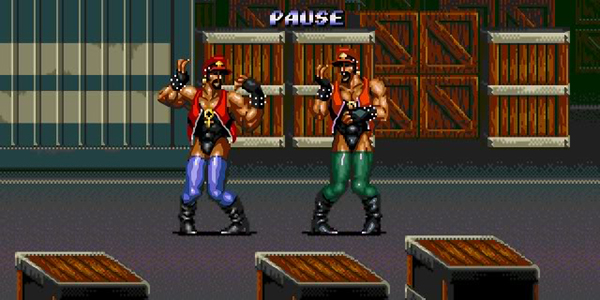
Released as Streets of Rage 3 in the US and Europe, Bare Knuckle III was the original Japanese version of the popular fighting game, and as such included a number of separate features that were not present in other versions. One feature which was partially removed from the English version was a sub-boss and unlockable character named Ash, a horribly stereotypical presentation of a gay man who would cry upon being defeated.
The decision to remove Ash from the English version of the game shows some awareness of the issue, but the fact that it wasn't removed entirely from the offset suggests that the game's developers and publishers didn't feel there was anything significantly wrong with it. Somehow a character that looked like a reject from the Village People and slapped his opponents whilst also pulling a series of effeminate poses made it into a relatively popular game.
4. Super Princess Peach
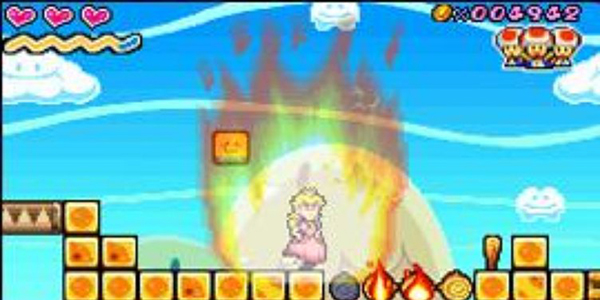
The Mario franchise has faced criticism before for its reinforcement of gender roles and lack of racial diversity. Nintendo were clearly looking to dispel claims that it was in any way sexist when they released Super Princess Peach, a game in which players assume control of Princess Peach in an effort to save Mario and Luigi from Bowser.
While the role reversal, which sees the series' damsel in distress taking on the macho villain in order to save a couple of blokes, can only be considered as a step in the right direction, the execution leaves something to be desired. As it happens, in Super Princess Peach it's not combat, strength and size that gets you through the game: it's emotions.
Yes! Princess Peach can cry to run faster, jump farther and damage enemies below her. She can also become joyous, allowing her to fly, or she can calm herself down which regenerates her health. Finally she can get really angry, which essentially makes her death incarnate.
Men? Strong and athletic. Women? Emotionally unstable.3. Fat Princess
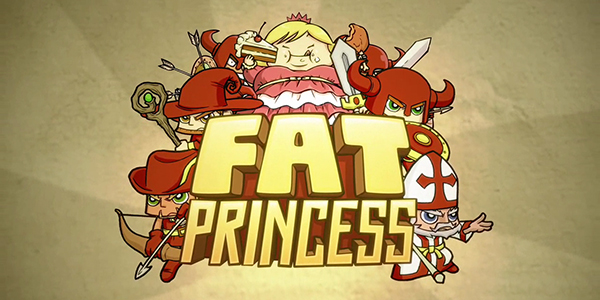
Fat Princess is a cutesy top-down cooperative strategy game in which players assume various combat roles in an effort to save their team's princess from the opposing team's stronghold, while working simultaneously to keep the other team's princess in their captivity. It's essentially capture-the-flag, except teams can feed the princesses in their captivity some cake, thus making them morbidly obese harder for the opposing team to carry.
Something of a controversy erupted across the internet when Fat Princess burst onto the scene back in 2009. On one side of the debate there were some feminists that claimed the game reinforced fat-bashing and objectified women, on the other side there were a lot of angry gamers who were rather keen to point out that it's just a game.
The issue really has very little to do with gender; if the game had been called Fat Prince it would still have been equally as unpalatable. The issue is with the presentation of weight gain, eating disorders and obesity in general and it's largely unintentional. In Fat Princess we're shown characters that are so unable to control their eating habits that they're actively imprisoning themselves, and it's that game mechanic which fuels the joke at the centre of Fat Princess; essentially obesity is funny. It really isn't.
2. Ride To Hell: Retribution
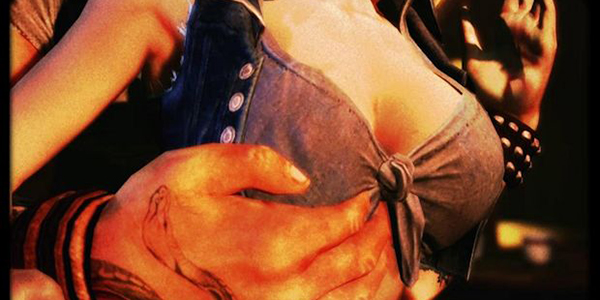
Few games have as little going for them as Ride to Hell: Retribution, a game that tries to make up for its countless frailties with a dramatic title and a myriad of bosomy female characters. Here we have a game that one can only assume has been made by people who believe that the entire gaming community is made up of 14-year-old boys who want nothing more than an interactive movie in which a muscly, grizzled biker and Vietnam veteran, naturally kills people and gets off with women.
Ride to Hell: Retribution does an abysmal job of presenting females as anything other than sex objects. There is one section in the game where our thuggish protagonist saves a prostitute from a man who is harassing her by beating him up, within seconds of the bad guy hitting the floor we're shown an utterly haunting cutscene in which the prostitute and our protagonist are having sex: because that's obviously the logical conclusion to that scenario.
The only way that this could have been left in the game is if its developers had truly been oblivious to the potential ramifications of this objectification of women.
1. Hitman: Absolution
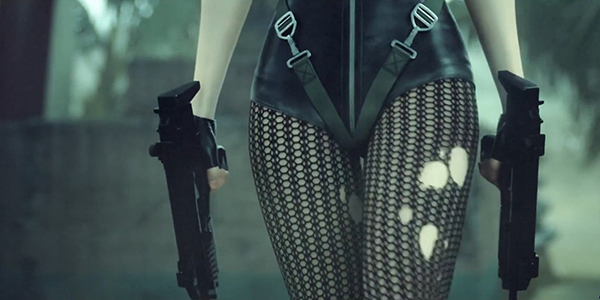
Hitman: Absolution was a triumphant return for the adored stealth franchise, but it was tainted by its lack of strong female characters and its constant representation of women as victims. Misogynistic elements are present even in the opening mission, which culminates in the assassination of one of the franchise's best female characters - who just so happens to be showering at the time.
The key issue is that the game's developers were clearly going for a tone that was more akin to gritty realism or southern pulp than it was to blatant misogyny. What players get is a world where every male is a perverted criminal and every female is a misandrist, a victim or a hyper-sexualised joke.
The worst manifestation of this tonal misjudgement is to be found in the game's now infamous 'Attack of the Saints' level. The mission begins with a cutscene in which a troupe of stripper-assassin-nuns turns up to kill protagonist, Agent 47. The women, who fight in fetishistic S&M outfits complete with ridiculous stiletto heels (as employed by the SAS), are then hunted down by the player and brutally dispatched one by one. The whole level is enough to make your skin crawl, but the developers most likely saw it as nothing more than a nod to themes present in pulp fiction.
Are there any other titles that struck you as being very ill thought-out? Let us know in the comments!