7 Beloved Video Game Consoles That Were Almost Completely Different
The Dreamcast didn't have to die.

Designing a successful video game console is hard - just ask the teams that created the Philips CD-i, the Nokia N-Gage or the Atari... Anything After The Mid-80s.
Most systems go through a ton of revisions before anybody in the public gets to see them. These changes can run the gamut from minor to major - the Xbox One team probably went through a thousand focus groups before settling on a shade of red for the B button, while somewhere out there is a designer whose resumé includes "reduced the number of hands required to hold an N64 controller from five to three."
But there are some consoles that went through changes during development so significant, they didn't just affect that product, but the video game industry as a whole.
Sometimes it's a groundbreaking feature that was cut at the last minute, teasing us with endless "what if?" scenarios, others a serendipitous change forced onto the developers by circumstances beyond their control, or it's a company making a desperate choice that paid off in unpredicted ways.
And sometimes, it's just video game companies making really stupid decisions...
7. The American NES Was Going To Be A Personal Computer

The Nintendo Entertainment System was as revolutionary as it was insane. It allowed gamers to do things previously limited to crazy people - like shooting a dog because it was laughing at you, or being anywhere near Mike Tyson.
In fact, between the Ninja Turtles games and the Super Mario series, a disturbing number of NES titles were just about watching turtles die. But all of that 8-bit psychopathy was originally going to come in a much more mundane package: a home computer.
As they were localizing their Japanese Famicom console for an American release, Nintendo developed a retooled prototype called the Advanced Video System. The AVS was designed as a personal computer with a heavy gaming slant, similar to the Commodore 64. It would have supported wireless peripherals common to home computers at the time such as a QWERTY keyboard and tape deck.
An AVS prototype was shown at the 1985 Consumer Electronics Show, but it had some problems. The infrared wireless controllers were extremely unresponsive, and the whole system seemed too much like all the other game console/computer hybrids available at the time. As a result, Nintendo redesigned the system into the turtle murder box we all love today.
6. The Original Xbox Almost Had Dreamcast Compatibility

The Sega Dreamcast was like an open bar for adults at a child's birthday party: Awesome, but doomed to end poorly. And like a drunk man being pulled out of an inflatable bouncy castle, Sega Chairman Isao Okawa wasn't going to go without a fight.
Things were already looking bleak for the Dreamcast by the early 2000s, and Okawa was looking for a way to extend the platform's lifespan. At the same time, Microsoft was developing a new console called the Xbox, and Okawa saw that as an opportunity to prolong the Dreamcast's legacy.
He approached Microsoft with an intriguing idea: Make the Xbox compatible with Dreamcast games. And he didn't just pitch this idea to some no-name project manager, he went straight to the top - Bill Gates himself.
Gates was reportedly on board with the idea, and it would've been a win-win for both sides - Sega would have extended their dying platform while giving the Xbox a huge, well-regarded library at launch. But there was one problem: Microsoft would not guarantee online support for Dreamcast games, which Okawa considered non-negotiable. Neither side would budge on the issue, and the two companies were unable to come to an agreement.
5. The Genesis Only Pioneered Mature Gaming Because Atari Rejected It
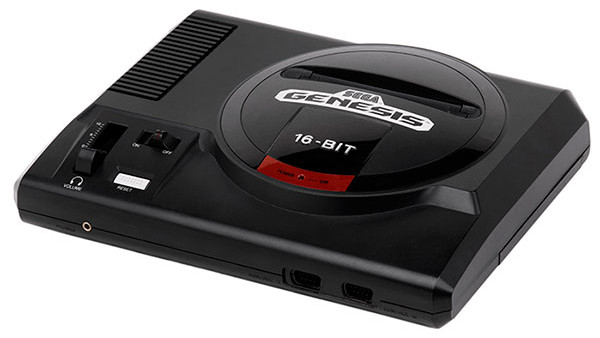
In the late 80s, Sega and Atari began discussing the possibility of Atari localizing Sega's Mega Drive console for the American market. Negotiations even went far enough for Atari to provide Sega with a list of possible names for the American version of the system. Eventually, however, Atari decided that licensing the Mega Drive for an American release just wasn't worth the money, and the deal was off.
Without a distributor in place, Sega's Japanese headquarters tasked Sega of America with releasing the console themselves. Their desperation to make headway against Nintendo was what triggered them to do something that had previously seemed counterintuitive: eschew the traditional child demographic and instead target teenagers and adults.
It was a revolutionary tactic, and it worked - Sega successfully positioned themselves as the cool, more mature company, while Nintendo and others were seen as childish and outdated. Once Sega proved it was viable, attracting older audiences became the norm in the video game industry, and it still is today - and it likely would have never happened had Atari released the console instead of Sega.
The Atari talks weren't completely fruitless for Sega, as they did decide to go with one of the names Atari had recommended - Genesis.
4. The Atari Jaguar Had A VR Headset 22 Years Before The Oculus Rift
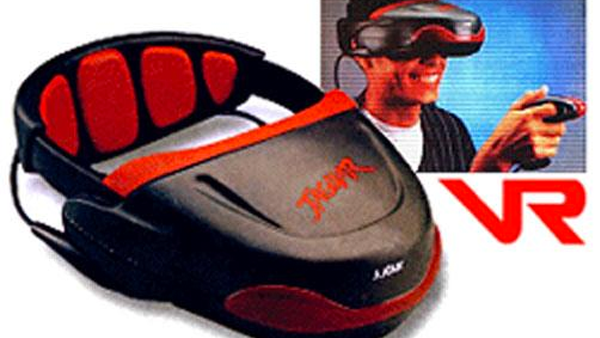
After turning down the chance to release the Genesis, Atari tried to compete with it by releasing the Atari Jaguar, a console that was a lot like a real jaguar in that it was difficult to control and owning one seemed like a waste of money. But things were seemingly looking up for the beleaguered company in 1994.
That's when they partnered with a group called Virtuality to produce a virtual reality headset for the Jaguar, a full 22 years before the Oculus Rift.
Codenamed JaguarVR, the project saw the production of at least two working prototype models. There was even a JaguarVR-compatible game released called Missile Command 3D. By most accounts, the virtual reality headsets worked surprisingly well, but the future of the Jaguar and Atari itself were in question by the time Virutality delivered the final prototype in 1995, and the project was shelved.
Most of the prototype models were destroyed when Atari merged with JTS in 1996, but at least one low-res and one high-res model are currently owned by private collectors.
3. Nintendo Only Released The Wii Because Microsoft And Sony Rejected It

The Wii was a huge success for Nintendo, but what you may not realize is that not only didn't Nintendo develop the Wii's motion control technology themselves, they weren't even the second company it was pitched to.
Tom Quinn was an amateur pilot who patented a system to translate motion controls into on-screen graphics. His initial pitch was to the Xbox team at Microsoft, who literally laughed him out of the building and treated him so rudely that the company later called him to officially apologize.
He next tried Sony, who would only license the patent if the controllers could be produced for an impossible fifty cents or less (because why bother with revolutionary technology if it costs more than an off-brand cola?).
Quinn finally took his pitch to Nintendo, and after a tumultuous meeting that saw executives loudly argue with each other in Japanese in front of him (Quinn was not fluent and had no idea what they were saying), Nintendo agreed to purchase the patents. If Microsoft hadn't been so rude and Sony so cheap, Nintendo would likely have never regained their foothold in the industry.
2. The Original Video Game Console Almost Required A Cable Subscription
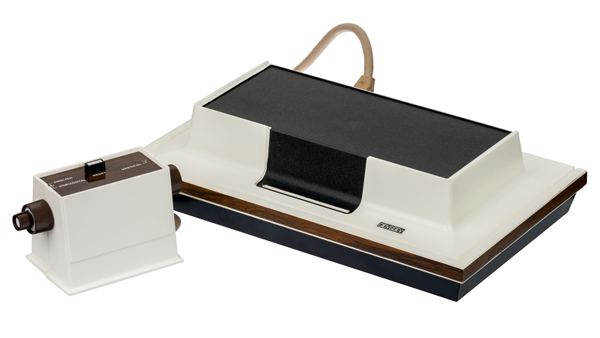
Released in 1972, the Magnavox Odyssey was the first video game console. Its games consisted mostly of players moving squares around the screen in slightly different ways, and the software wasn't advanced enough to even keep track of score (but on the other hand, no tutorial levels or microtransactions!).
It has served as the model for virtually every subsequent console, establishing fundamental concepts like hand-held controllers and games stored on external media. But there was one prototypical feature that almost had a major, negative impact on modern gaming.
Before it was bought by Magnavox, Odyssey creator Ralph Baer pitched it to cable television companies. The cable companies would transmit a static background image that would be necessary to play a certain game (like an image of a tennis court for a tennis game), as the Odyssey couldn't handle this on its own. In other words, you would have to have a cable subscription to play the Odyssey.
Baer's deals with the cable companies fell through, which was great in retrospect for gamers; as the seminal game console, it could have set an ugly precedent of certain systems being exclusive to cable (or satellite) subscribers.
1. The Super Nintendo Nearly Had A CD Add-On... Twice
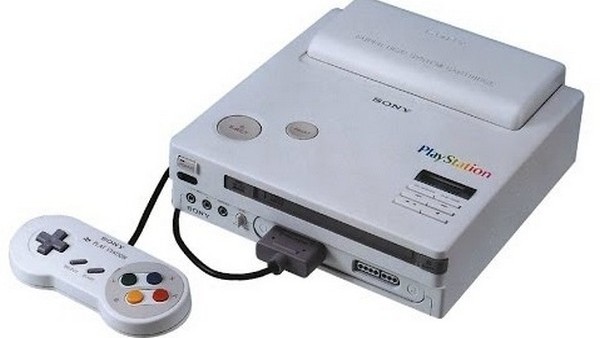
In the early 90s, Nintendo partnered with a Japanese electronics company to develop an add-on for the Super Nintendo that would allow it to play CD-based games. The agreement gave Nintendo's partners full control over the new disc format, an arrangement which made Nintendo increasingly uncomfortable.
Nintendo's collaborators were ready to reveal the project at the June 1991 Consumer Electronics Show, but Nintendo made their own surprise announcement there: they had secretly entered into a new agreement with Philips to produce the add-on instead.
It was at this point that the cosmic force responsible for punishing gaming companies for their transgressions cracked its knuckles and said "jackpot."
Nintendo's Philips deal never resulted in a SNES-CD add-on, but it did infamously result in Nintendo characters appearing in Philips CD-i games that were so bad Nintendo pretends they didn't exist. Nintendo's original partners, meanwhile, were humiliated by Nintendo's public underhandedness and resolved to finish the add-on as a stand-alone console.
It should be noted that this company was Sony, and that the project eventually became the PlayStation. By backstabbing Sony, Nintendo missed out on having CD technology early, saw their most important properties bastardized by Philips, and created their own industry rival.