7 Confusing Video Game Plots That Make More Sense Than You Think
Did you know all the Legends of Zelda are one?

Back in the day, video game storytelling used to be a simple case of saving the princess or defeating the faceless evil, but now many of the stories in games rival novels and film scripts in length and complexity.
It makes sense. When it comes to creative expression, boundaries are always being pushed farther, and in a world with so many video games, developers want - nay, need - theirs to stand out. With this change in the times, however, alternate forms of storytelling have emerged - techniques that go beyond basic exposition and narration.
Put simply, these new-age methods of storytelling differ wildly, and with certain franchises literally lasting for decades, it's easy to feel overwhelmed. Yet many of the games that are regarded as being insanely confusing are actually deceptively simple - you need only take a little bit of time to examine what it is they're doing (and how they're doing it).
From alternate timelines to stories told through item descriptions, here are seven confusing video game plots that make much more sense than you think.
7. Bioshock Infinite

For most people, Bioshock Infinite is pretty easy to follow up until the second half. There's a floating island in the sky, a self-proclaimed prophet named Comstock and a grim darkness lurking just beneath a vibrant, colourful cityscape. If you've spent any time in Rapture, you basically know what the score is – it's a similar set-up, except in Infinite you experience it before the collapse of society, not after.
The main reason people have difficulty with Infinite's plot isn't because it involves multiple timelines, it's because it isn't told chronologically. The moment the multiverse pops up, it's quite natural to feel overwhelmed by the sheer scope of possibility. But when you place events in order, it's all actually rather simple.
In essence, Columbia is run by Comstock, who adopted Elizabeth, who he plans to use to take over the city when he dies. Elizabeth has the ability to create tears in space time and can interact with alternate universes. Elizabeth is held prisoner by Comstock so that he can utilise her powers by using a “Siphon”. Booker is brought to Columbia by a pair of scientists who know the truth about him, and what is that truth? That in many timelines, Booker IS Comstock, having changed his identity after war atrocities.
Bioshock Infinite's plot is a great example of achieving mystery through messing with chronology, feigning complexity when the whole thing is actually rather simple.
6. Dear Esther

When Dear Esther commercially released back in 2012, it received a huge amount of attention, some praising its storytelling while others criticising it as nothing more than a “walking simulator”. Regardless, storytelling is all the game really offers, and so its unsurprising that developer The Chinese Room would try and make it obscure.
There are a couple different reasons why many people consider the plot of Dear Esther to be confusing. Like Bioshock Infinite, the chronology of events that the narrator reads to Esther are all jumbled up. Not only that, but the narrator reads fragmented letters, which sometimes lack context. On top of that again, the game actually randomises the fragments which are read out, a feature which is intended to flesh out the story on repeat playthroughs.
The gist of the story? The narrator's wife Esther died after a driver named Paul crashed into her car on a motorway. He may have been drunk, he may not have been. Either way, riddled with guilt, Paul winds up dying himself some time after. That, in essence, is it.
The extremely flowery language used during the narration coupled with the mixed chronology, fragmented nature of the letters and randomised inclusions makes an extremely basic narrative seem bizarrely complex.
5. Castlevania Series

With over thirty games, it's understandable that someone who hasn't played Castlevania (and honestly, even somebody who has) would think that the storyline must be complicated as hell. The reality, however, is quite different.
Interestingly, the series canon has fluctuated somewhat over the years, with many of its titles being removed from the main story. Castlevania Legends, for example, which was initially pipped as an origin story was removed from the timeline during development, and spin-offs like Kid Dracula are also narratively irrelevant. When paired down to the “official” timeline, then, the story is surprisingly streamlined.
After the death of his wife, Mathias Cronqvist assumes the form of Dracula, enacting revenge on the earth. This begins a century-long recurring cycle which sees Dracula resurrected until someone puts him down. The games in the main timeline, then, take place over almost one-thousand years, and can be placed chronologically in “eras” based on which particular vampire hunter is doing the killing.
The first in the timeline, for example, is Castlevania: Lament Of Innocence, which takes place in 1094 A.D., whereas the most recent is Dawn Of Sorrow, which kicks off in 2036 A.D.
Despite the sheer number of games, it's essentially the same story being told over and over again. The Castlevania series may at first appear intimidating, but there are so many titles that don't count as part of the main narrative.
4. Kingdom Hearts Series

Don't be fooled by the colourful aesthetic and the inclusion of Disney characters like Donald Duck and Goofy. The plot for Kingdom Hearts is regarded as one of the most complex and convoluted ever conceived, spanning multiple games on multiple consoles with dozens and dozens of characters.
Hearing that is enough to put anyone off attempting to understand what it's all about, but in actuality the vast majority of the confusing elements are superfluous to the main plot, which is basically as black and white as they come. In essence, there was once a paradise called Kingdom Hearts (think of it like heaven) – and what does paradise do? It prompts war. Kingdom Hearts was protected by a magic blade, which was shattered during the war and plunged the paradise into darkness.
Many years later, various baddies fancy a slice of that fabled paradise for themselves, so they come up with different ways to reveal the kingdom, including rebuilding the blade or by sacrificing a bunch of people. This is where the misconception about the plot being insanely confusing comes in. Sure, there are a huge number of characters, but everything revolves around the same central conceit. The villains want Kingdom Hearts, whereas the good guys want to stop that from happening. How do the Disney characters fit in? They just exist in the universe for some reason, they don't even try to explain it.
Even when you factor in all of the franchise's characters and their relationships, it does a remarkably good job at keeping track of everything that's going on. Though most people like to joke the series has given up on its own story, it all fits together if you care enough follow it all.
3. The Legend Of Zelda Series
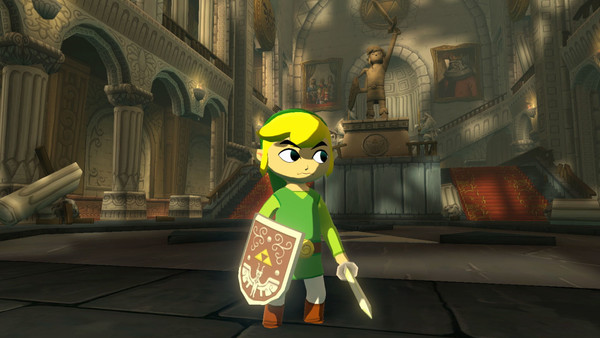
While none of the Zelda games individually have particularly complex plots (though a case could be made for Majora's Mask) when viewed as a whole, the vast majority assume that there's no real continuity or structure. In actuality, applying the timeline information provided by Nintendo gives the whole series a very satisfying sense of unity. Even better, it draws basically every game together extremely simply.
Skyward Sword comes first, detailing the battle between the surface dwellers and the Goddess Hylia. This is followed by The Minish Cap in which Hyrule is in a very primitive state and Vaati is the main antagonist. This is logically followed by Four Swords, which also features Vaati. Then comes Ocarina Of Time, which allows for the remaining games to be accounted for.
How? Using three distinct timelines. In the timeline in which the Hero of Time is defeated, Ganon is resurrected prompting the events of A Link To The Past, the Oracle games and Link's Awakening. In a world in which the hero succeeds and returns to child form, we see the direct sequel Majora's Mask. And if he doesn't return to child form, Ganondorf is sealed away. When he attempts to break from this seal Hyrule is flooded, leading into The Wind Waker and its sequels.
For a franchise with so many games the timeline answers a significant number of questions.
Oh, and Skyward Sword also confirms that the innumerable Zeldas, Links and Ganondorfs are just recurring incarnations of the Goddess Hylia, the demon king Demise and the original hero – so that's why the same three people crop up again and again and again. See? It all makes sense.
2. Half-Life 1 & 2

It's easy to forget amidst all of the Half-Life 3 jokes (one day, folks... one day) just how influential the series was when it first released. While many know of its impact on the first-person shooter genre, they don't realise the significance it had in shaping video game story lines, specifically how they're told.
The Half-Life series is a brilliant example of environmental storytelling, and this is why many people find its narrative difficult and confusing. The vast majority of gamers are used to being force fed story during long, drawn out cutscenes and lengthy exposition, but Half-Life did away with all that, choosing to tell its story through subtle environmental clues instead (a newspaper clipping in Kleiner's lab is enough to alert players to a past war, and characters don't stand around explaining the back story – we deduce it from their dialogue about the present).
Piecing the whole thing together then reveals a relatively simple plot. You play as Gordon Freeman, a Physicist who works at Black Mesa, an experimental facility. Incidentally, one of these experiments goes wrong, opening up a rift in space time and allowing aliens to flood the earth. Freeman battles against these aliens, later crossing into the alien dimension and killing the Nihilanth, the entity maintaining the rift. After this, it's revealed Freeman was being observed the whole time by someone known as the G-Man, who offers him a job.
This takes us to Half-Life 2. Gordon Freeman wakes up from stasis to find the world overrun by an alien race referred to as Combine. Once again Freeman leads an alien resistance.
Adapting to a different kind of storytelling is the most challenging thing about following Half-Life's plot, but when you do, it all clicks into place.
1. Dark Souls

Where Half-Life introduced environmental storytelling to video gaming, 2011's Dark Souls perfected it. Not only is the game known for its punishing difficulty, it's also commonly referred to as a game that “has no story”, or at the very least, has one which is totally optional.
Often people mistake this opaque form of storytelling for something extremely complex and obscure. This is likely due to the game's difficulty factor; if the game is hard, surely the story must be hard to understand, too. In reality, the narrative is pretty simple, and ties together a huge amount of the enemies, NPCS, bosses, and yes, even your endless deaths.
At the beginning of time there was nothing but huge, immortal dragons and massive 'Arch-trees'. This was the Age of Ancients. Then, from nowhere, fire appeared, creating disparity, like heat and cold and light and dark. A race of beings distinct of the dragons appeared, and found within the fire souls of great power. These people were Nito, the Witch of Izalith, Gwyn and the Furtive Pygmy. They harnessed the power of these souls (alongside some tips from dragon Seath, who betrayed his kind in exchange for knowledge) to overthrow the dragons, and the Age of Fire was begun.
Humanity developed and prospered, but when the First Flame began to dwindle it brought about the undead curse (hence all of the dying). Seeing the fire was fading, Gwyn sacrificed himself to keep the flame burning longer. By the time the player comes in, the fire is going out again, and the player can choose to succeed Gwyn by sacrificing themselves or snuffing out the flame to usher in a world of darkness. That's the vast majority of the plot right there, and rest is just a simple case of listening to NPCS and reading item descriptions.
--
Are there any other supposedly complex game plots that can be easily explained? Let us know in the comments!