7 Killer Video Games Inspired By Horror Films

Game Over, Man! Game Over!
In games, no one can hear you scream €“ not A.I. controlled NPCs, anyway. They aren€™t real. We€™re sure future tech will bring RPGs with dialogue trees that we actually read aloud, or even textless, fully dynamic conversation options. This would put us in the place we need to be, technologically speaking, for NPCs to €œhear us scream,€ so to speak, but we digress€ We only want to scream if it€™s for a good reason, and a horrifying video game is pretty much always an excellent reason. We're not talking about movies based on games. That combination almost never works. Has it ever? Uwe Bolls' atrocities and the progressively laughable Resident Evil series don't exactly set a high bar. The first Silent Hill film might be the exception, and Duncan Jones - writer and director of Moon and Source Code - is heading up the new World of Warcraft movie, so it's not necessarily a zero sum list of game films. When we look at it from the other angle, some of the very best horror games ever were inspired by scary movie classics that did it first. It's important to appreciate how much longer film has had to mature as an artistic medium. For that matter, all of these movies draw inspiration from classic horror literature, and of course, all monster stories are true. Now, all of these games are more action-oriented than the scary movies that inspired them, and they should be €“ they€™re interactive. That said, it surprised us how well the mechanics of some of these games functioned as virtual parallels of what made their filmic inspirations so terrifying. If nothing else, they successfully married the themes, tone, and style of what came before. These are the 7 best scary games spawned from even scarier cinematic classics...

7. Slender - The Blair Witch Project

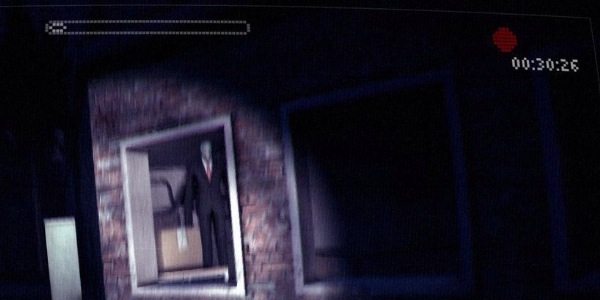
Found-footage horror simply wouldn't carry the genre prominence it does today without The Blair Witch Project, but the terror we experienced in 1999 was more than just a nubile film-style in definitive form. Where inspired offshoots like Cloverfield, REC, Paranormal Acitivity and VHS give you physical glimpses and full-on encounters with their evil subjects, The Blair Witch never once compromised its minimalist slow-drip of implied terror. Much like its cinematic predecessor, Slender: The Eight Pages is based on the legend of an evil, supernatural being who stalks people, drives them mad with fear and ultimately hauls them off into the woods for killing. Slenderman, if you didn€™t know, is that faceless, long-limbed man in a suit, pictured above. He is very evil. Do not read any further. Slender: The Arrival takes The Blair Witch€™s camcorder convention very seriously. It even has a little, red €œREC€ blip flashing in the corner. The difference in graphical quality between the original and sequel is night and day, but the core, horror mechanic remains effective in both iterations. It€™s the looming threat of an evil force we rarely see that haunts us. The Blair Witch uses minimalist camera techniques, and Slender achieves a similar effect with a bare bones gameplay loop that actively exploits the same source of paranoia. If you see Slenderman, it's either too late or time to run. You cannot fight back and you cannot stop moving, or you are nothing. In the end, he will find you. Always watching. No eyes. No no no no no no no no no€

6. Condemned: Criminal Origins - Se7en
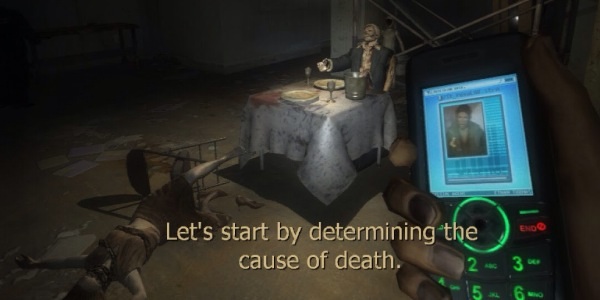
Before Shadows of Mordor and F.E.A.R., but a bit after Cate Archer and the Warner Bros. acquisition, Monolith brought us one of the best launch games ever €“ certainly the scariest. Following the cross-medium translation trend, Condemned: Criminal Origins has a lot more straight violence than Se7en ever did, veering off in an even darker, more desperate direction than Fincher€™s psychological horror classic, but nonetheless evoking its trademark vibes. There€™s no denying the similarities between intro segments. Even the opening credits have the same high-contrast, x-ray jitters and unwelcoming fonts. The first stage in Condemned €“ the dank, inner city crime scene, the flashlight investigation, and the body at the dinner table €“ looks an awful lot like the first murder Morgan Freeman and Brad Pitt investigated, otherwise known as €œGluttony.€ Se7en was set in Detroit, while Condemned opts to drop us in the fictional Metro City, but the inspiration is clear. Again, almost immediately, Criminal Origins goes crazy. That same starting level sees you shooting, bludgeoning and tazing junkie-tweakers left and right. At the end of the stage, not only do you meet €œSerial Killer X,€ the main antagonist, but he frames you for a double-cop-murder on the spot. Beyond that, the only similarities are crime-scene investigation and a savagely depraved tone. We prefer Se7en€™s grounded characters and mind-numbing, albeit coherent, twists, and we doubt Condemned would have existed without it, which is just another reason to be thankful for both.

5. Dead Rising - Dawn Of The Dead

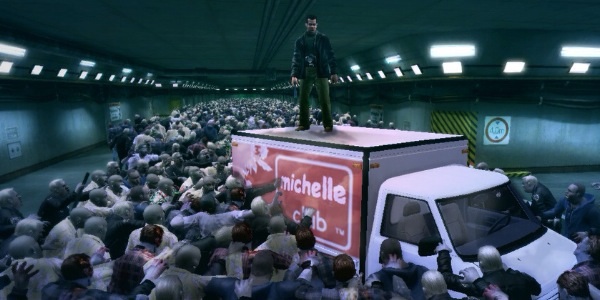
People don€™t hail George A. Romero for inventing the zombie, but rather for defining the contemporary rules that govern our cannibal ghouls€™ lore. Night of the Living Dead broke ground, and then 1978€™s Dawn of the Dead reached up through that ground and grabbed horror fans by the ankles. A growling horde of Americans shambling through a shopping mall is enough to horrify anyone, and Romero capitalized on these social themes like a genius. Flash forward to 2006 and Dead Rising comes to Xbox 360, an everything-is-a-weapon zombie romp also set in a mall. The comparison€™s to Dead of the Dead were apparently enough to warrant a lawsuit, started by the MKR Group, who own the rights to Romero€™s film. Apparently the emboldened disclaimer on the game€™s cover €“ denying official ties to 70s film €“ wasn€™t enough. The case was ultimately dropped in 2008, the same year it started, with a ruling that determined the similarities in question were €œdriven by the wholly unprotectable concept of humans battling zombies in a mall during a zombie outbreak.€ There€™s no way Dead Rising would exist without Dawn of the Dead having made the glaringly similar premise so iconic, but for that matter, we probably wouldn€™t have House of the Dead, Resident Evil or Left 4 Dead either. Technically speaking, every entertainment IP with a modern zombie bone in its body has risen from George A. Romero€™s low-budget loins, indirectly joining his undead legacy.

4. Dead Space - Event Horizon

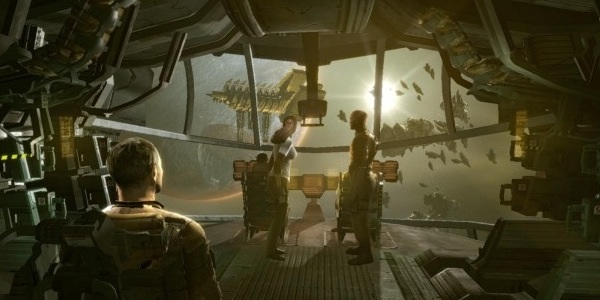
Visceral's deep space nightmare shared a striking resemblance to many of the factors at play in the 90s film Event Horizon, but indirectly repurposed those structural and tonal elements. While Dead Space did find interesting gameplay hooks to set itself apart, the core settings and premises were undeniably similar. Each story starts with a team of space travellers tracking down an errant signal from a lost ship in low-orbit. The titular Event Horizon is a prototype spacecraft, carrying an inter-dimensional Mass Effect-type warp-drive while Dead Space's Ishimura is also the first of its kind - a celestial mining vessel known as a planet cracker. The main crew for each story has been sent to investigate their respective, long-lost spacecraft, and when they arrive, both appear to be abandoned. Nope. As the nightmarish visions of Laurence Fishburne and friends intensify, it becomes increasingly evident that the Horizon has literally been to Hell and back. Dead Space swaps the devil's door for an alien virus channeled through an ancient relic, dug up by the planet-cracking Ishimura. It mangles and mutates human-beings into sharp-limbed freaks, and these "Necromorphs" come out of the woodwork almost right away. After you and your team are forcefully and almost immediately split up, you spend the majority of the game on your own. Not scary at all. The gargantuan spaceship full of monster people is an apt justification for Dead Space's emphasis on dismemberment action, as is the simple fact that it€™s all part of a video game, but it still manages to ground itself in an ambient tension that draws more thematic cues from horror films than typical sci-fi shooter games... the original does, anyway.

3. The Last Of Us - The Road

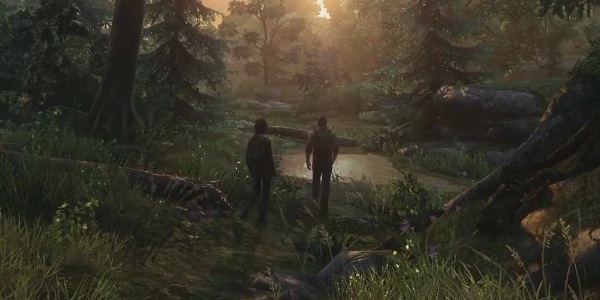
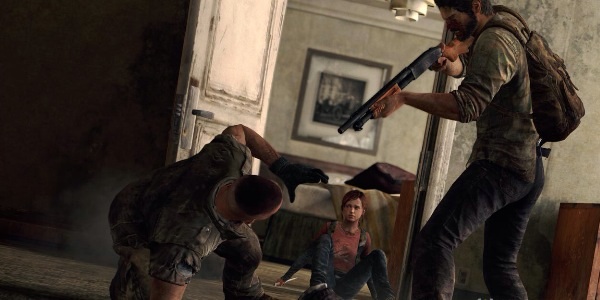
If you thought the PS3€™s magnum opus was a wholy original work of art, you might want to watch The Road. Now, The Road was a Cormac McCarthy survival-horror novel before it starred Viggo Mortensen on the silver screen, but they€™re both essentially the same story and they both predate The Last of Us. Whether it€™s the book or film, The Road follows a Man and his Boy trekking across country in a post-acopocalyptic wasteland. Sound familiar? The Last of Us largely follows the same premise, obviously swapping The Road€™s Boy for Ellie, and while she isn€™t Joel€™s child, she certainly fills that roll. Both Ellie and the Boy were born after the world went to Hell, a motif that informs their perspective throughout each journey. On the flip side, Ellie is a young teen, while the Boy is easily less than ten. Her age and tenacity make her much less a victim, but it€™s her literal importance that is perhaps the biggest difference. The most raw human drama in either story stems from the ever-present struggle to preserve one€™s humanity. The Man protects his Boy with everything he has, fueled by the purity and innocence his child represents and what it means to the preservation of civil mankind. Without spoiling anything, Ellie represents a more literal savior role, while both stories regard the protection of their star youths with tantamount importance. The Last of Us did introduce an original take on the zombie concept €“ an end-of-world trope that The Road never touches €“ with a fictional spreading of a real fungus known as Cordyceps. This parasite €œinvades and eventually replaces host tissue,€ not unlike the alien virus from The Thing, but don€™t worry€ Google seems to think it only kills video game people and bugs. Like Dead Space before it, The Last of Us does something new and amazing with a story we love. As long as it does enough new to be its own thing while maintaining a certain level of quality that respects the source material, we don€™t mind any storyteller going down that road.

2. The Thing - The Thing

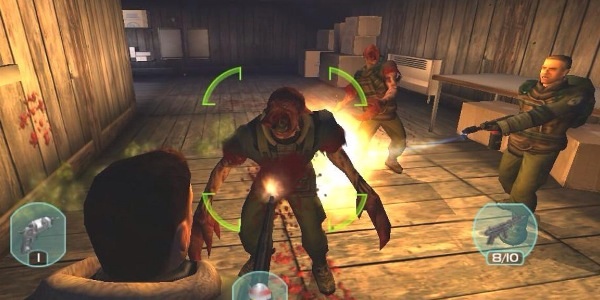
Whether its penultimate, non-descript title makes you scoff or shudder, trust us - John Carpenter's The Thing is one of the simplest, most expertly executed horror premises of all time. The only thing worse than shacking up with a bunch of geo-thermal nerds in an arctic compound is a shape-shifting alien systematically murdering and replacing everyone - especially when you're Kurt Russell and it's 1982. Twenty years later, picking up where the original left off, The Thing video game released on PC, Xbox and PS2, featuring many of the same ingredients that make John Carpenter's masterpiece so compelling. Managing your group hinged on the same fear and trust dynamics that made the film so effectively horrifying... and we're not talking about the abysmal 2011 pre-sequel. Before anything particularly terrifying happens, your A.I companions - A Medic, Technician, and Soldier - trust you implicitly, and you them. As Commander, you are naturally forced to periodically test the DNA of your squad members, and if they aren't friendly, they twist and split and grow new limbs right in front of you. This loss meant something, in a gamescape where death often means so little. In third-person, The Thing was like a squad-management-style Resident Evil, with serious Half-Life vibes if you chose to play in first-person. With better animations and online options, this is a game we wouldn't mind having as an HD remake. If you can find a copy, the original is backwards compatible on the 360!

1. Alien: Isolation - Alien

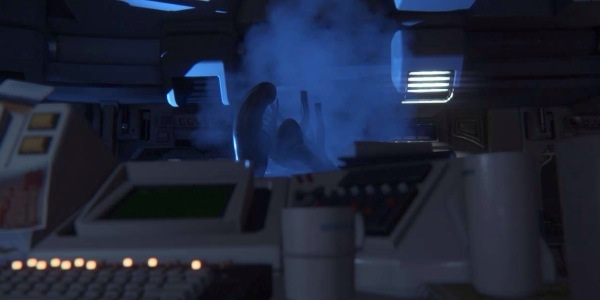
We haven't played Alien: Isolation, but over the last year, we've poured over hours of demos and behind-the-scenes vignettes online... and we haven't heard a single negative thing about it. It's no secret how badly Aliens: Colonial Marines melted our dreams, like so many screaming faces drenched in acid blood, but Isolation seems fit to deliver the bona fide antithesis to that soulless experience. So many hardcore Xenomorph fans complained, and rightfully so, that Colonial Marines lacked any of the tension found in James Cameron€™s Aliens, let alone Ridley Scotts paralyzing original. Granted, it seems Gearbox was shooting for something closer to the action-focused sequel, but whatever they and their many outsourced minions meant to do, they failed miserably on all fronts. The priorities in place for Creative Assembly€™s attempt to revive the original Alien name can perhaps be best explained by the fact that their game only has one Alien. Following the powerless victim concept of titles like Outlast, Amnesia, and the aforementioned Slender, Alien: Isolation uses this design philosophy to capture the singularly focused, nerve-wracking terror that Ridley Scott intended. You are Ripley, Amanda Ripley €“ the daughter of the legend searching for her Mum. You€™ve got a crew of your own, and some of them are losing their minds. Good luck with that. You€™ve got a big, fat, CRT motion-scanner, maybe a few weapons here and there, and no HUD. The lo-fi, sci-fi palette dictates gameplay and level design, as clunky 80€™s buttons and interior ship designs straight out of Alien add authenticity to the nightmare, even if you€™re just hiding behind a desk. If Alien: Isolation really is everything previews suggest, it will set a new standard for the Alien license, film tie-ins, ludonarrative clarity, and scary games that don€™t let you fight back. We€™re just psyched we€™re getting a playable sequel to the godfather of all survival-horror. Did we forget to mention you're favorite scary game inspired by a horror movie? What creepy film do you want to see as a video game? How could their onscreen formulas provide thematically consistent and compelling gameplay? Let us know in the comments!

 
Posted On: 
Contributor
Contributor

Real Science Magazine called James' addiction to video games "sexually attractive." He also worked really hard and got really lucky in college and earned some awards for acting, improv and stand-up, but nobody cares about that out here in LA. So... He's starting over fresh, performing when He can. His profile picture features James as Serbian, vampire comic Dorde Mehailo with His anonymous Brother and Uncle at the Nerdmelt Showroom in West Hollywood. In James' spare time, he engages in acting, writing, athletics, hydration, hours of great pondering and generally wishing you'd like him.