7 More Hidden Video Game Design Secrets That Are Total Genius
Are you playing Uncharted, or is Uncharted playing you?

As one of the most entertaining mediums on the planet, video games can take you from battling hordes of aliens armed with nothing but a wrench, to speeding through a pack of rivals to claim an oversized trophy.
They're everything our minds conjure when reading made visual; every ride a film takes you on make playable - in short, they're endlessly fascinating to pick apart.
To that end - and especially as modern triple-A budget titles take teams of hundreds to assemble - every last part of the experience needs to be a mix of authorship on behalf of the coders, and pathfinding from the player. One of the biggest mistakes ever levied at gaming when the "Are games art?" debate was in full swing, came from the idea of players authoring the experience, and that thereby robbing the work of any true auteurship.
This is of course not the case - it's merely that the better the developer and the more immersive the experience, the less you're supposed to see the puppet strings. The greatest trick the devil ever pulled was convincing you he didn't exist, and that goes double for escapism in gaming...
7. The Last Bit Of Stamina Means More Than You Think - Dark Souls 3 & LoZ: Breath Of The Wild

When it comes to modern third-person action games, stamina is key. There is nothing worse than running out of juice right in the heat of battle, and getting spent in Dark Souls is the absolute worst. The game is hard enough without being unable to lift a sword or ladle to fight back, but it seems like FromSoftware decided to take a slight bit of pressure off for those in the thick of it.
Interestingly, you don’t actually have to have the required amount of stamina or Focus Points to cast weapon arts, just that you need to have a sliver left for the animation to trigger. This little tweak means you might be able to land the final blow or force an opponent to back off for a breather. It’s technically cheating the system, but in a game as demanding as this, a very welcome addition.
This is also the case in The Legend of Zelda: Breath of the Wild, as no matter your remaining stamina when climbing, Link can always make that last-ditch effort leap to grab an outcrop of land, even if you’ve only a tiny amount remaining.
6. The Dynamic Difficulty - Resident Evil 4

Resident Evil 4 is often touted as one of, if not THE greatest Resident Evil game of all time, and you'd be hard pressed to argue against it as the narrative, combat and setting are a perfect blend of horror and action.
It also managed to straddle the line between difficulty and ease, with a brilliant and often overlooked feature, as it turns out that Resident Evil 4 adjusted ammo drop rates, enemy damage output and even AI aggressiveness based on how well you were - or weren't - doing.
If you breezed through the levels you’d be met with stiffer resistance, meaning you’d always experience a challenge no matter how good you were. Lovely stuff.
5. Link’s Eyes Solve Puzzles For You - Legend Of Zelda: The Wind Waker

If there’s one thing that’ll stop your fantasy idea of being the lowly hero gallivanting across the land to right every last wrong, it’s an awkwardly obtuse dungeon puzzle.
Wind Waker was the last of the more old-school Zeldas in terms of barely giving you any hints as to where to go and what to do - and that’s why this tiny revelation will have been staring you in the face the entire time.
Mentioned in one tiny paragraph in the original GameCube game’s manual, if you actually rotate the camera around to see Link’s eyes, they’ll actually be looking at the solution or wherever you need to go.
4. The Counter Window - Assassins Creed & Other Fighting Games

Pulling off a counter in a fighting or action game is a lovely middle finger to your opponent, taking their raw power and making them look a real idiot in the process.
It’s a satisfying moment, and something that several video game developers have realised players will want to do. Thankfully, as developer Jon Tetrino pointed out on a recent video game discussion thread, games like Assassins Creed have a trail-off counter window of about one to twp seconds longer than the actual prompt, to give players a greater chance at pulling this off.
It’s a perfect example of developers trying to improve gameplay flow but empowering players, as after all, if you can pull of sweet moves like this, you’re going to want to play more right?
3. Damage Bonuses Ensure You Get A Kill First Round - Gears Of War

Ever been on the receiving end of a Gnasher Shotgun in Gears? Of course you have. The little buckshot-spitting twats are single-handedly responsible for many of us rage-quitting and going off to play Halo instead.
VERY interestingly though, the developers actually give every player who’s just starting out some substantial bonuses - like damage buffs - to guarantee they nail a kill on their first match of any game type.
Done because player data suggests 90% of people won’t continue to play if they don’t get at least one kill, this is a subtle, and yet not so subtle, way to encourage competition.
2. Lessened Rocket Splash Damage - Quake III
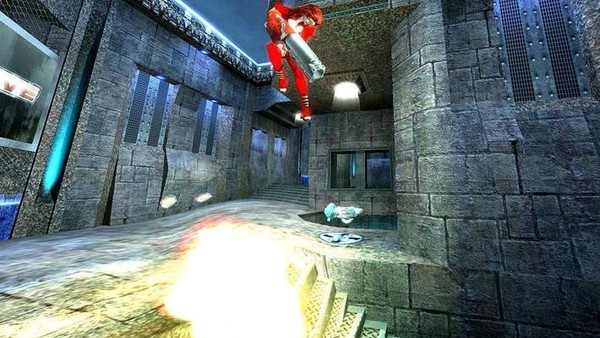
Storming around Quake 3 with a Rocket launcher is pretty much the perfect example of why this game was great. Smashing players to pieces and sprinting away into more chaos was an utter joy, but the rocket launcher also played another huge role in the title as Rocket jumping was used by many to take advantage of maps and rain down fire from above.
Yet this was only really possible thanks to the devs acknowledging that maybe, just maybe the rocket launcher would only be fun if they reduced the splash damage to the user by quite a bit.
This tweak to the damage output meant that players could fling themselves into the stratosphere as well as avoid a nasty death at their own hands. It’s a simply trick, but one that shaped the entire flow of the game.
1. Naughty Dog Collapse Scenery In Time With Your Movements - Uncharted

No one does playable cinematic ephemera better than Naughty Dog. The absolute maestros of making you feel like a superheroic force of debris dodging prowess, this effect - when you’re not leaping off in the wrong direction - is achieved through clever manipulation of any given set-piece.
By actively slowing down the collapsing scenery depending on how close or far you are from the invisible “critical path” - or speeding it up if you’re following along nicely - it keeps the intensity of the moment sky-high, while making you feel like the Hollywood hero who’s JUST making it through.
Next time the bullets are flying and the skyscrapers are collapsin, take your time. You might just cotton onto the fact that Nathan Drake’s reality is more Truman Show than Indiana Jones.