7 Reasons Why People Are Giving Up On Gaming
Let's address the elephant in the room.

Let's talk about the state of gaming. Like the real state of everything in 2022, from CG trailers for far-off releases to on-fire behind the scenes reports, overblown AAA attempts at games as a service, to the idea-rich indie scene occasionally birthing something that dominates for a whole month.
Because there's a change in the air right now; a reality that's rearing its head.
"Gaming" as we've known it for the majority of its lifespan - the constantly innovating, forever impressive tech-meets-art showcase of new, interactive ideas, stories and concepts... has hit a bit of a brick wall; a malaise of competing factors resulting in almost total inertia.
Look to the data side and spending is down across the board.
Titans of the industry like Ubisoft have performed disastrously, cancelling various interesting projects like Splinter Cell VR, while still funding the likes of XDefiant, a Call of Duty clone that feels dead in the water. Blizzard, Rockstar, Square Enix - all feel demonstrably less confident in their brand identities than where they were even a generation ago.
Now, some of this is absolutely, entirely down to the pandemic. Millions more gamers than ever before invested in the medium as a way to get by, while developer schedules were completely overhauled as scores of us adapted to working from home.
Still, strike this conversation up with any regular gamer - or check the comments on the video I hyperlinked above - and you'll find common ground in admitting that to some, gaming just isn't what it used to be.
7. All Your Favourite Studios Have Shut Down Or Are Falling Apart

It wasn't until we put out this video analysing the financials of the industry and looking to dissect the current "malaise" that's permeating gaming in 2022, that many comments began mentioning the fact that a LOT of the studios we used to champion, love and follow, simply aren't around anymore, or are different beasts entirely.
Across the board, start with AAA and Ubisoft, Bethesda, Blizzard, Square Enix, Bioware and EA seem allergic to focusing on quality and/or originality over monetisation and formulaic releases, with the likes of Konami largely sitting the last decade out, following the debacle surrounding Silent Hills and Metal Gear Solid V.
Rockstar couldn't even get the GTA Trilogy: Definitive Edition out the door without it being an abysmal, insulting mess of a product, and CD Projekt RED, for as much as The Witcher 3 near-singlehandedly revived interest in the gaming scene across 2015, have now lost 75% of their company worth following Cyberpunk 2077's disastrous launch.
Smaller beloved teams like Raven, Pandemic and Visceral have either been shuttered by their publishers, or folded into working on larger entities like Call of Duty, almost entirely removing, Jenga-style, the "mid-tier" of development that entertained millions of us.
The latter has increasingly been replaced by indie titles, which is thankfully the modern-day equivalent of that "game first, profit second" ethos people like me miss so dearly. Impressive "AA" titles like Evil West, Sifu, Shadow Warrior 3, Hellblade, A Plague Tale etc. are incredibly promising and restorative in their balance of solid game mechanics vs monetisation, yet we've a long way to go when it comes to the industry's upper echelon feeling healthy once again.
6. It's Too Expensive

Keep an eye on your gaming financials and you'll notice Sony announcing they've had to change annual profit estimates for the rest of 2022, as PlayStation game sales are down 26%. PS5 units and PSN membership numbers aren't where they need to be either, with Xbox also reporting a 7% drop in game sales and an 11% drop in hardware, compared to 2021.
Sadly, the reality of why - especially for the majority of Europe and the UK - alongside comparisons to en masse lockdown gaming, is a near-insane inflation of living costs, thanks to both the fallout from lockdown-resultant energy use, and the Russia-Ukraine war affection distribution.
Blowing out monthly prices to exorbitant, simply not affordable amounts for millions in multiple countries, you need only pair that with £500 consoles that don't justify themselves, disappointing day one releases and things like Sony and third parties insisting on a £70 price point per game, to see why it's better not to invest at all.
Gaming was always an expensive hobby, and I'm thankful for a monthly catalogue of titles to fall back on, but if we're talking about keeping up with the latest releases, for a lot of people it's simply not tenable.
5. This Console Generation Is Disappointing
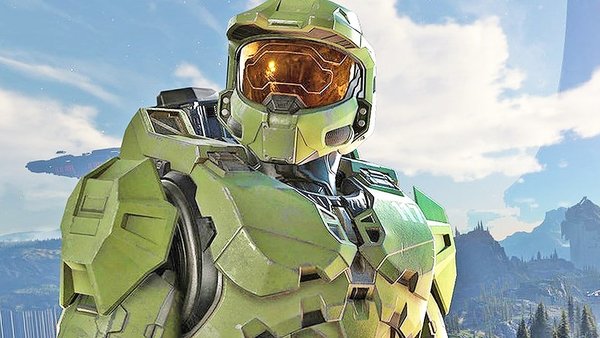
Call it the ramifications of the pandemic; call it a complete lack of planning on Microsoft's part to not spend the back half of the Xbox One's lifecycle generating eye-catching exclusives - the current console generation has failed to wow the masses, at least in conversation.
Thanks to a lack of first or third-party titles worth buying the systems for, it doesn't help the case for investment than Horizon Forbidden West, Gran Turismo 7 and even upcoming God of War Ragnarok are on PS4, with Xbox's flagship Halo Infinite still running impressively on original Xbox One hardware.
Though there are enough amongst the masses to snatch up a PS5 for the sake of it, it's hard to justify forking out so much money for a better frame rate, higher resolution or better vibration in a controller.
On the Xbox side too, we're yet to get a single "Xbox Series X|S exclusive" - an idea that in itself, feels deceptive. How can Xbox ever fully play to their strongest system's strengths, if they also have a marketing need to factor in a system more comparable to high-end hardware from the close of the last generation?
As for the Switch, Nintendo's hybrid wonder-machine is dominating sales charts thanks to a handful of polished exclusives and a great indie lineup, but Nintendo themselves are selling us less and less game day one. Mario Tennis Aces, Mario Golf: Super Rush and Mario Strikers: Battle League all dropped with the barest amount of content, seeing Nintendo release what would actually be worth full price in the following months and years to come.
Combined, you have a "new console feel" that means people are justifying exorbitant amounts of buy-in on frame rates and resolutions, not game design or any real mechanical improvement.
4. Monthly Services Completely Change Buying Habits
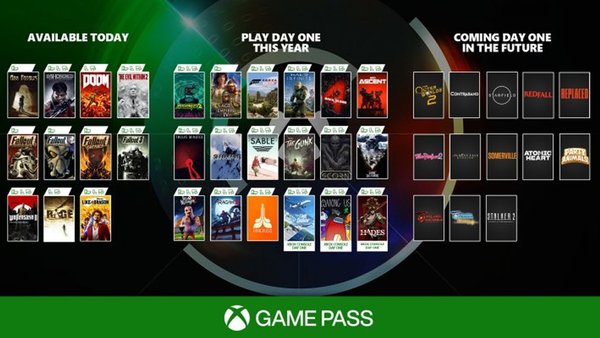
"I'll just get it on Game Pass"
"I'll wait and see if it comes to PlayStation Plus"
Honestly, why would anyone ever buy a full priced game day one, when monthly offerings are so unbelievably stellar right now?
Yes, PS+ has a lot of catching up to do when it comes to matching Xbox's monthly selections and day one Xbox Studios titles, but you're still getting insane bang for your buck. Middle PS+ tier Extra comes with almost every PlayStation exclusive of the last 10 years - a catalogue that put PlayStation first-party back on the map across 2010, and contains everything from God of War to Ghost of Tsushima, Horizon Zero Dawn to The Last of Us 2.
While all this is a net positive for the sheer discoverability of video games for the public, you can't deny the impact it has on how video games are marketed; how hype and conversation builds beforehand, and how you consume the medium at hand.
It's worth clarifying that none of this is a negative for the money-conscious consumer. Game Pass and PS+ are much better ways to enjoy games than broken day one releases, but monthly service catalogues only reinforce the idea that you should bide your time, avoid marketing spins and otherwise not engage with gaming as you once did.
3. Aggressive Monetisation Is The Norm

Did you know Diablo Immortal made $100 MILLION in under two months? That it's set records for Blizzard IP, mobile storefronts and the balancing act of "how much game do we need to get right, before we can start charging"?
Because it has.
Blizzard's divisive as hell, meme'd to death Diablo Immortal is one of the worst-reviewed games of all time... and yet, the general public don't care.
Don't get me wrong, there absolutely are victories against the likes of Anthem, The Avengers, Star Wars: Battlefront II and what will likely be a squeaky fart of a release for Gotham Knights, but the idea of aggressive in-game monetisation going away or being replaced by Battle Passes just isn't the case, and likely never will be.
If anything, we're seeing a combined effort.
The sweet spot for most people seems to be nailing the core mechanics of something enough, so that even if monetisation and premium currency pop-ups are constant, at least there's SOMETHING to actually play.
Multiversus is a perfect example. Once third-party devs started ostensibly taking the Nintendo approach I mentioned earlier - polishing a tiny amount of the game and monetising things afterwards or for a premium price point - it was off to the races.
Budgets for high-end video games aren't being relaxed. The industry's bigwigs simply don't think an audience will respond to 10 smaller projects versus a Far Cry 6, so the consumer has to pay the bills and keep shareholders happy instead.
2. You Can Look Forward To... More Sequels

Y'know what's cooler than a second Last of Us remake in nine years?
Whatever Naughty Dog are doing next. Whatever Rockstar are doing next, that ISN'T more GTA or another Red Dead.
As has become the case across most high-budget film and TV too, the "safe bet" is king, yet it's a fundamental maxim to our very being as humans, that we can't sustain on repetition. Eat too much of the same thing, you lose your appetite for it. Play, watch or listen to too much of the same game, movie or band, and it loses its allure. You need a break; you need something else. Maybe you come back to the beloved thing later and re-appreciate it all over again, but intermittence is key.
Hearing Todd Howard formulaically lay out that after 2023's Starfield, "Elder Scrolls 6 is in pre-production and, you know, we’re going to be doing Fallout 5 after that", was just about the most "foregone conclusion" approach you could possibly have to an industry otherwise associated with technological advancement and innovation. That's another 10 years of Bethesda already sewn up, and we can pretty much say right now what those games will be, and how they'll play.
There's a reason The Last of Us' 2022 remake rubbed people up the wrong way, and why Elden Ring felt like it held the mediasphere in its hand for a solid couple of months.
Humans.Need.New.Things. New stimulus, new conversations. In art and digital escapist spaces especially, it is paramount to never rest on your laurels.
1. You're Rewarded For Not Caring

SOMETIMES hype and losing yourself to a video game really pays off. I mentioned Elden Ring, and that game's rollout was every bit the icing on an already stacked cake, going down very well for millions upon millions of players.
The same does not go for MOST video games, though. Most releases are either over-hyped or misrepresented; either broken at launch or given far better releases months down the line.
Stump up the cash for the latest midnight release? You just bought the worst version of that game - one that will likely come to a monthly service later, is running on servers still adjusting to player counts, and will only get cheaper and perform better in a few weeks' time.
Disconnect from the gaming hype-cycle and you're only rewarded more. Game of the Year editions with patched bugs and glitches. One monthly fee for something that cost others full price. Apology tour PR cycles have come to an end, expectations are metered out by what the final product actually IS, and you can just enjoy a video game, as it should be.
Addressing and fixing advertising cycles, distributing budgets more evenly across a wider set of game ideas per studio and giving IP the care and attention it deserves - while fostering a space for new ideas at the top-end of development - that's what would make gaming exciting and healthy again.
There's a chance 2023 is the payoff we've been waiting for since even before the pandemic, and here's to that coming true.