7 Things Nobody Wants To Admit About Sekiro: Shadows Die Twice
We need to talk about the good AND the bad.

After many, MANY hours with FromSoftware's latest masterwork, my head is spinning with various positive and middling thoughts. There's clearly an exemplary execution of intent, craft and artistry from front to back, but all the same, many of the creative risks and expansions the devs have taken, arguably don't pay off as much as they could.
To parse this out, know that Sekiro is still a masterful game; something to be cherished in this particular time of loot grinds, "games as a service" and the increasing push towards mobile gaming, but that said, it's worth dissecting the potential negatives, if only to have a more rounded conversation on where Shadows Die Twice sits overall.
Because at this stage, FromSoftware are the critical darlings. Maintaining a streak of innovation and mechanically sound titles for 10 years now (starting with 2009's Demon's Souls), their arc from Dark Souls to Bloodborne and now Sekiro is filled with calculated risks and massive payoffs.
Shadows Die Twice might be the newest and most brutal test of gamer mettle, but in providing such a high bar of quality, does it stand up to scrutiny?
--
Note: Spoilers within.
7. The Story Is Torn Between Two Ideologies

Marking a major first for FromSoftware in "one of these types of games", Sekiro sees you control a main character, the "One-Armed Wolf". From any other dev in the current climate it would be considered baby steps, but now we've got a voiced protagonist, cutscenes and a solid motivation from the beginning of the game as to why you're fighting, or doing anything at all.
However, what starts out as a disgraced former shinobi having a lapse of memory as all those around him refer to a mysterious "event" that caused his downfall, turns into a completely different tale surrounding immortality and the lineage of the Ashina hierarchy.
For the former, we're given a bell that lets us travel back to the Hirata Estate three years prior, where a siege on one part of the land seems to bear some resemblance to why Wolf is in his amnesiac, forlorn state. Once you start talking to Kuro, the young Ashinian lord though, this ostensibly goes out the window.
It points to a need to try something new in terms of a more direct story - one with a defined opening mystery that can hook a wider player base in - and that clash with FromSoft sticking to their guns. Those "guns" in this case are story details and wider world lore being communicated through collectibles, items and weapons.
Maybe the entirety of Wolf's disillusionment comes from such things, or conversations I can optionally eavesdrop into, and that's more than fine, but the setup vs. how it plays out feels like two completely different approaches to storytelling.
6. Combat Is Deceptively Simple And Repetitive

Look, I've died a good 20 times to almost each boss and even a handful of key foot soldier enemies too, but Sekiro's new focus on dodging and parrying drastically reduces your options overall, when in combat.
I'll get to how the Skill Tree peters out in usefulness once you're past the mid-point, but overall, the main thing to overcome in Sekiro is when to tap L1/LB. Once you're pretty reflexive at matching an incoming blow with that button, that's pretty much it. Your learning is complete.
Yes, there's "which of the three things do I need to do if the red symbol appears", but again, you're matching one of three outputs with one of three inputs. Although it does mean that Sekiro's combat is far more intense and relentless than anything we've seen before, I can't help but compare it directly to rock, paper, scissors.
Ultimately, once you've conquered your fear of intimidating boss designs through sheer size or visual effects, this "learn the animations to a T", trial and error approach makes the vast majority of encounters feel too similar, with minimal room for improvisation on your part.
Where past FromSoft titles made you consider different weapons, builds or items, here you're boxed into a specific way to play over time, and it's almost Cuphead-like in terms of boss fights turning into "when X happens, do Y" until you win.
5. The Camera Can Kill You Just As Much As Any Enemy

A problem FromSoftware have had for literally a decade, any indoor encounter or time you're pushed up against the environment, will ALWAYS result in your character disappearing "under" the camera itself. This leaves you trying to predict what's happening as enemies wade in regardless, the end result being a quick trip back to the last checkpoint.
Worse still, is any mobile enemy can de-lock the camera, despite you tapping R3 to get a bead on them. Getting up close to any foe is essential to experiment with the appropriate parry windows, but from Lady Butterfly to Gyoubu to the Demon of Hatred, if they dart past you too fast, the game will completely lose track, forcing you to try and catch up. It's in this window where dying feels the most genuinely unfair.
It wouldn't be so hard if this was only resigned to environments or clashes with the world geometry, but speaking of Demon of Hatred, getting up close to him recreates another age-old FromSoftware problem: Seeing the camera disappear UNDER you, because a boss is too big.
In designing these massive, screen-sized bosses, or those with a focus on mobility, whether you're indoors or trying to close distance to attack a weak point, it remains a standout annoyance that the camera in these games occasionally just can't handle it.
4. Animation Priority Can Be A Massive Problem

This is clearly a design choice, but something that's carried over from the Soulsborne series, when it should have been amended.
See, those older titles were notably slower than what we have in Sekiro. Bloodborne and Dark Souls 3 are the closest comparisons in terms of sheer pace, but Shadows Die Twice introduces unblockable attacks, and it really likes to doll them out at times when you couldn't do anything but absorb the blow.
To explain, we need to get very granular with how Sekiro handles player inputs.
Rather than a system akin to something like Dead Cells - where a dodge or jump can interrupt any attack, climb animation etc. at any time, Sekiro "queues up" your inputs within a certain time window, occasionally resulting in additional swings if you've pushed the button again.
Now, it makes sense to remind the player of discipline - especially when it comes to button mashing. You should be mindful of what you're committing to, but where it gets strangely cheap, is after "committing" to a swing, in the time of that swing, it could be invalidated by an unblockable enemy animation.
Because you can't cancel out of your attack even if you register the on-screen symbol, it results in cheap deaths, despite you being more than aware of what needed to happen.
3. We NEED A Dedicated Heal Button

FromSoftware were so close. So very, very close to getting this right.
Why, when you're continually entertaining the notion of an instant-access, five item inventory on the D-pad, do we not have one button dedicated to healing? Yes, you can hold left/right to equip your Gourd, but in fights against the Headless, Shamans or anything that regularly inflicts Poison, Burn or Terror damage, you'll be flicking between cures and status reductions, just as much as healing overall HP.
By having to keep your eyes moving between the action on screen and some small icon in the corner - whilst also memorising the order of the five items you've equipped for that particular fight - it can result in eating a herb when you wanted to heal, or healing twice by mistake.
It's a tiny, tiny change, but when Down on the D-Pad is reserved for the always-out-of-combat Eavesdrop, it could've made all the difference.
Yes you can hold Left or Right to shortcut straight to the Gourd, but this is still finicky in the heat of combat, and doesn't get around the ease of a dedicated heal.
2. Tying All Heavy Attacks To Spirit Tokens Can Artificially Elongate Runtime
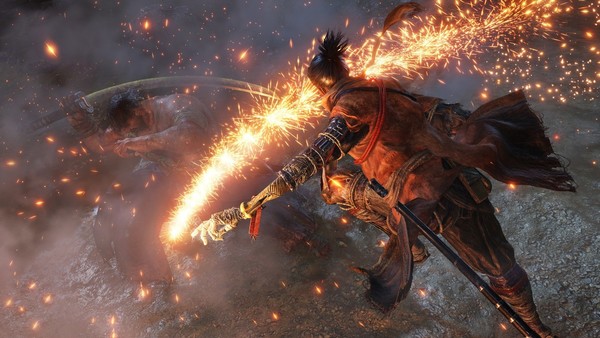
So you're down and out after being flattened by a boss, over and over (and over), and following a handful of losses in a row, you'll be out of Spirit Tokens, with no more Sen to exchange at a Sculptor's Idol.
This creates an interesting, albeit annoying quandary - one that affects what a "checkpoint" could/should provide for the player, in terms of a place to try again. Because in Sekiro, your heavy attacks/Prosthetic Tool uses are directly tied to Spirit Tokens; a currency doled out from dead enemies, bought at Sculptor's Idols, and occasionally found across the environment.
If you're out of them, you just can't use any tools, and the only option is to disconnect from the fight at hand, to attack a number of grunts and refill your stocks. It's definitely one to think on where you come down, as you could argue there's a massive benefit to offing every foe with just your sword, but the counterpoint would be that you're essentially forced to grind out additional enemies, at the most inopportune times, just to access your full moveset.
1. Post-Genichiro, A LOT Of The Focus Is Gone

The ultimate test of everything you've learned across those first few hours, Genichiro is an unrelenting beast of perfectly-timed attacks and dodges, alongside overcoming the reality of wielding lightning to down his third form.
Genichiro is for my money, the game's best-dealt card, and the highpoint of Sekiro combat overall. He takes patience and a pure tactical focus to surmount, and for me, everything thereafter felt all the more aimless.
Where the likes of the Shinobi Hunter, Gyoubu Oniwa and Juzou the Drunkard all had brilliant skill barriers forcing you to address spear counters, mid-air deflects and shield-bearing foes respectively, this idea of a "combat soup" where future foes would serve up all sorts of encounters requiring a mix of techniques to bring down, never comes.
Sekiro portents to drill down on the idea of "skill" being related to motor functions, rather than pre-thought or pattern learning. While the early game has a razor-sharp focus on meaningful unlockables twinned with a learning curve you need to master, this "elongated tutorial" doesn't bear meaningful fruit, and you're arguably left with something that peaks halfway through.