8 Amazing Games With Terrible Mechanics
Incredible games brought down a peg by one terrible piece of gameplay...

Delivering an amazing game is nothing short of a miracle, typically requiring an army of committed artists and technicians to pool their skills in harmony, often for many years at a time.
As such, it’s little surprise that the perfect game doesn’t exist, and even the very best ones aren’t without their notable flaws.
But sometimes incredible video games offer up a single loathsome mechanic which, while hardly ruining the entire experience, sticks out enough that you might question how it made it in to the final release at all.
That’s absolutely the case with these widely maligned mechanics, each of which invoked the ire of a substantial portions of the player base.
These mechanics might’ve even proven problematic enough to dissuade players from replaying the game at all, or in the case of the PC crowd, they may have sought out mods to remove these elements entirely.
Again, no game is perfect and it’s silly to expect as much from any project produced by human beings in all of their flawed, squishy loveliness.
But opposed to everything great in these games, you do have to wonder quite what the hell the developers were thinking…
8. Cait Sith's Box Throwing - Final Fantasy VII Rebirth

Near-universally accepted to be the low point of Final Fantasy VII Rebirth's mostly brilliant critical path, the Cait Sith box-throwing mini-game is eight pounds of hot garbage stuffed into a dirty nappy.
In the game's eleventh chapter, you'll be forced to take control of everyone's favourite robotic feline for a lengthy sequence inside Shinra Manor. This includes taking part in an utterly excruciating aside in which you need to pick up and throw a series of boxes to activate switches, break pipes, and manipulate machines.
Between the wonky, unresponsive controls, fiddly aiming, and Cait Sith's molasses-slow movement speed, it's absolutely infuriating to get through, and worse than that, it's the most aggressively dull example of blatant filler content in the entire main game.
While Rebirth's arguably excessive number of mini-games vary wildly in quality, most of them are at least relatively painless to get through. This one, though? It's like pulling digital teeth. Few players would begrudge Square Enix just patching it out entirely, honestly, because in a game that's already wildly overlong, this is one miserable late-stage nadir.
7. Blowing - Donkey Kong Country Returns

Donkey Kong Country Returns is a certified banger of a platformer, except for that one damn mechanic that, well, both literally and figuratively blows.
Throughout the game's levels, Donkey and Diddy Kong are able to blow air onto objects such as dandelions, burning Tiki heads, and windmills, in turn often revealing hidden items.
This involves crouching and then shaking the Wiimote on the Wii version of the game, or simply pressing Y on the 3DS port. Simple enough?
The problem, however, is that this mechanic brutally breaks the flow of gameplay, ensuring that any collection-minded players are compelled to stop and blow every damn thing in sight in order to see what goodies might lie in wait.
The mechanic was reportedly integrated at the request of Shigeru Miyamoto himself, yet feels like a clunky, pace-staunching addendum that should've never made it through testing. Nintendo evidently heard fans' complaints loud and clear, though, as it was nowhere to be seen in follow-up Donkey Kong Country: Tropical Freeze.
6. Carry Weight - Bethesda RPGs

There's a fundamental paradox in how Bethesda games give players the opportunity to hoover up so much loot around the game world, and yet, it's just a matter of time before doing so will leave you over-encumbered, in most cases ensuring you're unable to run or use fast travel.
While some might argue that inventory management is simply another survival mechanic in a game like Fallout 4, it ultimately crosses the rubicon of tediousness, and in The Elder Scrolls games, saddling magically-inclined characters with carry weight limitations just seems a wee bit silly.
As such it's little surprise that vast swaths of PC players will instantly install a carry weight mod whenever they start playing a Bethesda game, to ensure that arbitrary weight restrictions don't get in the way of a fun time.
It's the epitome of "realism" for realism's sake, even if it ultimately detracts from the fun factor. If players really want to hoard their wares, let 'em dammit.
5. Weapon Durability - The Legend Of Zelda: Breath Of The Wild

Grab yourself a drink and get comfy, because it's time to break open that discourse once again.
The Legend of Zelda: Breath of the Wild is a gosh-darn masterpiece just about any way you slice it - an ingenious reinvention of the series’ much-loved formula that promotes player freedom above all else.
Well, almost.
Without question the game's most polarising mechanic is the inclusion of strict weapon degradation. While breakable weapons aren't an inherently awful idea, the sheer brevity with which the average weapon lasts before splitting in twain quickly makes weapon management feel like a busy-work chore which takes away from the thrill of exploration.
This is made worse by both the lack of ability to repair your weapons and the game's relatively high degree of combat challenge. In a game that's so note-perfect in so many key areas, weapon durability is a tediously "game-y" fly in the ointment - a low-effort attempt to nudge players into switching up their combat strategy.
4. The Gummi Ship - Kingdom Hearts
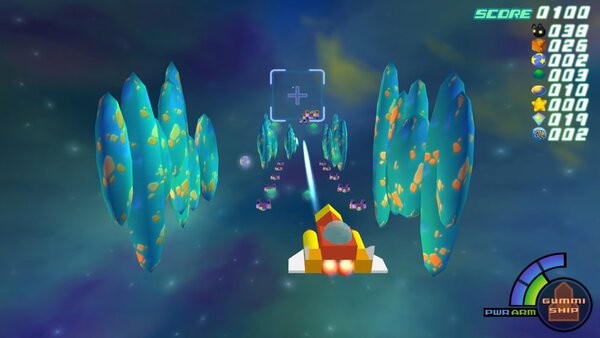
The original Kingdom Hearts is that rare miracle of a potentially cynical idea that actually turned out incredibly well - an act of corporate synergy between Square Enix and Disney that resulted in one of the most beloved RPGs of the last quarter-century.
That's in spite of those bloody godawful Gummi Ship sections, though.
Because getting to explore gorgeous Disney-themed worlds and kick ass alongside Donald Duck and Goofy apparently wasn't enough of a gameplay hook, Square Enix injected some "added value" by forcing players to pilot their Gummi Ship between the various game worlds.
These soul-sucking tedious on-rails shooting sections are basically the polar opposite of the game's exploration and combat - uninspired, artless filler in a game that's already long enough. A common habit for the publisher, unfortunately.
Though they toned these sections down considerably in the second and third Kingdom Hearts games, the fact they exist at all is bewildering. In a world filled with so much magic, can Sora and co. really not just teleport around?
Then again, seeking logic in the decidedly logic-allergic world of Kingdom Hearts is a most foolish errand.
3. Tripping - Super Smash Bros. Brawl

Super Smash Bros. Brawl is, like every other game in the series, a freakin' blast of a fighting game, especially when played with friends. That's save for one big, lumbering asterisk, though, by way of Brawl's maddening tripping mechanic.
Brawl introduced the small probability of a fighter tripping over while moving mid-combat - an unwanted arrival of "RN-Jesus" presumably intended to close the skill gap between players by adding an element of chance.
This naturally spiked the collective blood pressure of the competitive Smash scene, especially as there was no option within Brawl to turn tripping off. As such, serious-minded Smash players returned to Brawl's predecessor Melee in droves.
Even for casuals though, it felt like it trivialised the thrill of beating a pal during a hard-fought battle.
Outcry was deafening enough that Nintendo never returned tripping to the series in any subsequent releases - yet, anyway.
2. Rune Puzzles - Hellblade: Senua's Sacrifice
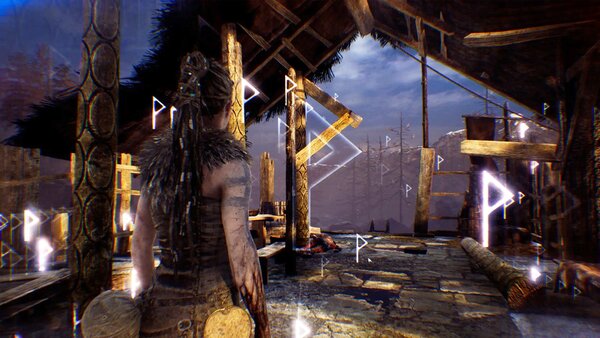
Hellblade: Senua's Sacrifice is one hell of an experience - a richly atmospheric fantasy-adventure game rightly renowned for its deep characterisation, world-class sound design, and gorgeous visuals.
It's also, however, a game that succeeds entirely in spite of its groan-inducing rune puzzles, where players have to use perspective to align symbols in the environment in order to progress onward.
It's a neat idea to convey to players how Senua sees the world while in the throes of psychosis, albeit one that quickly becomes more tedious than enjoyable.
As an attempt to wear the player's own sanity thinner than their supply teacher's elbow patches, it works, but in a game that's otherwise so beautifully hypnotic to play, these puzzles are a yawn-inducing stumbling block.
Needless to say, hopefully Ninja Theory has comprehensively reworked the puzzles for upcoming sequel Hellblade: Senua's Saga, or there's gonna be trouble.
1. Rubberbanding - Mario Kart 64

Now, it's hardly a secret that the beloved Mario Kart franchise employs the use of rubberbanding - providing off-screen boosts to AI racers to ensure that even the most skilled of players can't gain too far of a lead.
But if you haven't played Mario Kart 64 in a good while. you might not recall just how much more transparent and aggressive its rubberbanding is.
Continually doling out helpful items to those racers stuck at the back of the pack is one thing, but Mario Kart 64 never lets the player feel confident in first place, constantly forcing them to battle for the win no matter how well they're racing.
That might sound great to some, but it ultimately devalues the skill of being a great racer if you can just get hosed near the finish line despite running a near-perfect race.
The AI racers are basically glued to your ass in Mario Kart 64, and while players might complain about the rubberbanding in the newer titles, it's vastly improved from decades past.