8 Annoying Mistakes Video Game Developers Continue To Make
How are invisible walls still a thing?

When it comes to creating games, developers and creatives have come a long way. From the distant memories of Pong, to the glistening height of Breath of the Wild, games have transformed in a myriad of brilliant ways, always constantly innovating and expanding the horizons of the medium.
And while developers have spent decades honing their crafts and games are slowly becoming refined masterpieces, there are still a number of major mistakes that tons of studios continue to make. Whether it's in the name of saving time or there just isn't a valid way of solving a given problem in a particular game before - and sometimes after - launch, these mistakes always seem to crop up, despite the vocality of gamers.
Ranging from outdated methods of game design to clumsy implementation of supposedly innovative mechanics, there are always ways for developers to improve the experience. And in a time where developers are slowly catching onto the idea that maybe their target audiences know what gameplay mechanics and features they would like to play, perhaps the following mistakes and annoyances can be ironed out for good...
8. Levelled Missions

In theory, they make for a steady difficulty curve that can be easily monitored and keeps the player accessing content that equates to their level. In practice... not so much.
Most of the time you find yourself over-levelled due to playing side-missions or additional quests/missions, meaning that when you get round to the main progression, it's now beneath you, becoming exceptionally easy and losing the charm and difficulty that should've made it sing.
Games like The Witcher and Horizon: Zero Dawn suffer the most from this as they tie their difficulty into levelled missions. Instead of adopting a natural way of indicating to the player that maybe they should go level up, they flat out tell you, ruining that role-playing element. Instead of you as the character deciding the challenge is too tough, it's you as a player looking at the numbers and saying it's too much - a key distinction.
Other game like Skyrim and Breath of the Wild manage to scale enemies to your level, whilst still having powerful one-offs as deterrents to particularly tough areas. At no point does the game say you fundamentally aren't a high enough level, instead it lets you figure that out by getting your ass handed to you - a far more memorable and worthwhile method of player engagement.
7. Invisible Walls

Invisible walls are a relic of a bygone age of video games when games weren't optimised and the hardware that stored them couldn't hold up to the fancy graphics of modern gaming. They were an easy way to restrict the player's movements and took up next to no space, whereas designing and implementing a wall texture would.
However, considering the heightening of technical standards in video games over the last couple decades, you'd expect that invisible walls would slowly get weeded out from games, but somehow they still linger. There is nothing more distracting than running into an invisible wall expecting to explore a whole new part of the map, only to discover that you 'aren't meant to go that way'.
Also, developers that place a small pile of climbable rubble and think that that is a sufficient enough barrier to justify restricting the players access to the rest of the game - especially when we can jump or climb - need to think again.
Looking at you, Dark Souls 2...
6. Celebrity Voice Actors

When it comes to movies, star power can sell a premise. Dozens of movies have sailed through the box office based on the celebrities that are on the poster, but when it comes to games, there is a different standard.
A growing trend amongst games developers is to use celebrities as voice actors, despite next to no skill in that field. And whilst some of these actors are exceptional on screen, it takes a certain tenacity and degree of finesse to sell a character on a voice alone.
Instances such as Matthew Perry voicing Benny in Fallout: New Vegas or the infamous flop of Peter Dinklage's Ghost from Destiny rank amongst the many times voice actors have been out of their depth, and it's become clear that their names were the true selling point of the game.
Of course, celebrities do have their place in games, with some being exceptional voice actors (Mark Hamill's Joker being a prime example), but just flinging a celeb in to boost star power is a major faux pax that many studios need to outgrow.
5. Binary Moral Choice And Punishment

Moral choices have been growing in popularity for the last few years and it's easy to see why. In theory, they can change the story and gameplay in accordance with the player's actions, creating an engrossing and realistically interactive world. Having the way you play affect the world can be incredibly interesting, and make for some of the most engaging experiences.
So far, so good.
But there seem to always be two polar opposites that developers gravitate towards - a literal good and evil, with nothing in between. Various games make the 'right' path clear, with a heavy emphasis on the good route being the operative choice. Players are reprimanded and slapped on the wrists for choosing the evil route, with gameplay often becoming harder because of it.
It's even more frustrating when games like Dishonored offer up all these unique and creative ways to kill people, but makes an effort to punish you for doing so, often forcing you down the monotonous route of saving everybody instead. Moral choices can be good, but only when each choice is a viable decision, and there isn't a better path in terms of gameplay difficulty shifts and punishments.
4. "Play Your Way..."

Games are becoming more and more about choice, immersion and creating an experience that fully engrosses the player at every turn. To that end, developers always seem to be pushing the catchphrase 'play your way' - something that on paper does wonders for immersion, but in practice? Not so much.
Titles that adhere to this mentality often have a multitude of weapons, equipment and options in terms of firepower to deal with your problems, but it often becomes clear that the game was designed around a small handful of these weapons, with the rest simply being auxiliary.
The amount of mechanics that 'play your way' games pile on result in bloated games where there is a superior option that everyone eventually gravitates towards anyway. Everyone just ends up doing what's easiest instead of trying the myriad of convoluted and less effective options that the developers added in the name of 'variety'.
By all means, have a game that allows players to choose from multiple different approaches, but make them all viable. Or just pick one of the many mechanics that are present and refine it so players don't feel daunted by the vast amount of 'options'.
3. Balancing Difficulties

Games like Dark Souls excelled in a way that most games don't, because of their lack of a difficulty menu. Being able to tailor a game and make it the perfect difficulty to accentuate the experience is a valuable asset, and one that a lot of developers don't take advantage of.
Instead, they opt to make the game more accessible and have multiple difficulties, resulting in one of the most frustrating problems to grace modern gaming:
Finding the 'right' difficulty.
Having five or so options results in players never knowing which to choose - especially at the beginning - and often they can be so disproportionate to one another, resulting in Medium being too easy and Hard being nigh-on impossible.
If developers actually decided on a specific experiential difficulty and tailored their game around it, the overall experience would be far more confident. Or, there's the Infamous 2 approach that actively adjusted difficulty in regards to player skill in-game - anything that avoids letting the consumer blindly choose is for the best.
2. Collectables Don't Equate To Gameplay
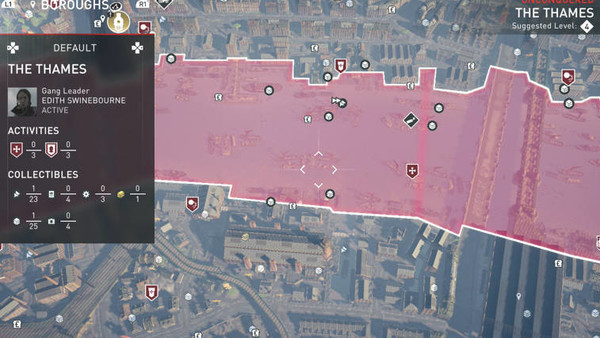
Collectables are a fun addition that enhances the gameplay experience in a small and largely unimportant way, the operative word being 'enhance' in that sentence. And while some developers have their collectables be small progress tracking additions, a lot of developers substitute gameplay for collectables.
Assassin's Creed is the most notable perpetrator with collectables being the main side activity beyond the story missions. Flags, chests, fragments, shanties, feathers and a whole host of other meaningless pieces of tat became fodder that packs out the game into a full length title.
It's a pretty important mistake that developers keep makingm despite there being numerous examples of ways to include collectables. Naughty Dog made Uncharted's actually mean something by unlocking small perks and cheats as you found them, and Horizon: Zero Dawn fleshed out the world itself through diary entries and audio diaries, all related to collectable components.
Collectables should have a purpose, not simply acting as checklists on the way to 100% completion. Simple as.
1. Bigger Isn't Always Better
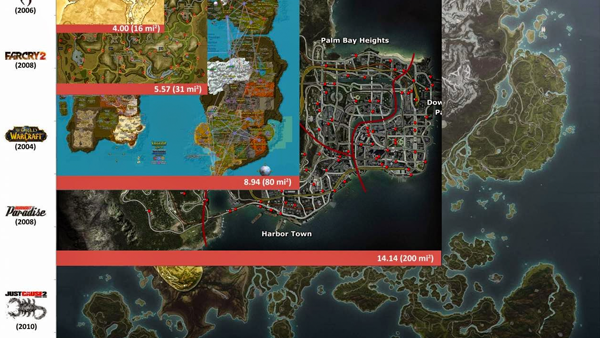
Bigger isn't always better; a lesson that a lot of developers seem to forget, yet an important one not only in game design, but life itself. There is a constant push for games to be bigger and better, more expansive and encompassing to the extent that map size can be a selling point in itself.
And that can be all well and good. Games like Skyrim excelled because of a massive space in which the player can explore - but not all games pull that off.
Having a bigger game for the sake of it can be detrimental in the long run, as a lot of titles profess their size as a major selling point, only to feel empty as that substantial space isn't filled. When developers create a massive map but don't have the content to fill it, you ultimately end up making the player commute half way across the world, only to do something tedious and dull (see the previous point).
Look at Shadow of Mordor - a game with a comparatively small world. Whilst it was small, there was so much to do, you could run from one end to the other without getting bored. Its size was considered and crafted, ultimately proving that just because technology dictates we can create massive game worlds, it doesn't mean we should.
--
Are there any other mistakes developers continue to make that frustrate you no end? Let us know in the comments!