8 Failing Video Game Franchises That JUST WON'T DIE
These franchises just won't stay down for the count.

As recent times have made depressingly clear, the video game industry is an incredibly volatile business, where developers spend potentially over five years working on a game that may or may not end up connecting with players.
This of course is why publishers are so afraid of new IP and will instead keenly return to the bread and butter of tried-and-tested successful franchises, because if there’s already an existing fanbase thirsting for more, why not cater to that need?
Yet it’s tough to keep a franchise feeling fresh and relevant in a medium as fast-evolving as video games, and so it’s sadly incredibly common for franchises to end up going stale and declining in popularity.
Now, nobody’s saying that these franchises need to be taken out to the wood-shed and put down, but given how they’ve been in the critical and perhaps also commercial doldrums for so long, it’s shocking that they’re still registering a pulse at all.
To say that these video game series have flopped and left most fans disinterested is quite the understatement, and yet each continues to clamber on towards the next instalment. As cooked as these franchises might seem, they’re still hanging in there, steadfastly refusing to evaporate into the cultural ether…
8. Need For Speed

There's no denying that Need for Speed is one of the most statuesque racing game franchises of all time, and though it celebrates its 30th anniversary this year, it's tough to deny that the series has been running on empty for about a decade.
The last truly high quality Need for Speed game was 2013's Rivals, after which we saw the microtransaction-fuelled mobile game Need for Speed: No Limits, 2015's utterly forgettable franchise reboot, middling follow-ups Need for Speed Payback and Need for Speed Heat, and most recently the dead-OK Need for Speed Unbound.
Need for Speed is a franchise that just doesn't have anything fresh or interesting left to offer. Unbound even opted for a more heightened, cartoonish art style in what felt like a desperate attempt to help it stand out from the pack.
Though the series seemingly continues to perform well enough for EA to keep pumping sequels out - likely due to modest production budgets - Need for Speed has near-zero relevance in the current gaming sphere, feeling like a mere dusty, moldy relic.
It'd be unwise to bet against the franchise's survival at this point, but if it did go away, would most people even notice?
7. Silent Hill

To say that Silent Hill fans have been suffering for the better part of 15 years is an understatement indeed. The hit survival horror franchise kicked off with four amazing-to-solid mainline entries, after which the returns began to diminish significantly.
Silent Hill: Origins, Homecoming, and Shattered Memories had their cheerleaders, but certainly felt like lesser entries compared to what came before, as fans begged Konami to just produce another full-fat Silent Hill game worthy of the original quartet.
But the publisher responded instead with 2012's disappointing Silent Hill: Downpour, a widely-panned "HD Collection" of the second and third games, and naff PS Vita spin-off Book of Memories.
After that, Konami introduced and swiftly cancelled Hideo Kojima's enticing Silent Hills project, and left fans waiting the better part of a decade for their next Silent Hill game.
This turned out to be last year's disastrous interactive streaming series Silent Hill: Ascension, followed by the mostly terrible free-to-play game Silent Hill: The Short Message earlier this year.
Silent Hill certainly has a lot of the projects on the horizon, though sadly few of them look truly promising.
Hiring the wildly uneven Bloober Team (Layers of Fear) to develop a remake of Silent Hill 2 has many fans up in arms, and the numerous other Silent Hill projects in development - like Silent Hill f and Silent Hill: Townfall - suggest that Konami is spreading the IP thinly without having a concrete idea of where to take it next.
The franchise hasn't done anything even close to remarkable since Shattered Memories in 2009, yet like the shambling inhabitants of the titular nightmarish town, it just keeps coming back.
6. Destiny
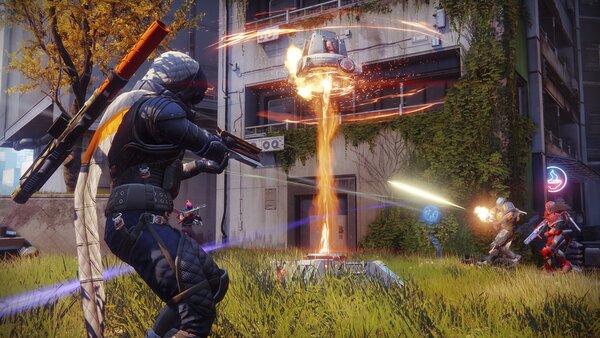
The Destiny franchise has had nothing if not a tenure filled with ups and downs, from the first game's underwhelming 2014 launch to the massive improvements made with various expansions, and the 2017 release of Destiny 2, which was largely deemed a fair improvement over its predecessor.
Destiny 2 in particular has had a rocky relationship with players over the years, though, and while we can't say that the franchise is dying - after all, last year's Lightfall expansion posted record-breaking Steam numbers - in terms of pure enjoyment and inspiration, it feels like the series is long past its peak.
Despite its outstanding central gunplay, Destiny as a brand feels tired and played-out, having wrung just about every last morsel of interest from its lore, loot, and general gameplay.
As a result, player excitement for upcoming content just isn't there, and while it should be a mere matter of time before the bottom finally falls out and a mass player exodus begins, Destiny 2's free-to-play nature likely ensures that it won't be categorically dying off anytime soon, even if it might be in a bankrupt state right now.
5. Just Dance
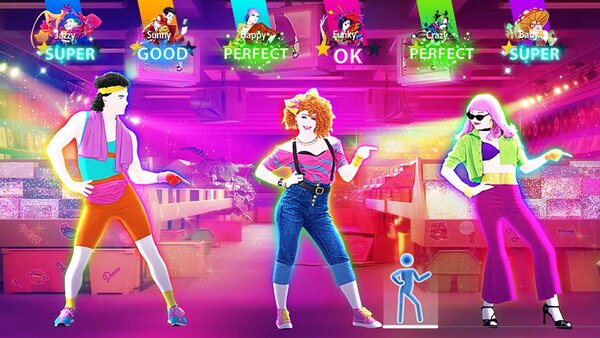
If you're not into rhythm games - or at least, not this type of rhythm game - it's incredibly easy to underestimate the popularity of the Just Dance franchise, which became a reliable, budget-conscious IP for Ubisoft after first launching on the Wii in 2009.
Since then, a new Just Dance game has released every single year like clockwork, in addition to more than a dozen spin-offs. Hell, the franchise proved popular enough that Nintendo kept releasing the games on the Wii all the way until 2019's Just Dance 2020, more than five years after Nintendo stopped manufacturing the console itself.
Just Dance's critical reception has never really risen above "not bad," and though the series never became a cultural juggernaut quite like Guitar Hero, it nevertheless has a loyal core fanbase which has kept it afloat.
But it finally appears that the wheels have started to come off the franchise - Just Dance 2023 underperformed in sales, likely due to the middling player reception amid Ubisoft's attempts to turn Just Dance into a live service property moving forward.
Going by the Just Dance subreddit, even long-time fans are feeling burned out by the series' well-trod formula and Ubisoft's craven attempts to wring cash from customers without giving them a content-rich product.
Just Dance is at least cheap enough to produce that it probably won't die anytime soon, but artistically and in terms of basically pleasing the fans, it's in a downward spiral.
4. Far Cry

The Far Cry franchise celebrates its 20th anniversary this year, and it's fair to say that it's come a long way from the comparative modesty of the original tropical-themed FPS.
Far Cry 3 saw the series' popularity skyrocket with the introduction of more memorable villains and a more vibrant open-world, helping popularise many of the now-tired tropes associated with this type of game - most infamously, radio towers.
Far Cry 4 and 5 followed much the same formula to rock solid success, though the downturn became evident when Far Cry 6 received mixed notices from critics and fans alike for clinging too early to a template that was losing its lustre.
This led to the game underperforming sales-wise, enough that Ubisoft hasn't even bothered providing much sales data since release.
While a single sub-par game won't be enough to sink Far Cry - and the seventh game will surely be announced in due course - it does indicate that without some serious innovation, interest is only going to keep waning.
3. Halo

Once upon a time, Halo was the FPS franchise to beat, with the series' original trilogy serving as major gemstones of the Xbox brand.
But the quality took a bit of a dip with Halo 4 - which saw developer Bungie subbed out for 343 Industries - and Halo 5: Guardians proved wildly divisive with fans, for both its lackluster single-player campaign and microtransaction implementation in multiplayer.
2021's Halo Infinite was decently received upon launch, but it simply lacked the staying power to keep all but the most die-hard fans playing in perpetuity, causing the Steam player count to steadily decline in the 18 months after release.
Add to this some major internal turmoil at 343 between layoffs and scrapped projects, and it feels like Halo's best days are long behind it.
343 are reportedly "all but starting from scratch" with the franchise moving forward, and while this could get things back on track long-term, it doesn't paint the most encouraging picture for a series which used to be the dominant console FPS beyond compare.
2. Alone In The Dark

It's truly fascinating that the Alone in the Dark franchise continues to exist, seemingly in spite of itself.
The classic survival horror series launched back in 1992, and though the original game remains much-loved for its atmosphere and innovative gameplay, the series' reception has been wildly all over the place ever since.
Alone in the Dark 2 and 3 received relatively lukewarm notices, enough that the franchise took a six-year hiatus until 2001, when it was resurrected with the not-bad, not-great Alone in the Dark: The New Nightmare, the mediocre sales of which put the series on ice once again.
Since then three more attempts have been made to shock the IP back to life, with 2008's mediocre Alone in the Dark, 2015's atrocious third-person shooter Alone in the Dark: Illumination, and this year's reimagining of the original game.
With the new title releasing to mixed reviews in an incredibly crowded period for AAA games, it seems like the series has likely failed yet again. But given its baffling tendency to defy the odds and keep on trucking, it'd be foolish to count Alone in the Dark out at this point.
1. Dynasty Warriors

Dynasty Warriors seems to be one of those franchises that just keeps going, because it's amassed itself an extremely dedicated stable of core players who will assuredly buy each new game, no matter the reviews.
The series' popularity peak was unquestionably in the PS2 era, and though its output has slowed considerably in recent years, Dynasty Warriors 9 ended up releasing back in 2018.
Reviews for the launch version of the game weren't pretty, though, with even die-hard fans decrying Dynasty Warriors 9 for its cynical transition into barren, bland open world gameplay, its mediocre story, and generic, repetitive gameplay.
This did nothing to stem the series' steadily declining sales in recent years, likely explaining why we've now gone more than six years without a new mainline Dynasty Warriors game - by far the longest gap between sequels since the series' inception.
While Dynasty Warriors 10 will almost certainly happen sooner rather than later, the widening gap between releases and the brand's overall commercial downturn suggests it's basically on the slow march to irrelevance.