8 Hugely Controversial Video Game Endings That Divided The Fans

Metal Gear Solid was always controversial, but V's ending is something else.

So you're 60 hours deep, you've mastered the controls to a near-symbiotic level and all-round you're loving every second of what you're thundering through. Across the marketing for your respective title you've been told it's the "last one", the "culmination of everything that went before", a general consensus emerging from both the developers and the fans of putting their all into one last hurrah. Now, chances are you're thinking of Mass Effect 3, but this list isn't always about closing chapters, instead it's worth pointing the finger at all those games that just couldn't stick their landings whatsoever. Bioware's magnum opus was set to wrap up one of the most beloved franchises in gaming history, but for now, let's just say that... wasn't the case. Not by a long shot. However, the point to be made, is how much does the pressure to deliver subsequent instalments in a well-regarded series, effect those behind the execution? Most recently it's Metal Gear Solid V that's being pulled in all directions by scores of fans either hating how things went down, versus those that think it's the best thing ever. That aforementioned sense of expectation and assumption is on the fan end too, which almost always leads to us either loving or vehemently despising how things turn out. Stir such an already potent mixture with the passion and dogged devotion gamers have to their favourite titles, and you've got a recipe for either the send-off a game deserves, or a sour taste that'll last for an eternity.

8. The Last Of Us

Naughty Dog's critically-praised masterpiece has mostly been hailed as gaming's "Citizen Kane moment", but the overwhelmingly positive nature of its reception belies a lot of the discussion on fan forums and comment sections that totally favour the opposite. In a nutshell: After surviving a perilous journey across a zombified, apocalyptic Boston countryside, protagonist and father Joel has built up one hell of a familial bond with travelling partner Ellie. Faced with the realisation she would have to be sacrificed to cure mankind, he instead butchers the surgeons working on her unconscious body, escapes the hospital facility and lies to her face, saying they could've never made a cure in the first place. https://www.youtube.com/watch?v=5TwdUn8WqOk The case for: The very reason the 'Citizen Kane moment' comparisons are thrown around is directly because of this scene. Games have done the whole "You're the villain all along" trick before, but never in such a morally grey kind of way. It works in the most direct way possible by asking you to think of the one person in your life you couldn't live without, and then if you'd make the call to let them go for the sake of saving millions of strangers. Such a question and its setup could translate to book, film or TV and be just as impactful, and as the scene played out and you realised what was happening and why it was happening, is what will truly stick with you. The case against: If the game really wanted you to consider what you would've done, it should've allowed for both outcomes and split the ending in half. Those who wanted to save Ellie were free to do so, whereas the rest of us could've turned Joel back during that pivotal moment in the surgery room, opting to let him walk out with no further damage done. Joel's anger and rage towards the Fireflies would've been his way of dealing with the loss, and as we never really saw him grieve over daughter Sarah aside from the immediate shock, could've let such an arc of destruction speak for itself.

7. Red Dead Redemption

Easily many peoples' Greatest Game of All Time sheerly because of how much you get pigeonholed into a fairly dour final scene, Red Dead's ballsy choice to kill off the main character in one of its final scenes always brings about some of the staunchest opposition from those who thought it was way too forced. In a nutshell: After tracking down all his former comrades and taking them out, retired outlaw and family man John Marston eventually returns home to his wife and son. However, disgruntled and bitter Sheriff, Edgar Ross, randomly leads a militant force to take him out, where despite Marston putting up one hell of a last stand (letting you try and take down as many law enforcement as possible before the inevitable happens), still gets mercilessly gunned down. Following this we jump ahead three years, switching control to former-farmhand and son, Jack, as the game gives you the option to track down your father's killer, should you know where to go and what to do. https://www.youtube.com/watch?v=VU1vbPbm9r4 The case for: Delivering your own redemption by emptying a six-shooter into Edgar Ross's chest is one of the most satisfying moments in gaming history. Sending him floating off down the river makes for a perfect showcase of everything games can do better than film, and because you seek out Ross of your own volition, makes avenging him fairly personal for you, too. The case against: Many gamers simply felt betrayed they couldn't do anything against the inevitability of Ross' betrayal. His decision to hunt and kill Marston only comes from a few embittered exchanges, and can feel fairly cheap considering how much of RDR we'd spent surviving far worse, outnumbered circumstances. Hunting down the Sheriff was a fantastic endpoint, sure, but by switching you over to a character who'd only really been in a couple of scenes, made it feel like a last-minute inclusion designed to get people talking, as oppose to something truly earned.

6. Mass Effect 3

The one everybody and their granny knows about. Mass Effect 3's ending was so bad and phoned in, it got EA voted The Worst Company in America by an army of ardent fans weaponising their keyboards to make some dint at the money-grubbing behemoth. The cultural and critical reception was so poignant, Bioware released an 'Extended Cut' featuring motion stills telling additional story details, whilst also confirming hugely important DLC character Javik was supposed to be in the game all along. He sat alongside additional paid-for downloadable packs that contained information yougenuinely needed to understand the ending. A complete travesty no matter which way you look at it, ME 3's ending overshadows every conversation the series ever gets brought up in. In a nutshell: After building up a solid foundation of interwoven race-relations, love interests and devoted soldier-types, come the game's final moments all your preparation and trilogy-wide game time was for nothing. Instead, you had a one-sided conversation with a random A.I. that was controlling the Reapers, after which you literally chose your ending from what was essentially a menu. https://www.youtube.com/watch?v=Y5ebN1dW9CA The case for: The Reaper invasion was always supposed to represent the inevitability of all life in the universe: expiration. By having an ancient program ensure the galaxy began anew ever few thousand years, it stimulated new life forms and technological advances, as well as nurturing every race's survival instinct to progress further in the next cycle. (Or something... it's very hard to defend this one. Sound off in the comments if you can make anything of a positive case for it). The case against: Everything. Absolutely everything. The final showdown against a Reaper tech-infused Illusive Man came out of nowhere, and the conversation you have against the Starchild A.I. is unbelievably one-sided considering every other exchange you have in the game. Your own crew who you've built up genuinely loving relationships with are shown randomly abandoning you, and the game's 'three endings' are the same cutscene edited with different coloured explosions to indicate your decision. It's lazy, was unfinished by Bioware's own admission, and the decision to let you pay additional money for the ending and information you needed is just disgusting.

5. Halo 2

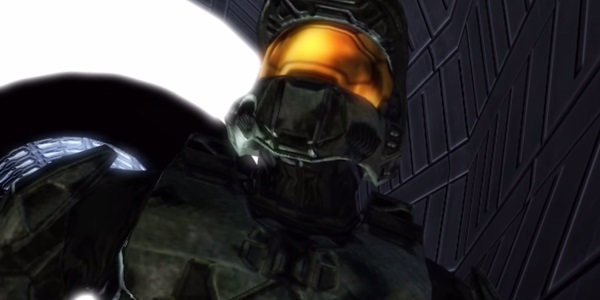
It's a little-known fact that Bungie had to kowtow to Microsoft's deadlines, releasing Halo 2 in what was essentially an unfinished state; but it resulted in an ending that's one of the biggest cliffhangers in gaming history - something that considering the first Halo was a gaming revolution in every aspect of its being, split all those who played right down the middle. In a nutshell: Playing once again as Master Chief, much was made about controlling The Arbiter; a rogue alien Covenant soldier who also sympathised with humanity's cause thanks to being tortured by his own kin at the start of the game. However, his story took up a huge portion of your game time, and just as we were starting to enjoy playing as the Chief again, he mounts a bomb about to be dropped on a Covenant ship and the game cuts to credits, ensuring you'll buy the sequel to get what you wanted all along. https://www.youtube.com/watch?v=azcrz_59pmI The case for: If you've read the books or comics surrounding the Halo universe, you'll know Master Chief is only a tiny portion of what makes up the franchise's appeal. As such, taking the focus away from him and onto the Arbiter was a genius move, framing MC's exploits through the lens of someone else, much like Raiden to Solid Snake in Metal Gear Solid 2. When control finally returns to the Chief, you get a handful of incredibly fun, tight missions that demonstrate his abilities, before setting up the final part in what was always described as a trilogy, to be the big finish. The case against: As simple as the "You had ONE job" meme; all Bungie had to do was give us more of that exquisite Halo gameplay, although we didn't realise just how much it mattered who was delivering those Grunt-smashing punches or lobbing those plasma grenades. There was a fantastic feeling of empowerment being humanity's one-man frontline deployment-tank, and as soon as you took that away - only to try for some badass one-liner finale - it went to hell.

4. Assassin's Creed

It might be on the doldrums now, but across the late 2000s Assassin's Creed was the game everyone just had to play. A killer sci-fi-meets-ancient civilisations mix made for one hell of a reveal when we realised it had a huge amount of modern-day story content packed in, creating a story that meant you 'jacked-in' all Matrix-style into the locations from the trailers. In a nutshell: After slowly unravelling the modern day plot elements and realising you were just one of many human experiments trying to tap into your ancestral DNA-stored memories, AC first features a boss fight against a super-powered religious leader, before zipping back to the modern day and revealing you've 'inherited' the ability to see what another test subject wrote on your cell wall. https://www.youtube.com/watch?v=fu42CF4oMj0 The case for: Remember, this was when the entire modern day part of the plot was one of its strongest assets. The whole "What's really going on with Abstergo?" stuff was extremely interesting, and back then we thought the series was going to train Desmond up to be an assassin himself, so seeing the Eagle Vision stuff in action before discovering all the locations around the world we could be heading to, was mesmerising. The case against: Like how Metal Gear Solid's increasingly ridiculous plot threads put anyone off who preferred the more grounded original, Assassin's Creed choosing to have a mind-controlling super-device at the heart of the evil Templars' plan was just ridiculously out of place. There's also the debate around whether the appeal for AC lies in the historical setting or the modern day stuff, as if you favoured the former, disregarding Altair's portion of the tale to end on Desmond (which only worked if you'd thoroughly explored the area in the first place) was just a monumental misstep.

3. Gears Of War 3

Lead designer Cliff Bleszinski's final entry in the series became the best and most definitive take yet. Both previous Gears games had pretty big spectacle-filled endings - but part two in particular simply focussed on you pointing an uber-weapon at a large plant, before giving you a victory screen after a few seconds. As such, all bets were off on whether it'd be a return to antagonising boss fight victory a la General RAMM, or more of the same. In a nutshell: The enemy Locust were forever answering to a mysterious Queen Myrrah, and facing off against her was a fantastic mix of cover-based retaliatory strikes versus hopping between cover to avoid lasers. When all was said and done, questions surrounding Myrrah's humanoid appearance were cast aside as Marcus Fenix's dad succumbed to his own cure for a planet-wide mutant infection, leaving Marcus to kill Myrrah in revenge and watch the sun rise. https://www.youtube.com/watch?v=yT3vZ9-T7oU The case for: The scene with Marcus' father is quite touching in its suddenness (the guy literally turns to ash within seconds), before Fenix finally takes the time to rest, removing his headband as long-time comrade Anya arrives and holds his hand, hinting at a potential romance between the two in the process. It's a nice personal touch to an otherwise gung-ho string of games, and proves Gears always had a heart underneath all the chainsaws and gunfire. The case against: It just isn't very satisfying. Despite giving it your all to save Professor Fenix and the planet, he crumbles and Marcus slips into a "Now it's all over"-style depression as he looks out towards the sun. The biggest overarching plot point is left to interpretation, and although the game shows you the positive effects of all your actions, actually ends on a total downer.

2. Bioshock

2K Games and Ken Levine combined to create a game for the ages back in 2007; a fantastic little first-person shooter that - intentionally or otherwise - revolutionised everything we thought we knew about player agency in video games. In a nutshell: After the medium-defining "Andrew Ryan twist" knocked you for six as we realised every helper-character's mission objectives were actually their own contribution to your character's mind-control, you're given a big, dumb boss fight against a Hulk'd up Frank Fontaine, before alternating auto-trigger cutscenes show you the consequences of how you treated the Little Sisters. https://www.youtube.com/watch?v=ewGATu7U67A The case for: Levine likes to make games that have equal brains and brawn, so if you'd bought into the general notion of what 'power-gone-mad' looks like in its various guises throughout the game, you could make the argument that Fontaine's outward appearance mimics that of his innermost desires. Dealing with the Little Sisters was an incredibly emotional gameplay mechanic across the game too, and getting a concise and visually impactful wrap-up for whichever path you went down finished everything off nicely - keeping the big talking point focussed on the previous Ryan moment. The case against: When you were taking part in unwillingly beating Ryan to death, there was a true sense of gaming advancing to the next level in terms of narrative - something that should've extended across the rest of the story. Andrew Ryan's motivations were sublime, but after his arc is over it feels like Bioshock peaks way too early. Without the requisite pathos given to Fontaine's transformation or giving the Little Sisters something more than a glorified slideshow, it leaves a sour aftertaste to one hell of a main course.

1. Metal Gear Solid V: The Phantom Pain

The culmination of 28 years of game design, all masterminded by controversial plot-spinning maestro Hideo Kojima. For the grand finale and his bow-out performance, it was always going to be a divisive one, but there's no room for wiggle room here; you're either staunchly opposed or firmly in support. In a nutshell: Following a good 60 hours of building a nation free of governmental oppression by recruiting hundreds of soldiers, it's revealed you were playing as a mind-controlled doppelgänger, a former medic who underwent surgery to look just like the real Big Boss - put in place to divert attention away from the real Snake. Everything you've done and lived is a lie, and all the interactions you've had with key characters are all part of the most elaborate ruse since Raiden in MGS 2. https://www.youtube.com/watch?v=edQvG6Gdxqc The case for: At the beginning of the game when you're asked to create an avatar and enter your name; this is the 'real' you that's going to be revealed at the close of the story. By literally letting you create a face that mirrors your own and having it be the one that fulfils the ideology of Big Boss at a pivotal point of the game's timeline, as a fan, gamer or prime director of the story, YOU are directly responsible for all the actions of the franchise. Kojima's long mentioned how much of a passionate connection he has to Metal Gear's legions of fans, and by doing all of this; it not only puts you into the game, but means the entire franchise - both in-world and real life - only happened because of your participation. Brilliant. The case against: Because you were never playing as the real Big Boss, his actions as perceived by the rest of the world and games in the series are left up in the air. We never see what turns him from hero to villain, why he thought this switcheroo was a good idea in the first place, what the repercussions were for his best friend Kaz, and everything in between. Raiden's switch was to showcase Solid Snake's skills and abilities from another point of view, whereas MGS V's is to make a comment on peoples' reputations exceeding their own actions; yet falls down considerably when such a thing is the basis for the entire game's existence in the first place. What's your most controversial or disappointing game ending so far? Let us know in the comments, and where you stand on MGS V!

Gaming Editor
Gaming Editor

WhatCulture's Head of Gaming.