8 More Video Games That Totally Wasted Their Biggest Selling Point
How did Resident Evil 6 squander the greatest team-up of all time?!

Unlike movies or TV, video games aren't really built around one single feature, story or premise. By their very nature they're often an interplay of all of these different aspects, focusing on a multitude of different gameplay mechanics, plotlines and tones.
The very best are able to do all this while tying them to a cohesive overall theme, but the majority are content to throw everything at the wall and let players pick at whichever threads they want to pursue.
While that can make for a great time, it sometimes means that one key element the game is sold on - for instance Mass Effect: Andromeda's promise of exploring a brand new galaxy or Star Wars Battlefront 2 allegedly spinning a story from the point of view of the Empire - turns out to just be one feature amongst many, and isn't given the focus in the actual game that it probably deserves.
Suffocated by other ideas, these are premises could have set titles apart from the competition if done well, with fans waiting years to see how they were brought to life in the games themselves, only to realise later that the developers had squandered their potential.
--
Note: Our first instalment in this article series can be found over here.
8. Becoming The Classic Lara Croft - Rise Of The Tomb Raider
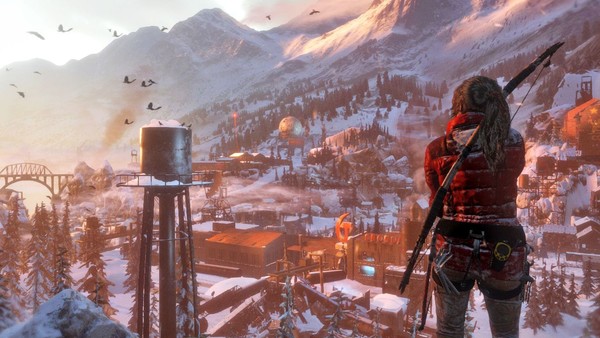
After putting Lara through hell in 2013's Tomb Raider and chronicling her transformation from a helpless young woman into a genuine hero, Rise of the Tomb Raider was set to pick up with a version of the character closer to the confident, capable adventurer found in the original series. Unfortunately, that's not exactly what players got.
The problem is perhaps inherent to being the middle part of a trilogy; Lara Croft had come a long way since the first game, but she still wasn't quite where she needed to be, stuck in a kind of developmental limbo.
The devs still had the punishment=growth mentality of the first game, putting her through the wringer in order for her character to evolve. But after so much torment in the initial title it felt a little gratuitous, and in away rendered her arc in the original a little redundant.
Consequently, it made for fractured characterisation and diminishing returns, making a lot of fans wonder why Crystal Dynamics were dragging this origin story out over three whole releases.
7. Black Mask Isn't Black Mask - Batman: Arkham Origins

Though it's often forgotten about, Arkham Origins was still a great entry in WB's Batman series, chronicling The Dark Knight's early years and dealing with The Black Mask, who'd put a bounty on the hero's head.
However it was more interesting because it was the first game that didn't cast The Joker as the main villain, instead letting a different member of Bats' rogues gallery take the reigns for once. That's what everyone thought, anyway, until it was revealed halfway through that The Black Mask was actually The Joker in disguise, and that he was the mastermind the whole time.
We knew he'd be involved, but it was promised that he'd only be a minor character, showing Batman's first interaction with his arch nemesis. The Black Mask was still technically in the game, but the majority of the time it was actually The Clown Prince of Crime in disguise, orchestrating every major event.
6. The Dark Zone - The Division
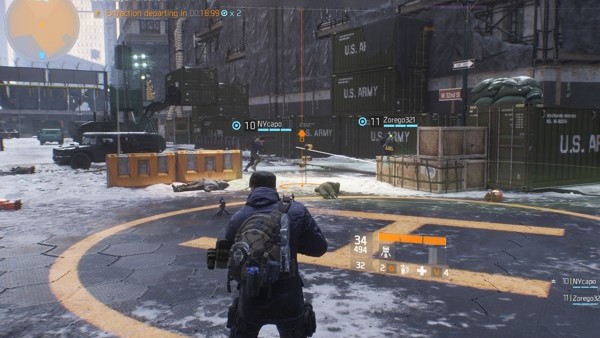
Look, there's no denying that a lot of what was promised in the early trailers for The Division didn't make it into the final release. Entire areas of the map changed, graphics were altered and the story itself seemed to go through radical revisions, but the idea of playing in a huge dystopian sandbox with other players, risking your supplies against real-life enemies, always remained.
And that experience was certainly present in the final game, but it was its own separate beast, isolated from the rest of the gameplay. PVP was only possible in the Dark Zone, which had its own currency system, loot, and styles of gameplay. There was some crossover with this area in the rest of the title, but it wasn't a cohesive, seamless experience.
Consequently, there was no way for other players to get the drop on you, or any sort of PVP element unless you really wanted to seek it out. While some players might have preferred that, it made The Division feel like any other shared-world shooter on the market, rather than the tense, post-apocalyptic experience it was sold as.
5. "Frank Being Back" - Dead Rising 4
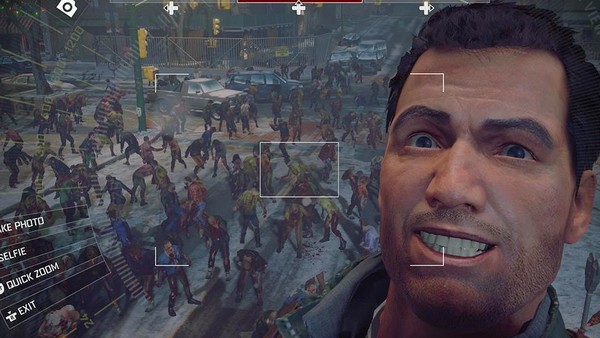
Although the Dead Rising series has gone through plenty of protagonists since it debuted back in 2006, it was Frank West who's always been the fan favourite. It might have simply been because you always remember the first time more fondly than the rest, but Frank's dry personality and seeing the zombie apocalypse as more of hindrance to his job than anything else helped make him a hero players could connect to.
Unfortunately, he never officially appeared as the main character in the series again, until Dead Rising 4 promised to bring him back. Picking up with an older Frank (now with a new voice actor) and even returning to the original game's mall, the sequel promised to be the return to form fans of the early games so desperately wanted.
It wasn't though, and while there were other issues, the biggest disappointment was Frank himself. Instead of nailing the character again, the developers ramped his personality up to 11, to the point where it felt like somebody cosplaying as the hero rather than the character himself. A new voice actor didn't help either, because while he wasn't bad, it just wasn't the Frank everyone was looking forward to catching up with.
4. Werewolf Hunting - The Order: 1886
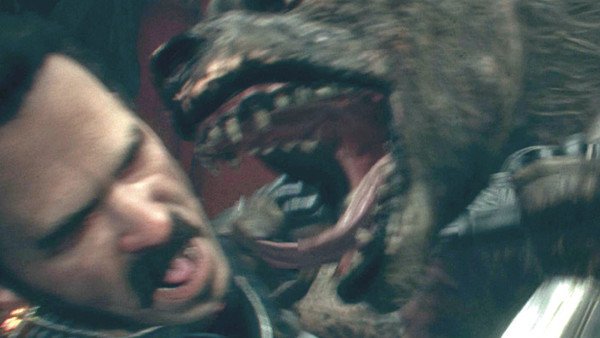
When the reviews for The Order: 1886 came out, it wasn't the criticisms about the length or the shooting mechanics that were the biggest red flags, it was that the game apparently didn't even care about the werewolf combat that pre-release trailers were entirely based around.
Fans still held onto hope though, because the developers surely couldn't squander a premise as cool as players lurking around Victorian England and waging a secret war against supernatural creatures. Of course, that's exactly what happened.
The bulk of the gameplay was actually centred around the same old human shootouts that players could get in any other (and far more competent) third-person shooters, with the supernatural battles coming few and far between. Even worse, when they did show up they all played the exact same, with absolutely no variety.
In a way, then, it's probably for the best players were only subjected to them about three times.
3. Open-World Horror - The Evil Within 2

The Evil Within 2 is easily one of the best survival horror games in years, not only because it's built around old-school mentalities, but also because it blends these features with brand new influences. The most impressive was the inclusion of open world areas, something which gained most of the attention in the run up to release.
It's easy to see why as well, as the open world of The Evil Within 2 essentially proved why the genre has been so stagnant. The idea of exploring an area on your own, not knowing what's around the corner and what will be in the next building, was exhilarating, with the developers somehow managing to cram in emergent scares that worked just as well as the tightly-scripted ones.
Unfortunately, there are only really two sandbox areas in the game, and the latter half of the title is virtually devoid of them. The rest of the content is far from bad, but after you've tasted the open world it's hard to go back to corridor shooting, something which The Evil Within 3 will hopefully remedy.
2. Three Different Campaigns - Resident Evil 6

Resident Evil 6 was the game that was supposed to please every single fan of the iconic horror franchise.
Attempting to balance the survival horror of the originals with the campy leanings of 4 and the balls-to-the-wall action of 5, in order house all of these different styles under one umbrella, the devs came up with the idea of splitting the sixth game into 3 different campaigns (four if you count Ada Wong's secret missions).
That was a great premise, but unfortunately the team didn't quite live up to their vision of presenting three different versions of Resident Evil in one complete package. Chris' story was the Gears of War clone that everyone thought it would be, while newcomer Jake had shades of Resident Evil 3, but that was undone when you started karate chopping zombies to death.
Leon's campaign was the closest fans got to the "classic experience", and while it started out well, even that devolved into the same explosiveness that the rest of the campaigns were built around.
It was ambitious, and the way these stories interacted with each other was admittedly cool, but there's no denying that the campaigns were nowhere near different enough to justify the split.
1. Hicks Being Alive - Aliens: Colonial Marines

In the whole backlash after Aliens: Colonial Marines misled players with dodgy trailers and delivered a game that barely functioned, what didn't receive the ire it deserved was just how much the developers botched the canonical story they were handed.
In the rare position to tell a new story set between Aliens and Alien 3, the pre-release hype focused on Michael Biehn's Corporal Hicks, with the story apparently going to delve into how he actually survived and how his "dead" body ended up with Ripley in the third film.
Hicks did turn up, of course, but the explanation was piss-poor, and the story probably would have been better if he wasn't there at all. His plot was slapdash at best and insulting at worst, taking an iconic character and absolutely wasting him in a plot that was supposed to be official canon.
Of course, this was all on top of the devs promising a tense first-person shooter experience where you had to adapt to the unique A.I. of the Aliens, only to make players spend the majority of the game fighting against dumb human soldiers.