8 Popular Video Game Trends That Were Never Built To Last
Nothing screams 'next generation' like poor-quality video.

We've all been there. Just as you're sitting down to enjoy that fresh new copy of a PS4 blockbuster, along comes a massive update that stops you from playing the game you've just forked out on. Best put the kettle on, because this could take a while.
Gaming used to be so much simpler, right?
Wrong. Oh, how wrong. 'Day One' patches may be an issue in today's industry, but the video game market has always had various tropes specific to a certain period of time. Hopefully, such epic 'updates' on release go the same way as trends of the past that were never really built to last in the long run. Unnecessary, expensive DLC, you can beat it too.
Not every trend has been a bad one though, and yet it's still true that most of them disappear over time. That's what happens in an industry that's ever-changing.
Technology is both a blessing for pushing things forward and a curse for getting in the way of cherished memories...
8. Demo Discs

The humble demo disc. The ideal way to check out some upcoming releases without having to latch onto a "friend" at school who has games you want or convince your parents to spend an absolute fortune. These little beauties came included with PS One magazines of the day and were absolutely priceless.
Eventually, the likes of PSN and Xbox Live allowed developers to upload demos for download, but that wasn't the case during the 90's. Instead, players wanting that sneak peek at Final Fantasy VIII or the next Tomb Raider title had to pick up these action-packed discs. Often, they were more valuable than the mag they came bundled with.
The increased move from physical to digital made demo discs redundant by the time the PS3 and Xbox 360 came along. Before those consoles however, the chance to play a handful of levels from upcoming gems was very much welcomed, especially if cash was tight.
7. Cheat Books
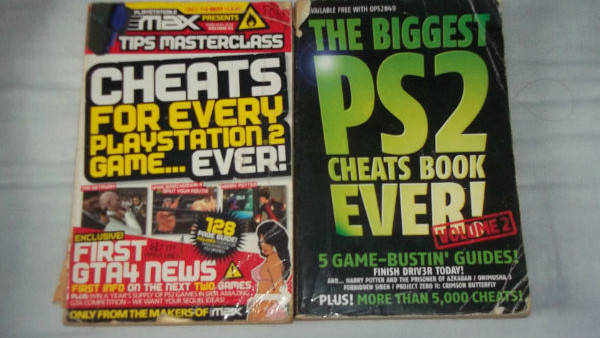
Want infinite ammo for your rocket launcher in GTA III or unlimited lives to help you beat Crash Bandicoot? Well, you better pick up a cheat code book then, and lose yourself in an endless flurry of button combinations. Don't be fooled by the "hints and tips" though, they're not as cool as the real cheats that make gaming easier.
Cheat codes have died out in today's gaming market. Back in the day, magazines came with these books strapped to the cover as extra goodies. Shops even sold cheat books by the thousand, because apparently everybody wanted to scam their way through the latest games.
It's hard to pinpoint exactly why cheats are no longer a huge part of gaming, but it's easy to understand why the books aren't. Why buy one of these manuals when you could fire up Firefox on your iPhone and a quick Google search will do the trick?
There's just something magical about those yellowed pages that younger generations won't understand.
6. Obnoxiously Long Quick Time Events

On the surface, Quick Time Events (or QTE's for short) are a novel idea. Video games have always strived to be interactive, movie-like experiences, so there's nothing wrong with developers creating more cinematic experiences. Sadly, some games are bogged down by the need to watch film-like footage and press buttons at the right time.
Full games have even been published with QTE's at the forefront. Remember Fahrenheit on the original Xbox? How about Heavy Rain on PS3, a game that was remastered for the PS4 and bundled along with Beyond Two Souls for more 'this isn't a movie, honest', fun. Problems occur when QTE's are shoe-horned in.
Used sparingly, they can be effective, but who wants to conduct entire boss battles this way? Surely shooting all on your own is preferable to waiting for prompts? Gaming still uses Quick Time Events, but they're not nearly as obnoxious as they used to be. Thank God for that.
5. Dedicated Rhythm Games For Specific Bands

Rhythm titles like Guitar Hero and Rock Band have made a lot of money for a lot of folks over the years, so there will always be grand ideas to squeeze another game out. That's fine. What hasn't been embraced so readily are those band-specific rhythm games like those revolving around The Beatles, Metallica or Van Halen.
These seemed like a good idea for hardcore fans, although they are more restricted experiences when compared to the general party-style releases from Harmonix, Neversoft and others. Therein lies the issue: gamers were expected to stump up a lot of cash to play through only one band's back catalogue, with (at times) little room for expansion.
Guitar Hero Live did see release in 2015, as did Rock Band 4, but the whole idea of music peripherals in general has taken a hit. Things were getting ridiculous, because people had everything from fake guitars and microphones to plastic drum kits sitting around the place.
Sometimes, all you want is a basic controller.
4. Motion Controls
On that subject, remember the Nintendo Wii was released in 2006 and threatened to change the way people played video games forever? We've heard it all before, Nintendo, because some of us are old enough to remember the Power Glove and Power Pad. Some may even recall 'R.O'B', your gaming robot.
Motion controls were at the core of the Wii experience, and the idea swept across gaming like a cure for cancer had just been discovered. Both Sony and Microsoft wanted in on the action, releasing Move and Kinect respectively, but it turns out motion control was just another flash in the pan that couldn't oust the might buttoned controller from the throne.
This has been proven by Nintendo's own switch back to controllers for their new console, one ironically called the Switch. There are still motion gimmicks attached, but the Switch is a much more traditional system than the Wii ever hoped to be, even with the 'play at home or on the go' marketing.
3. Memory Cards
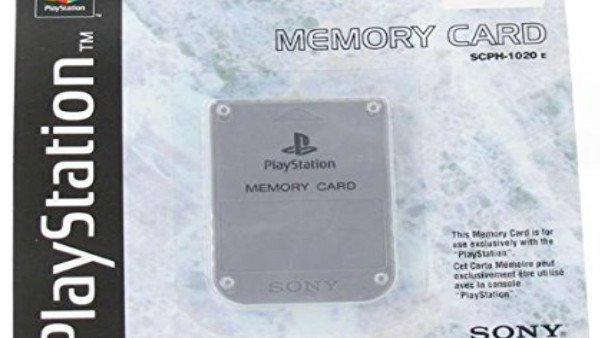
It may baffle gamers who only picked up their first console last generation, but there was a time when players were content to start games from the beginning every time they booted up. Those who could afford it picked up a memory card. This was Sony's way of saying, "Hey, pay more to save" on the original PlayStation.
Now, games save effortlessly to a HDD or even Cloud systems online, but memory hasn't always been so simple. Hell, when the PS2 released the system even made it sound like buying a memory card was the only way to continue the game. We're looking at you, SmackDown: Just Bring It, you little tease you.
Hilariously, original memory cards could store a paltry 1 MB of data. That isn't a typo, we're talking one solitary megabyte here. The PS2 would later bump that up to 8 MB, like that was something to shout about. Now, in an age where standard PS4's have 500 GB of storage space from the off, these cards are antiquated relics from gaming's past.
2. Password Systems
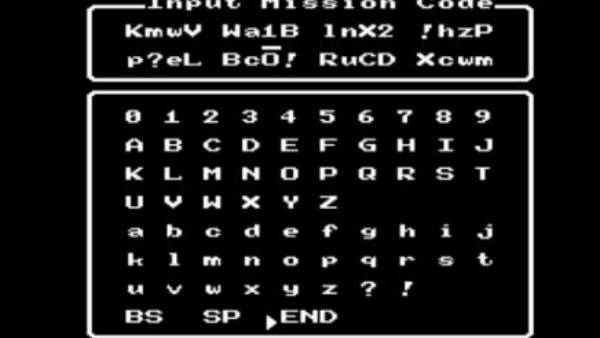
Just like memory cards, there's absolutely no need for passwords in today's gaming world. After all, what purpose would they serve? Back in the day, passwords only existed so that players could skip to a specific level after using up all their continues.
This is a good thing too, because some games featured torturous, lengthy passwords that just seemed totally needless. Why would any developer make a password 32 characters long, for example? The only explanation is that they wanted to frustrate gamers to the point of just ignoring passwords entirely. It should not take you longer to put the pass in than complete the level you're trying to play.
The advent of built-in memory wasn't what blew passwords out of the water, it was those aforementioned memory cards. Bless them for coming along and removing the need to distinguish between capital letters or juggling symbols. For all its own problems, gaming is definitely easier with storage space.
1. Full Motion Video Games
Take yourself back to a time before on-demand streaming services, or even before DVD. That was a world gamers of the 90's existed in, and that's why so many got so excited about the prospect of 'Full Motion Video'. FMV for short, this feature usually meant you'd see video clip cutscenes in between levels.
The Sega Saturn didn't limit things to that extent though, that console boasted about full-blown FMV games like Night Trap and Sewer Shark. These 'interactive' experiences relied on the gimmick too much and can't properly be passed off as video games. On this occasion, the 'video' part of the medium was taken too far.
Games today rarely (if at all) include scenes like this, because somewhere along the line developers realised that the quality was so poor. Who wants to watch stripped-down, hazy clips when the actual graphics are more visually appealing to begin with? This is one trend that didn't have legs, and it's no surprise FMV games are a thing of the past.
--
What other video game trends have you seen burn out or fade away? Let us know down in the comments section below!