8 Reasons Sekiro Is BETTER Than Dark Souls
You are not ready for what FromSoftware have created.
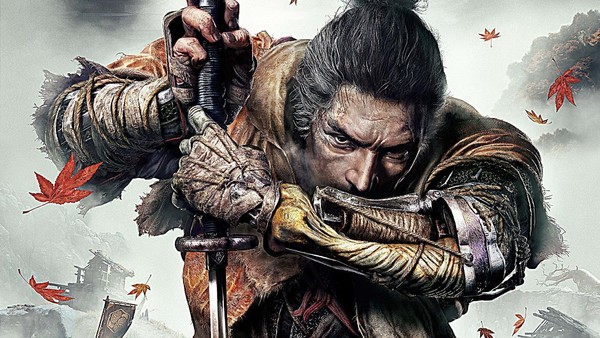
Look, I know what you’re thinking: "Hey, that’s a nice inflammatory title you’ve got there - it's really going to go down well with the Dark Souls crowd."
Well you know what? Thanks to Activision sending us down to London to play Sekiro for a closed doors session, I’ve had hours of time with Shadows Die Twice, and enough time to KNOW that there are simply some areas of the game that ARE more refined than those of its great grandfather.
So put down your Zweihanders and let’s fat-roll over to the land of the rising fun, as I’m not slagging off Dark Souls, I’m just saying improvements can and have been made. While this game "is not Dark Souls!" it maintains a development style and many clear similarities - all of which make comparisons apt.
Now, off we go.
--
8. Streamlining Combat

Sekiro punishes those who wait. While positioning has been an important part of other FromSoft titles, a lot of emphasis was on waiting for your chance to strike; a lot of "shields-up and turtle-poke"ing to get the enemy to react.
In Sekiro, it’s about making your own opportunities.
This is accomplished through the sheer amount of combat options at your disposal. If an enemy is guarding a lot in an effort to waste time until his mates show up, then break that guard with a charged attack or heavy swing from your axe. If a musketeer is taking pot shots, break from combat with the grappling hook and eliminate him from the mix using stealth.
Guarding and parrying are on the same button now, which makes it much more viable to deflect attacks even when your back's against the wall. The sometimes iffy parry window from previous games is gone, and it’s clear when you can and can’t negate a strike.
There’s no stamina meter either, meaning that you can break from combat quickly or continually dodge and jump out of sticky situations.
What does govern everything is "poise", represented by a bar that fills when you hit enemies and take hits yourself while blocking. If it fills and breaks then it’s either an insta-kill opportunity for you, or you’re going to be in for a world of hurt. It’s clearly displayed above enemies on-screen, meaning you always know how tantalisingly close you are to opening up enemies throats, without obstructing the flow of combat.
7. Freedom Of Movement

One of the most immediate things you’ll notice when booting up this game, apart from that sweet sweet arm, is that you have a jump button. Now i know you had a jump mechanic in Dark Souls and Bloodborne, but this was a, let’s just say, rather clunky affair.
Here’ the player can jump freely, over obstacles, enemies and even jump kick off walls in order to access new areas. This is a huge departure from previous From Software titles and the range of options this opens up is immense. If an enemy is battering you, you now have the option to dodge vertically and escape. If you want to get the drop on a group of foes, you can now leap across buildings and position yourself with ease.
You can even use your hookshot hand to grab certain enemies from afar, closing the gap and even knocking them off balance, meaning that battles gain yet another level of player investment and a greater degree of control.
6. Checkpointing
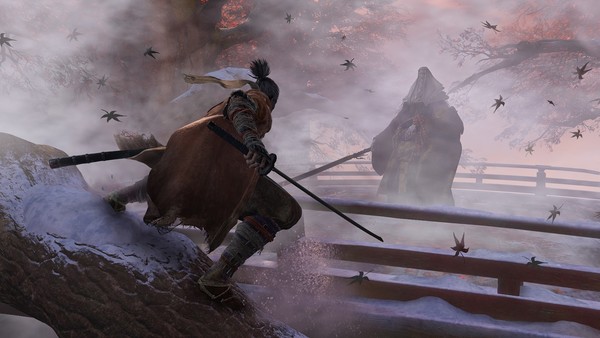
One of the more frustrating things about Dark Souls - besides those a-hole blowdart sniper chaps - was the immense slog that faced players between checkpoint and boss upon death. One of the quintessential gaming desires is “one more go”, and while I respect the decision to tease this expectation out to teeth-shattering levels, Sekiro is much fairer when it comes to checkpointing.
Instead of dying and looking at a punishing 15 minute journey back to the boss, Sekiro posts spawn points more frequently, making progress and success feel like a more constant event. This in turn is great at keeping player investment high, as it’s less likely you’ll walk away from an encounter knowing you can try again far faster.
In my eyes, it’s not a weakness to have a more frequent points of respite, because the combat between these moments is still chaotically fast and visceral. The ability to jump back into fighting bosses and growing in skill alongside makes time fly by.
5. Storytelling Is WAY Clearer
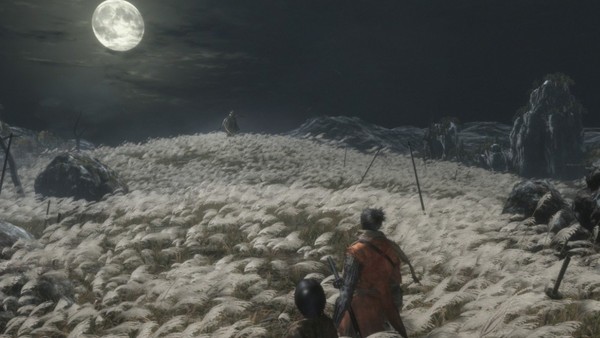
Now this might be seen as either a massive positive or a negative, but regardless of your feelings on the matter, Dark Souls and Bloodborne tell a lot of their world lore through item descriptions and obtuse dialogue. Personally I love this, but I know a fair few people that would feel completely overwhelmed and therefore disconnected from the game as a result, therefore knowing that Sekiro is much more direct with its storytelling will be of some consolation.
From the outset you’re given a clear direction by your Lord who asks for Sekiro to protect him and swear loyalty, then we find out our protagonist has no recollection of the events that led him to become a disgraced warrior in the first place. All this sets up the idea of travelling through memories to unlock new information, as the death of a central figure drives the desire to seek revenge.
Some fans might see this as a more shallow affair than the Soulsborne games, but there is a more direct, immediate and ultimately personal tale on show. Thankfully, with Hidetaka Miyazaki at the helm once again, it still carries that trademark FromSoft sense of weight and drama the studio are famous for.
4. Character Progression
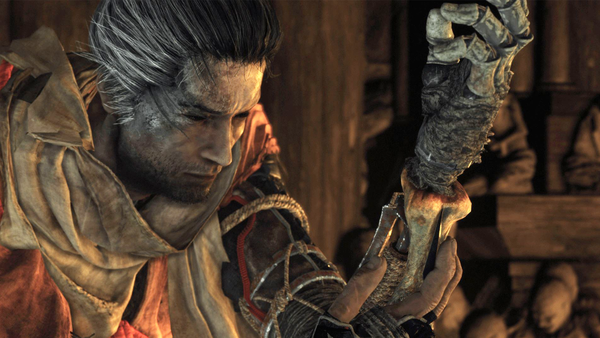
Well, to put it bluntly, there is some. I’m not saying Dark Souls and its sickly ilk are devoid of progression whatsoever - far from it. "Fashion Souls" becoming one of the more popular expressions of creativity in the series is definitely a thing, however when it comes to your moveset, it's the same after 5 minutes as 5 hours.
To truly shake things up, Sekiro introduces skill trees and development.
In a clear effort to ease some of the criticisms pointed at the lack of weapon choices, Sekiro allows the player to not only level up their strength, but also invest in skills that will customise how they play. You can create a flurry of whirlwind strikes to push back groups of enemies, you can slide around them to get quick back attacks and even learn to deflect mid-air against enemies that look to knock you from the sky with arrows.
From the start of my time with the game to the end, I felt like I’d developed both as a player, and that my lone wolf had grown as well. It even couples well with the narrative threads of the game, in that Sekiro unlocking skills as he begins to regain his memories makes sense.
3. Enemy Variation

Woah woah woah, even I have to stop myself here. I don’t mean in terms of design, I mean that in the first 5 hours of gameplay in Sekiro, you experience so many different bosses, sub-bosses and regular enemies that nearly every new section felt like it was introducing something new and exciting.
Even the low level grunts have a menagerie of styles; some have pots and pans which they bang to alert others, some have bows, muskets, spears, shields, axes. Some are armoured, some throw rocks if you try to escape and others are just basic fodder. What this means is that the combat feels like a constant juggling act, and rewards quick-thinking alongside enemy prioritisation.
Then we have the named “sub-boss” enemies which are sometimes so challenging that it’s a real sense of achievement just beating them.
In my playtime I found shogun generals with two handed swords, spear wielding Shinobi Hunters, massive drunkards with curved blades and because of the balancing and constant introduction of fresh faces, it managed to keep the game feeling innovative even if I died multiple times.
Many fans have spoken of “Souls fatigue” in terms of tackling the same enemies en mass, and this addresses that head-on.
2. Stealth
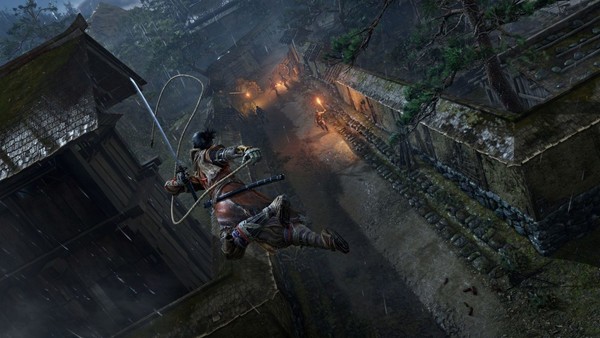
There was an almost audible cry of excitement from our office when we saw the stealth sections announced as a major part of Sekiro, and with good reason, as lest we not forget that From Software has its origins in the Tenchu series. Which I might add, are great games.
The implementation of stealth is not just a throwaway combat option either, as the game teaches you early on (through the use of a giant snake) that being unseen is an almost essential tactic in order to thin out enemy ranks.
By taking the time to sneak past enemies you open up opportunities that wouldn’t be possible otherwise. For example you might be able to sneak behind a group in order to take out a sentry or some ranged foes, or you might be able to get the drop on a particularly difficult sub boss to take a whole pip of their health off.
When you consider that these named characters can drop you like a bad habit, this becomes an essential arrow in your already bursting quiver.
1. Sense Of Empowerment
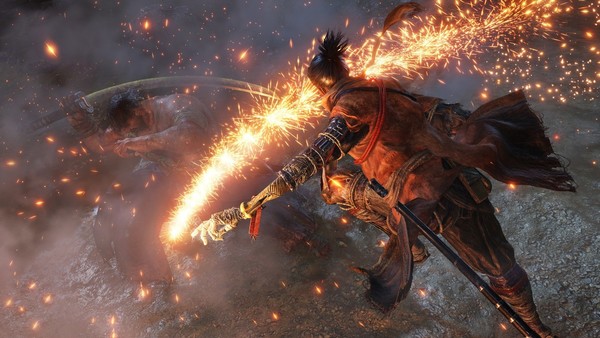
As you can tell, I think Sekiro is a phenomenal game, and it all boils down to one point: I feel this title nails the balance between player vulnerability and empowerment.
For example, you’ll come across an ogre you’re told is afraid of fire, and when you battle it, you realise that this is not going to be an easy fight. Heed the message and travel to another area though, and you’ll find the flame-spewing arm accessory, making this fight a little easier.
The player is thus broken down to the point of defeat, but if they pay attention to the information given around them pre-fight, it's possible to find an item that can help immensely, thus restoring the sense of worth and achievement they get from defeating the enemy in the first place.
The SoulsBorne series has always rewarded fighting smart, and Sekiro uses that to encourage players to explore new areas, develop as a character and make the most of every item you get.
This mentality, coupled with the speed of the combat, the mobility of your character and the sheer range of options available means Sekiro pulls off something truly outstanding, and a true contender to Dark Souls' crown as the king of considered third-person action.