8 Scrapped Endings That Almost Ruined Great Video Games
How to make The Last of Us just another action game.
Crafting a good video game story is virtually impossible. Game development is an ever-changing beast, and even a slight alteration to a level, line of dialogue or story beat can mean hours of extra work across departments and previously-completed code thrown out. Despite this pressure, it's not unheard of for entire stories to get scrapped months before a game is set to ship - which is exactly what happened with the original Destiny - forcing the devs to cobble something together at the last minute.
This is all on top of deciding how to actually tell a story as well. Which characters deserve to live or die? How much control should players have over the outcome? Should the final scene wrap everything up, or tease a sequel so fans definitely want to return in a couple of years time?
Sometimes developers and writers are able to identify when they've made a mistake or something isn't right though, and save a story before it's doomed. It's not easy to admit the work you've created isn't up to snuff, but these games rightly scrapped their original endings, and they're all the better for it.
8. Multiple Endings Were Dropped For One Great One - Mafia II

Mafia II is such an underrated game. At the time it was criticised for not having a bunch of activities to engage with in its open world, but that was never what the first two games were about. The sandboxes were always there to drive the story, rather than give players the freedom to do whatever they wanted.
However, the developers of the second (and best) game apparently did envision players having a little more agency than what they eventually got, at least when it came to the ending. When building the sequel, the idea was for there to be four different resolutions depending on the player's actions, potentially even including one where you could save Joe, who in the main game is surprisingly taken away to be whacked in a final twist.
When play-testing was underway though, the devs apparently realised that players were actively seeking out one of the endings, and rather than lumping them with three "ok" finales, they opted to axe them all for a single canon one that more fittingly tied up the characters and themes.
Though these alternates would have been cool to see, it's undeniable that Mafia II's single ending was the correct one to go with.
7. Lara Croft Murders Amanda In Cold Blood - Tomb Raider: Underworld
Like Mafia II, Tomb Raider: Underworld is tragically overlooked in the gaming world. Possibly because it came at the tail-end of the franchise's original run, with players feeling old Lara Croft was outmoded and Nathan Drake was in, a lot of fans passed it up.
It had a pretty solid story though, once again concerning series villain Amanda Evert, who revives the former ruler of Atalntis, Jacqueline Natla. The game followed Lara tracking the duo down while fighting back against a whole bunch of creatures from Norse mythology. It's pretty cool, and Croft even wields Mjolnir at one point. God of War eat your heart out.
The whole mythology stomping tale, of course, ends with Lara saving the day and leaving Amanda, but the original ending had a final fight between the two, and it's a brutal encounter that would fit more at home in the grittier reboot series. After a scuffle in a snowstorm, Lara shoots her nemesis, and after contemplating finishing her off, leaves her to the elements.
Cold - both literally and figuratively.
It's a cool-as-all-hell scene, but wouldn't have fit with this version of the character, and it's ultimately much more bleak than the regular ending, which sees Lara making peace with her mother on a more conventionally happier note.
6. Nate Vs. Sam Was The Endgame - Uncharted 4

It's no secret that Uncharted 4 was originally supposed to be markedly different from the game we actually got. When it was announced via that ominous, stunning trailer back at E3 2014, series creator Amy Hennig was still on directing duties. She'd later part ways with Naughty Dog a few months later, leaving it up to The Last of Us' creators Bruce Straley and Neil Druckmann to step in and salvage Nathan Drake's finale.
Instead of continuing Hennig's original vision though, the new blood threw out a bunch of work that had been completed and retooled the story to fit their own interests. The basics were kept the same - Drake's brother Sam being a major character, a hunt for lost pirate treasure - but everything else was radically different.
For one, Sam would have been a main antagonist, forcing Drake back into the adventuring business. They'd reconcile in the end, but butting heads would have drastically altered the brothers' dynamic.
The very ending scene itself was something that was constantly up the air as well, even after the new directors came on board. Neil Druckmann described the game's initial final scene as being too vague, ending the series on a shot of Drake, Elena and their dog after returning from their latest adventure.
The director didn't think that was final enough, and posed the question: "How do we know in a year he doesn't go back?" Consequently, the new epilogue was created, giving the two a daughter, and ageing them up to the point where more life-threatening trips abroad wouldn't be possible.
5. No Post-Credit Twist - Prey

Prey is one of my favourite games of the entire generation, but I can understand why the ending is divisive. Throughout the title, you play as Morgan Yu, a scientist battling back against an alien infestation on a space station. However, the final post-credit scene reveals you're actually one of these aliens, who's been implanted with the experiences of the real Yu and relived their battle in an experiment to see if the species can learn human ways of thinking.
That's because the aliens have already attacked Earth, and this is the only way of saving humanity. The game uses the decisions you made throughout the experience to judge whether or not the experiment was a success, and then cuts to black, leaving the fate of the world hanging in the balance.
It's an ambitious ending, but it's jarring to realise that you haven't been playing as the real Yu. According to the devs, this was an idea which came late in development, and the team went constantly back and forth on the separation between the entity you are at the end and character you thought you were.
Presumably, originally the game would have ended before the post-credits sequence, but while it is divisive, that stinger certainly does do a great job of making your decisions matter. Hopefully Prey 2 happens, and the devs get to explore its ramifications in full.
4. A Whole Bunch Of Different Cliffhangers - God Of War 3

Back when God of War 3 finished up, it ended the trilogy on something of an ambiguous note. Kratos had defeated his enemies, but after being brutally beaten, a post-credit scene teased his disappearance, leaving it up to the audience to figure out what came next. It was a bit of a sequel tease, showing that he was still out there, but rounded out the Greek Mythology saga in a satisfying way.
However, because each game in the franchise was helmed by a different director, each had their own plans for finishing Kratos' journey. GoW 3's lead man, Stig Asmussen, discussed the outlines previous developers left him when boarding the project. He explained that David Jaffe, who helmed the original title, had an idea for the God to continue his murder spree across other mythologies - including Norse - after exhausting every major player in Greece.
Cory Barlog - director of GoW 2 - had a slightly different idea, with Asmussen revealing that in this version, Kratos "pretty much becomes the Grim Reaper at the end of the game and his blades become sickles." Ironically, Barlog would return to the franchise years later, and take queues from Jaffe's idea rather than his own.
They're both interesting, but because a follow-up wasn't going to happen for years, it was probably for the best that God of War rounded out its trilogy and didn't set anything in stone too much for the future.
3. Taking Down The Sinister Six Took Way Longer - Spider-Man

The ending to Spider-Man is pretty much perfect. After taking down Doctor Octopus and defeating The Sinister Six, Peter Parker is given a choice that only someone like he could bear the burden of.
The city is stricken with a disease that's so far incurable, and it's also slowly taking the life of his Aunt May. With one vial of the antidote in his hand, the superhero has to choose to either administer it to the person he loves and doom everyone else, or let May die in order to mass-produce a cure for the city.
That finale was always a part of the story, but the build up to it at one point was completely different, with the climax of the game in general being "much bigger" than in the end product. Initially, chasing down the villains who fled The Raft was going to take precedent, with each one having their own boss battle.
This apparently made the game and story drag on for far too long and messed up the pacing, so it was decided to make this a shorter, intense burst before the final fight. Though it would have been cool to see NYC in disarray a little bit longer, the quicker resolution is undoubtedly more impactful, and stops the superhero romp from stagnating in its final hours.
2. Ellie And Joel Live Happily Ever After - The Last Of Us

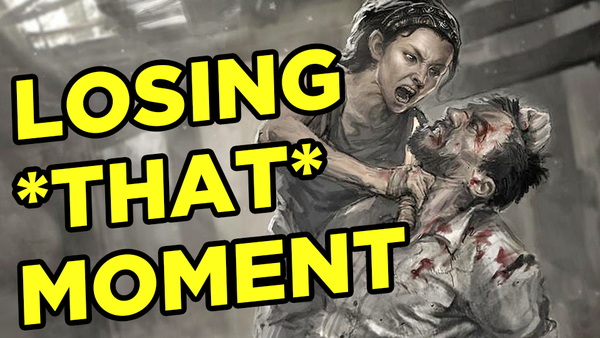
The Last of Us is a game that famously only properly came together during its final months, with so much of the story changing throughout development. In fact, the original pitch from Neil Druckmann that Sony greenlit resembled virtually nothing from the finished product.
Initially, the idea was to have Tess - who dies early in the main game - become the villain. Feeling betrayed by Joel, she would propel the two protagonists around the country, eventually catching up to them at the end. Here, the game was going to close out on Joel being tortured by Tess, and then Ellie intervening and killing her.
In this version, Tess would have been Ellie's first kill, but according to Druckmann, "We decided it wasn't going to be about the first time she killed someone, it was more about this coming of age story of the impact that the horrors of violence has on her over the course of the game."
Even when that was changed though, the new ending still wasn't good enough. After the hospital scene from the final draft, the epic would have ended on the two moving to a society in San Francisco and helping rebuild civilisation, with Ellie buying into Joel's lie.
The director described the ending as not being honest enough, and altered it to be more ambiguous and less hopeful.
1. Otacon And Snake Are Executed - Metal Gear Solid 4
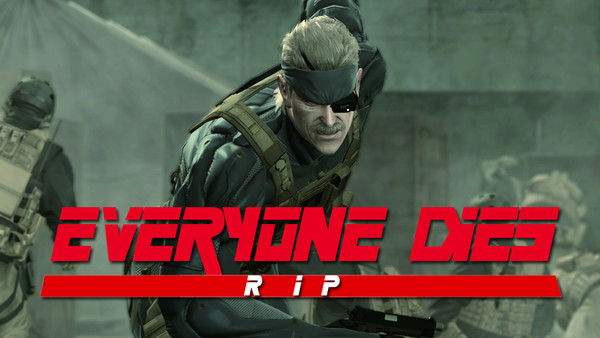
Metal Gear Solid 4 is a mad, fun, ridiculous game that bends over backwards to address pretty much every major question the series had posed until that point. The answers might not have always been the most satisfying (or sensical), but it was all delivered with such confidence and gusto that it's hard to not love it - primarily because the send off it offers for all the main cast was exactly what fans wanted.
Originally though, Hideo Kojima had a much less happy ending in mind.
The bulk of the game would play out the same, with Solid Snake and co. taking down the Patriots, but wouldn't have seen the legendary hero enjoying the remaining years of his life. Instead, the director wanted Snake and Otacon to turn themselves into the authorities, which would have seen them convicted and executed for, uh, saving the world, I guess?
As the story goes, the development team pushed back massively against the idea, and it's for the best. Though it's the kind of noble, atoning-for-his-sins thing Snake might have done, he'd already suffered enough and sacrificed everything to save a world that was never grateful.