8 Video Game Genres We're All Sick Of
Why is all the focus put on the "open" part of open-world?

Modern gaming offers developers the broadest range of possibilities when it comes to creating new games. In an industry driven by popularity and sequels to constantly renewed franchises, it seems developers are scared of branching out from their stalwart franchises more than ever.
Having regular series' is fine, as long as they're iterated upon. Without reinventing or updating their core game series, developers risk alienating gamers with titles that are just too familiar to warrant the price of a brand new game for their PC or console of choice.
Almost every major genre is dominated by a specific type of game or design formula, and innovation seems to these days mostly appear in the indie gems that are driven by budget limitations or smaller teams to tackle problems in new ways.
With E3 leaving a lot of players disappointed by the lack of - or any real appearance from - many fan-favourite franchises, it's a perfect time to consider which genres are starting to feel just that little bit stale.
8. Yearly Sports Games

This is probably more personal than the other entries, but there's just something about the yearly entries into the likes of WWE, FIFA/PES, Madden and other genres that feels like there's almost no point in developing new versions of the same exact games.
Developers can really only continue to drip-feed updates to the meta of these franchises' multiplayer elements, like the recent World Cup update to FIFA 18, for example. Yearly entries feel more like a quick way for developers to cash-in on sports-mad gamers and make them shell out hundreds for currency to pick-up packs more than anything else.
Whilst publicity for games tells us that there are adjustments to be made, but most of these games feel more like interactive fantasy football more than anything else. I don't think it would be really that hard to just add the models of new hotshot footballers or NFL players as DLC, rather than developing entire new games to draw in fans.
The beautiful game can only become so beautiful before it ends up just being the same game being trotted out for no real reason.
7. Hero Shooters

Whilst the MOBA may once have ruled supreme as the go-to free-to-play game genre of choice. What started as a natural evolution of the multiplayer death-match has now pretty much become the de facto online mode for thousands of gamers.
Recent gaming history is littered with Hero Shooters that have relatively small but committed fanbases compared to the giants of the franchise, like Paladins or Nosgoth. However, there are even more that have failed entirely; perfect examples include the closure of Gigantic or the absolute failure that was Cliffy B's Lawbreakers. The Hero Shooter genre is so contested that it's pretty much impossible to convince players to jump ship, especially once they're invested in the loot box rewards for their chosen characters.
It seems that consumers generally are getting sick of hero shooters too. Very few that have released in recent years have seen significant success barring Blizzard's fabulous creation Overwatch. If you remember Battleborn, you'll remember it failed spectacularly despite having some interesting characters and stories to tell, with only 187 players at peak time on Steam in the last 30 days according to Steamcharts.
Even with personality, it seems it's pretty damn hard to draw players from a different franchise they already adore.
6. Survival Games

Rust. Conan: Exiles. Ark: Survival Evolved. Minecraft. Subnautica.
What do all of these titles have in common? They all plop you on some inhospitable landmass and task you with eking out a meagre life amongst the threatening wildlife, whether they be dinosaurs, other equally naked players, zombies or otherwise.
The survival genre was initially quite compelling, offering a tense atmosphere and a world that's unfamiliar for you to learn about. Nowadays, we're just handed the same sort of formula:
Crafting trees, multiplayer servers rife with griefing, gameplay that almost necessitates alt-tabbing out to a wiki just to know what you're supposed to be cracking on with.
Whilst they can be quite fun if you can squad up or build your own fortress of solitude and defend it from any incoming force whether your weapon of choice is a fire axe, a bow made from spider-silk or even a scavenged gun, most survival games these days rely on the exact same principles with little in the way of innovation beyond graphical differences or changing the environment.
At least if the apocalypse comes, we all know punching a tree in our back garden will be the way to get ahead, I suppose.
5. Open-Worlds

Every major franchise in modern gaming seems to view the open world as this next step in gaming.
Having the freedom to roam an expansive Hyrule contrasted with previous Zelda titles, making the many familiar domains Link explores feel fresh. Nintendo might have nailed it, but not all open worlds are created equally.
Sandbox style gameplay can be the pinnacle of online gaming too, as we can see in the continued support of GTA Online. However, many open worlds focus too much on having a big environment to play around in just because it's what many gaming franchises are doing.
Developers have to create populous, living environments with a variety of tasks that offer the player choice in how they engage with this huge map.
Leaving players to create their own fun is great, but only if you have enough to do within those worlds in the first place. The bombast and amount of tools you get to play with are what make sandbox gaming in an open world fun. If you can't provide an engaging world that makes messing around with all of our toys fun, we're going to get bored, fast.
4. Soulslike Games
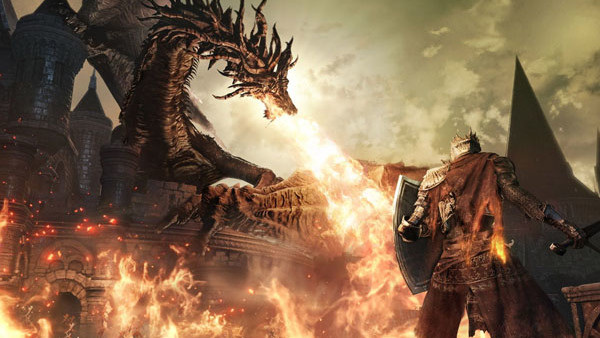
From Software have birthed one of the most beloved franchises in their Souls series of games. Whether you're experiencing Dark Souls for the first time with its newly remaster or have been a veteran ever since Demon's Souls, it's fair to say that From have revolutionised the modern Action RPG. This popularity inevitably gave rise to a a great many pretenders to From's throne.
It's plain to see that From's influence is wide spread. There are titles which spin their own unique variant of the classic gameplay like Nioh did by spicing up combat with stances and the guardian spirit special attack meters, but there are often many more which instead palette swap the high fantasy setting of Dark Souls for something else without offering much else other than a slower, sometimes clunkier combat that lacks the polish of From's games.
It seems even From Software themselves want to distance from the Souls formula, if the trailer for Sekiro: Shadows Die Twice is anything to go by. It's fast-paced swordplay builds from the more aggressive playstyle of Bloodborne to make Sekiro look more like your typical action platformer rather than the tense, precise fights you might be used to from the Souls franchise.
3. The "Ubisoft Formula"
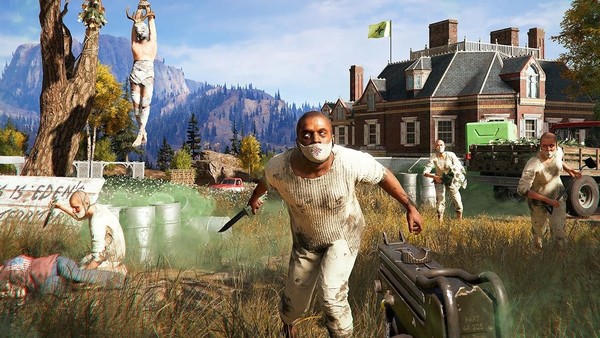
Ubisoft is a studio difficult to criticise; they make good games, often. However, you could quite easily accuse many of their core franchises from beginning to feel indistinct, as they all follow a similar formula. They all feature a huge world to mess about in, are littered with repeatable activities that are largely base invasions, assassination targets, races or collectables, and passable narratives.
The worst part of this formula is the waypoint system. Each major entry in most of their franchises has featured some form of watchtower that delays exploration of the rest of the map.
Whether it's radio towers to reactivate like Far Cry 3, towers to crash through in The Crew or the nests found at the top of assorted climbable buildings in Assassin's Creed, the tower system is a frustrating way of gating off certain areas of the map arbitrarily.
Ubisoft do seem to be aware of this problem, which is promising. Far Cry 5 tied each district of its map to a different member of the Seed family, feeding the player individual stories which encouraged full completion of single sections, rather than encouraging absolute free reign. As long as each franchise is driving players to play in ways which they can't elsewhere, they can start to remedy this problem.
2. Spin-Off Collectable Card Games

Since Blizzard dropped Hearthstone back in 2014 as a companion game utilising the cavalcade of characters from their Warcraft mythos, several studios have seen fit to start releasing their own companion card games as standalone projects.
Digital versions of Trading Card Games like the Pokemon or Magic: The Gathering had existed before, but these were self-contained releases with set amounts of cards, unlike these continuously evolving free-to-play behemoths.
Of course it's not just Hearthstone. CD Projekt Red released the rather unique game of Gwent, originally playable within the Witcher 3, a game that fulfills its own niche by being vastly different to the majority of other card game offerings out there. It's precisely because Gwent was so unique that you start to notice similarities between Hearthstone, Elder Scrolls: Legends, and the upcoming DOTA spin-off Artifact.
Not only are there plenty of these spin-off CCGs, there are also scores of studios developing original card games for every major platform as well as mobile and tablet variants too.
With the reveal of DOTA's Artifact at last year's E3 not leaving the impression Valve were hoping for, it seems that it's about time studios move on from this growing genre.
1. Battle Royale Modes

Recently popularised by PlayerUnknown's Battlegrounds,, the 99 enter, one remains format is an absolute titan of multiplayer gaming, competitive or not. However, no game seems able to take the popularity crown back from Epic Games' free-to-play behemoth, Fortnite.
These two titles have arguably perfected what you can expect from the Battle Royale mode, the only choice being whether you like Fortnite's crafting mechanics or the comparative realism and greater map variety that only PUBG offers.
Whilst battle royale modes make for compelling multiplayer experiences, this isn't an acceptable excuse for every game being developed in 2018 seems to adopt the mode. Black Ops IV has Blackout mode, H1Z1's King of the Kill mode re-emerged as it popped up on consoles, we had the failed launch of Radical Heights, the release of Realm Royale, and Dying Light 2 is supposedly getting a battle royale mode too. This list could go on, a lot.
The sheer density of this genre makes it feel less explosive and high octane, but rather redundant. New games seem to be gravitating towards the battle royale mode simply because its the newest, most lucrative game type out there without really trying anything new with the game type.