8 Video Games You Didn't Realise Broke The Industry
The games that kickstarted those trends all players love to hate.
We're currently on the cusp of a new console generation, and as players start to look back at the gaming industry's last decade, there are bound to be mixed feelings. We've been gifted with some truly phenomenal experiences like The Last of Us and Red Dead Redemption 2, but at the same time, players have also seen the emergence of some really damaging trends.
Micro-transactions, season passes and as-a-service models are but a few of the worst offenders, while lootboxes, annualised releases and more were all also popularised over the last decade.
Some of these trends are finally on their way out, but as the new Xbox and PlayStation beckon, it stands to reason that most will look back on the last two console cycles with mixed feelings.
And it's with that in mind that it's worth considering how these trends actually began. They all had to come from somewhere, and in some cases, the actual source of the outbreak, as it were, is genuinely quite unexpected. No genre is spared; single-player, multiplayer... all have had a hand in fashioning the trends most players today simply cannot stand.
8. DayZ - Popularised Battle Royale

Okay, so getting the obvious thing out of the way first, I KNOW there are tons of people who love Battle Royale. It wouldn't be the most popular thing on the planet right now if there weren't, and it's inevitable that video game publishers will react to supply the demand generated by free-to-play titles like Fortnite, PUBG, and now Apex Legends.
People can enjoy what they want, and that's perfectly fine! If you don't like Battle Royale, then you can go play whatever you want... to a degree.
You see, the major problem with Battle Royale is that it encroaches into different franchises. Take Battlefield and Call of Duty, for instance. Both series made a name for themselves by providing two very different kinds of first-person-shooter experiences; Battlefield with large-scale, frenetic combat, and Call of Duty with fast-paced, close-quarters action. Now, the two most recent releases from both franchises dedicated large chunks of time to fashioning Battle Royale experiences, seemingly determined to capitalise on the latest trend at the expense of their staple game-modes.
Black Ops 4 didn't even have a single-player!
In terms of games that should be blamed for making Battle Royale 'a thing', Fortnite is most obvious to blame. It started out as a co-op, building... thing, and then pivoted to BR as soon as PUBG was developing mainstream appeal.
It wasn't the first though. That honour actually goes to DayZ, a mod for ARMA II that formally released in 2013. Yes, there was a Hunger Games mod for Minecraft that released a year earlier, but the tropes we most commonly associate with Battle Royale (military combat, hiding in bushes, etc.), started with DayZ.
7. Minecraft - Opened The Floodgates To Early Access

There's been a lot of controversy surrounding early access games over the last few years. Players who invest in early access titles do so with the risk that the game they're investing in may never be fully developed, while there've been repeat cases of early access titles amounting to little more than scams.
The practice itself isn't inherently good or bad, and for indie developers who don't have budgets to hire play-testers, having a title be early access can actually prove invaluable. It's a great feature to have when used appropriately, but there have been cases where games have stayed in early access for years on end. No less frustrating is the fact that big publishers have also dabbled in early access, offering players unique benefits while they effectively pay for the pleasure of play-testing a title.
Numerous games have adopted early access, but by far the most notable example was Minecraft. The game is beloved by (mostly) all and kickstarted gaming's early access obsession, opening the door not only for indie devs to secure greater funding and feedback for their projects, but sadly also to the prospect that players could be taken advantage of by a duplicitous studio or individual.
Some games have spent multiple years in early access, and it means some have effectively forked over their money to play something that'll never be finished.
6. SOCOM U.S. Navy SEALs: Fireteam Bravo 3 - Introduced Online Passes
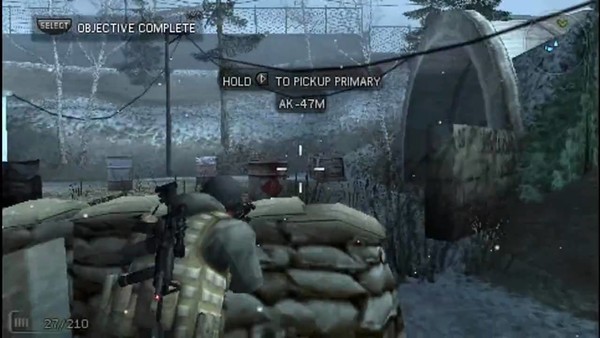
Online passes were a relatively brief phenomenon, but they were EVERYWHERE for a time during the seventh generation of consoles. Effectively designed to kill the second-hand market, these passes made it so that every sealed game would come with a code that would give the player access to online features. Without the code, they couldn't go on multiplayer, which meant they'd have to buy the pass for an additional fee through Xbox Live or the PlayStation Network.
Online passes faced an immediate backlash upon their introduction, but publishers persisted with their use until the seventh gen ended. Ubisoft and EA were the keenest adopters, with titles like Assassin's Creed and Dragon Age both featuring online passes across a number of different entries.
For all that Ubi and EA were the worst offenders when it came to online passes, they weren't the companies responsible for their initial introduction. In actual fact, it was Sony's exclusive SOCOM series that was the first game to have an online pass, with PSP exclusive Fireteam Bravo 3 requiring a $20 fee for players to get online had they acquired the game second-hand.
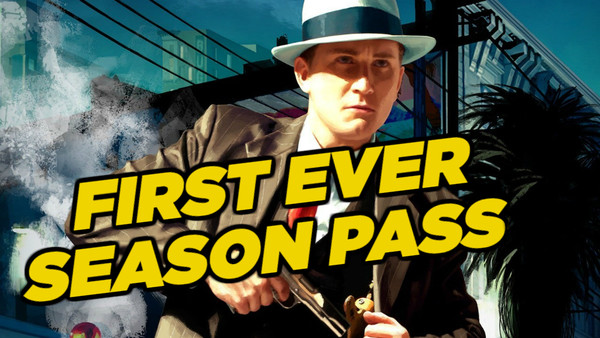
5. L.A. Noire - Came With The First Season Pass

Despite a few mechanical hiccups, L.A. Noire is an absolute banger of a single-player video game. Team Bondi's title (developed in conjunction with Rockstar), brought the detective genre to the mainstream of the medium and did so with aplomb, garnering praise for its strong performances, revolutionary facial-capture technology, and for its immaculate historical attention to detail.
However, while L.A. Noire is still fondly remembered by most players, it hides a sinister secret. Sort of like protagonist Cole Phelps, if you come to think about it.
As most will know by now, L.A. Noire had a few DLC cases that released after the game's official launch. They pad out each of the various 'desks' Cole works his way through over the course of the game (traffic, homicide, vice and arson), and while they integrate into the title fairly seamlessly if you find yourself playing the game of the year edition, at the time, it felt awkwardly obtuse.
This was mainly down to the fact that Rockstar's then latest IP was promising a 'season pass' ahead of release, which would give players access to all the post-launch content at a discounted price. Other publishers would soon adopt the practice, demanding players fork over money for content they weren't even guaranteed to receive in the first place, and sometimes for add-ons they knew nothing about.
No wonder devs make such a big deal about games not having season passes at every E3.
4. Titanfall - Kickstarted The Trend Of Studios Dropping FPS Campaigns
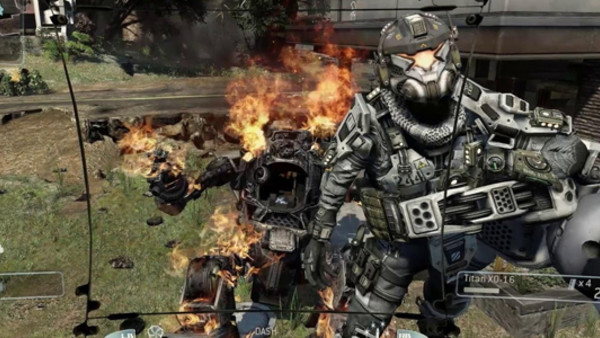
It pains me to dunk on Respawn when they're one of the best studios around, but it's a sad reality that Titanfall kickstarted the trend where studios forgo single-player campaigns in their first-person shooters.
First off, there's nothing wrong with multiplayer-only titles. In fact, for a franchise like Titanfall, the first game not having single-player actually made a degree of sense. Respawn were a new studio and they were aiming to provide a true competitor to heavyweight franchises like Halo and Call of Duty, two games famed more-so - debatably - for their multiplayer than their single-player. They even returned to Titanfall a few years later to deliver one of the best FPS campaigns in the sequel, so they're clearly not at fault here.
The issue, really, is that publishers looked at Titanfall and later Overwatch, and believed they could get away with releasing an FPS without a single-player altogether, even in franchises with pre-established and well-liked single-player story-modes. 2015's Star Wars Battlefront reboot was the first notable offender, being sold at full-price by EA despite possessing a dearth of content at launch and advertising a $40 season pass for players to receive all the post-release DLC.
Following in Battlefront's footsteps, Activision released 2018's Black Ops 4 without a campaign too, opting to implement a Battle Royale mode at its expense.
Even if both COD and Battlefront brought back single-player modes in subsequent entries, I don't think anyone can deny that FPS campaigns have declined in value over the last decade - at least in those franchises that have a strong multiplayer component. The challenge is rarely ever there, and they feel more like an afterthought than anything else - a result of games ditching single-player for a brief time, and publishers struggling to monetise offline experiences post-launch.
3. Legend Of Zelda: Ocarina Of Time (Maybe?) - Had The First Pre-Order Bonus

Pre-order bonuses are naff. Like, really naff.
We've all been there, pining over the next release of the Batman: Arkham franchise, only to realise that the costumes you're after (the kind of thing that would usually be unlocked in-game, by the way), are locked behind separate pre-order bonuses at different retailers. It sta-hinks, and while it's a nice enough thought to reward your most loyal customers, there comes a point where it gets too much.
Whether it's charging folks stupid money to steadily amass a collection of tat or some other gimmicky nonsense, pre-order bonuses ruin any sense of progression and put up paywalls in front of content that should, ideally, just be included in the base game itself.
What game kickstarted pre-order bonuses? Shockingly, this one is one of the hardest to nail down. Pre-ordering games really took off at the start of the late-nineties and early noughties, and it was around this time that retailers and publishers came together to offer specific pre-order bonuses. It's impossible to say with any degree of certainty which game was the first, but surprisingly, it seems as though Legend of Zelda: Ocarina of Time was one of the first - or at least the first to kick up a fuss.
North American players who pre-ordered Ocarina of Time in 1998 would get a special T-shirt and an equally special box, which had a plastic card. Is it the real culprit behind the tat-renaissance? One can only guess, but one thing we know for certain is that Arkham City was the worst offender, offering a myriad of bonuses with all sorts of retailers. Blegh.
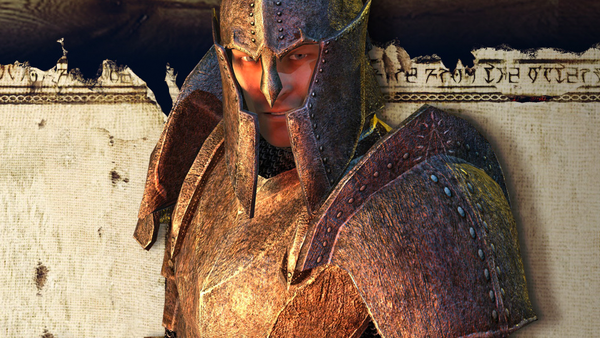
2. Elder Scrolls IV: Oblivion - First Major Console Release To Have Microtransactions
Microtransactions are okay in small doses, but we've seen publishers utilise them in increasingly sinister ways over the last decade. Pay-to-win models pervaded the last console generation, while games like FIFA and Fortnite have drawn intense criticism for including what some consumers have called 'predatory' monetisation models geared primarily towards children.
As most will know, it was mobile, free-to-play games that really pioneered microtransactions in the industry. Freemium games are the biggest offenders, being free-to-play but with a huge asterisk, thanks to almost every aspect of those titles including microtransactions in some form or another.
Certain titles popularised those elements on PC and consoles over the last few years, but potentially the first to actually implement microtransactions in a significant way was Elder Scrolls IV: Oblivion. Earlier PC games had allowed players to exchange real cash for fake currency ala GTA Online, but Oblivion was where it all kicked off.
Following Microsoft's attempts at including microtransactions in franchises like Perfect Dark Zero and Project Gotham Racing, Bethesda followed suit and put them in Elder Scrolls, allowing players to add armour to their horse for the low-low price of $2.50. This kind of offer has since become the norm for most games, with cosmetics and sometimes weapons with unique advantages being made available for purchase.
1. Team Fortress 2 - First Major Title To Make Loot Boxes 'A Thing'

Of all the most reviled gaming trends, loot boxes are right on up there with the worst of the worst. They were popularised through titles like Overwatch and went on to be included in dozens of multiplayer games, most controversially in 2017's Star Wars: Battlefront 2. Although that game has since mounted an incredible comeback, the initial controversy surrounding its launch hasn't exactly left it with too many admirers.
But where did this all begin? Loot boxes didn't just materialise out of thin air halfway through the last decade, but their origins seem almost nebulous. One day they were there; the next, they were everywhere. So where did it all begin?
The earliest noted example of loot boxes in a full video game came in Chinese MMO ZT Online, which introduced the feature to ensure the game had a form of monetisation. The game released in 2007, but it wasn't until 2010 when loot boxes would appear in western markets, courtesy of industry good-guys, Valve.
Team Fortress 2 was the game responsible, allowing players to purchase randomised crates with keys, which could be purchased with real-world currency. The rest, as they say, is history. Studios began to adopt the model, and controversy soon followed, with some governments ruling that loot boxes were effectively gambling.
Watch Next
The Impossible Minecraft Quiz: How Well Will You Do?
