8 Ways The Video Game Industry Will Completely Change In The Next 10 Years
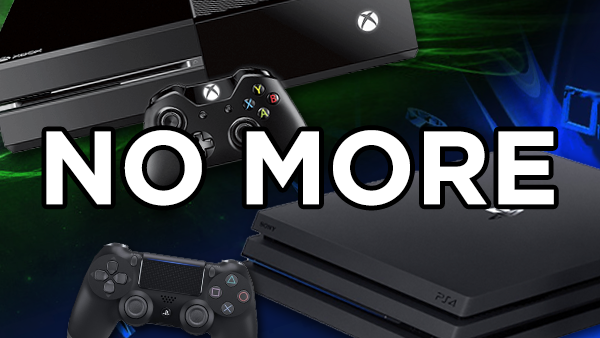
Say goodbye to PlayStation and Xbox consoles.
You'll be hearing a lot about how 2017 is one of the best years for gaming since, oh, say 2013, but the more interesting rumination (once you've gotten over Overwatch beating Warframe and GTA Online as 'Best Ongoing Game' at The Game Awards, anyway) is "What does this mean for the future?"
Because don't forget: While we've seen scores of phenomenal titles from Zelda: Breath of the Wild to Steamworld Dig 2, Horizon Zero Dawn to Pyre, the hardware, manufacturing and deal-making side of things has changed considerably. We're seeing Microsoft's future for the Xbox brand get called into question, their own Phil Spencer has mentioned how he could see gaming become a streaming service, and Sony - after winning the generation, sales-wise - have already begun work on the PS5.
Not to mention, game budgets are constantly in flux, we have nowhere near a dedicated price point across the board (if you compare to a film ticket) and the Nintendo Switch just revolutionised how to even "do" a home console.
There's a lot to think on, starting with...
8. No More PlayStation Or Xbox Consoles

As mentioned in the intro, Xbox's own Phil Spencer has been describing a future where the Xbox is a streaming service. It comes after a year where the system has had zero notable exclusives outside of Cuphead, has cancelled things like Scalebound, has nothing to look forward to and they released a half-step system that solves none of these problems.
Alongside this, you have things like Sony's PlayStation TV, a "microconsole" that essentially beams in PSP/PS Vita content straight to a TV, with the help of a controller. Take one step back and you have PlayStation Now - Sony's attempt to make this happen with PS4 content and bigger file sizes, also encompassing their backwards compatible library into one monthly fee.
Take ANOTHER step back, look to the future, and it's entirely possible we get something like a "Smart TV" (Sony are more than just games consoles) with stripped down PS4 tech inside - one that comes bundled with a DualShock, as everything else is streamed in.
Likewise for Microsoft, match their "on demand" Xbox Game Pass service with physical sales that won't be looking too great right now, and as many outlets have discussed shifting to a "Netflix for games" industry model, the wheels are already in motion.
7. Streaming Becomes The Go-To Method Of Playing Games

Nintendo remain the outlier in this scenario (personally I can't see them deviating away from tradition or doing their own thing - even the company's approach to microtransactions is through tiny collectible plastic figures).
However, a Netflix-esque streaming model potentially gives the most bang for the least buck. In an ideal world - which is the linchpin, as Sony certainly haven't eliminated lag on PS Now - we'd pick up a controller like any other TV remote and switch to a dedicated PlayStation/Xbox app.
Picking from an entire legacy catalogue of games for a monthly fee also makes consumer sense - especially if packages get split from console to console, era to era, or even genre by genre.
See, the industry isn't the biggest fan of physical products thanks to labour and manufacturing cost - not to mention the benefits of digital distribution giving you the most up to date/fixed version of a game. Had the Xbox One not fudged its launch quite so badly, this would've been the generation that introduced total digital domination to the mainstream.
Of course, that was before Sony chose to play the "for the fans" card, but don't think this future isn't inevitable.
6. Dedicated Physical Game Stores Are Resigned To Selling Retro Items & Merchandise

Thankfully, for as much as digital easy-access is immediate, that's all it is. At the end of the day we're still human - we need physical interaction and indulgent use of our senses. Over 50% of all communication is non-verbal, and like how a couch gaming session is always more memorable than an online one, physical game-related items aren't going away altogether.
Put simply, the Kindle did not replace the book.
Instead, like the music industry, we'll see a shift in focus towards more elaborate merchandise deals, or lucrative "bundles" for new releases. Many bands have finally accepted the shockingly low amounts of royalties paid their way or the impossibility of living off song sales alone, hence why you see "signings", "t-shirt bundles", "VIP packages" etc. for every tour.
Obviously in gaming the "celebrity" aspect is resigned to a fraction of the industry (your Hideo Kojimas or Shigeru Miyamotos of the world), so we'll see brick n' mortar stores fall back on merchandise and collectibles to stay afloat.
Next time you go into any mom n' pop game store, tell me the percentage of games vs. physical memorabilia isn't weighted towards the latter.
5. Microtransactions Will Fold Into "Triple A Free-To-Play"

Remember Star Wars Battlefront 2? That was a hoot.
No doubt it'll see a resurrection of sorts when The Last Jedi reignites the fanboy flames for the second half of December, but it exemplified something very interesting about how EA and DICE were treating their consumers.
You can read a full breakdown of the facts over here, but here's a thought: If Battlefront 2 was free at retail, does that solve the issue with its progression?
"Greed", is of course the go-to answer as to why it released with a price tag, but going forward - if the claims of microtransactions being necessary to recoup budgets are true - we'll no doubt see the rise of "triple-A free-to-play" games.
If EA released a standalone edition with separate playlists so all the one-time purchasers can play together, how about then? The F2P edition works as a demo for the "full game", if you want to apply an older generation bent, for example. The only crux is identifying which aspects get split across the versions, to keep both parties happy.
The fact is, microtransactions make far too much money for any business or investor to wipe away because people are disgruntled. They have to find a way to make it work, and segmenting the consumer base so the 35% of identified "whales" with their millions of dollars' worth of disposable income can have their own yard? That works just fine.
4. Gameplay Will Triumph Over Graphics As A Major Selling Point

For the longest time, we didn't have photo-real graphics. Hell, you'd be lucky to accurately portray the human anatomy without it looking like a hunk of Lego bricks until post-1998.
As such, like even the earliest cave painters and artists, we've continually strived to replicate the human form in our medium of choice. We've seen developers and publishers chase facial animation, how to convey emotion, how to frame interactions with objects and real gravitas - essentially, how to capture Hollywood in digital form.
Well, as you might have already started to feel from the lacklustre cultural response to 4K tech, we've reached the tipping point. No more can we chase visuals as a marked selling point, and you need only look to the renaissance of pure gameplay from the likes of Rocket League, Overwatch and PlayerUnknown's Battlegrounds as three multi-million unit-shipping reasons why.
Gameplay is always what mattered, and as visuals won't be going backwards, we'll only see R&D put into designing the most innovative, original and impactful games possible.
After all, it's about time we focused on the "game" part of "video game".
3. The Delineation Between "Triple-A" & "Indie" Will Go Away
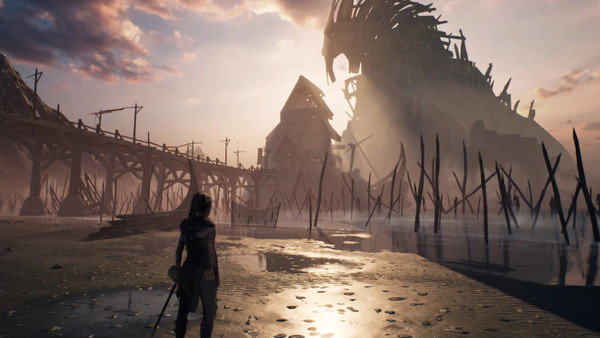
We're already seeing this with the rise of "indie games" that can rival triple-A in many respects. Hellblade: Senua's Sacrifice saw Ninja Theory release something that was budgeted appropriately so as to fall in-line with the average indie projection, yet its production values allowed cutscenes and environments that can hang with Naughty Dog.
The reason is down to things like the mighty Unreal Engine 4 being offered for free, and various budgetary factors surrounding how software and coding techniques are amply shared amongst a thriving indie scene. Just look at the difference between what was classified as indie at the start of the decade (Super Meat Boy, Bastion, Fez, and jump through to A Way Out, Hellblade, No Man's Sky, Volume and Rime).
We once enjoyed a more harmonious blend of budgetary allocations the more you go back in time, and though "triple-A" has had its day in the sun, we'll see a return to games being released and thought of as equal, without pondering on how they came together.
2. VR, Motion Controls & Other Gimmicks Will Finally Be Ruled Out
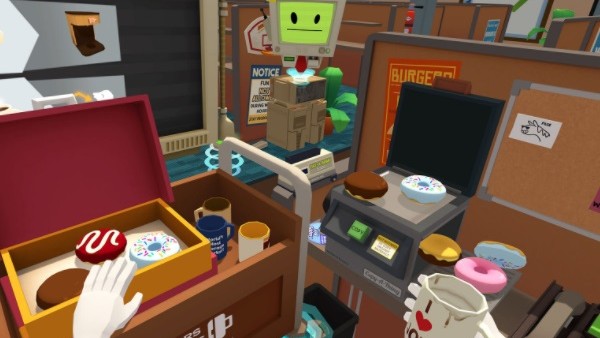
I'll explain this more in my next point, but take a wide look at the entire history of gaming - can you point to one gimmick (i.e. something that isn't just one button-filled pad controlling a game) actually taking off and sustaining?
From the Virtual Boy to the Power Glove, Dreamcast's flirtation with portable mini-units and every incarnation of motion controls aside from the first Wii, they've all proven one thing: We like our games controlled with controllers. Yes, the Wii's motion controls were stratospherically popular, but did anything else outside of Wii Sports take off on that same console?
Exactly. Every company's copycatting attempt failed, and even Nintendo couldn't make lightning strike twice with neither the Wii U, nor 1-2-Switch on their new system.
We want to become one with the experience on-screen, and like grabbing a TV remote or thumbing through a social feed, the function of the "thing" in between needs to create 100% symbiosis.
It is simply because of that, that all gimmicks will always die out, faltering in the shadow of the mighty, one-and-all, humble controller.
1. Video Games Will Become Like Film (In A Good Way)
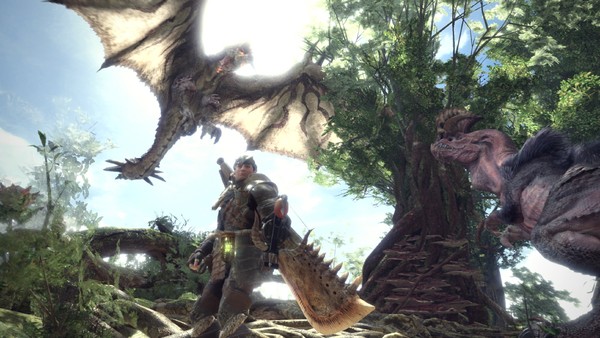
This is something I'm just going to have to describe, because a single sentence above an image won't do it justice:
So, firstly, nobody in cinema ponders whatsoever on the advancement of technology to bring a vision to life. Yes, we've seen higher quality imagery come into being over the years, but that maxed out and backfired when Peter Jackson's The Hobbit debuted all-new "48 frames-per-second technology" - a new high that had the reverse effect of making everyone look like they were in costumes on set, rather than battling through the fields of Middle-Earth.
There's now an acceptance that film has reached the pinnacle of the tools necessary to create, and though we see Hollywood desperately trying with 3D, D-Box and all manner of theme park-esque attractions to "go bigger and better", as a set of tools, the filmmaker's kit is complete.
This is where we're heading with video games, and it will only benefit the perception of the medium in the cultural and social space, tenfold. A wider baseline of tools means a wider baseline of expectation, granting more affordance to riskier projects and letting the "average consumer" ingest a wider amount of "better" subject matter.
We've seen Hollywood's various booms of innovation over the years, and with the "technology era" drawing to a close in gaming (4K TVs and half-step consoles have nowhere else to go), the future can only be something completely different.