8 Ways You're Wrong About Bayonetta

Platinum Games' poster child is a tricky one.

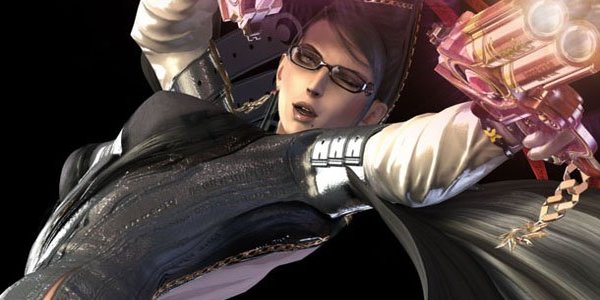
Platinum Games has never been a subtle studio. We're talking about the independent developer that began as ODD Limited, made waves as Clover Studio with such hits as Okami and Viewtiful Joe, and went on to become one of the most flamboyant members of today's gaming sphere. Old Platinum is currently working on Xbox One exclusive Scalebound, but Madworld, Metal Gear Rising: Revengeance, Vanquish and more are on their roster. But none have found the same audience as the now two-part action series Bayonetta. However, as is often the case with radically stylized media (particularly something as interactive and therefore personal as video games), that audience isn't entirely happy. It's unsurprising, really. The gaming demographic has always wrestled with sensitive topics like the treatment of women and morality in games. And while other games tip-toe sheepishly around the topic, Bayonetta, both the IP and the modern witch herself, have trod up and down the both of them high heeled, haughty, and loudly. Someone's bound to get a little peeved. You'd be perfectly correct to label Bayonetta's gratuitous candy shots obvious bait for the male gaming demographic (see: above, and much of Bayonetta 2's cut-scenes). You'd also be well within your rights to criticize her ludicrously sexy design€”she does, after all, closely resemble a snake that ate two softballs, a watermelon, and stilts. With that said, there are several, less subjective qualities to Platinum's fireball of an IP that deserve recognition, and several more that have brought the aforementioned sensitive topics closer to proper discussion and experimentation€”a far cry above the hushed, defensive, and often accusatory muttering they currently see.

8. Bayonetta Is Not A Western Woman

Let's shoo the elephant out of the room first. The problem stemming from this crucial distinction€”Bayonetta, as a character, originating from Japanese culture€”is simply one of fit. Many of Bayonetta's critics are viewing her and the games through a predominantly Western lens. Now, there's nothing wrong with that; we're all inevitably going to view things from the perspective of our culture€”especially so when those things ask to be a part of it, as Bayonetta has by retailing in the United States, Europe, and so on. But calling something inappropriate or crude is one thing; calling it provably wrong or disparaging is quite another. The theory of cultural relativism suggests that any element of culture can only truly be understood when examined in its original context. A cross-section of a global newspaper's current events column will show this to be true. Understanding, however, does not equal acceptance. It's only natural for sexually conservative Westerners to balk at a character as openly sexual as Bayonetta; it's just a difference of tastes, like finding a shot of soy sauce in your martini. The key point to keep in mind here is that, when approaching the games, and indeed anything dealing with the cultural divide, the most effective mind set is not "How well does this align with my beliefs?" but "How does this differ from my beliefs?" Cultures and values should be examined and compared, not condemned for being different. The sexually open values of Japan that undoubtedly influenced Bayonetta are no exception.

7. Bayonetta Was Designed As A Witch

There's no shortage of labels to toss at Bayonetta. But to go back to the importance of a work's origins and true intent, only one is necessary: She's a witch. Why do her legs make up approximately 110 percent of her body? Why is she sporting clothes woven from her own hair? Why do said clothes regularly fly off, leaving her near naked? Some assume these all point to marketability, to drawing men to the game with crude T&A. The actual answer? Because she's a witch. In a 2009 post to Platinum Games' development blog, character designer Mari Shimazaki (Shimako) detailed the driving elements of Bayonetta's design. "When we started Bayonetta," she said, "our director, Hideki Kamiya, asked me to design a character with three traits: 1) A Female Lead; 2) A Modern Witch; 3) She Uses Four Guns." (You may notice an absence of 'huge breasts' and the like from the design checklist.) "Since Bayonetta is a Witch," Shimazaki continued, "her 'theme color' had to be black! The other special part of her design is the long hair wrapping around her body. The hair gathered around Bayonetta's sleeves accentuates the movements of her limbs." The post refers to Bayonetta's iconic hair as "the source of her power," and describes the special attacks involving it, which strip the witch bare, as moments of excitement€”curiously, not blatant T&A, as many have called them. Oh, and the glasses? A "sense of mystery and intelligence." Shimazaki's Bayonetta 2 post follows a similar pattern, declaring the witch's sequel theme to be "Solid," and her appearance intentionally more masculine. Speaking with Destructoid, Platinum's Yusuke Hashimoto said Bayonetta's concept was simply "a witch who came back to life in the present," and also stated that only a woman could have designed her. Maybe€”and let's just throw this out there€”sex appeal wasn't the driving factor after all?

6. Bayonetta Isn't The Only Piece Of Sex
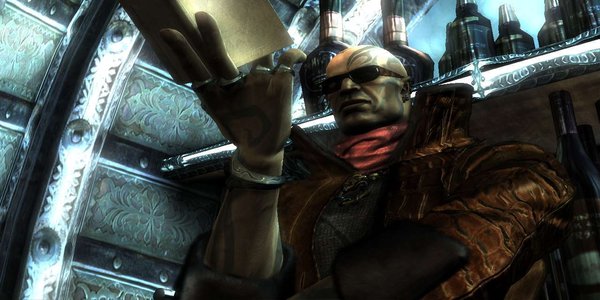
It would be one thing for Bayonetta to be strutting about half-naked in a world of Puritan clergymen and Amish settlers. That, at the very least, would be a bit out of place. But the world and atmosphere of the games is so steeped in sensuality and so heavily stylized that Bayonetta herself blends right in. This is perfectly in-line with Platinum's overarching design philosophy of turning the dial so far past 11 that you have to draw additional settings on the freaking thing. Rodin, the bartender from Hell; Jeanne, Bayonetta's skintight leather-clad foil; and the IP's plethora of side characters all absolutely ooze style. They've all been hand-tailored with a very specific theme in mind. This is to say nothing of the soundtrack's eclectic combination of timeless jazz and new-age J-Pop. Hell, you could even argue that the game's many angelic enemies have been fetishised€”the term fetish, of course, not being limited to attraction but also applying to inordinately heightened qualities. Bayonetta isn't a veritable Umbren (her witch faction) Aphrodite because she's a woman. Hell, her partners would probably be put off if she wasn't!

5. Bayonetta Herself Is The Most Commanding Character In The Series

Even among all those ridiculous characters€”waves of downright staggering opponents and a colorful crew on the side€”Bayonetta, as the game's protagonist, reigns supreme. Both games are founded on her victories and constantly hammer home the point that she is to be respected, if only out of fear. All the tropes that we've come to expect from gaming's heroes are applied to and filled by Platinum's witch. If angels or demons need thrashing, little girls need protecting (see: Bayonetta 1), or companions need saving (that'd be Bayonetta 2), everyone turns to none other than the notoriously temperamental woman spearheading things. This flies in the face of the wholly valid argument that modern games pigeonhole women into submissive roles, and is a step in the right direction for female leads. The obvious caveat here is the aforementioned overly designed features€”backs arched so sharply that professional contortionists are cringing just thinking about it, breasts so large you have to consider whether the spine simply can't handle their weight, and so on€”which will remain a point of contention and a question of aesthetics.

4. Bayonetta Is A Character, Not An Object

Female video game protagonists have truly come a long way since the 1990s, since their days of being hauled away to various castles and dungeons to await rescue at the hands of an idealized white knight. Christ, Peach must have been bored with only Bowser for company. While some modern games like Grand Theft Auto and Saints Row continue to portray women as items to be obtained, there are plenty of notable opposites. Faith of Mirror's Edge, Samus Aran of Metroid, Nariko of Heavenly Sword, Lara Croft of Tomb Raider, and especially Bayonetta don't need saving. They work through and star in their games with agency and power. What's more, Bayonetta doesn't simply have her sensual nature thrust upon her; she chooses it, owns it, and doesn't care who does or doesn't like it. It's a central part of her personality, not a marketing afterthought. This isn't Akiba's Trip, after all.

3. Sexy Isn't Inherently Negative

At what point in gaming's long history of Nathan Drakes (Uncharted), Sam Gideons (Vanquish), Cole McGraths (Infamous), and Booker DeWitts (BioShock Infinite) did designing main characters to be attractive become a bad thing? Is it only when women are dolled up that things become problematic? Dragon's Crown is an excellent case study for this sort of thing. The male characters in Capcom's PS3/Vita hit€”the armor-clad hunks of muscle that more closely resemble a bipedal bison than a human€”were brushed off as amusing caricatures; the women, however, with equally absurd bodies sashaying about, came under fire. This raises a number of interesting questions. Would the reverse be true if the gaming demographic was 80 percent female (not to suggest that it is currently 80 percent male; it's much closer to a 55/45 split, actually). Male protagonists are so regularly chiseled and masculine because male gamers, studies have shown, enjoy playing as those sorts of characters. The same is true for women, mind, meaning attractive female leads do plenty more than turn heads. The same escapism-rooted projection applies: people like pretty, it's just how our brains work. At the end of it all, being sexy isn't a bad thing. We've said the word approximately 400 times in this very article, yet no disasters have torn the world asunder. (WhatCulture apologises for any disasters that may have torn your world asunder.)

2. The Games Sell Action, Not Sex

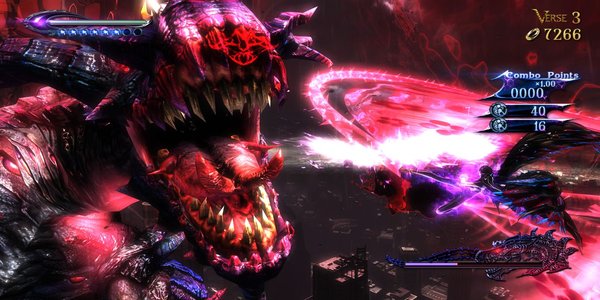
In keeping with Platinum Games' history, the Bayonetta games are predicated upon frenetic, visceral, and over-the-top action. Where else can you rack up a triple-digit combo, employing a frankly irresponsible number of diverse and often situational moves, only to reach a literal and figurative climax by crafting a voracious dragon from the very clothing of the main character, all just to polish off whatever was so unfortunate to become the object of your attack? Bayonetta is unmatched in both speed and coherence; it is a tightly woven bed of chaos with more than enough method to its madness to keep players engaged. Trimmed of every ounce of fat and fluff, it is an exhilarating and punishing experience to which no contemporary hack-and-slash/beat-'em-ups€”God of War, Devil May Cry, Heavenly Sword, Darksiders, and plenty more€”can hold a candle. That's the heart and soul of the game. If you strip away all the sex, humor, and witticisms, Bayonetta would still be all of that. But it would be less entertaining. It would be less fun, and lack that iconic adult flare. It doesn't flirt with the audacious because it needs to; it does it because it can, and because it's fun to do so.

1. They're Among The Best Action Games Ever

That's the take-away for all this. Bayonetta 2 is a massive leap forward for the action genre and will set the standard for future titles€”which is particularly impressive given that it's a Wii U exclusive. In many respects, you could argue that Bayonetta herself is an equally massive leap forward for female protagonists in gaming. Regardless, it'd be a shame to see such an expertly crafted experience dismissed outright simply due to disagreements over the role of sex and the position of women in video games. So by all means be repulsed by Bayonetta's blunt stance and crude jabs. Decry the aforementioned candy shots until you're hoarse (by any and all means, because really, they do wear out their welcome). But don't decide that Bayonetta is a bad series because it conflicts with any views you may hold. If it can't be good just because you agree with it, it can't be bad just because you don't, right? This has gotten too complex too quickly. Go beat the s**t out of some s**t. In style. Do you agree with Platinum Game's design philosophies? Is Bayonetta a step in the right direction for female leads? Should she tone it down a bit, or go away altogether?

Contributor
Contributor

A freelance games writer, you say? Typically battling his current RPG addiction and ceaseless perfectionism? A fan of horror but too big a sissy to play for more than a couple of hours? Spends far too much time on JRPGs and gets way too angry with card games? Well that doesn't sound anything like me.