9 "Must-Have" Video Game Peripherals (That Instantly Flopped)
Sega tried its hand at controller-less gaming long before Microsoft.

You won't ever catch the games industry resting on its laurels; the sheer ferocity of the competition doesn't allow such apathetic attitudes.
No, publishers, developers and platform holders alike never let their grey matter rest - one good idea could be all that stands between it and first dibs on the next fad or gimmick to grant a money-printing license.
That persistent drive to innovate is what lights a fire under the industry's major players day in and day out and, if the risk succeeds - as it did for Harmonix when it struck gold with its peripheral-spewing Guitar Hero and Rock Band brands - then the cow is milked until not a drop remains.
If it's a flop? Then, well, it ends up consigned to the history books as a footnote, leaving future generations to ponder how novel ideas so ahead of their time ended up as such.
More than most, Sega and Nintendo are familiar with pushing the boundaries of what's possible with forward-thinking ideas like mid-generational console upgrades, virtual reality devices and Robotic Operating Buddies, but so too, is it aware of the pain that follows when those inventions amount to nothing more than dead weight.
A voice-activated light gun sure sounded like the greatest invention since sliced bread in 1990, but you probably should have made sure it worked first, eh, Konami?
9. Sega Activator - Mega Drive/Genesis

What it was: Technology of the future, today!
By modern standards, the Sega Activator looks more like the prop from a budget sci-fi movie than a gaming peripheral, but in 1993, this was it - the device that would revolutionize video games and do away with the need to clutch a cheap hunk of mass-produced plastic in hand to play.
Hands-free gaming: the dream.
Why it flopped: Besides the absurd price point? A working product would have been a good start. The idea was that standing within the octagonal device would allow the Activator to read your movements and translate them into inputs on-screen. As you'd expect, the concept was immediately put to use on fighters like Street Fighter and Mortal Kombat, but the horrid accuracy made anything other than a fluke victory nigh-on impossible.
As expected, the deeply flawed device went straight back in the box once the novelty wore off, becoming just another forgettable footnote in the Mega Drive's history.
8. UDraw - PlayStation 4 & Xbox 360

What it was: THQ's gaming graphics tablet that allowed Wii owners to slot in the console's rectangular remote and get to drawing whatever their imaginations allowed. Thanks to the publisher's clever realization that the Wii had a strong draw and appeal to the casual crowd, uDraw went down a treat on Ninty's little white box.
Not so clever, however, was its decision to follow-up the Wii version with similar kits for Xbox 360 and PlayStation 3.
Why it flopped: As it turned out, owners of Sony and Microsoft's consoles were largely more concerned with going on grand RPG adventures and honing their digital trigger fingers than exploring their artistic sides, the result being a catastrophic disaster for THQ, which found itself lumped with over a million unsold uDraw units.
To put that into perspective, THQ reported a loss of around $100 million in revenue the same year it launched uDraw for PS3 and 360. One year later, the publisher announced its impending closure due to bankruptcy.
No surprises there.
7. Guitar Hero Grip - Nintendo DS

What it was: Nintendo, Activision and Guitar Hero: On Tour developer Vicarious Visions' efforts to replicate the popularity of the rhythm action series on the former's original dual-screen handheld.
For that to happen, the DS needed a peripheral similar to that of its brethren and so, the Guitar Grip (complete with plectrum-shaped stylus) was born. Plugging into the DS' Game Boy Advance port, the grip emulated the same colour-coded finger slapping that made the main series so popular, only now, you could show off your fake instrumental skills in public.
Why it flopped: Unfortunately, not a single soul thought to test the comfort factor of wielding the DS as a guitar with an added block of plastic jutting out of one end. Holding, let alone using, the device in such a manner became exceedingly painful over time and the grip itself had a tendency to come loose from its docking station, causing all sorts of technical problems as a result.
The final nail in the coffin, though, came when Nintendo launched the DSi. Lacking the GBA port of the original, On Tour and its sequels were rendered literally unplayable on the new and improved handheld, in turn making the grip useless for any who wished to upgrade.
Great timing, Nintendo.
6. Nintendo Power Glove - NES

What it was: One of the earliest forms of virtual reality that, instead of being worn on the head à la modern iterations like Oculus or Vive, encased the user's arm in a gauntlet with such a strong 80s vibe it wouldn't at all be surprising if the device had been smuggled off the set of Back To The Future.
Despite its name adorning the box, Nintendo had no hand in the Power Glove's creation. Rather, it was manufactured by Mattel for the NES as an affordable peripheral that could detect finger movements and rolling motions.
Why it flopped: Besides having only ever received two dedicated titles - Super Glove Ball and Bad Street Brawler - it swiftly became apparent, following launch, that in an effort to prevent the peripheral from requiring a second mortage, Mattel had created one of the most unreliable pieces of technology ever conceived.
You need not take our word for it - see a live demonstration of the device in action below.
5. Skate Deck - PlayStation 3/Xbox 360/Nintendo Wii

What it was: You can't fault Activision's thought process. Guitar Hero and it's numerous sequels had been snatched up like hot cakes in the mid-noughties, so how could the premise of a skating game with an actual (kinda) skateboard as the controller possibly flop?
Tony Hawk: Ride arrived in 2009 to show the publisher exactly how to turn skateboarding games into the antithesis of fun.
Why it flopped: For an entertainment product such as Ride, the quality and reliability of its gimmicky selling point - the controller - was crucial to its success. The bad news for Activision was that, outside of 'basic' tricks like ollies and manuals, getting the board to recognise more complex strings of stunts amounted to luck more than proper foot movement. That failure, combined with a hefty asking price and the strict requirement of having to use the peripheral to play resulted in the game's critical and commercial destruction.
The series never managed to recover from the debacle and Activision appears to have placed Tony's video game career on hold indefinitely for the forseeable future.
4. Konami LaserScope - NES

What it was: Konami's unique spin on the light gun phenomenon popularized by arcades and Nintendo's NES Zapper. The fancifully-named LaserScope, designed specifically for use with Laser Invasion on the NES, launched in 1990, boasting voice-activated light gun entertainment via an accompanying microphone. Cutting edge, right?
Sure, if it had actually worked.
Why it flopped: Even today, voice-activated technology isn't exactly renowned for its reliability, so imagine the trouble Konami would have had 30 years ago, in ensuring that each utterance of the word 'FIRE!' (yes, that command needed to be belted out every time) into the mic triggered the corresponding action without fail.
A lot, is the answer, because while the LaserScope was only meant to fire on command, even so much as a silent fart would be enough to set it off.
Tl;dr - it's a good job Konami decided to focus on publishing games.
3. R.O.B. - NES
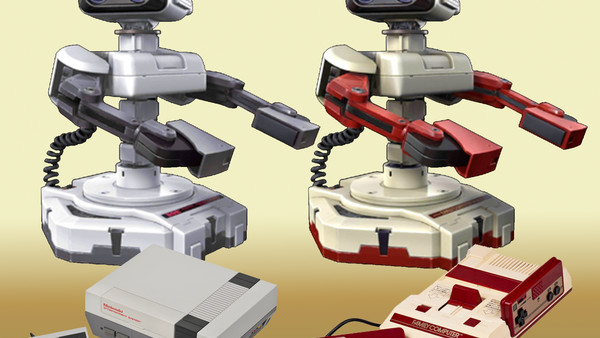
What it was: The result of an absolute genius marketing strategy drafted by Nintendo.
Following the catastrophic video game crash of '83 in North America, the Big N, as well as every Stateside retailer in existence, had doubts over the financial viability of a new games console in the West.
As a means of circumventing the industry's then-fragile state in 1985, Nintendo decided to release R.O.B. alongside the NES in the States to make the pairing appear as that of a novelty toy, rather than a games console.
Why it flopped: As is abundantly clear, video games regained their popularity in the West thanks, in no small part, to the success of the NES, but R.O.B., the poor, soulless bot, never really had a hand in the recovery.
Just two games, Gyromite and Stack-Up, were released for the peripheral, leaving its usefulness severely lacking. Today, it's a highly sought-after collector's item and fetches a far higher price than its original RRP.
Nintendo continues to acknowledge R.O.B.'s existence in various games, most notably in Super Smash Bros.
2. 64DD - Nintendo 64

What it was: An N64-shaped device that slotted snugly into the underbelly of Nintendo's 64-bit console, providing heaps of added functionality, including magnetic, disc-based games, user-created content, e.g. Mario Artist's suite of drawing software, and even rudimentary online capabilities allowing for content sharing and the like.
For the late 90s, that was some pretty slick tech all packed onto one device.
Why it flopped: Despite dozens of prospective titles having entered development at one time or another, just 10 games ultimately made their way to the 64DD, a poor showing that helped little in driving sales.
Nintendo had announced the peripheral prior even to the launch of the N64 itself but it took a further three years to arrive, just in time for nobody to care, what with the GameCube scheduled to arrive less than two years later.
Had it launched alongside the N64, who knows, it could have seen some semblance of use before being retired to attics and second-hand shops. Tragic.
1. 32X - Mega Drive/Genesis
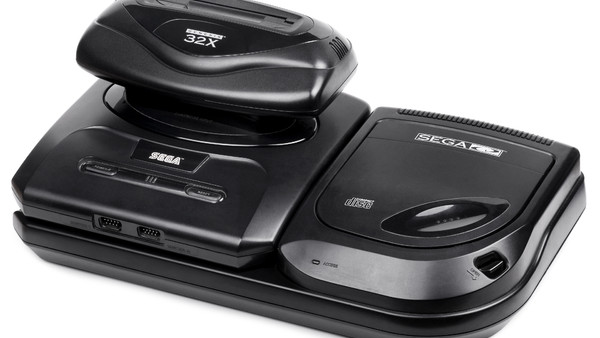
What it was: A mid-generational add-on designed to bolster the Mega Drive's raw power until Sega was ready to roll out its dedicated 32-bit console, the Saturn.
Priced competitively and boasting a lineup of both improved Mega Drive titles and its own exclusives (remember Knuckles' Chaotix?) 32x was essentially the 90s equivalent of the PS4 Pro and Xbox One X, only, it never enjoyed the same level of success.
Why it flopped: In order to get the hardware out the door in time for Christmas '94, Sega had to cut a few rather major corners, including a scaled back launch lineup of forty games, many of which ended up being ports of old games that couldn't properly utilize the 32x's hardware.
That, combined with the near-total reluctance of third parties to sink resources into the tech due to the upcoming Saturn resulted in the 32x being essentially DOA, even despite a positive reception from the press post-unveiling.
A great idea poorly executed. The exact same mistake Sega would go on to make with the Saturn's bungled launch.