10 Big Industry Gaffs Gaming Companies Want You To Forget

Remember Milo? No? Neither do Microsoft.
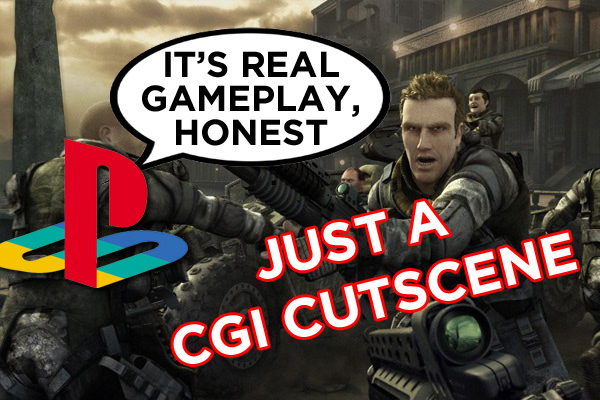
The gaming industry has always had to navigate through the confines of its own precarious existence, but despite the sheer financial generosity that is thrown its way each and every year, mixups do happen - mostly at the detriment to the consumer. Some are damaging, but others are just plain embarrassing - case in point; Sony's recent misguided attempt to trademark the phrase 'Let's Play'. This application was only recently denied, but it's only the latest in a long line of them that not only have Sony been party to, but the entire industry as well. Everything from failed press conferences to woeful opening launches have reminded gamers of just how weirdly experimental and disastrous the industry can be, and as it attempts to find more creative ways to get people to cough up their cash, skepticism and ridicule are really the only reactions it can provoke - especially when botched releases and excessive DLC ends up becoming the market's norm. These instances of oddball industry strategies have only gotten more frequent in recent years, as the onus is on developers, publishers and companies to make further advancements with both their hardware and software in an ever-expanding market. Bigger risks are being taken, but whether or not they're beneficial for the industry to learn and thrive is an entirely different matter altogether.

10. Peter Molyneux Lies About The Kinect's Capabilities (Microsoft)

https://www.youtube.com/watch?v=CPIbGnBQcJY Who could forget the sheer abject awkwardness that wormed its way into Microsoft's conference hall when this thing was demoed? The Kinect (then known as Project Natal) was always a bit of a misfire for Xbox, as it didn't deliver on any of its promises and found itself relegated to the annals of poor party games only picked up on awful New Year's parties, but Milo was just something else altogether. The brainchild of professional industry hype-artist Peter Molyneux, 'Milo' was demoed as an adaptive communicative AI that could read emotion. Yeah, bit creepy isn't it? Just watch the above video though, Molyneux's descriptions of the events we're 'seeing happen' are literally just lies, especially in retrospect now we've seen what the hardware could do. Luckily, Microsoft caught onto the fact that not really anyone wants to have a conversation with a computer-generated adolescent - especially one that could supposedly pick up on vocal changes.

9. The Red Ring Of Death Breaks Records For Failure Rates (Microsoft)

Almost everyone who bought an Xbox 360 from 2005-2010 experienced some sort of hardware failure, which is pretty bad considering the console was such a huge commercial success. A Game Informer survey actually pointed the console's failure rate at a record 54.2%, absolutely dwarfing other competing consoles' and consequentially faming the 360 for its notorious hardware difficulties. Everything from the RRoD to the E74 screen and even constant scratching of discs came to define the 360's negative traits quite immaculately, even if the console itself served those who purchased it well in certain areas. Whilst Microsoft's successor to the original Xbox was far from the only console to experience hardware failures, the sheer scale of their occurrences meant that its early years in particular haven't been too fondly remembered. Indeed, the RRoD is almost synonymous with the Xbox brand at this stage - it's not really something Microsoft can evade even if they tried to.

8. SixAxis Motion Controls Ruin Lair And Factor 5 (Sony)
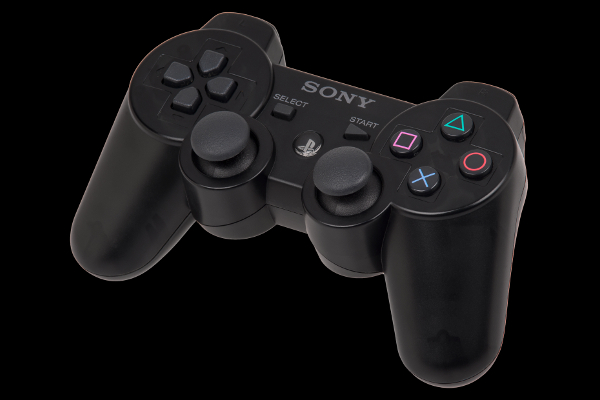
However, where the Xbox failed in its console, it more than made up for in its superb controller design - something Sony struggled with immensely with the launch of the Playstation 3. The Sixaxis was always a bit of an odd design, but its evolution was even weirder. The controller originally sported a comically garish 'boomerang' look before returning to the traditional image of Sony's controller, but with the added bonus of clunky triggers, a cheap feel and completely superfluous motion controls. The design was of course innovated on with the advent of the DualShock 3 and 4, but the Sixaxis motion element just really didn't bode well for game designers, and even became the undoing of the 'Lair' developer, Factor 5. The controller's dodgy motion movements were originally the only way to play the game, and because they were so unresponsive, well, it was unplayable. This meant that Lair ended up being a failure in both the critical and commercial sense, and in-turn squandered Factor 5's attempts to continue development on different titles afterwards. Good luck getting that Rogue Squadron sequel now.

7. SimCity's DRM Leaves Users Unable To Play It (EA)
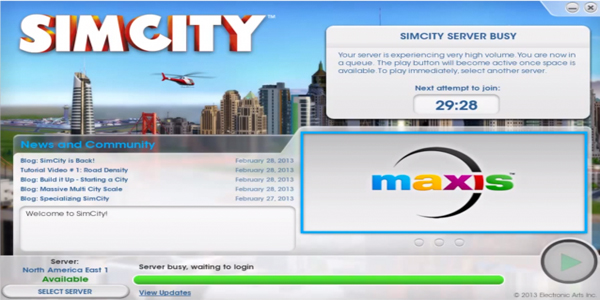
If any one industry gaff deserved the moniker of 'unmitigated disaster', it would be DRM and its controversy in relation to the fifth main instalment of the SimCity franchise. Online-always setups just don't work and they never will, since not every consumer has the option to secure unlimited, uninterrupted broadband. Plus, people should always have the option to choose when they go online, and whilst it's one way of combatting pirates who take away thousands from the industry each year, SimCity's launch day troubles exemplify just why it's so unviable as a defence. Irrespective of the game's core mechanics, the title was marred with controversy when it became apparent that people who had purchased it within its first week couldn't actually play it, as EA's servers were completely overwhelmed and couldn't keep up with the online demand - all this for a game that could've been played with ease without the need for an online connection. EA have since abandoned the tactic altogether now however, so at least it's a case of a publisher learning from their mistakes.

6. Killzone Tries To Pass Off CGI As Actual Gameplay (Sony)

https://www.youtube.com/watch?v=zAb2rP9Wp-U One of the most notorious trailers to have ever dropped, Guerrilla Games' long-delayed sequel to the first Killzone may have achieved a positive reception when it launched four years after its big debut, but the first time audiences did see it left a remarkably bad taste in their mouths. Marketed under the false pretence that what was being shown was in fact, 'actual gameplay', developer Guerrilla Games and publisher Sony displayed a pre-rendered trailer to audiences world wide and only conceded that it was in fact fake after the event had ended - shady or what? Killzone's 'fake' trailer was one of the first notable instances of marketing tomfoolery, but it certainly preempted another infamous victim of the E3 hype machine...

5. Watch Dogs' Graphical Downgrade (Ubisoft)
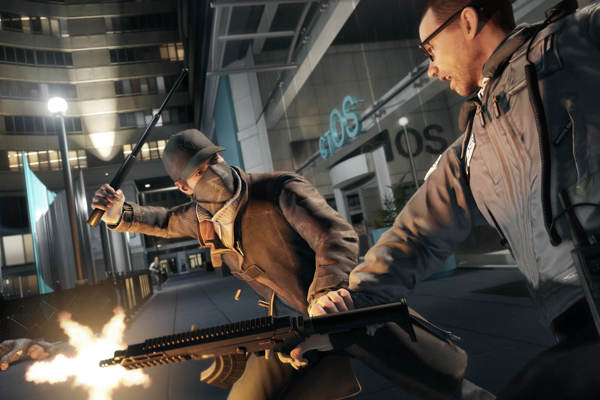
A case of hype and flashy gameshow tactics becoming self-defeating in their own right, Watch Dogs was always meant to be Ubisoft's next big thing. When it was first shown off at E3 2012 people found themselves marvelling at the environment that Ubisoft had supposedly completed, and were wowed further when it returned the following year confirmed to be on the then next generation of consoles. This was not the Watch Dogs that got released however, with the final release suffering from a graphical look that bore no resemblance whatsoever to the gorgeous pixels we were shown at both of its E3 shows, along with a shoddy story and fairly lacklustre gameplay to boot. It was very much a case of the perpetual hype-machine getting crushed underneath its own weight, but it did expose the rather unsavoury marketing techniques developers and publishers used at different shows. The debacle surrounding Ubisoft's new IP only further embedded the cynicism gamers now seem to have in respect to all pre-release material for titles, which is a huge shame considering part of the fun in getting games is delighting in the fervent excitement that occurs beforehand.

4. Mortal Kombat & Batman: Arkham Knight Ship Broken On PC (Warner Bros.)
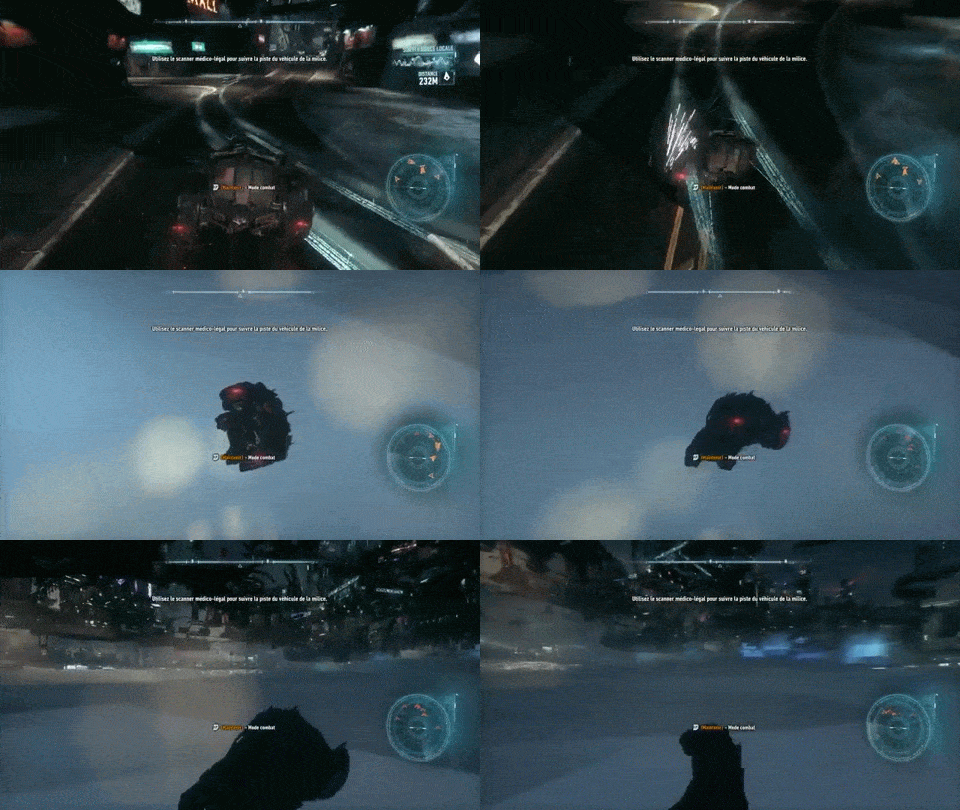
Warner Bros. really didn't seem to have a good relationship with the PC this year, what with its disastrous releases for Mortal Kombat X and Batman: Arkham Knight not doing anything good for the publisher's reputation. Even if the titles in question were decent games, both their PC releases just completely dropped the ball. MK X suffered numerous technical issues, as did Arkham Knight, which is still fairly unplayable on a lot of set-ups 7 months after its initial release. This led to Rocksteady and Warner Bros. offering a refund for players effected by the release, but months of failed patches had already done the job of disillusioning dozens of customers with the company. As WB inevitably gears up for their 2016 slate, one can only hope that they hold the PC in higher regard - lest we see another repeat of last year's disasters.

3. Microsoft Demos The Most Anti-Consumer Console Ever At E3 2013
I don't think I've ever seen quite as big a U-Turn in gaming history like I witnessed with Microsoft's disastrous 2013 E3 showing. Along with a conference that decided to focus on pretty much everything except gaming, audiences reeled in their chairs at the prospect of having the next console being online-only - a practice we've seen lambasted fairly by other failed experiments in the medium - along with a restriction on access to used games. It was just one mediocre announcement after the other, and only provided Sony with some hilariously timed rebutting adverts that chimed in on gamers' disbelief at the prospect of having a games console that wouldn't have a focus on playing games. https://www.youtube.com/watch?v=kWSIFh8ICaA Luckily Microsoft realised just how stupid the whole affair was and scrapped the most unappealing aspects of the console before it released. Not before they went on to arrogantly insult their consumers however, with Don Mattrick defiantly arguing that the company did in fact have a console for players who wanted to stay offline, "it's called the Xbox 360." 2013 is definitely a year the company won't be too hesitant about forgetting anytime soon.

2. Assassin's Creed Unity Ships Completely Broken (Ubisoft)

We've already harped on about why Unity's buggy release is both hilarious and completely disrespectful as a whole, but the entire affair that arose from it is simply too important to forget just yet. A victim to the Creed's annual development cycle, Unity shipped with a notoriously buggy base game. Many glitches and errors were rectified and amended with patches and updates, but the damage had been done the moment Ubi had allowed Unity to ship with the knowledge of its unplayable state well and truly there. The damage caused by Unity is still sending reverberations throughout the entire AC franchise, as it looks as though it will finally be rebooting and moving away from yearly releases in the near future.

1. PlayStation Network Hack Leaves 77 Million People's Data Compromised (Sony)

The hack to end all hacks, the massive security and data breach that engulfed Playstation in the summer of 2011 was a huge wakeup call for the industry, and shone a light on the inept defences that were in place prior to such a breach taking place on Sony's PSN. The hack was believed to have compromised the personal and financial information of over 77 million users, all justifiably outraged that such an intrusion was allowed to take place and that Sony had withheld information regarding the attack for days after it had occurred. Not exactly the best way to deal with one of the largest data breaches in history, is it? Thankfully the PSN seems to be a whole lot more resilient now, despite the copious amounts of downtime it enjoys as a result of DDOS attacks and maintenance. It may not hold a candle to Xbox Live, but it's a damn sight better than the network that fell victim to the hack of 2011. Are there any other industry gaffs that we've missed out? Post a comment below to let us know!

In this post: 
Killzone 2
 
Posted On: 
Content Producer/Presenter

WhatCulture's very own resident movie guy, Ewan has been working in the content creation biz for over 10 years now, having started as a freelance contributor to WhatCulture Gaming all the way back in 2015. After graduating with a First-Class Honours in History from Northumbria University in 2017 (where he won a prize for a totally killer dissertation on the Watergate years), Ewan took on the role of Comics Editor at WhatCulture and quickly developed WhatCulture Comics into one of the biggest superhero-focused channels on YouTube. He followed this with a brief hiatus at Screen Rant in 2021, where he worked across the Gaming and Film sections as a writer and editor, before returning to WhatCulture as a Senior Content Producer / Presenter in 2023. He started his own podcast, We Love Dad Movies, in 2022, and has contributed several written pieces to the Eisner-nominated comics website Shelfdust as well. In his current role, Ewan incorporates his love of cinema, comic books, and history into written pieces and video essays for WhatCulture's Film & TV channel, as well as WhatCulture Gaming and WhatCulture Horror, with a particular focus on nineties-era Dad Movies, old school Westerns, and Golden Age Hollywood Noir. John Carpenter is his fave, and he thinks Batman Beyond should never have been cancelled. If that's your vibe, you'll probably like his stuff.