9 Famous Video Games That Are Actually Responses To Other Famous Video Games
Activision and EA are the Marvel and DC of video games.
Nothing in the world of media is original. Even the most beloved movies, games and television shows are inspired by, and share DNA with, other beloved movies, games and television shows. It's just how it works, as creatives are inspired to take a great idea and build upon it.
However, this sometimes goes one step further, moving beyond the world of homage and spiritual successors to the point where media is created that actively functions as a direct response to something else, either as a critique or a send up.
We've seen this in the movie business, where Antz was made by a former Disney executive to compete with the House of Mouse's upcoming A Bug's Life, even being pushed out the door early to steal its thunder and be the first animated film about bugs to hit theatres. Look, I never said that it was reasonable, only that it happened.
Unsurprisingly, this same mentality is present throughout the world of video games, as publishers and developers look at what players are responding to and attempt to go one bigger and better, or in some cases, to fill a gap in the market the comepetition has been neglecting.
9. Rock Band Happened Because Activision Snubbed Harmonix

Starting with a relatively obvious one here, the brief, soaring success of peripheral-led music games in the mid-2000s led to the biggest rivalry this side of Pepsi and Coke: Guitar Hero vs Rock Band.
The two franchises were strikingly similar, but the latter brought - as the title suggests - a whole band's worth of plastic musical instruments to join in on the fun, adding drums, a microphone and later a keyboard alongside the regular guitar. It seemed like a natural progression of what GH started when it debuted, but publisher Activision didn't seem to think so.
In fact, the publisher didn't care all that much about the developers of the original games, Harmonix. They didn't own the IP, the manufacturer of the peripherals, RedOctane, did, and Activision didn't even meet with studio about working on more sequels, instead bringing production in-house.
Consequently, Harmonix got to work on a rival, crafting the ambitious Rock Band (which allegedly cost $200 million to make), and forcing Activision to play catch up, themselves introducing full-band peripherals a little while later.
8. American McGee's Alice Was Born To Challenge Quake And Doom

Now, on the surface it might not appear that the third-person, puzzle-based Alice in Wonderland games have anything to do with the super gory first-person Quake and Doom franchises, but they were actually built to directly contrast with these hyper-masculine experiences.
The titular American McGee was the creative director at id Software, and after working on those shooters, he branched off to prove that games didn't have to be about space marines and drab industrial corridors to sell.
In response, he took inspiration from Lewis Carroll's Alice in Wonderland books, putting players in the shoes of the titular character and placing her in horrific, nightmarish dreamscapes where she battled her own demons, literally and figuratively. The game still had the blood and the gore of a title like Doom and Quake, but eschewed the regular conventions of those titles, with more metaphorical storytelling and imaginative, fractured levels.
It wasn't a total success, but it was a creatively rich title, and even spawned a sequel in Madness Returns years later, all because American McGee was sick of seeing space marines on video game box art.
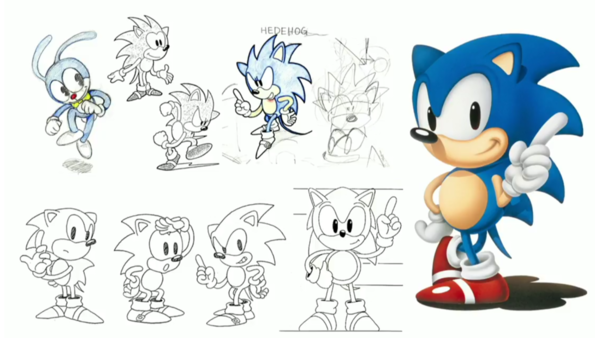
7. Sonic Was Conceptualised As An Edgier Mario
The early 90s were the silver age of gaming mascots. The success of lovable, easily identifiable heroes like Mario served to sell consoles from the late 80s onwards, becoming synonymous with entire brands rather than a single franchise, and just about every company wanted to create their own flagship character.
Of course, because this is the world of video games, it often didn't mean coming up with something original that could stand on its own, but a symbol which could simultaneously take the spotlight away from another mascot instead.
This is where SEGA comes in, as their push of Sonic the Hedgehog was an attempt to directly challenge Nintendo's dominance, giving players a cooler, "edgier" character to get behind. They'd tried previously, but the closest the publisher had come to beating their rivals was Alex Kidd, and if you're asking yourself "Who?!", then you know just how hard SEGA failed.
The company funnelled so many resources into researching the perfect mascot, painstakingly going back and forth on various human and animal designs, who his villains and sidekicks should be, and the abilities that would allow him to stand out. He even had Michael Jackson's shoes from the Bad video, just to be more "down with the kids".
Of course, this all paid off in the end, and while he might not have dethroned Mario (certainly not when it comes to the quality of games), Sonic became one of the most beloved fictional characters of all time.
6. Skate Focused On Actual Skateboarding Because Tony Hawk's Wasn't

It might be hard to believe now, but like Tamigotchis, skateboarding was everywhere in the late 90s and early 2000s. Activision capitalised on the popularity with the genuinely amazing Tony Hawk's franchise, releasing annual releases that, for a long time, managed to innovate and remain creative, in addition to nailing the core skating mechanics.
However, the title was decidedly cartoony and rooted in arcade sensibilities, and as the sequels wore on, it was the Tony Hawk "aesthetic" (the punk-rock-by way-of-Jackass feel) that was relied on to sell copies, with the focus becoming less and less on actual skateboarding.
Not one to let Activision run away with a monopoly of a moneymaker, EA entered the scene just as skateboarding was beginning to lose its mainstream allure, creating Skate as an attempt to focus solely on the craft and challenge of pulling off lines and combos.
Appealing to the hardcore crowd, Skate delivered a gameplay style that Activision's series couldn't have been further away from, and filled a gap that skating fans were pining for.
5. Kingdom Come: Deliverance Is A Realistic Skyrim

For a long time, Kingdom Come: Deliverance was the little game that could, a crowd-funded fantasy RPG that was aimed at the most hardcore of hardcore players. From the get go, the title's mantra was to be a fantasy game that other developers weren't making, a purposeful break from the heightened archetypes and conventions found in the likes of The Elder Scrolls or Dragon Age.
This was made clear even from the promise of the first Kickstarter, which read:
"At no point will you have to collect seven pieces of a legendary magic staff to defeat an ancient evil bent on destroying the world with an army of demons. We think there are enough such games out there."
Instead, Kingdom Come was essentially going to do for video game fantasy what Game of Thrones did for cinematic fantasy: grounding it in reality and doubling down on the development of your character from a bumbling fool to formidable warrior.
Things you took for granted in a game like Skyrim - such as even firing a bow and arrow - would have to be painstakingly earned here, not for the sole reason of doing the opposite to other releases, but to make these actions feel even more rewarding and appreciated. The devs wanted to make you feel like you really lived and belonged in this world, and weren't merely passing through and becoming the Chosen One because you picked up a controller.
It was abrasive and obtuse, but players responded enthusiastically, making it an instant success at launch.
4. Haze Was Infamously Created As A "Halo Killer"

Video game companies just don't get it sometimes.
When a property gets popular, be it Call of Duty, Halo, or Fortnite, publishers scramble to create something that can take it down and replace it at the top of the food chain, reaping the rewards in the process. The problem is, this rarely ever happens, and in order to save face, few publishers actively admit they're gunning for another property just in case they fail and have to eat their words.
Ubisoft is not one of these companies. Instead, when the studio drafted in Free Radical, beloved underdogs responsible for the TimeSplitters series, to work on a big-budget PS3 exclusive called Haze, they wasted no time in stirring up the console war and pitching it to the press as a "Halo killer".
It got to the point where the general public might not have even known how the game played, but knew that it was gunning for Halo's crown, and was , ultimately, an attempt to get Halo fans to pick up Sony's console.
The two games don't have too many similarities outside of the sci-fi framing and first-person perspective, but that didn't stop the hype train. Apparently the developers weren't actually keen on the constant comparisons, and it was Ubisoft who pushed the approach, setting the game up for its inevitable, disastrous fall.
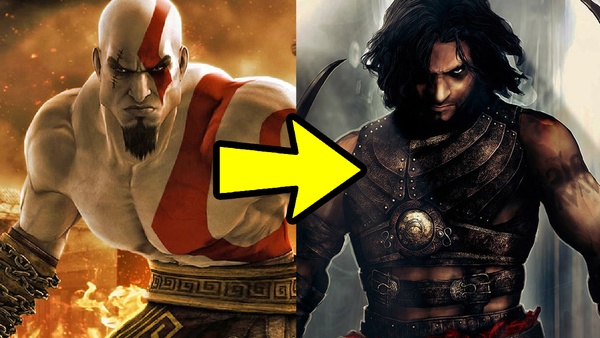
3. Prince Of Persia: Warrior Within Went Darker To Pre-Empt God Of War

Now, this one is admittedly unconfirmed, but the rumours swirling around the release of Prince of Persia: Warrior Within, the highly anticipated follow up to Ubisoft's breakout success The Sands of Time, suggested that it was a response to the impending launch of God of War.
If you've ever wondered by the sequel went through such a radical change in both tone and aesthetic, moving from the colourful fantasy of the original to the brooding, dark, even emo look of the second game, it could be because of Sony's new franchise.
Though PoP was focused more on platforming than combat compared to GoW, the two properties did share similarities, and the darker, more violent approach of the sequel was an attempt to pre-empt Sony's success. There was even a rumour that Ubisoft purposefully pushed Warrior Within out early before God of War to steal some of its thunder.
While these are only allegations, the unspoken rivalry between the two games has been commented on by Ubisoft, with executives admitting that the franchise lost players to God of War because it couldn't compete with the level of graphic violence. Clearly, it was something they were aware of while developing this trilogy.
2. Medal Of Honor Was Rebooted To Take Down Call Of Duty

Oh, EA, when will you learn? In the late 2000s, the gaming giant once again found itself competing directly with a world-conquering Activision franchise, this time attempting to get a bit of the Call of Duty pie. The problem is, they'd already fought this war once before, pitting Battlefield against the series and doing pretty well for themselves, selling 10s of million copies in the process.
That evidently wasn't enough for the publisher, and Battlefield's brand of large-scale combat wasn't a direct one-to-one competitor with COD anyway, so they dreamt up yet another first-person property that could appeal to fans of the competition's smaller, more focused squad-based combat. As a result, the classically WW2-themed Medal of Honor series was rebooted to focus on present-day conflicts, with the devs prioritising real-world multiplayer jargon and settings to sell the authenticity of the experience.
Sadly, the gameplay wasn't quite up to snuff, and nobody enjoying Call of Duty were persuaded to jump ship because Medal of Honor didn't bring anything new to the table.
Ironically, Medal of Honor failing to dethrone Call of Duty came years after COD dethroned MOH, with Activision's franchise even being known as "Medal of Honor killer" in development before it had a name.
1. Fortnite Added Battle Royale Because Of PUBG

Now this is perhaps the most interesting addition on this list, because Fortnite was already officially released when it shifted gears entirely in response to another popular game. Originally, EA's shooter was a PvE experience where a group of heroes built defences and protected them against waves of monsters. It wasn't free-to-play either, but came bundled with a bunch of different editions that provided in-game bonuses.
You might know this version of the title now as Fortnite: Save the World, or you might not realise it exists at all because it's been totally eclipsed by its free update, the battle-royale edition of Fortnite. For better or worse, this became the biggest gaming phenomenon of the decade, but it wouldn't have happened had Player Unknown's Battlegrounds not proven just how lucrative and exciting the battle royale genre could be.
At the time, that PC title was dubbed as being the next big thing, taking the gaming world by storm and spawning a bunch of imitators. None were as polished or as business savvy as Fornite though, whose colourful, free taste of the hot new genre hooked in the biggest market possible, and maintained their interest through regular updates.
Funnily enough, despite basing its own premise and conventions on a movie (where the 'battle royale' moniker came from in the first place), PUBG's developers publicly complained that Fortnite were copying them, which didn't end well.