9 Great Video Games You Didn't Understand First Time
Yeah so... erm... what.

Interpretations of narratives tend to split people right down the middle.
Either you're totally fine "working with" a film, TV show or game - indulging in wider thinking or interpretations based on context or supplementary reading - or everything has to be right there on the screen, for it to be taken as gospel.
To be honest, many of these conversations go on to form some of the most diehard, introspective and investigative fandoms in entertainment history, so there is an immense power to playing things right down the middle.
Let's just say though, that there's a huge difference in slowly drip-feeding the role of The Illusive Man in Mass Effect 2, versus plonking Palpatine down in Star Wars: Rise of Skywalker, and hoping for the best.
Either way, it's you that's left scratching your head when the credits roll.
How much of that confusion was intended? Are you supposed to "dive deeper" right off the bat, or does the creator want you to wait it out for a future instalment, or their own "everything explained" followup?
When does "reading between the lines" become "writing the script yourself"? The results are often fascinating, divisive, and make for a good conversation no matter what. And at the end of the day, maybe that's all our beloved medium needs.
--
Note: There will be spoilers for the games mentioned.
9. Final Fantasy 7 Remake

Starting with a grade-A humdinger of a game story, FF7R follows the basic beats of its original like a good remake should.
... until the closing 40 minutes or so, where characters are suddenly aware they're in a remake; aware of their own destiny and what is supposed to happen, choosing to break free and forge something new.
However, this only makes a kernel of sense, and to those who've played the original, forming the tip of the iceberg of confusion for newcomers and veterans alike.
For newbies though, they were left asking what the hell Sephiroth's deal was, what's a Jenova, why Cloud never addressed his headaches with Tifa, what Red XIII was, why Aerith seemed to know everything about time and space, what the ghost whisper things were... and like a million more queries alongside.
Final Fantasy 7 Remake was very much made as a celebration of the original title... but with enough deviations within its core story to actively throw most of those diehard fans away, whilst being overly confusing to newcomers as well.
8. Death Stranding
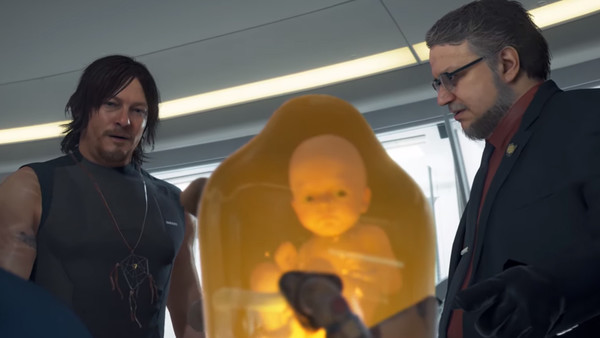
I've already covered - in GREAT detail - the many issues with Death Stranding's out of sync ending, but the majority of the game seems intent on throwing you off any anchoring point when it comes to establishing context.
It randomly rains time. People cry when it rains. People explode when they die, but not Troy Baker, who has lightning and conjuring powers. Main-man Norman Reedus can never die, and though he leaves a crater in the ground after seemingly passing away, he'll come right back, after you - the player - swim back down his throat in a giant ocean of corpses.
The closing act is a complete mess of character revelations being told out of chronological order, other people coming back from the dead, a MASSIVE twist upending who Sam Porter Bridges even is, and a finale that throws another positive twist at you, just so the game can end on a high.
What does it all mean, and what was actually happening? You'll have to replay with endgame context, and scour all the game's optional text logs to even come close.
7. Shadow Of The Colossus
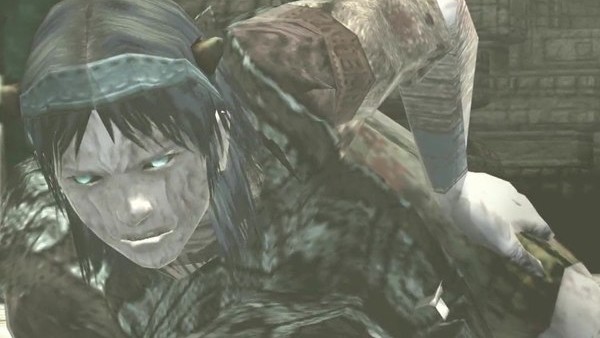
Deliberately designed to replicate the ethereal feeling of a piece of folklore or mythology, Shadow of the Colossus couldn't care less about giving you cutscene exposition every few minutes.
Instead, you're supposed to take it in at your leisure; let its atmospheric charms wash over you, and after you've slaughtered 13 hulking Colossi, only then will you find out what's really going on.
Turns out, the Colossi you'd been killing were the only guardians left housing the evil Dormin's spirit, and though he agreed to resurrect your beloved Mono, your life is going to be taken as a trade.
How does this play out though? Well, you'll grow to become a giant shadowy beast, kill all the footsoldiers who were trying to make sure Dormin didn't escape, then you'll fall through a wormhole and emerge as a small, horn-headed baby.
Somewhat intentionally interpretational at launch, creative director Fumito Ueda later confirmed that Shadow is a prequel to other horned child action game ICO, which retroactively ties everything together far tighter.
That first time through though? Ooof.
6. Hotline Miami 2: Wrong Number
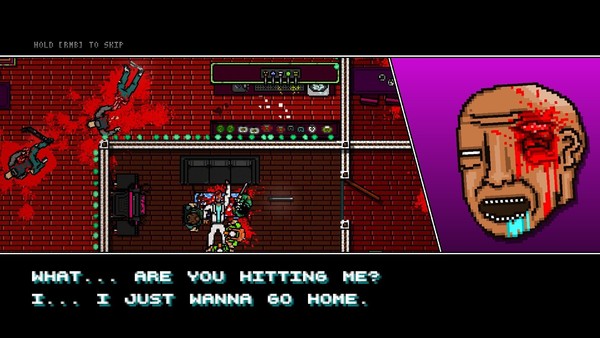
Both Hotline Miami games are some of my personal favourites, and the second should be praised for continuing from EXACTLY where the first left off.
That means a difficulty curve that starts with the mastery of the original, and a story that takes the idea of an individual brainwashed into killing, and then dives into their backstory.
We find out Jacket was part of a platoon from Vietnam, that his actions have inspired copycat killers around the city, that a detective is on his tale, that a crime boss is taking advantage of his opposition being dead, and then a nuclear bomb goes off, wiping everything out for good.
All of this led to the sequel being branded as incomprehensible or at least messy, but repeat playthroughs only clue you in to how much creators Jonatan Söderström and Dennis Wedin are dissecting the role of violence and repercussion in as many ways as possible.
Hotline Miami 2 isn't a masterpiece - its levels do see you torn down from across the map while you were just trying to see what was coming - but it's story might be the most underrated of the whole generation.
5. Control

Remedy's latest title is easily their best work since either Alan Wake or Max Payne 2. A truly phenomenally unique supernatural setup where "The Oldest House" is essentially a Men in Black-style location, tracking down everyday objects infused with paranormal capabilities, and experimenting on them.
This results in everything from doing battle with a giant possessed clock demon to even yourself, after you get sucked through a mirror, with all the evil in the land being tied to a mysterious entity called The Hiss.
There's also the story of leading lady Jesse Faden and her brother who was taken by the Bureau of Control. However, she's led to him by a mysterious voice in her head... that's actually inside a metal chamber the whole time. This chamber is actually empty when she opens it, and her brother passes out after being possessed by the Hiss, leading to Jesse being trapped in an office environment, and everything cutting to credits.
Honestly, I'm still torn on whether Control deliberately not having an ending is a positive or a negative, because even its DLC only gives you more background detail on the Bureau, alongside excuses to keep digging.
It's because of all this that the fandom are still positing theories and breakdowns to this day, the result being a game that loops back in on itself, with the only constant being the need to replay.
4. Bioshock Infinite

"There is always a lighthouse, there's always a man, there's always a city"
Such were the words uttered by Elizabeth in the closing act of Bioshock Infinite. A sentence purposefully designed to codify the insanity of its multi-dimensional finale, and leading to an endless amount of Bioshock sequels, should anybody ever want to do more.
In many ways it's total genius, and allowed for Ken Levine to finally step away, but when it comes to understanding everything going down in Columbia, you probably needed a Youtube breakdown or two.
There's the Lutece Twins, who seem to know everything about why Booker is there. Inter-dimensional rifts that let Elizabeth pull items and weapons from other timelines. There's the giant Songbird creature...man... thing that seems to be the next evolution of a Big Daddy.
In short, Bioshock Infinite is packed full of tantalising questions - and the answers are all there, once you start looking - but it's such a sensory onslaught first time, I'd be amazed if anyone was totally comfortable by the end.
Oh, and if you were, then explain why Lady Comstock's ghost is a thing.
Exactly.
3. NieR Automata

A spectacularly unique game that should be championed at every opportunity, Yoko Taro's Nier Automata is life viewed through machine learning.
The purpose of emotion, the resultant calculations that create "fashion sense" - love, loss, war, survival and ultimately, purpose. It's one giant tone poem on existence, and that sense of looseness is what elevates the entire experience.
However, it's highly unlikely you'll "get" what Automata is going for first time, because confusion is part of the intent.
Case in point: You need to finish the game twice over before a third playthrough even unlocks the end of the main story (something around 38% of people have done on PS4, according to trophy data). There are a whopping 26 different endings accounting for everything from abandoning characters and bosses, to just blowing yourself up.
And lastly, because the whole thing takes around 20-30 hours - or 60 if you get lost in side-quests - actually piecing together a cogent "beginning, middle and end" feels nigh-on impossible.
Go back through or read "explained" articles and you'll feel much better, but that first run is about as confusing and awkward as life itself. Which is probably the point.
2. Metal Gear Solid 4: Guns Of The Patriots
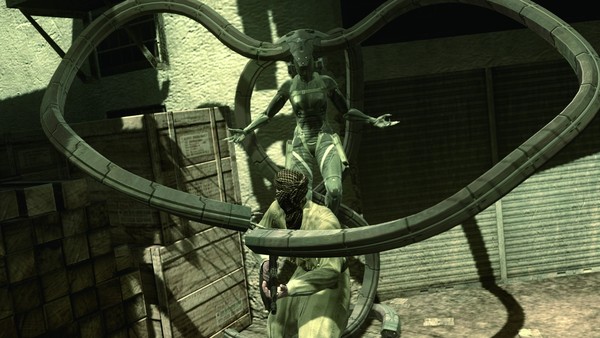
Beautiful models who started as war orphans, crossed with animals and put in mech suits. An entire futurescape where ID tagged soldiers are controlled biometrically by corporations back home, fighting proxy wars while those at home price a VR headset modelled by David Hayter.
Smoking, coca cola-drinking monkeys in diapers, nanomachines that prevent cancer, characters who died decades ago getting resurrected, and a side character immediately getting married to the leading lady, because they fell in love that afternoon.
Metal Gear Solid 4 was the culmination of Hideo Kojima being asked to do multiple additional sequels, after praying to the fans and Konami to let him move on. He put enough barmy BS into Guns of the Patriots to last a lifetime, but also found time to pay tribute to his father at the very end.
The only way for MGS 4 to make sense is to literally sit with a notepad filled with notes from the previous games, and Charlie Day your own diagram as you go.
Anything less, and it really is like a fever dream from one man desperately trying to write himself out of a franchise.
Of course, even after all this, we still got MGS 5.
1. Dark Souls & Bloodborne
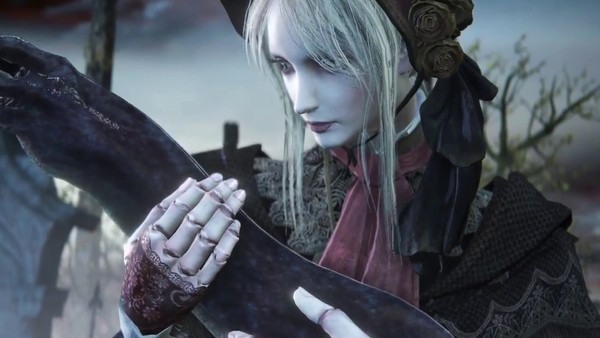
The games that popularised the idea of storytelling by way of item descriptions, 99% of the characters in Dark Souls or Bloodborne are more likely to cackle at you whilst selling a few items, than describe what's actually going on.
It got so bad in terms of only the most diehard fans unravelling this stuff, that Sekiro: Shadows Die Twice was the first FromSoftware game this generation to feature a voiced protagonist, cutscenes and actual straightforward exposition.
Still, that descended into a man emerging from another man's shoulder for the final fight, but you can't have everything.
Back to Souls and Bloodborne, and obviously this approach paid dividends. Besides the rush of overcoming insanely challenging odds, there's a sense of inbuilt value to working your way through the lore as well.
Entire silk-voiced Youtube careers have been made from discussing just how detailed and emotional Soulsian lore truly is, but you'll have to collect items, read text and seek out every last nook and cranny to make the pieces fit yourself.
Dark Souls is forever the embodiment of Zelda's "It's not safe to go alone" opening statement, and that applies to the storytelling, too.
Watch Next
The IMPOSSIBLE Dark Souls Quiz: How Far Will You Get?
