9 Popular Video Games With Glaring Flaws Nobody Admits
The things you're forced to forget about when the rest is spot on.

There's always a feeling when any critically-revered title releases, that nothing bad can ever be said about it. Just try doing so with GTA: Vice City or Skyrim - those games are like Luke Cage to any opinion-bullets: They're phenomenal, flawless titles. Fact.
Not that I'm necessarily disagreeing, but nothing's perfect (unless you're Shovel Knight), and no matter how much a given title's positive reception and reputation cements it in the good books, that doesn't mean there aren't negatives worth addressing.
One definition of perfection involves acknowledging the blemishes and quirks in a given 'thing' anyway, as only that makes it genuine. So, with that in mind, which insanely popular and well-regarded titles have glaring mistakes we're all too star-struck to notice?
--
9. Overwatch - Loot Sucks

You know Overwatch, right? The fantastical blend of superheroes, Pixar-esque animation, vibrant colour schemes and sex appeal? It's a cocktail of purely primal good vibrations, and one that easily netted developers Valve a Game of the Year nomination.
That said, outside of enjoyment, the reason for playing is to unlock small loot boxes, but as a character's weapons, costume sets and items are locked, it forces the devs to pack these boxes with all sorts of 'rewards' that are ultimately pointless.
Literally, working through a handful of matches will get you any combination of the following: Spray-on stickers (to put on walls that no one ever looks at), costumes (very rare, but actually good), 'voice lines' to randomly say in the game, player icons, some emote animations, victory poses, 'Highlight Intros' for any 'Play of the Game' final shot, or some cash.
It's... fine, but the vast majority of the time you'll end up with three sprays and a voice line, or a costume for a character you never use. Even getting enough gold coins to purchase something you actually want is completely random, forcing you into the dour market of microtransactions to have some semblance of agency over what you're unlocking.
Oh, and even then all you can do is buy more blind loot boxes... it's a never-ending cycle.
8. Batman: Arkham City - The Open-World Is Pointless

Think about the Arkham series: Asylum was phenomenal, City was solid and Knight, well, it still played fantastically, but the story was all over the place.
Overall though, Rocksteady seemed to take the franchise in the direction of GTA - or that of an open-world template - and they really didn't need to. You wouldn't even have gotten the naff 'tank battles' and forced Riddler Raceway challenges in Arkham Knight, if not for Arkham City's push towards a bigger, more open game world.
Even considering how Arkham City is laid out, it's a series of enclosed spaces and levels, peppered across an expanse of Gotham that is barely a city at all. There are no pedestrians, no signs of life other than gang members to slap around or the occasional 'Political Prisoner' in need of rescuing - I mean, why was Arkham City set in an open-world in the first place?
It would've been far tighter and better-plotted as a more linear experience with the occasional large area, a la Arkham Asylum, or more recently, Uncharted 4. The more you think about it, the less sense it makes.
7. Far Cry 3 - Vaas Was Terribly Used

Despite being front and centre for every advert relating to Far Cry 3 - making the character a firm favourite in the process - Michael Mando's excellent performance as Vaas gets less screentime than Return of the Jedi's Ewoks.
Yes, the "Definition of insanity" ended up amounting to building a PR campaign around a character you barely use. Despite tons of marketing materials alluding to the idea that Vaas could be a figment of main-man Jason Brody's imagination, in the game, he dies in a cutscene about halfway through and is seldom mentioned again.
The whole kill happens way too fast and sudden, leaving you with that quintessential "What th- is that it?!" reaction, as really, considering the trippy way the scene plays out, we could've done with having like, a conversation or something?
6. God Of War - Kratos' Motivations Make No Sense

Have you ever really looked into Kratos' motivations? I mean, back when the series first got off the ground, we were too busy marvelling at the angry spartan pulling enemies in half with his bare hands to care, but his reason for despising the Gods themselves, well, it's a bit cack.
See, Kratos, erm, accidentally kills his entire family after being asked by Ares to wipe out any number of villages to prove his allegiance. I mean, the devs want you to believe he didn't recognise his own house, his own wife and his own child, before cutting them down and then blaming the person who told him to do it?
Like, yes, wiping out families isn't the best gig in the digital cosmos, but Kratos, ol' buddy ol' pal, it's kind of your fault, and has been all along.
5. GTA Online - The Re-Balancing Of Shark Cards Forces Microtransactions

Back to shady business practices, and with every subsequent DLC, Rockstar have cranked up the price of all in-game assets, forever offering microtransactions in the form of 'Shark Cards' if you want to bypass the standard progression.
Want a fancy new ride or weapon, but don't have tens of hours spare to plough into amassing the cash through missions? Why, you can plonk down some additional real-world cash to unlock it right now!
In the same vein as Overwatch, the defence of "Well, you can just play it" is there, but that same ethos lets developers get away with this setup in the first place. No matter which way you look at it, both GTA Online and Overwatch offer 'fast track' options through real-world payment for something you can unlock if you give up a day or two of game-time.
The only reason you're not offered a full game's worth of content within a reasonable time frame is to 'encourage' additional spending, and in GTA Online's case, has become incredibly off-putting.
4. Bioshock: Infinite - WTF Was Songbird?!
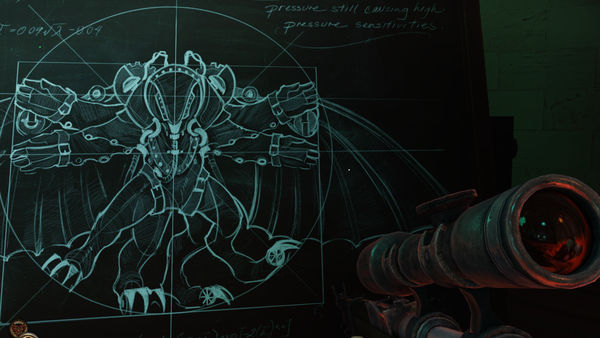
For as much as Ken Levine span a pretty tight yarn when it came to delivering a followup to his monumental original, Bioshock: Infinite had one gaping hole in its narrative that only barely got papered over: Songbird.
First, its creation - we don't see anything resembling a solid explanation as to WTF Songbird is or where it came from. The nearest is a handful of scattered papers showing the Big Daddies and their requisite technology, confirming that Fink and Suchong worked on what would become Songbird together by communicating through the tear in time and space.
Even with that, the game doesn't go into enough detail. We're supposed to accept that there's a ginormous human inside the suit, which despite Elizabeth hanging around with it long enough, never shows any signs of relatable life, or a breakdown of how the people of Columbia or Rapture created a literal giant in the first place.
I don't know about you, but every part of Songbird's role in the story always had this massive "Yeah but... what the hell is that thing?!" hanging over it, which the game never properly addressed, before killing the creature off anyway.
3. Deus Ex: Mankind Divided - Microtransactions Break The Game

Well, they kept this one relatively quiet, didn't they? Thanks to an exposé of sorts from Jim Sterling, he uncovered the startling fact that Mankind Divided's microtransactions were only added in the final few weeks of development, resulting in a totally broken progression system.
Naturally, this came from publishers, Square Enix, and thanks to it being such a last minute inclusion, Eidos could only apply it to the abilities you get across the campaign, meaning if you so choose, you can drop some cash unlocking everything in minutes.
Exactly what money-grubbing execs wanted, then.
The roundly-trounced 'Breach Mode' received copious hatred and negativity from fans, but having the same application of 'pay to win' for your long-awaited single player is pretty f*cking lame.
2. Uncharted 4: A Thief's End - Elena's A Trained Killer Now?

A product of her A.I. more than anything else, Uncharted 4's Elena goes from being a pistol-equipped journalist in the original trilogy, to a neck-snapping, headshot-perfecting soldier in A Thief's End.
No sooner have you reunited with her at the beginning of the game's final third, that both Nate and Elena will charge forward into an overgrown enemy mansion. The problem is, Uncharted's 'companion A.I.' is more accustomed to the likes of Sully or brother Sam; known criminals who perhaps aren't opposed to offing an enemy or two.
But Elena, well, she does the same animations, meaning if you're pinned down and a guard is about to find you, her A.I. will trigger and see her snap that neck like a twig. She'll also unload on enemies with pistols and machine guns, not saying anything or remarking whatsoever on the fact she's pretty much become the female version of The Punisher.
1. Metal Gear Solid 3 Doesn't Work As A Stealth Game
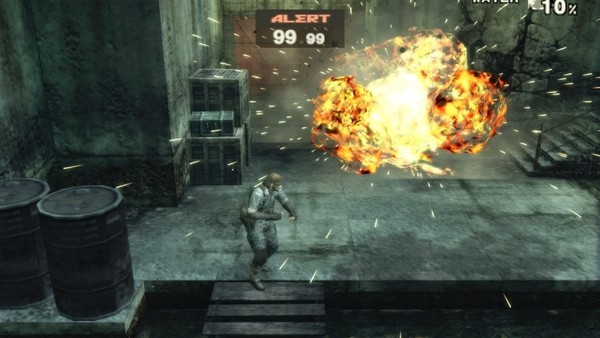
Go on, admit it - how many times have you been caught in Metal Gear, only to resort to shooting your way back to 'normalcy' and carrying on as if nothing went wrong?
It's happened to all of us, but especially in MGS 3 - thanks to Kojima removing the Soliton Radar and forcing you to monitor a percentage as to how visible you were - this was an annoyance every five minutes. Konami would later acknowledge "how many people played" by framing a ton of MGS 4 trailers around a far heavier action focus, showing Snake blowing up soldiers and tanks left, right and centre.
The fact remains that Snake Eater was the hardest of the bunch to get a handle on where exactly you were visible from, and the amount of times you'd hear "Huh?", as some off-screen enemy started slowly approaching you - only to result in a full-on alert - well, I lost count.
--
Which other annoyances stop otherwise perfect games from being flawless? Let us know in the comments!