9 Reasons You Shouldn't Have Faith In The Video Game Industry

Can you remember any game that actually worked on day one?
Video games are bigger than ever. Just when everyone thought that consoles were dead and mobiles were going to become the norm, Sony and Microsoft came out swinging in 2013 to deliver some of the most successful machines the industry has ever seen. Unfortunately though, the new generation has brought its own series of new problems for players around the globe, with some dodgy practices in particular infiltrating the biggest games of the past few years. Although the likes of online passes met a quick demise shortly after they were introduced a few years ago, it hasn't stopped publishers from shoehorning similar restrictions into various games right under our noses. For as much as these companies pretend to make decisions "for the fans", the amount of intrusive business decisions, shortsighted industry predictions and broken products they push out the door would indicate otherwise. So, while the industry at large might be doing better than ever financially, the fact remains that publishers and developers are starting to go to some ridiculous lengths to squeeze the most money out of their releases, without the dedication to quality and stability that you would have gotten in years gone by.

9. Publishers Don't Have Any Foresight

Everyone knows that mobile gaming is the future and consoles are dead, right? Well, of course not, but that's the future video game publishers were having a melt-down over a few years ago. While it seems silly now that mobile games could ever dominate in the console market, this was a very real outcome that companies were preparing for just before the dawn of Sony and Microsoft's new hardware - and the effects are still very much being felt to this day. With the market seemingly heading in the direction of more bitesize, episodic content over huge and sprawling releases, many games coming out now were initially supposed to follow suit. Ever wonder why the release of the latest Hitman has been so weird? It's because it started out as an attempt to compete with episodic and mobile games, and when the likes of The Witcher 3 and Fallout 4 proved that people want meatier experiences, Hitman has been trying to shift course ever since. It's just one example, but it's proof that publishers don't always have the best judgement when it comes to the industry they're supposedly experts of.

8. Games Don't Work Out The Box

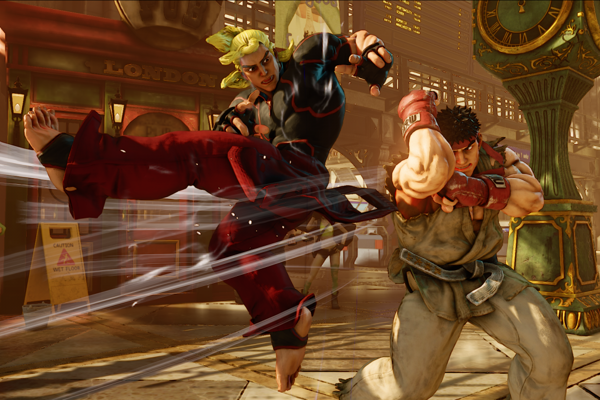
Although PC gamers have known this for years, console players are starting to realise that you should never buy an online-only game at launch. The Division and Street Fighter V are the latest examples of products that went through teething problems in its first few hours. Even if you managed to avoid the server blackouts and actually got into either, the early missions in the former were plagued by a bug that meant players had to queue one at a time to start one of the earliest missions. As a result, The Division was an absolute nightmare to play on day one, and it's completely baffling how such an obvious oversight made it into the game in the first place. Considering the modern mentality of pushing out a new release with a focus on fixing it through patches later on, the first few days of The Division shouldn't have come as a surprise. While fixes and patches aren't all bad, some of them are starting to become a joke. When patches for the latest Tony Hawk's Pro Skater 5 or Assassin's Creed: Unity on Xbox One are bigger than the actual file for the game itself (and they still can't fix all of the problems) then you know something has gone terribly, terribly wrong.

7. Intrusive Microtransactions Ruin The Experience

Microtransactions had so much potential to be great additions to our experiences, yet somewhere along the line the features became more concerned with corporate greed than enhancing the enjoyment of new releases. Not all of them of course; while cosmetic items hidden behind paywalls can be annoying, they don't completely ruin the enjoyment of a game. However, when a title forces you to splash out extra cash in order to get all of the essential content, or to achieve the best weapons in a competitive game, for instance, it becomes intrusive and a blight on the whole experience. Even worse, it's not a though these additional payments are elegantly implemented into gameplay. While being forced to pay extra is frustrating, the fact that they often take you out of the experience, throwing you through a bunch of loading screens or even into an external browser, kills whatever immersion the title may have built until that point.

6. Over-Saturation Is Killing Franchises

You know the saying, "absence makes the heart grow fonder"? Well the same could be applied to video games. While regular sequels are the norm these days, the most popular releases are often new entries into franchises that haven't been seen in years. Whether it's GTA V or Fallout 4, if a series has been on hiatus then its eventual return will only serve to send players into a frenzy - just look at GTA V's sales figures. Which is why it's such a shame to see publishers continue to pump out games just to keep a franchise in the minds of players. Although this tactic is just as valid as keeping properties on the back-burner for a while, it's rarely ever executed properly in today's industry. Take for instance Rocksteady's Arkham series. Not content to wait until the developers were finished on the latest game to follow up Arkham City, publishers at WB decided that four years was too long to go without a new Batman title, and drafted in a separate studio to finish the prequel - Origins - in the meantime. Unfortunately, all this did was negatively effect the brand as a whole, as the middling entry served to repeat the formula of the previous two, meaning that when Rocksteady's Arkham Knight finally came out the distinctive gameplay didn't feel quite as fresh. Gears of War: Judgment committed the same crime, as have many other properties over the last few years.

5. Overpriced Season Passes Are Ripping You Off
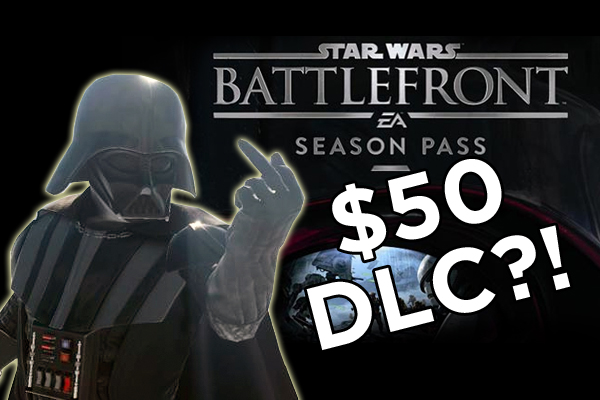
Season passes are a rip-off. With these things being almost the full price of a new game, developers and publishers simply give customers no reason to actually buy these expansions at launch. In fact, games that boast pricey season passes almost never come with concrete details of what you're actually paying for when they're first revealed, with publishers expecting players to throw down cash on an unproven game. And as time goes on, it's starting to look like companies are keeping this information hidden for a reason. Hell, do you think people would have paid upfront if they knew two of the four heroes included in the Star Wars Battlefront season pass were Nien Nunb and Greedo? Would you have been as willing to pick up Arkham Knight's expansions if you knew most of them weren't even created by main developers Rocksteady, but the guys responsible for the middling Arkham: Origins? Season passes are an unproven concept, yet as the years have gone on their price-point has only increased. At the minute, the cost of these packs just don't seem worth it, and unless companies start dedicating enough time to craft top content for them, they never will be.

4. 'Vertical Slice' Initial Reveals Are Unrepresentative Of Finished Products
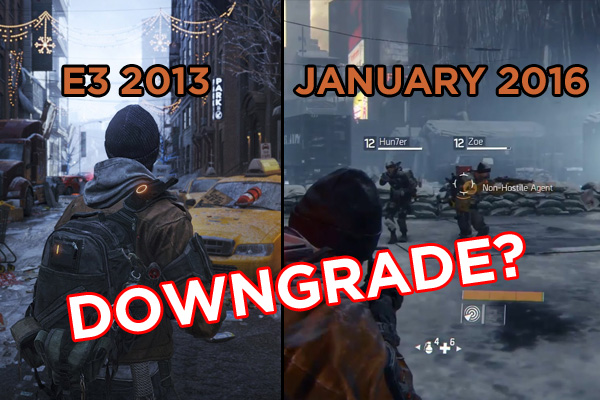
While media events like E3 are always good fun, they don't exactly provide an accurate representation of upcoming video games. After years and years of trailers and gameplay reveals that look nothing like the eventual finished product, anything you see in the build-up to a game's release, no matter how much of surefire thing it seems to be or how close to the release date it is, should be treated with a tablespoon of salt. It might not be the biggest problem, but when was the last time a new video game didn't suffer a visual downgrade in the time between its first reveal and hitting store shelves? Ubisoft is particularly bad for this, but even the more respected developers like The Witcher 3's CD Projekt RED routinely show off graphics that never actually make it into the final game. While graphical downgrades wont make or break a product (or shouldn't, anyway), the secrecy and faux-explanations surrounding these news stories aid in creating an uneasy atmosphere of distrust that sticks with a title even after launch.

3. Developers Think Customers Will Buy Anything

We already know that publishers think that gamers are pretty dumb, but at least they usually have the good grace to keep that opinion to themselves. Unfortunately though, over the past few months the people who make our games have dropped whatever etiquette they once had, with news stories popping up all over of how developers expect us to shell out money for the most inconsequential of features. Perhaps the most egregious example of this blatant disregard for the consumer base came early last year, with a marketing employee of Bungie rightly putting his foot in it during an interview about the game's DLC plans. Getting a little hot and bothered after repeatedly defending the company's DLC practices, the interviewee outright admitted that he expected fans to be "throwing money at the screen" as soon as they saw the emotes included in game's boxed re-release. While this is just one example, the mentality is present in the business model of just about every game we play today. Features that were once included as free bonuses in our titles are now cut out and sold as extra content - which wouldn't be so bad, if developers didn't act like they were somehow doing us a favour by selling us features that should have been free in the first place.

2. Every Game Plays The Same

If you described the game you're playing right now there's a good chance it would fit the bill of just about every big release that's hit shelves in the past few years. Whether it's open world, boasts a crafting system or has a check-list like, online-oriented structure (or all the above) too many recent games have shared the same systems without feeling the need to put a new spin on them. Hell, no matter the genre, whether it's the sci-fi horror of Alien: Isolation or the online MMO-style of The Division, the core gameplay of most modern titles remains astonishingly similar, to the point where you're playing more on muscle-memory than anything else. This repetition gets even worse if you consistently play games released by the same publisher. At this point it's almost become a running joke that every Ubisoft game, no matter the genre, is built around the same features. Yet while this has been exaggerated a little, it's actually strikingly close to the truth, and the more games these publishers pump out the more whole franchises start to just blend into one another.

1. Glorified Early Access Releases

The idea of releasing a game as a platform, as in selling a full-priced release that's updated with both free and paid content over the years in favour of a sequel, is something I can get behind. Unfortunately, while the idea is sound, its implementation in recent years has been more of an excuse for developers to release half-finished products into the market. This year's Street Fighter V is the latest example of this sell-it-first, make-the-game-later mentality. Although the core fighting experience was solid, the game released with the bare minimum of content, lacking an arcade mode and iconic features that fans were expecting to see. Although Capcom are working on adding these features in at a later date as part of its drip-feed business model, it's just not good enough. If you're planning to have your new release work like a platform you should have the full game available at day one, with new substantial content being released later - not the basic modes fans expected to see in there already. How do you feel as a consumer of the industry right now? Let us know in the comments!

Contributor

Josh has over 11 years of experience as a published writer, having worked nine of those years as a full-time content producer at WhatCulture. In that period he has created hundreds of articles, videos and podcast episodes for multiple WhatCulture channels, specialising in gaming, horror and film & TV. He now primarily works as a senior content producer and presenter on WhatCulture Gaming where he co-hosts the WhatCulture Gaming Podcast, a top 3 UK most listened to gaming podcast that he co-created in 2018. Over the years he has reviewed several high-profile gaming releases, covered industry events with on-site reporting, opined on breaking news, and even kicked off his interviewing career by chatting to childhood hero, Tommy Wiseau.