9 Terrible Video Games With One Incredible Mechanic
You kinda love them. You mostly hate them.

Though the history of video games is littered with incredible titles that let one horrendous feature slip through the cracks, what about those few otherwise awful games that nevertheless touted one hugely merit-worthy feature?
While it's no easy to sell to recommend these games solely on the basis of their single compelling gameplay mechanic, it does still make them worth playing for at least half an hour, to savour the clear ingenuity on display even if it couldn't prop up a game that was otherwise flagrantly unoriginal, messy or simply not worthy of that one great idea.
Some of these games arrived on a tidal wave of hype while others came and went with barely a peep, but each remains a monument to failed promise, and sure proof that even awful games can have their redeeming qualities...
9. Brink - Parkour

The Awesome Mechanic: Brink is a first-person shooter driven by its SMART (Smooth Movement Across Random Terrain) system, which allows players to perform parkour-style moves at the press of a button, automatically scaling obstacles and navigating the map in stunningly stylish fashion.
The Terrible Game: Unfortunately, outside of this mechanic Brink is a surprisingly familiar, formulaic first-person shooter that ultimately lacked polish and felt rushed out of the oven long before it was done cooking.
There's just not enough here to keep all but the most hardcore players coming back, because as fluid as the locomotion is, the shooting is utterly generic fare. It's exactly the sort of game that should've been a budget title, but dared to ask players for more.
8. Remember Me - Memory Remixing

The Awesome Mechanic: Protagonist Nilin is able to use her Memory Remix power to alter people's memories in order to affect their behaviour for her own motives.
This involves the player working through several mini-game sequences during the game where they re-enact a memory but make pivotal changes to it that then take hold in the recipient's mind.
The Terrible Game: Remember Me is best termed an ambitious failure, for though it boasts a provocative premise, outside of the Memory Remix sequences, it's a disappointingly by-the-numbers effort, with clunky combat, a messy story and oddly uninteresting locales derailing some initially intriguing ideas.
It's as though Dontnod Entertainment, the very same minds behind the Life is Strange series, came up with their hook concept early in development but never found a compelling whole to hang it on. As innovative as the memory tinkering is, it's a genuine chore to play through the rest of the game, so tough to actually play it to the end.
7. Alone In The Dark - A "Realistic" Inventory System
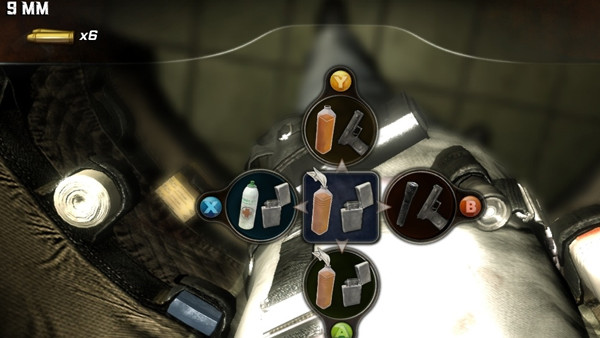
The Awesome Mechanic: The 2008 Alone in the Dark reboot had one of the most intriguing inventory systems of any recent-ish survival horror game. Rather than open up a backpack grid or pause the game to give the player ample time to figure things out, protagonist Edward Carnby simply opens his jacket and looks down, giving a birds-eye view of everything lining his pockets.
The stinger was that the game didn't pause while you had the menu open, requiring the player to work fast and efficiently, potentially in the heat of the moment.
The Terrible Game: Though the game was in many ways a brave attempt to resurrect the flagging horror franchise, Alone in the Dark was ultimately a depressing slog of a game, marred by an abundance of glitches, a forgettable plot, and some of the worst driving controls from any game of the last decade.
It tried to reinvent the series in gritty fashion, but its technical sloppiness above all else made it a hard sell. Atari did release an improved version for PS3 several months later, but sadly the damage was already done, and most players already stopped caring.
6. NeverDead - Body Part Detachment

The Awesome Mechanic: True to its title, NeverDead's single memorable and well-executed mechanic is that demon hunter protagonist Bryce can survive his various limbs and body parts being removed. Losing his head is just a minor inconvenience, at which point the player can roll around the map and pick them up in order to reform.
The Terrible Game: This gimmick is sadly only fun for a short time due to the game's lame controls, dull environments and a total non-event of a plot.
Even the dismemberment itself can be rendered awkward and fiddly due to the game's frequently janky physics and those aforementioned controls. This one's best regarded as a cult curio, a promisingly bonkers attempt that, for the most part, failed to hit its markers.
5. Blades Of Time - Time Travel...With A Twist
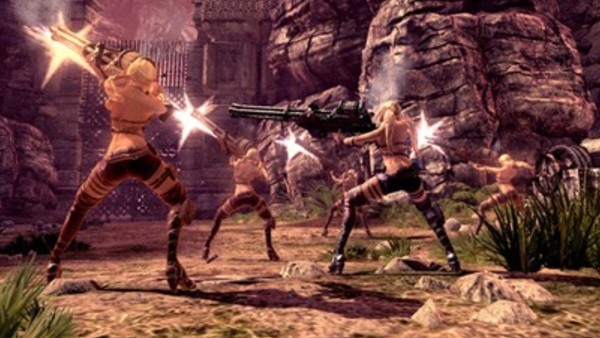
The Awesome Mechanic: Konami's 2012 hack-and-slash title offered up a terrifically entertaining mechanic called Time Rewind, which allowed the player to turn back time while creating a clone that copies the actions that protagonist Ayumi just carried out.
Furthermore, this can be repeated numerous times in order to build a clone squad for Ayumi to solve puzzles, battle enemies or even just escape a tough situation, though of course, rewinding time also comes with the disadvantage of restoring your enemies' health, so there is a sense of balance to it.
The Terrible Game: As inspired as this mechanic is, the rest of Blades of Time is pretty shambolic, touting a woefully dated, scantily-clad protagonist, a nothing story, ropey and unresponsive controls, an abundance of bugs and some infuriating difficulty spikes.
4. Alpha Protocol - The Dialogue System

The Awesome Mechanic: Alpha Protocol's Dialogue Stance System made an admirable attempt to blur the lines between good and evil by having the player pick from three modes of conversation throughout the game that weren't merely labelled hero, evil and rogue.
Rather, the player must choose between aggression, compassion and professionalism, with dialogues during the game requiring a mixing-up of each to ensure the greatest success. It's a surprisingly deep system with powerful reverberations later on and, honestly, belongs in a much better game.
The Terrible Game: Though the PC version of the game received more positive notices than on consoles, Alpha Protocol is still at its core a limp Mass Effect wannabe without the budget, charm or ingenuity to get the job done.
It wasn't a particularly good looking title even in 2010, and on top of that it's filled with glitches, the gunplay and cover system are headache-inducing and the AI is laughable. This all added up to a hugely disappointing effort from Obsidian.
3. Contrast - Shadow Play
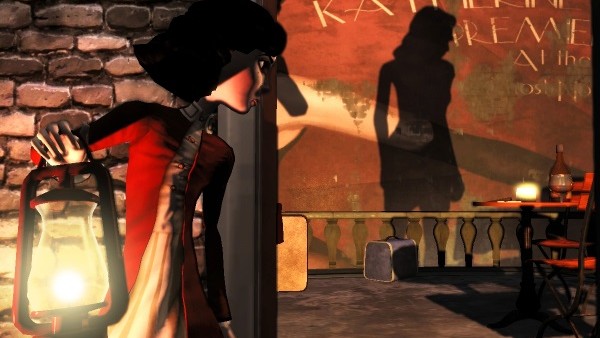
The Awesome Mechanic: This PS4 launch title is propelled forward by its entertaining art style and a platforming system which involves the player switching between the physical 3D world and the noir-inspired 2D world made entirely of shadows.
The tangible world informs the shadow world, and so the player will often need to manipulate light sources and other objects in the real world for them to alter the terrain of the shadow world. For a time, it feels positively genius.
The Terrible Game: The biggest problem with Contrast is that it's absolutely riddled with glitches that undermine its clever conceit.
On countless occasions you'll probably find yourself stuck in the environment to the extent that you'll need to reload the game, and elsewhere the puzzles are more irritating and frustrating than fun or smart.
If another game better-exploited this interplay of light and dark, though, it could end up a major indie hit, because those golden moments where the game really works are something very special indeed.
2. MindJack - Hack Into Enemies
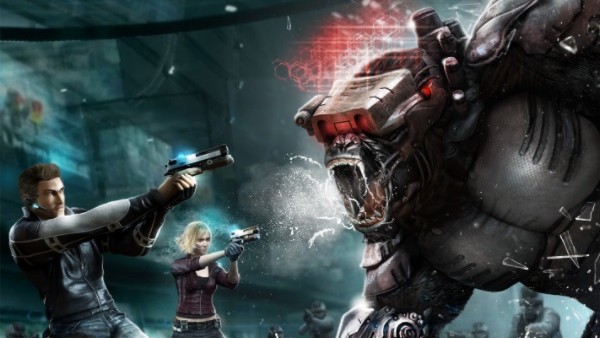
The Awesome Mechanic: In an attempt to one-up the typical third-person cover shooter formula, MindJack allows players to hack into civillian NPCs, drones, enemy combatants and even robot apes, in order to take down a corrupt corporation plotting to rule the world.
To sweeten the deal, other players can even jack into your own single-player campaign and fight with or against you.
The Terrible Game: This gimmick aside, MindJack is a woefully generic cyber-thriller with placeholder characters, hilariously bad voice acting and general presentation, glitchy visuals, and cover shooting that only sometimes works.
Oh, and you lose your weapons after each level for no apparent reason other than to make the game more of a slog, which is at least as infuriating as it sounds, if not more so. Play it for 20 minutes and then never touch it again, basically.
1. Scribblenauts - Word Recognition

The Awesome Mechanic: Scribblenauts' fantastic hook is that the player has the ability to conjure up just about any object they can think of by writing its name down on the Nintendo DS' touch screen.
It's a surprisingly intuitive feature which, aside from your most adult desires, can deliver pretty much anything you ask of it on-screen, and has led to a successful series of titles in the years that followed its 2009 release.
The Terrible Game: There's no denying that Scribblenauts is a controversial pick for a terrible game, but remember that outside of its impressive word recognition system, it is a head-smackingly infuriating game to play.
The main culprit is the control system, which was reviled by even those critics who otherwise praised the game. Players are forced to use imprecise touch-screen controls to guide player character Maxwell around, which makes a chore out of performing even basic actions with your newly-created objects.
Like several other entries on this list, the first game is ultimately an ambitious bust, but thankfully the sequel, Super Scribblenauts, fixed these control issues, resulting in a far more satisfying experience.
What are your favourite mechanics from otherwise terrible games? Shout them out in the comments!