9 Times Video Games Tricked You Into Becoming The Villain
You're the bad guy. Duh.
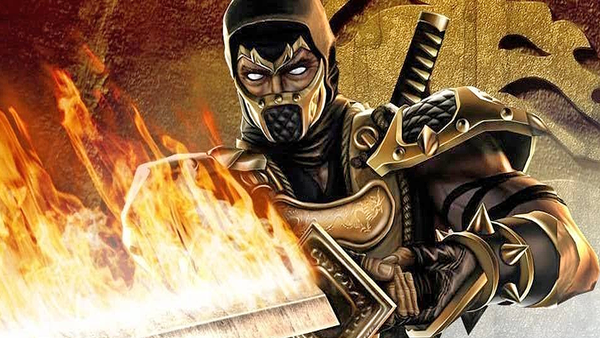
Players having any control in a video game is entirely an illusion. Even in the most open-ended titles that proclaim to champion 'player choice' or RPGs where decisions influence the outcome of the narrative, it's the developers who ultimately control everything
It makes for a strange, unspoken relationship between the people who authored the content and those who are engaging with it, which can be directly manipulated in the name of gut-punch plot twists.
The illusion that the player is in control is maintained in open-world games or understood to be limited in a linear, story-driven experiences like Uncharted, but sometimes developers get creative with this dynamic and use it to pull the wool over our eyes in the name of the narrative.
Iconic games like Bioshock tricked players into thinking heroes were villains and villains were heroes, but there are plenty of examples where releases tricked the you into becoming the bad guy. Insert Billie Eilish joke here.
9. Spec-Ops: The Line

Spec-Ops: The Line is up first because it has perhaps the most famous "you've been the bad guy the whole time" twist in gaming, to the point where more people probably know about reveal than have actually played it.
It's so effective because of how it uses gameplay mechanics that all third-person shooters utilise to subvert player expectations and build to the reveal that they're actually controlling a pretty bad dude.
Of course, the biggest example of this is the infamous white phosphorous sequence, where the player is encouraged to bomb "enemies" from the sky like they've done a thousand times before in the likes of Call of Duty. You don't even question it, but the consequences of your actions are revealed when you have to walk through the environment you've just decimated, and gaze upon the corpses.
And it's only then when you realise they were innocent civilians.
After this it's also revealed the villain is already dead as well, and your character's fractured psyche has hallucinated an evil antagonist to excuse his (and the player's) actions.
8. Blair Witch

Blair Witch is entirely centred around messing with the player's own perception of reality. Like the movie series it's based on, once you step into the Burkittsville woods, all logic is thrown out the window, as time and space begins to become meaningless.
However, the game also transfers this subversive approach over to the gameplay mechanics as well as the presentation, which ties into the ending.
Throughout the title you're facing off against a psychopath called Carver, who's being manipulated by the titular witch. As is Blair Witch tradition, on your journey you come across plenty of creepy idols scattered around the woods which scare your dog, Bullet.
The game lets you destroy them, and it's hinted that this is somehow hurting the monster hunting you. However, the final twist reveals that destroying these totems has actually given her a deeper influence over your actions, and with each one you've become more susceptible to her manipulation.
By destroying a bunch of these you'll net the bad ending, which sees you killing Carver and taking his place, a new puppet of the Blair Witch destined to kill anyone unlucky enough to find themselves lost in the woods.
7. Red Dead Redemption 2
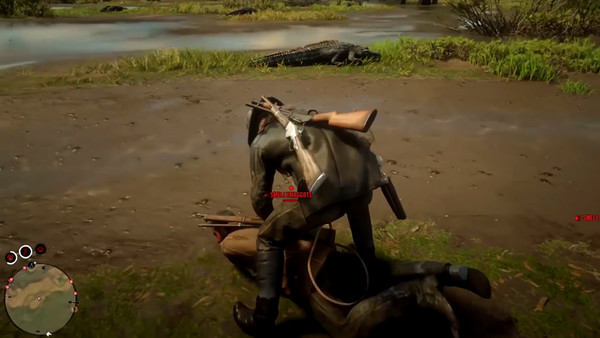
Now, there are a lot of nuances to the villains in Red Dead Redemption 2. Ostensibly, from the very beginning you know that player character Arthur Morgan is a bit of a bad dude. After all, he's spent his entire life in an outlaw gang, where robbing, killing and fighting pretty much make up all of his qualifications, but his posse does have a moral code.
They're not quite Robin Hood's band of merry men, stealing from the rich and giving to the poor, but Arthur has heart, and won't indiscriminately murder innocents or ruin their lives. That is, if he's aware of it anyway.
The trouble with Arthur - and the player is complicit in this as well - is that he doesn't really question the jobs he's given, at least at first. Consequently, when he's drafted in by Strauss to collect debts for unpaid loans to the camp by beating up dudes, he recognises it's not nice work, but the people on the receiving end probably deserve it.
However, later in the game it's revealed that Strauss is lending money to people he knows can't pay it back - who just want to provide for their families - and then getting Arthur to rough them up, or worse.
What was just a repeated side quest to the player turns out to be a completely monstrous act that ruins everyone's lives
6. Mortal Kombat: Deception
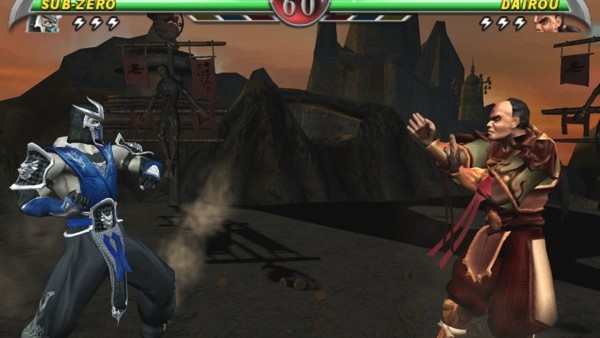
Even though it's only since 2011 that Mortal Kombat's stories have been recognised as being properly innovative and interesting, the franchise has always taken ambitious stabs at crafting compelling single-player narratives (though it hasn't always had the resources or talent to execute them properly).
2004's Deception is no different, and chronicles the battle against Onaga, The Dragon King, who has returned conveniently after a whole bunch of heroes were killed in the previous game. As a newcomer, Shujinko, the player is tasked with finding each piece of the Kamidogu, which has been scattered across the realms, presumably in the hopes of stopping The Dragon King.
However, once you're in possession of them all, it turns out you've been unwittingly been doing Onaga's bidding the whole time, gathering the items so the monster can become the One Being... and pretty much destroy everything in existence.
To be honest, we should have seen the deception coming. I mean, it's right there in the title!
5. Orwell

Orwell is fascinating game that functions in the same vein as Papers Please. As the title suggests, it takes place in a 1984-esque dystopia where surveillance is an everyday part of the keeping the "peace". There's one major online system that collates all of the information about people's lives, and you're tasked by that security force to act as an investigator and upload anything of interest.
What you're told as a player is that you're looking out for criminals and terrorists, and you have to report on every person who comes your way, but there's a limit on how much information you can send to the higher ups who ultimately make a decision on whether action is needed. Sometimes this can be tough, and failing to spot a security threat can lead to devastating consequences.
However, it's eventually revealed that there's a good chance you've gotten people locked up for what essentially amounts to thought crime (or worse). You eventually get the option to atone for what you've unknowingly done and out the government's secrets, but it doesn't exactly sooth the guilty conscience.
4. The Witch's House
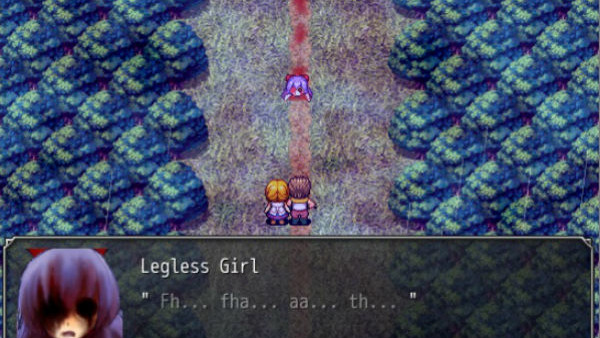
The Witch's House is one of the most unique games on this list. Essentially, it's a survival-horror puzzle game about Viola, who wakes up in the middle of a forrest with no way of escaping. She's forced to go through the titular spooky house, where's she's tormented by a fiendish witch and an environment that constantly shifts in size and shape. It's a bit like a more colourful, more 2D Blair Witch.
Eventually, you get to the bottom of why you woke up with no idea where you were, and that's because you're actually the witch, who swapped bodies with the protagonist before the start of the game. Consequently, the person chasing you around hasn't been trying to hurt you just because you're there, but rather because she's actually totally justified in trying to get her rightful body back.
It turned out that the witch was actually dying, and needed a healthy body to transfer her consciousness into to keep on living. Yep, that's the thieving monster you've been playing as the whole time.
3. Shadow Of The Colossus

Shadow of the Colossus was one of the first well recognised "oh s**t, you were the villain the whole time!" video games, and part of its appeal is how it slowly reveals that fact to the player as they continue to hunt down the game's "enemies".
The entire plot is about protagonist Wander attempting to revive Mono, and he's told in the opening that in order to do so he needs to hunt down and kill the 16 Colossi out in the wild. Of course, you do this, and are given enough of an emotional reason to want to see the mission through, and even without that drive, being an adventurer hunting down a bunch of big monsters is classic genre stuff.
However, you soon come to appreciate the Colossi for what they truly are: majestic forces of nature who belong to the world way more than you do, and not at all monsters (despite their appearance). They give the world personality and life, and you're invading their territory and killing them without provocation.
Though the player might understand this by the time they get to the last couple, Wander being the bad guy is cemented in the final sequence, where it's revealed that he's been manipulated by an evil force right from the start.
2. Crackdown

Before superhero games were actually good, Crackdown attempted to take all the tropes of that genre and let players live them out in all their virtual glory, with an added heap of guns and cool vehicles for extra measure.
All throughout the game you play as a super sci-fi cop, taking out criminal gangs wreaking havoc across the city in order to make the streets safe. Of course, along the way you also collect a whole bunch of floating orbs because this is a video game, which serve to level up your character, make them stronger, allow them to jump higher and unlock even swankier versions of your vehicles.
However, while you're indulging in being a super badass by the time the game's final stages roll around - squashing criminals under your boot and throwing cars around like they're made out of cardboard - the game retroactively sours all that fun with a final twist.
Because, once you've killed the mob bosses, it's revealed the organisation you work for is the true evil, and even funded the criminals in order to perpetuate strong-armed violence on the streets.
Skills for kills, Agent. Skills for kills.
1. Dark Souls

Now, there's no one right or wrong answer to Dark Souls' ambiguous plot, but one prevailing theory about the Chosen Undead's final act posits that the supposed 'good' ending is actually the evil outcome.
All the way through the game, your task is to reignite the First Flame and continue the dying Age of Fire. It seems justified; everyone tells you this is your destiny, and the alternative is the Age of Dark, which just sounds pretty sinister, doesn't it?
However, it's argued that this 'destiny' is total manipulation to get someone like you to perpetuate a dying age that only benefits the old Gods who can claw onto their positions of power for a little while longer. The fact that so many other undead subjects are supposedly also the 'chosen one', that Anor Londo's light is a lie, and that Gwynevere is an illusion all apparently serves to manipulate you into not questioning your goal.
The smoking gun, though, is that the Age of Dark is rumoured to go by another name: the Age of Man. Obviously, you being human, that's probably the age you should be wanting to bring about. Instead, you're fooled into believing that continuing a dying era - which can only happen after subjecting yourself to eternal torture, no less - is the right thing to do for the world, when in reality it benefits virtually nobody.
Jim Sterling summed this theory up very eloquently in a recent video, so check that out for a deeper dive.