9 Video Game Controversies We Were ALL Wrong About
Seriously guys, Zelda is a game for real ADULTS.

Video game controversies can feel like the end of the world. It seems like every year there's a handful that completely send the internet into meltdown, as die-hard fans take to message boards and social media to voice their vitriol over design changes that developers have made to their favourite brands.
For better or worse, players put so much stock into the games closest to them, and that means any change - big or small - can be perceived as completely altering the very nature of the thing they liked so much in the first place.
Some of these backlashes are admittedly deserved, of course. When EA decided to gate playable heroes and villains behind ridiculous grinds in Star Wars Battlefront 2, or when the same publisher decided to turn Dungeon Keeper into a mobile-only series, fans rightfully took to forums to tear the ideas apart.
Sometimes, though, the reactionary approach to change can lead to things being blown way, way out of proportion. Whether it was an alteration to a character's signature design or a brand new mechanic that shook up the core gameplay, there have been plenty of tweaks that caused such a storm in the moment but, in hindsight, weren't anywhere near worth all the fuss.
9. Lara Croft's More Practical Look

A reboot is always going to split the fanbase, and 2013's Tomb Raider was no exception. The game confidently reintroduced Lara into the modern gaming landscape, re-imagining everything from Lara herself to the core gameplay loop. Of course, there was one major point of contention: Lara's new look.
Of course, not everyone out there complained about it for this very reason, but there was a general feeling on the internet that the new Lara just wasn't sexy enough. The cone boobs of old had been swapped out for, you know, actual human proportions, while her adventuring gear was designed for practical raiding of tombs, rather than titillation.
Her more inexperienced personality was also viewed as a step back, but it did make sense for an origin story. Not only was the new look more natural, but Lara's new characterisation also allowed for a more engrossing story. The idea of her being a super cool, super posh, super sexy adventurer who can do no wrong was fine for the older games, but for a modern reinvention it would feel a bit... Old Money.
Like other heroes of the older Playstation age, Lara needed to be more than just sex appeal. Speaking of which...
8. God Of War's... Everything

While God of War 2018 instantly became viewed as one of the best games of the generation when it launched, a good chunk of fans would have balked at the idea of that result happening when it was first revealed.
Though seeing Kratos again after so much time away, stunningly rendered with the full power of the PS4 Pro, undeniably brought the chills at E3 2016, the new direction for the series the trailer promised became an immediate point of contention.
Atreus as a companion was the most obviously controversial new element, with fans questioning how fun it would be to look after a child for the entire game, highlighting just how damn annoying the character was in those early trailers.
It wasn't just him though, pretty much every new addition became a point of contention, from the new, more mature tone, the over-the-shoulder perspective, the new main weapon and the shift from Greek mythology to Norse.
The series strayed far from its roots, but fortunately the finished product showed definitively why it was the correct choice.
7. Call Of Duty's Sci-Fi Phase

It might be difficult to remember now, but Call of Duty embracing sci-fi wall-running and double jumps in Advanced Warfare was thought to be the saviour of the entire franchise - finally breathing new life into a formula that had been stagnating. Of course, it didn't take long for fans to tire of the sci-fi elements (which were admittedly a response to the futuristic focus of other shooters) in both the single-player and multiplayer.
This came to a head with the announcement of Infinite Warfare, whose reveal trailer received an astonishing number of down votes, becoming one of the most despised Call of Duty instalments ever. It had its fans, of course, but by taking Call of Duty into space, Activision alienated those who craved for a return to the boots-on-the-ground days of old. Not even Jon Snow could save it.
Fans were perhaps right to respond negatively to Activision refusing to diversify their brand and barrel headfirst down the sci-fi route, but Infinite Warfare didn't deserve to be caught in the crossfire. Boasting one of the most innovative and interesting CoD campaigns in years, there was so much to love about the title, from the story, to the characters, to the added freedom in the gameplay.
Fortunately, now that CoD has returned to its roots, Infinite Warfare can be appreciated as the hidden experimental gem it always was.
6. Kiefer Sutherland As Big Boss

Now, I want to preface this entry by saying that the way Hideo Kojima went about replacing longtime voice of Solid Snake and Big Boss, David Hayter, was not cool, and the end result doesn't justify him being binned so unceremoniously.
That said, the switch to Kiefer Sutherland (which may or may not have been stunt casting), actually works in the context of Metal Gear Solid V. For one, it functions as the first indicator that you're not actually playing as the real Big Boss, but simply someone wearing his face, which does help differentiate this version of the character from that of previous releases.
It also works, however, because the final entry in the stealth saga is a deeply weird game. Pretty much everything from the mechanics, to the structure of missions, to the story itself, is built around the idea of the 'phantom pain', the lingering paranoia that something is just slightly... off. That your perception of reality is somehow a bit wonky.
Consequently, the lack of David Hayter (just like the absence of Quiet in the game's final hours), acts as another of these phantom pains, and in a weird way fits in with the theme of the story.
Of course, all of this is redundant if you're playing in Japan where the original voice actor for Big Boss was kept so... let's just chalk this down to a happy accident.
5. GTA IV's 'Realistic' Gameplay

Despite being critically one of the highest rated games of all time, and selling like hotcakes, the legacy of Grand Theft Auto IV is a little strange. The story of Niko Bellic rising the ranks in Liberty City is fondly remembered, but its unique gameplay quirks are still considered, by some fans, a total misstep in the franchise's long history.
That's because, instead of embracing the open world anarchy of the previous titles (which other sandbox releases at the time, such as Saints Row, were also doing), Rockstar instead tried to make GTA IV far more realistic than its predecessors. Sure, it still had its wacky moments, but the world of Liberty City was programmed to be as authentic as possible, right down to NPCs having their own routines and characters' feet connecting to every step on a staircase.
That also meant, however, more 'realistic' gameplay, particularly when it came to the handling of cars. Unlike previous titles where every vehicle controlled like you were playing Burnout, here the cars had weight, and you couldn't just drive down the street at 100mph and hand-break turn around every corner without busting a sweat.
These simulation elements were seen as sacrificing the fun, and GTA V worked as a huge course correction to remedy the issues fans had.
However, in a post-Red Dead Redemption 2 world, Rockstar's previous attempt at a more methodical, purposeful style of play can be appreciated. These little details put Rockstar's world lightyears ahead of the competition, to the point where it still holds up 10 years later.
4. DmC's Hipster Dante

The redesign backlash that made all other character redesign backlashes look like storms in teacups, when Capcom unveiled DmC: Devil May Cry, fans hated everything about it. While the fourth game made the contentious decision to move away from main protagonist Dante to newcomer Nero, it still had its fans, but sadly didn't sell the amount the publisher expected.
Consequently, they went back to the drawing board in an attempt to broaden the appeal of the franchise, rebooting it with more Western sensibilities in order to cash in on mainstream trends, which were entirely rooted in darker, grittier characters and narratives. In came the new Dante, an annoying teenage as*hole, who looked like he'd stumbled straight out of Hot Topic, a terrible replacement for the previous version of the hero everyone knew and loved.
It was a needless change, but looks weren't what made DmC such a beloved franchise, it was the combat. Fortunately, Capcom absolutely nailed that element in the reboot, as well as the story, levels and, you know, pretty much every other element that makes up a game.
So many years on, it's hard to see why DmC caused such a stink. Yeah, tossing aside the older lore wasn't great, but DmC was still a hell of a good time, and the new Dante wasn't all that bad if you gave him a chance.
3. Spider-Man PS4's Original Costume

Though Sony's reveal of a new, exclusive Spider-Man game was met with near universal acclaim, there was one little detail which received immediate backlash: the costume.
In order to signify that this was a new version of Spidey separate to both the comics and the movies, Insomniac redesigned the signature costume to include a huge, white spider insignia as well as other white tints on the regular red, black and blue outfit - which unsurprisingly was a difficult sell to longtime fans.
Admittedly, I was one of the many people caught up on this decision, thinking it looked a little tacky and needless, no matter how much the developers reiterated that there was an in-universe reason for the change. How wrong we all were.
When the game launched and people had time to adjust to the alteration, it was eventually embraced. It helped that Insomniac included plenty of other costumes fans could hop into instead (including the classic original), but the new design did undeniably distinguish this version of the wall crawler from the rest.
A few months after launch, the discourse had changed so much that the white suit was even included in Spider-Man: Into The Spider-Verse, which gaming fans absolutely went crazy over.
2. Resident Evil 7's First-Person View
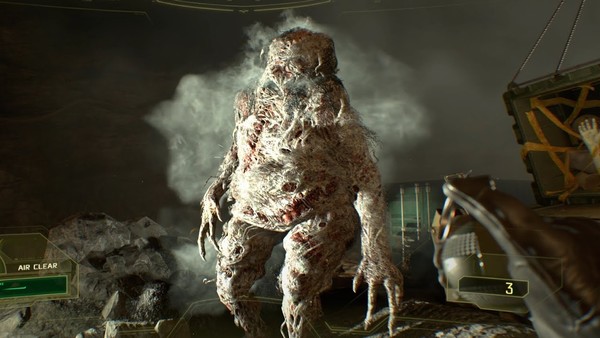
At this point, Resident Evil fans should be no stranger to change. From the shift from tank controls to a third-person perspective, from swapping out zombies for Las Plagas-infected mercenaries, the series has always been in a constant state of reinvention when it comes to the story, mechanics and overall direction.
Even with all that history though, the jump from a third-person perspective to a new first-person perspective in Resident Evil 7 went down like a lead balloon with some die-hard fans who claimed the new direction just wasn't Resident Evil enough. In their defence, it wasn't just the perspective that had changed, but the entire style of the horror, the enemies and the very lore itself.
What seems to be forgotten, though, was that kind of radical change was exactly what the franchise needed. It had become entirely unfocused across Resi 5 and especially 6, to the point where a shift in perspective should have been the least of fans' worries.
Now that the signature over-the-shoulder style has returned in the remake for Resi 2, the seventh title has been embraced as the kind of kick up the backside the series so desperately needed.
1. Wind Waker's Art Style
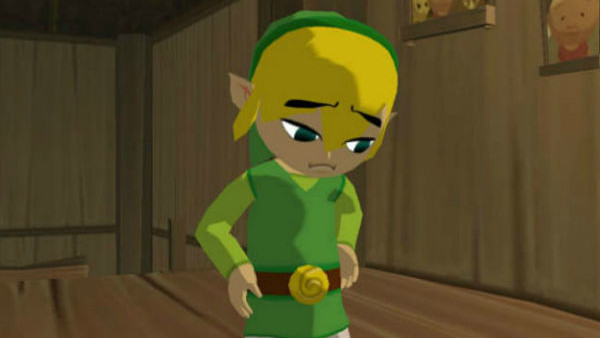
Of all the complaints to come from fandoms towards creatives, Wind Waker’s is not only the most misguided and baseless, but the one that’s aged the worst.
First up, some background. Nobody is going to deny that Ocarina of Time was a landmark moment, not only in video games, but for controllable digital entertainment. To an entire generation of children and teenagers, embodying Link and going on a quest to save the realm; exploring Hyrule field and journeying from dungeon to castle, desert to cave and back again, it felt like the most epic thing ever. Not to mention, the shift to playing as Adult Link gave the experience a sense of maturity, grounding it as a real coming of age tale.
All of this was doubled down on by Majora’s Mask being creepy and interpretive as hell, so come the time we laid eyes on Wind Waker, thousands of fans who’d pegged Zelda as a series “for adults” with “adult themes” ended up, well, losing it.
Thing is though, The Legend of Zelda is a fairytale.
The unassuming hero, the princess, a dastardly evil that needs to be stopped. Fairies, swords n’ shields, magic and horse-riding - it’s archetypal fantasy, and absolutely fits being rendered AS a fairytale more than anything approaching “realism”.
Wind Waker and Minish Cap are far closer to what Zelda is “supposed” to be (if that’s anything at all), and if you want proof that realism is bad… just look at Twilight Princess.