9 Video Game Franchises That Never Beat Their First Instalment
The Arkham games never topped Arkham Asylum.

The saying goes that across most creative outlets, "the original is the best". Early musicians are often at their most passionate; authors have the most essential thoughts to put on the page, but in video games, we have a medium of iteration.
It is SUPER rare that when you have game mechanics perfected over time or scores of developers becoming more proficient with technology - that subsequent instalments aren't fundamentally better in every respect.
Those anomalies do exist though, and often there's just no way to recreate that powerful original spark that birthed a fanbase in the first place.
Over time it's common for long-running IP to mine every remaining aspect of what went down well before, just to try and keep going.
9. Marvel: Ultimate Alliance

Arguably the best Marvel game that deals with groups of heroes rather than specific characters like Spider-Man, the original Ultimate Alliance had its heart in the right place, and was ludicrously enjoyable to play.
Seeing you on a location-spanning trek visiting everywhere from Stark Tower to Murderworld, Atlantis to Asgard, it's still super recommendable today thanks to developer Raven being an all-time great studio.
Afterwards, things only got worse.
Following Raven suffering various layoffs as they attempted to development Wolfenstein and the immaculate Singularity, development on the sequel went to Vicarious Visions, who removed many things that made the original so charming.
Gone were character-specific grapple finishers, gone were the more cool-looking team-up attacks, and gone were things that let you know the developers truly cared about the source material, like pop trivia quizzes you could play in between missions.
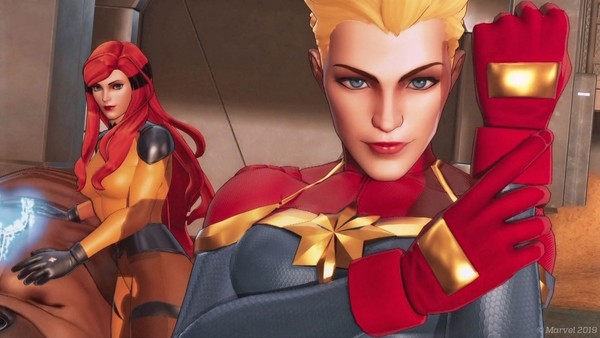
Ultimate Alliance 3 ditched everything that made the IP recognisable, seeing Team Ninja turn in a solid enough combat model, but with insanely boring level design, character animation and overall storytelling.
This was "Ultimate Alliance" in name only.
8. Bioshock

Bioshock's trajectory is fascinating. You have what is now commonly thought of as one of the most influential games of all time; a boundary-shattering fourth wall-breaking first-person action adventure that uprooted the very notion of how to tell stories in games... that then had nowhere left to go.
With lead creative Ken Levine passing on Bioshock 2, it left that game fleshing out existing parts of the fiction; incapable of moving them forward. Levine returned in the much-maligned Bioshock Infinite, a game that went through development hell, showcasing various versions of mechanics we never got, and feeling way less cohesive narrative and gameplay-wise as a result.
Infinite ended on an insanely overblown finale, throwing everything at the wall in an attempt to blow your mind all over again. Sadly, the multi-verse reveal felt like Levine destroying his own creation on the way out, as business interests were already governing an "infinite number of lighthouses, men and cities" in real life, and it was time to move on.
7. Sonic The Hedgehog

Sonic, Sonic, Sonic...
The more the years go by, the more even hardcore fans like me whose childhoods you defined have to admit the best of your work came in that original title.
It's not that Sonic 2 and 3 aren't enjoyable enough extensions of the base formula, but you just can't argue with reality:
Sonic was made in a marketing think-tank, to beat Mario. He was more "radical, brah" because Mario was a moustachioed man in overalls, programmed to speed through levels because the NES just couldn't handle fast platforming whatsoever. Sega originally had him in a rock band with a hourglass girlfriend called Madonna, and even his shoes came from Michael Jackson's video for "Bad".
So laser targeted was Sega's attempt to dominate the West... it worked.
The original Sonic the Hedgehog was - and still is - glorious. Everything I just mentioned absolutely clicked with a core demographic of gaming teens, and to this day Sega have never topped the Blue Blur's debut.
They've arguably never came close.
6. Crackdown

Launching in 2005 but not getting any real momentum until Gears of War turned industry heads in 2006, it was 2007's Crackdown that helped convince gamers to invest in Xbox 360.
A fully explorable open-world that encouraged collectible hunting in an era LONG before Ubisoft had ran it into the ground? There were few things better.
You were playing as a super-powered special agent capable of tossing cars into gangs of enemies, and during this furtive time of Xbox just needing people to pay attention, it was more than enough to turn the tide.
Afterwards though, Crackdown's legacy became "one and done". Crackdown 2 was farted out three years later by a different team, mandated by Microsoft wanting a sequel. It reused the exact same map with very few changes, repeating all the same collectible-based beats of the original with an ultimately pointless gliding mechanic.
By the time Crackdown 3 came around, that ship had sailed. After five long years of development and endless delays, this third instalment - by another new team - sadly fell back into being a nostalgia trip for the original.
In essence, all three Crackdown titles are the same game, meaning it's the original that deserves your attention most.
5. Batman: Arkham

There's nothing wrong with Arkham City, Origins or Knight, but the sheer power of having a much tighter narrative, play-space, set of character interactions, unlocks and general pace, thunders Arkham Asylum into the lead overall.
Where latter instalments would embrace open-world aspects to the point where it felt as though a formerly tight experience was fractured and scattered across fairly empty connective tissue, Arkham Asylum hits the ground sprinting, and doesn't let up for the duration.
With a brilliant mix of almost horror-esque design as Joker takes over, Bruce mustering all his wits and cunning on the spot to come out on top felt incredible to see. The "hidden Bat-cave moment" is still an all-time franchise best, and the tone cemented here only factored into Asylum's legendarily satisfying fighting system, or a neat Metroidvania structure encouraging you to see every inch of the island.
Also, Asylum is the only one of these games with a genuinely reasonable amount of Riddler Trophies to find.
4. F.E.A.R.

Speaking of horror, Monolith's take on blending super slow-mo, goretastic first-person shooting with all-out white knuckle jump-scares was one for the ages.
The original F.E.A.R. is its namesake incarnate, seeing you sever limbs and take down enemy guards in a blaze of bullets one minute, only to climb a ladder and have a zombified child staring at you from the shadows the next. Enemy A.I. was also stellar, forcing you to stay on the move, meaning you had to engage whatever lay around the corner or was right in front of you.
It's this sense of pure cerebral engagement that made the first instalment so recommendable, both to action and horror fans alike. For F.E.A.R. 2, while it's still a phenomenally playable game, by virtue of being a backstory that favours action over immersion and tension, it largely lost a lot of that appeal.
F.E.A.R. 3 then went down the all-out action route, embracing the co-op zeitgeist of the time and putting an emphasis on supernatural player powers to get through levels. Being given to a different dev team, Day 1 Studios, this trilogy still has a great identity, but it's the premiere instalment that always comes out on top.
3. Dragon Age

While we continue to watch the Bioware of today, hoping and praying they'll turn something around that gets close to their unrivalled 2000s output, Dragon Age as an IP has provided the bumpiest ride.
After producing a stellar first instalment that remains many peoples' most cherished third-person RPG of all time, EA forced a brutally inhuman crunch on the sequel, asking the majority of the project to be turned around in just over one year.
The result was clear after shipping, and though some enjoyed the flashier combat and easier access to fancier movesets, it was largely derided by the fanbase.
For Dragon Age: Inquisition, things markedly improved, but were still nowhere near the original, thanks to the Bioware of the 2010s being an altogether different beast.
The studio's take on open spaces continued to favour barren lands with scattered quest markers, the takeaway being that you "must be missing something" and the game "just hasn't kicked in yet", but that higher gear just never engaged.
With Dragon Age 4 on the horizon, but 14-year vet and creative director Mike Laidlaw departing, it's going to be a vertical uphill battle for quality from here on out.
2. Dead Space

"Dead Space versus Dead Space 2" is the "Alien versus Aliens" of gaming.
Visceral saw the potential limitations of corridor-crawling horror, and elected to uproot the IP - not unlike what Capcom did with Resident Evil 4.
However, while Dead Space 2 is a fantastic space shooter - a punchy-as-hell mix of curb-stomping Necromorphs while thundering through an environment looking for the next piece of story - it is not anywhere near as effective as a horror. Pockets of body-horror, sure, but depending on which wing of the fandom you speak to, there are ardent defenders of the original's slow-burn exploration, that were thoroughly put off.
Afterwards, well, things went completely south. Dead Space 3 saw EA mandate microtransactions into a single-player horror game. A game that now had a completely unnecessary co-op component, and that saw the aliens firing back at you, because the whole thing had become a Gears of War clone.
EA would then put Visceral to work churning out Battlefield: Hardline, before shuttering them altogether.
1. Deus Ex

The original Deus Ex was a groundbreaking RPG. The sort of game where, with every step, you could see alternate pathways you might have taken with a different character build, different dialogue options or mission conclusions that you couldn't wait to try out next time.
From here on out though, while still a heartily recommendable IP through and through, it felt like various developers tried their hand at making the "Deus Ex experience" work for increasingly larger audiences.
Direct sequel Invisible War was dragged by fans for things like universal ammo across all guns, and drastically reducing your options on-mission, Human Revolution largely hit its mark but came with outsourced boss fights that actually broke the game on depending how you played.
2016's Mankind Divided, despite being the most promising of them all, was dogged by unlocking the same upgrades you had one game prior, a microtransaction-filled multiplayer mode and a story that cut to credits, right when the pace was finally picking up.
Again, all playable enough, but that original spark was impossible to replicate.