9 Video Games Saved By RIDICULOUSLY Last-Minute Changes
The creative decisions that transformed good games into classics.
Video game development is something of a double-edged sword. On the one hand, it's an anything-goes creative endeavour that can birth a title fans talk about and love for decades, but on the other, it can be a total nightmare.
Because while the end result is always a work of passion and creative ingenuity, actually getting to the finish line can be one of the most stressful experiences ever. Game development is notoriously tumultuous, and it's always trouble trying to fit every piece of the puzzle together to make for a coherent whole, managing the work created by everyone from game designers to writers, artists to QA testers.
Even worse, because it takes so long to actually create a video game, it means that plenty gets changed along the way.
The realities of time and money can see ambitions get knocked down and drastic changes made to the experience last minute, with even instant-classic knockouts like The Last of Us reportedly being something of a mess until the final few months when it all came together.
While these last-minute changes can be the death knell of a game though, sometimes they're the saving grace that turn a good title into a great one.
9. A Completely Different Ending - The Last Of Us

The Last of Us' ending became so instantly iconic - and controversial - because of how it bucked the trends of not only post-apocalyptic fiction, but video game storytelling in general.
Though protagonists Ellie and Joel "win" in that they survive together, the title ends with there being no hope of a cure for the virus that destroyed civilisation, and Joel murdering all the "good guys" and then lying to his new surrogate daughter so they can enjoy the rest of their life.
The original ending that Neil Druckmann was given the greenlight for, however, was nowhere near as subversive.
Originally, Tess (who dies early on in the final game), would end up being a main villain, with the climactic level seeing her capture Joel and torturing him for betraying her. Here, Ellie would be given a choice to kill Tess to save her companion (in this version, this would be her first human kill), ending on a happier note where civilisation had more of a chance to rebuild.
Druckmann didn't feel the ending was honest enough, and didn't fit with the established arcs, so changed it, much to the derision of several Naughty Dog staff members who thought the new conclusion was "anti-climactic".
It was the right move though, as not only did it result in a far more resonant ending, but it also impacted gameplay, as Ellie was freed up to become more active in combat after killing her first human enemy far sooner in the story.
8. Making Deacon Way More Likeable - Days Gone

When it was first announced all the way back at E3 2016, Days Gone received something of a backlash. It wasn't just that the zombie game felt a little too late to the open world party, but the central idea of focusing on a biker gang in a post-apocalyptic story was easy to ridicule.
Protagonist Deacon St. John didn't make things any better either, with previews all commenting how he was nothing more than yet another by-the-numbers gruff, white anti-hero in an industry where gruff, white anti-heroes are the default. Though Sam Witwer is a compelling performer, it was clear the material he had to work with wasn't all that great, with Deacon's dialogue coming across as cliched and a little phoned in.
However, before release, Sony Bend made the right decision to soften Deacon's rougher edges and give him more of a unique personality that wasn't just "gruff biker". He was still an outsider hothead, but there was a more clearly defined arc now, while his relationships with the people around him - especially wife Sarah - became a major highlight of the experience, rather than being the groan-worthy laughing stock they used to be.
7. Overhauling The Art Style - Borderlands
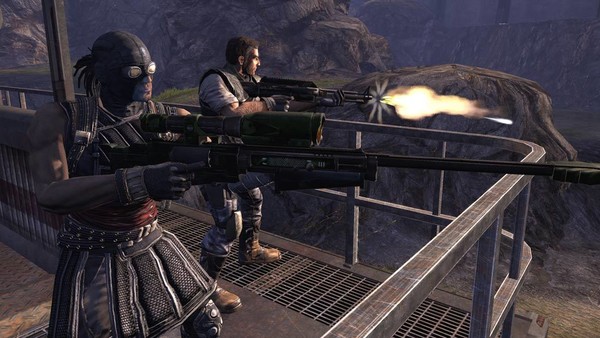
When you think of Borderlands, there are a few things that come to mind. Guns, psychos and the ever-lovable Claptrap are probably your go-tos, but they're all defined by one commonality: the cel-shaded art style.
It's difficult to understate just how much of a breath of fresh air Borderlands' visuals were back in 2009. By then, the entire industry had shifted to focus primarily on brown-and-grey shooters, inspired primarily by the success of Gears of War and Call of Duty. While that fit those two games, it made every other title following in its footsteps look uninspired, resulting in pretty much all of them fading into the crowd.
Consequently, when Borderlands was announced in 2008, again with the same bland aesthetic, everyone just kind of forgot about it. It wasn't until early 2009, four years into the title's development and months before it was set to release, that Gearbox made a Hail Mary play and completely ripped out the visuals they'd created in favour of a new cel-shaded look.

It was a risk, especially considering marketing was already out there, but it awarded Borderlands a distinct identity that's set it apart from the competition even 10 years later.
6. Adding Flying - Anthem

Now, you might argue that Anthem was totally beyond saving, but whether you hate the game or not, there's no denying that it feels pretty great to play. Missions might leave a lot to be desired, but the basic actions of flying around and engaging in combat are awesome.
What's perhaps astonishing to hear though, is that even this basic loop only came together at the last minute. According to Kotaku's report, how players would actually move around the world was constantly in flux during development. Flying was alternately implemented and then ripped out as the devs couldn't get it to feel right, and thought that if they did, players would speed across the environment without appreciating everything else the game had to offer.
Of course, without it, there was little to differentiate Anthem from similar loot-shooters, and the no-fly demo Bioware showed EA's higher-ups failed to impress. Given a few months to come up with something that would impress instead, the team threw in the flight ability, unsure of how it would actually fit into the full campaign, as a feature purely to excite the EA execs wanting to be wowed.
Fortunately it worked, and a feature the developers initially didn't like was kept, becoming one of the only redeeming qualities of the final build.
5. Not Cutting Atreus - God Of War

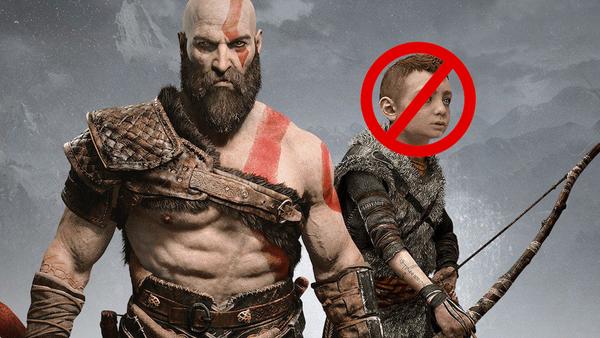
Sony's most recent attempt at a God of War game works so well because of the dynamic between Kratos and his son, Atreus. The reluctant father comes to embrace his responsibilities over the course of the experience, and the relationship between the two, both in the story and in combat, works in tandem to drive home a solid bond between the characters.
However, at one point, the idea of having any companion at all was considered a massive risk that could tank the reboot and franchise as a whole.
Rather than a narrative or creative decision, the main issue was time and money. Retooling this series with a new perspective, focus and combat style was already a gargantuan task, and accomplishing all that while also getting a companion character to work convincingly in-game was even more difficult.
Director Corey Barlog worried that a companion would "probably be the straw that breaks the franchise’s back", and considered cutting him, especially when his real passion, the one-shot camera, was already a tough sell.
Fortunately, he was able to convince Sony to do both.
Also, as a bonus, the developers decided to tone down Atreus' dialogue after feedback rolled in from the first trailer, making him less talkative, and overall less annoying.
4. Scrapping The Multiplayer Mode - Bioshock: Infinite

Bioshock: Infinite infamously transformed considerably during development, with the original trailers promising a story and a gameplay focus that was far removed from the actual finished product. Those changes aren't the focus of this entry, though (in part because there'd be people who argue that the original concept actually looked much better than what Irrational Games ended up creating), but rather the last minute decision to scrap the online multiplayer suite.
Though it was starting to wane by the time Infinite shipped, the trend of tacking on half-baked multiplayer modes onto predominantly single-player focused games had seen everything from Dead Space to Spec-Ops: The Line include a monetiseable online suite at the publisher's request.
With two multiplayer modes being developed; one a co-op mode called Spec-Ops and the other a wave-defence game where players were shrunken toys inside an arcade machine (no... seriously), both were eventually scrapped in favour of focusing purely on single-player.
The decision came at a time where production was particularly tumultuous. With no clear focus, Epic's Rod Fergusson came on board to help see out development, and the team dropped these additional experiments to, well, actually finish the game.
3. A Trailer That Made Us All Take Notice - Dead Island

The trailer for Dead Island became one of the most talked about - and most controversial - pieces of marketing when it debuted prior to the game's release back in 2011. The haunting cinematic tease told an isolated story about a family being devoured by a zombie horde in their vacation hotel room, all set to sombre music and told in reverse.
It pulled at the heartstrings, and promised an emotionally harrowing post-apocalyptic game with a story full of regular characters you care about.
Obviously, as soon as anyone actually picked up the game, they realised none of those things were present, and that the wacky hijinks of the first-person brawler were a far cry from the tone established in the trailer.
Now, you might argue that the trailer was false advertising for the finished product, but there's no denying that people weren't talking about this zombie game before the cinematic dropped. It had been announced, sure, but there was virtually no hype whatsoever, with this last-minute bit of marketing months before the project was set to ship finally getting audiences to take notice.
2. Ripping Out The Auction House - Diablo III

Diablo III's launch almost threatened to ruin the entire franchise. Though the game itself was well designed and for the most part lived up to the expectations players had in the years between instalments, an insidious marketplace feature at the heart of the game poisoned the well.
The auction house system was announced before launch, which essentially allowed players to buy and sell in-game items at a premium, purchased either for the in-game gold or with real-world money. Blizzard promised it wouldn't hinder those who didn't want to invest more money after paying for the game, but as soon as the third title launched, it became clear that the entire loot system was built around the auction house idea.
Players revolted, and it looked as though the long-anticipated sequel was going to tank under the weight of one terrible idea.
The developers recognised this (especially when other countries began to say the system violated their anti-gambling laws), but it wasn't just as easy as ripping the Auction House out entirely, as gameplay was built to support it. The game needed an overhaul, which the devs committed to, transforming Diablo III into the title players know and love today, alongside relaunching the Reaper of Souls edition.
1. Making A Battle Royale Mode - Fortnite

When Fortnite first launched, nobody cared.
The colourful PVE shooter had its charm, but for the most part its loop of building bases and defending them from hordes of monsters didn't set the world on fire. In fact, this version of the game (known now as Fortnite: Save the World), has become totally blindsided by its Battle Royale spin-off.
Though the original iteration of Epic's shooter was fine, nobody probably would have been talking about it now, and the post-launch decision to transform the PVE title into a PVP battle royale game made it the biggest release of the entire decade.
Initially barebones, Fortnite's battle royale mode was far more accessible, colourful and easy to pick up compared to the only other major player on the market at the time, PlayerUnknown's Battlegrounds.
It also boasted one massive advantage over PUBG: It was free, and already on consoles.
This was the perfect melting pot - a new genre everyone had been talking about, combined with a version of it that was easy to play and completely risk free to try.
You might resent the cultural hell it developed into, but ditching PVE for a focus on PVP saved Fortnight from sinking into obscurity.