Assassin’s Creed Origins: 10 Things Ubisoft Must Learn From Other Open-World Games
Fallout, Horizon, Dragon Age - which features should make their way across?

Many people were ecstatic to find out that Assassin's Creed was taking a year out of its yearly release schedule, and whilst it is a testament to the state of the series, hopefully this outlines a more careful attitude towards releases from Ubisoft.
Perhaps they are learning from their mistakes, and not just churning out a delayed version of the usual game?
With that said - and with one gameplay video under our belt - instead of reflecting simply upon their own mistakes, Ubisoft needs to look the vast world of other open world games and learn how to get it just right.
Despite being the open world game that defined a lot of the mechanics that other titles would copy, Assassin's Creed always seemed to stagnate without innovating. That's where other game's picked up the slack. There are a vast plethora of open-world games that have refined the core aspects and mentalities Ubisoft once heralded, making them even better.
Notebooks out and pay careful attention, because these are the games that took the open-world genre and made them great through simple and supremely effective tweaks.
Now, with a little luck, it's time for Assassin's Creed to do the same once again...
10. Collectibles - Horizon: Zero Dawn

Collectables have been a massive part of Assassin's Creed and since the first instalment, they have never been used effectively. Functioning more as a checklist, they ended up being an incredibly tiresome slog. Not all collectables are as bad as everyone says and there is a multitude of examples that manage to add some depth to the mechanic.
The collectables throughout Horizon: Zero Dawn always served a purpose. Collecting them all netted you a high-level weapon or some form of reward that was always useful. Some even added back story to the world acting as glorified Wikipedia entries, fleshing out an already interesting world even further.
They should have a purpose and not simply pad the run time of a game. Animus Fragments in the recent instalments unlocked pitiful rewards if any and there was no benefit to collecting them. Collectables should be a worthwhile endeavour that players want to seek out instead of a checklist that saps the life out of the game.
9. Side-Quests - The Witcher III

Side-Quests were never a massive part of the Assassin's Creed franchise, but slowly grew more prevalent as the games went on. And yet, the trouble was that none of the side-quests had any character. It was either 'kill this guy', 'tail this guy' or 'pickpocket this guy', resulting in the mission becoming more of a checklist, rather than an engaging part of the game.
The Witcher III stands as an exemplar in how to do side-quest correctly. Every player heralds the Bloody Baron's quest as the shining glory of the game and whilst it's good, the smaller quests are where the game shines. The small pieces of character building and the small attention to details that make the quests worthwhile. It really goes to show just how simple injections of character can make quests sing.
Unity tried this, but instead of building character through meaningful dialogue, they just flashed up some blanket mission statement and some trite dialogue about how Paris is screwed. Memorable characters are what makes side-quests worthwhile not unique combinations of the usual 'murder/follow/talk' objectives.
Every single quest should be worthwhile and memorable. The lesson to be learnt is that there should be no filler.
Filler does not equal content.
8. Exploration Is Key - Skyrim

Games like Breath of the Wild and Skyrim have that awe-inspiring feeling of looking out across a landscape and being able to walk anywhere that piques your interest. You might see an enemy camp in the distance and decide to take a break just to wander over. No matter what you do, the game always has something to incite that need for exploration.
Replicating that feeling in a singular city or collection of cities can be difficult, but not impossible. Walking the streets of the city should be like walking through history with each little nook and cranny offering something of substance for the player to interact with. It shouldn't feel like a chore to walk from mission to mission. Good open world games give you an objective and ultimately end up distracting you along the way.
People love Skyrim because they got soaked up in the world constantly dropping quests to explore new avenues before doing the exact same to the next quest you find. Sure, Skyrim and Assassin's Creed aren't strictly comparable, but there is a lesson to be learnt none the less.
7. Size Doesn't Matter - Shadow of Mordor

Games function as an escape from the real world just as much as other forms of entertainment. So no one wants to sit down and play a game only to find it to become a chore. The previous few Assassin's Creed games had admittedly massive maps but little to no substance in them (as previously mentioned in the last point) making getting from mission to mission a tedious commute.
And so it's important to remember the fact that a more compact and concise map packed to the brim with content can be far more beneficial than a massive sprawling landscape with small pockets of game-play spread thinly across them.
Shadow of Mordor is the prime example, considering how excellently they managed their world space. The two maps they had, whilst relatively large, were self-contained enough to be exciting and packed. Crossing the map never felt tiresome and doing so often afforded a multitude of encounters with new orc captains.
The game either has to take one of two directions: Create a small compact world like Shadow of Mordor or create a vast explorative land like Skyrim. Either one fits the Assassin's Creed mantra, but it's important that they only focus on one and learn from a singular example. Trying to mash both mentalities together will only end in tears.
6. Customisation - Assassin's Creed: Unity

A curveball to include, but it's hard to argue that the customisation system in Unity was damn near perfect. The game always had ways to personalise your assassin, but they always felt a bit off, detracting from the actual game. It always felt like you were meant to play with the standard robes and by using the wackier ones, you were messing with the game.
Not with Unity though! By implementing a varied and stylised series of costumes and deliberately making the standard uniform a bit unimaginative, it encouraged a more vibrant and personalised protagonist. It was just fun to be able to tweak and customise your character to such a degree and was easily the best part of the game.
The weapons, however, can be forgotten. Having the option to use a polearm, sword or two handed weapons amidst a variety of others was nice, but lacked polish. The game was clearly built around the sword, with the others being clunky and glitchy at best.
However, the level of customisation for the armour and robes is the best the series has ever done and needs to be learnt from instead of being tossed by the wayside.
5. Running A Brotherhood - Dragon Age: Inquisition

Ever since AC: Brotherhood, the game has tried and failed to create a decent brotherhood mechanic. The systems in Brotherhood and Revelations were crude but lacked character. The system in three was messy and all over the place. And future games just decided to forgo the idea in its entirety.
However, if the system is to make a return, then Ubisoft should take notes from Bioware. The Inquisition in Dragon Age was the perfect example of a team. Having a core group of characters, each with their own flair and style instead of blank-faced assassin's number one through ten.
The system is so easily transferable with a few changes. By selected your teammates before leaving on missions, you would be able to employ different Assassin's abilities much like in Assassin's Creed III, but with more variety. You would have a small home base where you can bond with said characters and actually build the Brotherhood. And the minigame from across the series would be implemented in the same Inquisition implemented their orders minigame.
It's easy to see what direction the system was going in when reflecting on Assassin's Creed III and if they continued to develop it, it likely would have become something akin to Dragon Age's Inquisition. So, if Ubisoft plan on having a Brotherhood mechanic, they know where to look.
4. Abilities & Skills - Deus Ex: Mankind Divided
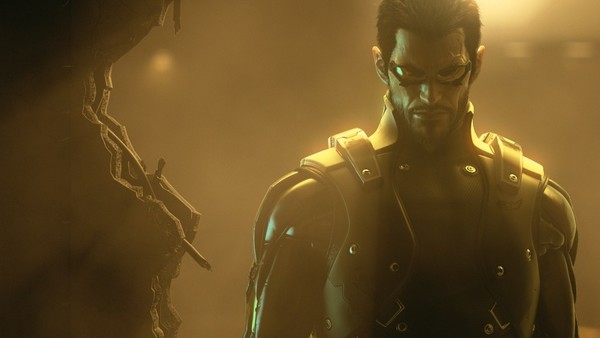
Assassin's Creed: Syndicate tried to include a levelling system, but said system ended up being really underwhelming. Sure, they gave a sense of progress to the game, but they simply made the game easier. Abilities tended to tweak health or damage but had no overall effect on the actual gameplay beyond tweaking the difficulty. And whilst you can say what you like about Deus Ex: Mankind Divided, it did abilities and skills right.
Abilities in Deus Ex fundamentally changed the way the game could be played. The unlocked secret areas and paths meaning that no matter what you put your points into, it usually paid off. Add onto that a whole bunch of fun and unique abilities that gave you interesting ways to tackle problems and you had a system of skills that had an impact on the game.
Skills shouldn't affect the difficulty of the game but simply give you easier options to tackle the difficult challenges. Instead of adding damage output to the main character, give them an ability that is better equipped for high health enemies or one that can eliminate multiples through tactical use. Don't just tweak the stats behind the same monotonous fighting gameplay.
Change the actual gameplay through abilities that are meaningful and more importantly, fun.
3. More Content ≠ Good Game - Fallout 4
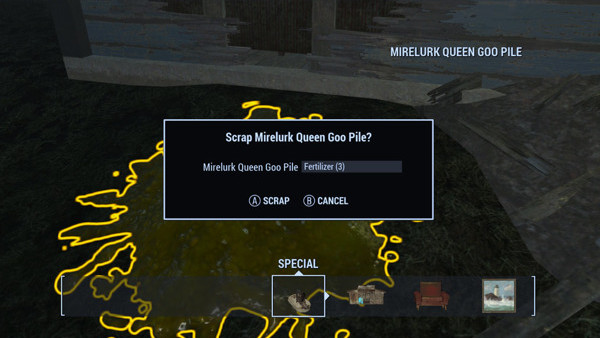
As the series went on and on, the games proceeded to be filled with more and more taff. It quickly became a checklist with no stand out moments. You had assassinations, viewpoints, standard enemy hideouts, treasures, escort missions and a whole plethora of side content that was tedious filler, rather than meaningful content.
Taking a leaf out of Fallout 4's book, Assassin's Creed could learn a thing or two about excessive content. Whilst Fallout 4 certainly isn't a good example, it's an example of what to avoid. The inclusion of settlement building, weapon crafting, armour crafting and a general focus on useless crafting systems killed the game. And beyond the crafting, there was haphazard companion relationships and the endless radiant quests that just bloated the game.
Less is more, and by taking a look at Fallout 4 - an ostensibly good game shrouded in trite and unnecessary filler - Assassin's Creed could learn a thing or two about cutting back.
A focused and core experience is worth more than a repetitive grind. That's why smaller indie projects are so popular in comparison to bloated messes of AAA titles.
2. Play Your Way - Metal Gear Solid V: Phantom Pain
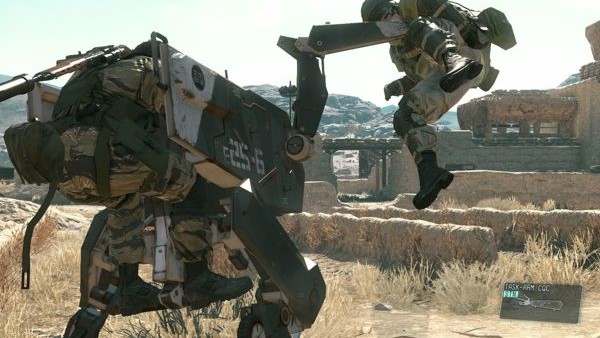
Ubisoft has been one of the bigger developers to push the undefined mantra of 'Play Your Way'. However, in previous Assassin's Creed's, 'Play Your Way' ended up having one of three choices: Go in through the window, front door or roof. The Assassin's Creed formula could use that mentality really well if it drew itself away from scripted events, simply allowing players to muck around.
One of the best examples was the most recent entry in the Metal Gear Solid series: The Phantom Pain. The game had a plethora of useful gadgets that on their own were incredibly fun, but when combined together afforded opportunities for limitless creativity.
The game forewent any barriers and just allowed players to use the game's mechanics in fun and creative ways. Instead of imposing restrictions to allow for a more cinematic and realistic approach, the game just wanted you to have fun and do things your way.
Assassin's Creed doesn't need to learn from this, it must learn from this. If the series is going to try and be more open it needs to allow for creative uses of its mechanics instead of giving the player three different paths and saying you can do what you want.
1. Make It Fun - Just Cause

The past few games have always been a bit serious in the Assassin's Creed franchise. Evie and Jacob's interactions added a much-needed degree of levity, but even then the games lacked that portion of the game that made it fun to play. The original instalments had flair and exciting moments that were simply fun to play, but as the series got settled into its roots, it became dull and monotonous.
So, Ubisoft really needs to take a leaf out of Just Cause's book and simply make the game fun. The two games are drastically dissimilar to each other, but that core mentality is one which all video-game developers must learn from. It's meant to be fun. The core aspect of a game is fun. Sure, there are outliers to the rule, but the majority of games need to adhere to how Just Cause plays and build the game around the core concept of having fun.
It's not that hard, to be honest. Just Cause is built around the central idea of blowing things up. Doing that is fun and so the game is built around that idea. Transfer that over to Assassin's Creed and you have a game who's appeal is all about stabbing people with a variety of weapons. So take that and build a game around that, cutting away all the boring dramatic subplots that take away from the stabbing.
Just make a fun game and focus on that!
--
Any other important lessons that Ubisoft can learn from other open world games? Or any lessons they must learn in general? Let us know in the comments below!