Assassin’s Creed Vikings Wishlist: 10 Things We Need To See
It's time to bring the franchise back to its roots.

As the release date of the next Assassin's Creed (currently known as "Kingdom", "Ragnarok" or "Vikings") nears, more speculation and hype grows amongst the fanbase. Naturally, given the series' long and diverse path, there's plenty of wants this fanbase has.
Whether improvements to continually expanding RPG mechanics, or a return to the series' classic roots, there is an undeniable amount of anticipation resting on Vikings' shoulders. Especially so after the recent news of Ubisoft's own financial troubles with the botched release and poor sales of Ghost Recon: Breakpoint.
Plenty of diehard fans have been left bitter after Odyssey's "less Assassin, more fantasy" take on the series, which gave many the desire to see a return of classic features that have since been phased out.
One can only hope that director Ashraf Ismail and his team at Ubisoft can find the perfect balance between old and new features for the next instalment, and incorporate at least some of these heavily sought-after mechanics.
Let's dive into the Animus and see what Assassin's Creed's history may hold for its future!
10. Lose The Exaggerated, Fantasy-Style Combat

Since Origins and Odyssey, the series' combat has leant more heavily into a fantasy-based, over-exaggerated brand of action. There are swords on fire, Spartan super-kicks and the ability to literally turn invisible. Enemies have become walking damage sponges, taking countless hits from the player before finally being finished.
This emits an entirely different feeling for the player when compared to the prior games. Both newer entries, particularly Odyssey, are most likely to make the player feel like a coked-up super warrior with Godlike abilities. This is in stark contrast to any game prior to Syndicate, which instead made the player feel like a swift, skilled assassin.
The combat was akin to a neatly choreographed, dance-like action sequence. Unity, the last entry to feature such combat, had perfected it. The combat had weight, took time to master and felt plausible. Especially when compared to where the series has gone now.
This isn't to say the more recent style is bad. Odyssey was an improvement over Origins, diversifying itself further and allowing for plenty of unique fun. However, perhaps a blend of these two styles could be achieved to recreate the believable feeling of being a badass assassin.
9. Less Repetition, More Exploration

If Assassin's Creed is infamous for anything, it's repetition. Ever since 2007 the series has suffered from having its players repeat the same tasks over and over. And over and over.*
Unfortunately, this doesn't seem to be getting any better given the rumours that Vikings' map is to contain the entirety of Northern Europe...God help us all.
Origins and Odyssey's condensed recreations of both Egypt and Greece, while gorgeous to look at, were littered with endless collectables, copy-and-paste activities, and so many enemy camps that they struck fear into the player whenever they saw yet another one on the horizon.
This is a classic case of less is more. These maps could work if they were filled with entertaining and intriguing side-quests, all individually focused on creating strong atmosphere, characters and world-building. Not to mention containing the same amount of thought and care put into them as the main story.
If Assassin's Creed truly wants to be an RPG, it needs to move past endless collectables and fill the world with enough diversity to make the map worth exploring in its entirety.
--
*And over and over.
8. Replayable Memory Sequences

Do you remember the ability to replay memories in the older Assassin's Creed games?
Perhaps you had forgotten some of the story, wanted to relive a particular moment, or simply wanted to master a skill, either way, you could replay that mission of your choosing whenever you pleased. Well, not anymore, unfortunately.
Since the series has shifted into RPG gear, the ability to replay any sequence or "memory" of our choosing has been rendered unavailable.
The answer to this feature being removed is "New Game +", which allows players to keep all of their character progress, but start the entire map from scratch.
This is certainly a welcome addition to the series, but also where it starts to get a little tedious. As we know, these games have been getting so big that they can take upwards of 100 to even 200 hours to complete everything. And New Game + isn't even available until you've completed the main story at least once.
If someone wants to relive one specific quest, are they really going to want to go through all of that surrounding baggage just to get to it?
There are numerous ways to avoid issues with reimplementing this feature, and it seems such a minor one that it wouldn't make sense for the next entry not to have it.
7. Parkour

Parkour is one of the most noticeable and memorable aspects of the Assassin's Creed series.
The series, from 2007 to 2015, continuously built upon the parkour system. It was refined, smooth and perfect by the time Unity arrived. Easy enough for players to get the gist of, but difficult enough that when someone truly mastered it, that felt rewarding and impressive.
Since Origins however, the parkour has been majorly streamlined. Basically, you can now climb anything without so much as a thought. You press the joystick up and then you're there. Want to go down? Just jump off.
Like the new combat, this form of parkour is still enjoyable and serves its purpose, but it doesn't feel quite like parkour. You don't get to descend the side of a building with smooth and natural animations, or run along high building tops, or even think anymore. There's no finesse or excitement in it like there used to be. Part of this is also due to the lack of large cities, which is only natural given Origins and Odyssey's ancient settings.
Hopefully with the new Vikings setting, the developers implement a more thoughtful and lasting parkour system. And some bigger cities to play around in.
6. Co-Op
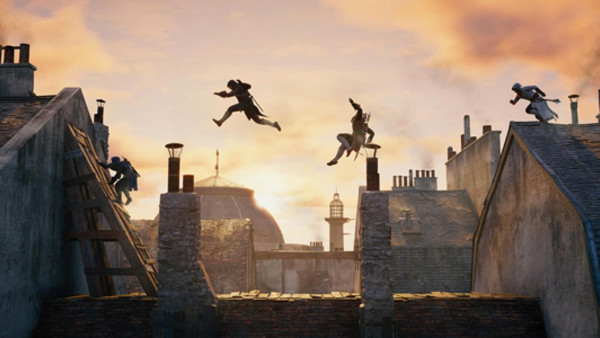
Another reason parkour is important comes from jumping around historical cities with your friends.
Assassin's Creed has always been underpinned by themes of family, teamwork, and of course, brotherhood. To be able to fight and connect with other Assassin friends is perfectly suited to the series. And it's a lot of fun!
Who doesn't love being able to plan out and perfectly execute assassinations with your bloodthirsty buddies?
The same also goes for the series' multiplayer in general, with the unfortunate removal of classic modes such as "Wanted" - in which everyone has an assassination target, but you're also a target to another player.
It's a shame the series dropped its multiplayer and has only gone the co-op route once so far, with Unity, but rumours surrounding Vikings have stated that it will once again reintroduce the feature. And it makes sense given Ubisoft's co-op and multiplayer track record.
Co-op's implementation in Unity was also appreciated, given that it never overshadowed the single-player experience. You could skip the co-op entirely if you so wished, which is certainly how Kingdom/Vikings should handle the feature too.
5. Building a Brotherhood

Like co-op, the feature introduced in 2010's Brotherhood - in which you could recruit other citizens and train them as your own assassins - fits like a glove for this series.
Being able to see your students rise the ranks, send them on missions, and call them in whenever you wished to assassinate targets with you was a joy. The more assassins players had, the more it made people truly feel as though they were a Master Assassin.
An argument could be made that this feature was in Odyssey and that's technically true. Players did have the opportunity to recruit almost anybody in the world to join your ship's crew and become a lieutenant of yours. Then, after unlocking the right skill, you could call your lieutenants into conflict. However, this is far more in line with the thieves & courtesans in the Ezio games, which act as more of a distraction to your enemies, rather than an actual assassination.
Given how layered features in Odyssey were, such as hunting down the Cult of Kosmos and the Mercenary system, there's no doubt a newly refined and deeper assassin recruitment system could be made.
Perhaps a central hub for assassins could be introduced?
4. Bring Back Social Stealth

One of the very first things Ezio, Desmond and the player learns in Assassin's Creed II is how to blend into a crowd.
Naturally, this was yet another defining feature continuously built upon in the series, and was a key aspect of traversing the varying historical worlds. Being able to disappear into crowds of people after your assassination was always a thrilling, rewarding and a little bit of a nerve wracking experience.
Again, however, since Origins, the ability to blend into crowds to avoid enemy detection has been entirely removed. This is also largely because the notoriety system has been taken away, meaning there is essentially no need to be able to blend amongst other NPCs anymore.
It is important to make mention that before Origins, there was a debate over the years on how pivotal and deep the system of social stealth actually was. Whether one chooses to call it "true" social stealth or not, there is always room for improvement and a deepening of the experience.
This is something Vikings has a chance to achieve and master, so we can all once again awkwardly stand on the outside of NPCs conversations and pretend to listen.
3. Ditch The Connection Between Microtransactions & Grind

Ah, yes, everyone's favourite addition to modern games: Microtransactions. The name alone brings a sour taste to most gamers' mouthes. And now, disappointingly, Assassin's Creed fans also feel the torture of these implementations.
Assassin's Creed has had DLC since 2009, but it is only with 2018's Odyssey that they are beginning to feel truly invasive. While it's disappointing to see many of Odyssey's best gear sets relegated to the game store and virtually impossible to attain without paying real world money, the worst additions to the game are the XP boosters and material packs.
Both of these items being in the game store alone has proven to many players that Odyssey was intentionally made a lengthy grind to level up, progress, and upgrade your gear and ship - just so Ubisoft could squeeze more dollars from fans that don't have the time or patience to 100% the game.
It's a greedy and nasty practise which is worrying for the series' future to say the least.
Whatever happened to being able to earn everything fairly in a game?
We can only hope Vikings has the restraint to allow players to earn everything in-game and have fun without a needless grind.
2. Better Modern Day Story
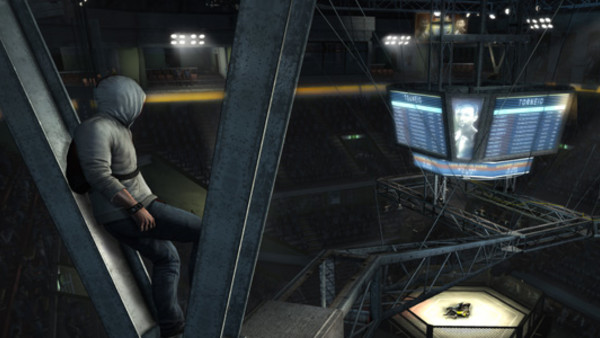
Whether you're a fan or not of the MD (Modern Day) story in Assassin's Creed, it's undeniable that it is intricately connected to the historical side of the series. After all, we're not just playing as a historical assassin, we're playing as someone reliving their ancestor's memories.
Whether all the characters were successful or not in their execution, the original Desmond saga featured an abundance of intriguing, mystifying and world-building story hooks when players slowly uncovered the secrets of "those who came before". The conspiracy theories, cryptic messages, and grand unravelling mystery kept plenty of players talking and invested in what was happening next.
Unfortunately, much of this development and world-building has been pushed to the side and left to spin-off comics. Even the Animus device, one of the most iconic and unique science-fiction creations in the last 20 years, is severely underused.
It's sad that while Ubisoft continues to put some semblance of a MD story into their games, they do so with such little conviction.
If Vikings is able to once again spark intrigue and mystery into the MD - and even implement some fun mechanics with how we play around in those sections - it would bring a long lost and missed part of the franchise back into the fold.
1. Greater Philosophical Conflict
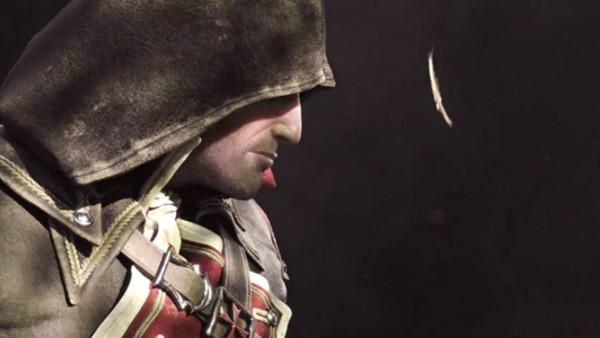
Perhaps the most interesting and unique factor of this series is the central Assassin and Templar conflict lying on a field of blurred morality.
The journey of Altaïr in the original game was built around the discovery that his enemies also had dreams and aspirations, thinking they were fighting for the right side.
The Templars and Assassins fight for the same end. Peace.
Yet, of course, the means in which both sides go about seeking this goal is oppositional. And this leads to many intriguing and thought-provoking debates across the series on which side is more just.
This is already far more depth than most video game conflicts are used to having, and is an excellent way to invest players and make them think. This timeless feud has manifested in many interesting ways across the series too, whether it through a master and his pupil, a father and his son, or two lovers.
Yet, particularly with Odyssey being so far removed from these two factions, it's not hard to see that much of this depth has been lost over the years.
Not for a while has there been a true inventive step forward in this conflict. However, with Vikings moving back into more (relatively) recent times, it's hopeful that we may again see a deeper dive into these orders' ideals and motives - an easy ticket to greater depth.