Assassin's Creed: 9 Biggest Franchise Mistakes Ubisoft Will Never Live Down
Where did it all go wrong?

For a time, Assassin's Creed was the premiere gaming franchise. Launching off the back of some mysterious marketing that hinted at a future-meets-ancient history setup, a supremely slick trailer that blended house beats with neck-stabbing and an ultra-cool hooded protagonist, it was like some mix of Splinter Cell stealth, Metal Gear ostentatiousness and Prince of Persia athleticism all rolled into one.
That said, nine main instalments, twenty spin-offs, multiple animated movies and a full-length Hollywood disaster later, Assassin's Creed is still a household name, but one approached with the cautiousness of an open flame. Thanks to a number of disappointing business decisions, some profoundly dumb plot revelations, off-putting characters and a rushed release schedule, the Assassin's Creed of today is one that feels as though it's denying being on life support.
Still, with AC Origins doing a great many things right, it's very easy to remain optimistic about the future of the franchise overall - because let's be honest, there aren't any other big budget trans-global adventures focused on neck-stabbing to take its place.
Though, look back on the series as a whole - and as someone who's played every single one, I frequently do - and you start to see a pretty clear picture of where Ubisoft began going left, when they should've gone right.
9. Deciding To Release Annually

Retrospectively, it's very easy to say that only two specific game 'types' have ever pulled off the whole 'annual release schedule' thing.
Either a sports game like FIFA or WWE 2K (their team/roster updates necessitate regular releases) or Call of Duty, which uses Activision's substantial coffers and the same game engines on routine releases to make their deadlines. For Ubisoft though, despite having 10 separate studios working on AC at any given time, it was immediately clear even from AC Revelations that the franchise didn't need to be trotted out every year. I'll get to what that game did wrong in a later point, but despite closing off Ezio's story in an admittedly fantastic scene with Altair's corpse, the franchise steaming ahead for its 'proper third instalment' immediately felt tacked on.
It was Assassin's Creed III that was the first to release with a marked drop in quality. Texture bugs and graphical glitches abounded as despite a supremely slick opening Templar twist, every major character felt incredibly underwritten - not to mention the Homestead side missions were just pointless filler.
Not to mention, it was during AC III's shoddy launch window that we learned of the following year's instalment, Black Flag, once again hammering home that 'production line' feel that did a disservice to some otherwise solid narrative foundations.
8. Making The Templars EXACTLY The Same As The Assassins

Speaking of that AC III opening twist, it ultimately did far more harm than good.
Let's backtrack, because in the first game, discovering the assassins and templars were still at war with one another in the present day was a fantastic revelation. Guys like your experimental overseer Warren Vidic having sinister motivations was a great way to encourage fans into picking apart precisely what happened over the years to create these diametrically opposed world views.
What does a modern day templar warrior look like? How do they fight? For everything the assassins can do, how have they evolved to deal the opposing blow at every turn?
Well... the answer came in AC III, as "By copying literally everything about the assassins". Part of that awesome-feeling twist was that the assassin-like Haytham Kenway is actually a templar, meaning the entire templar order actually mimic the same climbing, stabbing and general movements of our heroes.
Why? Who knows.
I can posit this was done to ostensibly delve into how any extremist left or right-leaning political ideology will always lead to ruin, but it had the knock-on effect of ruining any sense of conflict between the two sides. From here on in, the notions of templars and assassins pulling the strings behind the scenes were discarded, and the present day setting was left with nothing to explore.
7. Wasting Great Settings In The Chronicles Spin-Offs
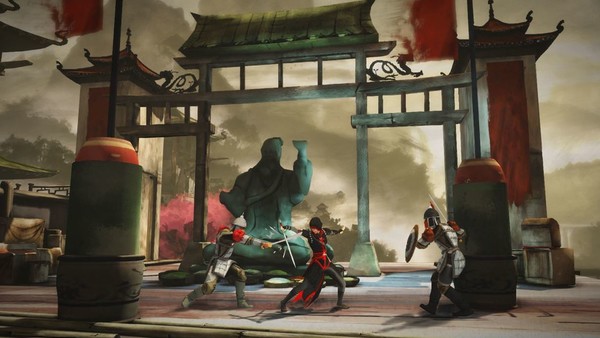
Remember how we really wanted the franchise to head to the east, and fans have literally asked about this every year since the first instalment?
Yeah, it's been done... but in one of the three spin-off Chronicles games, which despite being weird side-on 'platformers' inspired by 2012's Mark of the Ninja, completely waste three spectacular settings: India, Russia and China.
It's not that Ubi categorically couldn't revisit these locations in future titles, but the sheer annoyance of having them note that heading to the East (Feudal Japan in particular) would be "too familiar", only to ostensibly waste the look of an Assassin's Creed in an eastern setting on a spin-off, is a major missed opportunity.
It's precisely because the public were clamouring for a Tenchu-esque mishmash of neck-stabbing and temple climbing, that they should've delivered right after the Ezio trilogy. It remains a bizarre idea to still 'do an eastern setting' in anything other than the biggest way possible, and with AC Origins only re-righting the ship rather than returning us to that 2010 period where it was on top of the world, there's every chance we'll never see any eastern location done properly.
6. Losing The Connection Between Characters In AC III

Post-Ezio trilogy - and post a specific team member departing (more on that later) - you could tell Ubisoft just wanted to settle into a steady annual rhythm of "Choose location, choose protagonist, go stab things". The present day storyline was pretty messed up and they'd lost their Creative Director, but the franchise was making straight bank, so there was no need to do anything other than milk that cash cow dry.
However, where in AC II it felt fantastic to actually uncover passages describing what Altair got up to post-AC 1 - and then later unlocking his ceremonial assassin robes - AC III was a disconnect in every possible sense. By the close of the game they'd even kill Desmond, removing that already-on-life-support part of the franchise that was now waiting to be destroyed.
Indeed, playing AC III felt entirely like Ubi feeding the masses with a yearly dollop of by-the-numbers microwaved portions, rather than those handcrafted hearty meals we were accustomed to. That meant all the running, jumping and map-unlocking was present and correct, but there was no tangible continuity to the universe other than the arbitrary present day stuff, which in retrospect, contributed exponentially to that yearly "Here's another one" feel that now personifies the series.
5. AC Revelations' Big New Mechanic Being The Hookblade

If you were there at the time, you'll remember the collective "That's IT?!" that reverberated around the various conference halls when AC Revelations was announced.
Yes, it was undoubtedly cool to once again play as old man Altair and an ageing Ezio, but mechanically, what was Revelations bringing to the table? Outside of a new location and some godawful tower defence minigames, what would be changing the core feel of Assassin's Creed for this Ezio trilogy finale?
A hookblade. Which an in-game character literally - and hilariously - described as "A blade... with a hook!".
It was terrible, and in practice meant that Revelations was the same game as Brotherhood, albeit with a new item that meant you could climb certain gaps slightly faster. Whoopee.
Needless to say you can point to Revelations' marketing and threadbare approach to the necessity of a sequel as the first truly negatively received comment on where Assassin's Creed was heading. From here on in, the question of "What does the new one actually do?" would stick forevermore, reframing the approach to coverage of the franchise across the board.
4. Losing Patrice Desilets
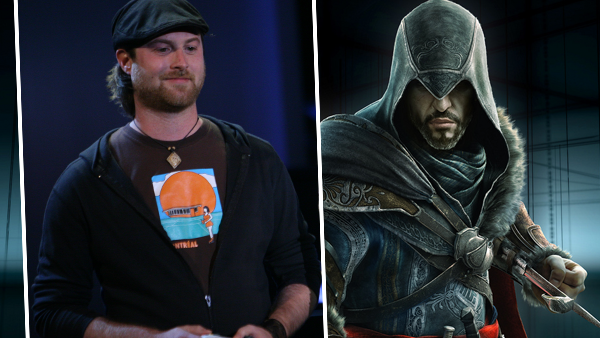
I've mentioned him before, but Patrice Desilets was instrumental in creating the vision of Assassin's Creed as a franchise. He's the Hideo Kojima to its Metal Gear, the Ken Levine to its Bioshock. Basically, if he leaves, you're up sh*t creek without an Animus.
Sadly, you can tell from the various interviews that Patrice did after leaving, that the money-hungry direction Ubi wanted to take the series was not in line with his intentions. He describes being forced into situations where he was actively "lying", covering for other peoples' decisions and being forced to live by them, eventually saying that he was "not a very good liar", and that he "[couldn't] do it anymore".
Obviously, with its creative lead going through a tough time and leaving months before Brotherhood came out, you can tell Revelations and all those thereafter were a communal effort from all remaining team members, simply picking up the pieces and trying to keep going.
The reality, and you can feel this evermore in retrospect, was a creative team with no unified vision.
3. Going Too Far Forward In Time, Too Fast
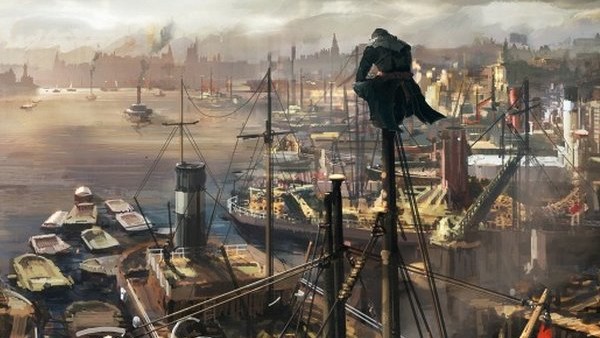
Like Call of Duty first bringing out three games in its perfect 'Modern Warfare timeline' and moving on to a different setting every time thereafter, AC also did the same with Ezio across AC II, Brotherhood and Revelations. Following that we've seen a pretty quick gallop forward through the years, even getting as far up to the present day as the 1940s, where a chunk of AC Unity took place in World War II.
Simply put; Assassin's Creed thrives on time periods with gaping wide grey areas of potential. It's precisely why Ubisoft have FINALLY gone back to ancient Egypt, but it stands to reason that the most forgettable instalments in the series are both AC III, Unity and Syndicate.
Black Flag retained some sense of adventure thanks to its sea-faring adventures and naval combat, but fans have been begging for Ubi to explore locations like the Crusades more, or to go somewhere that allows the creative department to, well, get creative.
The move to more city-styled locations might draw in an assumed wider audience (any video game publisher's list of demands will always include "Get to the part with the guns!" regardless), but in the process of modernisation, AC would leave its identity far behind.
2. Never Capitalising On 'The Minerva Twist'

We all remember it, and we all remember going into AC Brotherhood wondering just how the hell Ubi were going to capitalise on one of the finest twists in gaming history.
Ending that game with a supposed virtual reality simulation of past events actively addressing the present day character by name? This was the first time we'd had a real interaction with Isu/The Ones Who Came Before, and being it came after AC II let us uncover cutscenes of actual Adam and Eve being the first ever assassins, it felt like the world of Assassin's Creed was going to be blown wide open.
Then - and again, this stuff was written during the period that ended with Patrice Desilets leaving - Desmond was mind-controlled to stab Lucy, the 'wider story' was revealed to revolve around an Earth-shattering meteor, and the assassin's true purpose was to set off a load of underground switches that would erect a 'world shield' that could deflect the meteo- look, it was dumb, okay?
D-U-M-B.
All potential surrounding the Gods drip-feeding their agenda to us as an intelligent script that explored faith, atheism, purpose, belief and the notion of talking to a deity was cast aside, all in favour of a plotline that ended with another world-ending God being trapped inside an orb.
As you... do?
1. Killing Desmond

He could've been great. Ol' bland n' boring Dez could've been the key to pulling off the modern day Assassin's Creed romp we all thought was coming.
Clambering up the sides of skyscrapers, looking out over a New York-esque skyline, swinging from rooftops Spidey-style and landing on a group of templars attempting to steal some sort of ancient assassin artefact - who didn't want that?
Desmond's relative blank canvas personality first served to get us introduced to AC's world, too. The warring assassin vs. templar ideologies, virtual reality of the Animus and the notion of the Bleeding Effect letting Desmond acquire character traits through from each subsequent game - by the time we'd been through a handful of instalments he'd be a complete badass, capable of every ability from the franchise combined.
But then they killed him.
With Desmond's death came the end of anything remotely meaningful happening with the present day. Many fans of the older period stuff rejoiced, but it meant one half of the franchise's narrative structure had been for nothing. Literally nothing.
Desmond dying removed a key element of AC's unique franchise identity, and without it, you have to wonder if "random location of the year" is enough of a significant pull going forward.