Assassin's Creed Syndicate: 10 Confirmed Features That Might Save The Franchise

Can Ubisoft Quebec navigate the flagship franchise through the brewing storm?
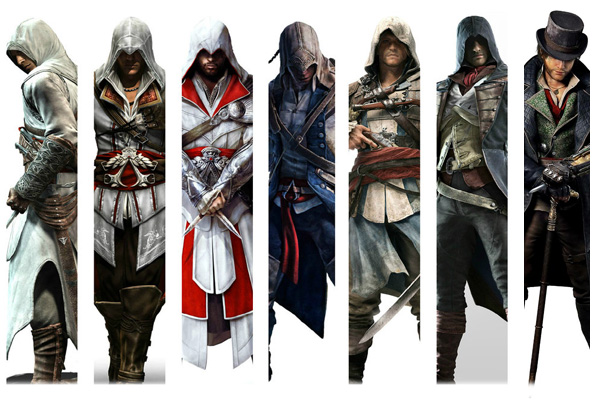
Ubisoft has accelerated the rate at which the Assassin's Creed franchise will hit the shelves. The commercial success of successive games aided by a willing fanbase has seen the production cycle of Assassin's Creed ramped up, to the point of releasing annual, bi-annual and franchise spin-off games, as well as expanding upon the wider universe with novels, movies shorts and a blockbuster in the pipeline. The humble successes of Altair in 2007, propelled Ubisoft to the forefront of the gaming industry, establishing one of the strongest gaming franchises in modern gaming. The lavish praises of innovative gameplay, picturesque settings and interesting narrative has comparatively diminished with the years gone by. Follow-ups have failed to garner the same levels critical success that distinguished their predecessors. This does not confine Assassin's Creed to a destiny of failure and mediocrity, however, the consensus is readily formed that the franchise has lost its sheen. Failure to innovate in several areas - such as locational setting, gameplay mechanics and gameplay narrative - have inevitably frustrated the loyal fans, undoubtedly plummiting to its lowest levels of approval following the release of Assassin's Creed: Unity. This has lead to calls amongst the gaming community, not for the franchise to ultimately disband, but to allow a significant period of review in an effort to consolidate the franchise and return with something truly innovative.

10. Jacob & Evie Frye

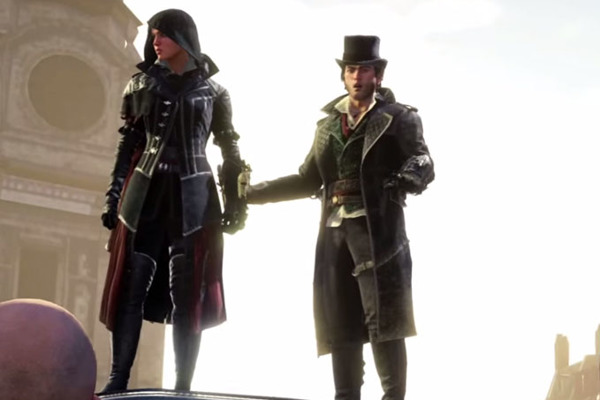
Assassin's Creed: Syndicate introduces Jacob and Evie Frye - the brother-sister Assassin's intent on liberating London from the Templars; and judging from the promotional materials and interviews, Ubisoft Quebec are priming the fans for a new experience. The titular twin-assassin's will have distinct personalities and capabilities, expanding the possibility for a wide variety of gameplay experiences and a narrative that is at once interesting and different to its predecessor. The exclusion of romance and love-sick characters clears the way for a passionate brother-sister dynamic that can lead to some interesting conflict. The character progression in Syndicate will be split in a 75:25 ratio in favour of Jacob. Described as a "charismatic brawler", Jacob's style of combat will be more overt than his twin's. In the demo footage, we witness Jacob's penchant to engage in fist-fights, gang wars and carriage-chases through the streets of London, creating a stark contrast between the inherent need for subtlety and stealth in Unity. Whilst little has been seen of Evie, thus far, we can deduct from the materials that she is more discrete and strategic, with a style of play that emphasises distance and long-range weaponry. Although Quebec have taken the progressive steps to include a female protagonist in a major title, perhaps the ratio of play should be split 50:50 to encourage greater empathy and depth across two potentially very interesting characters.

9. Victorian London

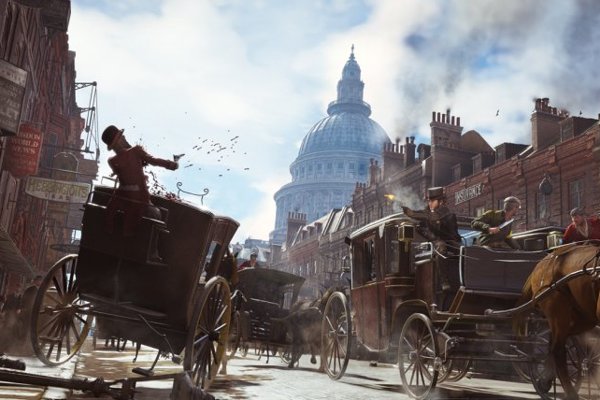
Although the British have featured heavily in the Assassin's Creed series, intimately entwined into Conor and Edward's struggles, players are now taken to the heart of the British Empire to witness the life of the underclass in the epicentre of industry, finance and imperialism. In traditional fashion, Assassin's Creed: Syndicate has thus far showcased artwork and world-design to the high standards the series has championed. Audiences are treated to sublime shots of London landmarks like Big Ben and St. Paul's cathedral, for example, the industrial advancements of manufacturing in the forms of factories and trains, whilst the streets and slums capture the Victorian era's reputation for wealth-creation and the downtrodden. It is questionable, however, whether the world-design of nineteenth-century London is distinguished enough from that of late eighteenth-century Paris. Successive studios have essentially failed to distinctly separate the design of each instalment from the previous. With the obvious themes of French and British imperialism and culture flowing through Assassin's Creed III to Syndicate, perhaps this is a prime source for the criticism leveraged at Ubisoft for failing to invigorate the series with something truly unique. Whilst the aesthetic once again seems beautiful, it is perhaps an area of the game which required extensive innovation.

8. Heart Of The Industrial Revolution

"We are leaving behind the medieval era." Creative director Marc-Alexis Cote stated in a recent interview how the series will leave behind the medieval period of history, forgetting the troubles of war and the politics of powerful dynasties, as we enter an epoch of peace - of social, technological and economic revolution. Assassin's Creed: Syndicate takes place during an era of peace, and with peace come a revolution of a different nature. The political grasp of religion was wailing, monarchial dynasties lost control at the expense of democratic advancements, and money began to talk rather than status. This set the scene for the proliferation of manufacturing and machinery, social and geographical mobility and a growing concern for the welfare of the working population. The Victorian era was marred by an atmosphere of exploitation, as entrepreneurs sought to exploit the working conditions, health and basic rights of the working class in the vain of maximum profits. In Jacob and Evie's quest to save London from the tyranny of the Templars, expect the twins to engage heavily in the struggles of the working class - a theme that should resonate heavily with the gamers of today, who witness the growing wealth of the empowered at the expense of basic working class rights. This will provide a fresh context from the archetypal historical fiction backdrops of politicking and war.

7. Historical Figures

With every Assassin's Creed installation comes the obligatory historical references. Whilst not inherently accurate, their interwoven inclusion provides an interesting and relevant approach to modern gaming. In the past, gamers have primarily interacted with political revolutionaries, such as Niccol\u00f2 Machiavelli, Napoleon Bonaparte and George Washington; but this time around, players can expect historical figures of a different nature. Confirmed appearances include Charles Darwin and Charles Dickens - two revolutionaries in their respective fears. Darwin's work premised upon the fallacy of creationism, dismissing the instilled the ideals of church and society with scientific evidence to illustrate his theory of evolution. As such, Darwin's theorising was a liberating advancement, as society now had a coherent basis to question the legitimacy of age-old, traditional institutions and thought, presenting a challenge to the Templar Order. Dickens' novels and writings have lasted the test of time, with an obvious undertone of criticism aimed toward the trouble of the Victorian era. With a back catalogue of 'Hard Times' and 'Bleak House', Dickens criticises the prevailing social, economic and institutional set-ups of the Victorian age - demonstrating a passion for resolution and reform. Other figures are likely to make an appearance, with John Stuart Mill and Karl Marx emerging as likely candidates to align with the Assassin's philosophy, whilst appearances from Annie Besant and Queen Victoria would make for an interesting plot.

6. Close Combat

With a new era comes the implications upon combat. Assassin's Creed: Syndicate provides a new emphasis on close-quarter combat and, unlike its predecessors, will focus upon melee, brawls and skirmishes. Ubisoft Quebec have stayed true to the spirit of the Victorian era - introducing police to regulate conduct and lawfulness, whilst including the emergence of gangs and organised crime as a direct consequence of the social revolutions taking place. As such, individuals cannot freely bear arms in public, forcing gangs and the Assassins to wield concealed weapons. In the promotional material and footages, Jacob can be seen brandishing various weapons unique within the series. The gang wars and street brawls are characterised by close-range fist-fights, where Jacob wields his brass-knuckles. We are treated to mass confrontations in the London boroughs in a bid to exert dominance over rival gang members, briefly pulling a six-shooter revolver to dispatch enemies with surprise. Yet, it remains to be seen how this will be received by the gaming public; but for the moment, the shift in focus from sword-play to close, fists-fights is enough to pique curiosity. Throughout the course of character trailers, we learn more about the Frye twins' arsenal - including throwing-hallucinogenic darts to kill and manipulate AI, the quick and deadly kukri blade and the stylish and brutal cane sword.

5. Rope Launcher

Amidst the weapons and gadgets at the twins' disposal, the greatest innovation comes in the form of the rope launcher - a mechanical rope and hook, capable of latching onto surroundings and pulling the Assassin towards the destination. The rope launcher is perhaps the greatest representation of the technological advancements achieved over the course of the industrial revolution. Production shifted from farming to manufacturing, and as a result, innovative machinery became a prominent feature of the time. The gameplay consequences of the rope launcher's introduction may be quite staggering. The time sunk into climbing buildings will now be reduced by a noticeable proportion, enabling players to complete missions and tasks with brevity. This may also have implications in reducing the difficulty of chase and time-orientated missions. One of the key criticisms in Unity, and perhaps transcending the entire series, has been the convoluted mechanics of climbing a structure. A prime source of frustration, players often attempt to direct the Assassin in a particular direction, only to be prohibited by certain ledges or lunges toward wrong destinations. The rope launcher may mitigate these difficulties. There is the possibility, however, that the rope launcher will be negatively received, stemming from its potential to bypass certain difficulties, traditional tasks of the series and short-cutting content and routes.

4. Vehicles

Arguably the most noticeable feature of the alpha footage is the integration of modern roadway mechanics and Victorian era carriages. Jacob can be seen hijacking, piloting, ramming and climbing atop horse-drawn carriages through the streets of London as he gives chase to Templar adversaries. Coinciding with this, is the careful design of traffic rules, regulations and basic decorum, as we are promptly informed of the need to abide by the laws of the road. This includes keeping to the left-hand side, speed restrictions and the need to avoid collisions - all in the hope that the Assassin will avoid raising attention from the authorities. Moreover, the carriages serve as vehicles of combat, with Jacob ramming his foes, jumping across and climbing atop to dispatch any threats. The design of vehicle combat will make or break the introduction of the roads system, which, at the moment, seems promising, considering the vulnerabilities of losing track of a target and damaging or toppling the carriage. However, much like the teased combat animations, the initial visuals of the vehicle mechanics may seem a little animated to instil the sense of reality the developers where focusing upon, leaving much to be desired. Furthermore, players can exploit the introduction of trains for the purposes of travel and combat.

3. Story Progression

In a series in dire need of narrative cohesion, the time has come for Ubisoft to consolidate the story arc of Assassin's Creed. Annual and bi-annual instalments have stretched a storyline from what was once ambitious and compelling, to one that is entirely convoluted and too expansive. The story of Jacob and Evie Frye is focused upon their efforts to liberate the city of London, borough-by-borough, from the grasp of the Templar Order. This will primarily take place through a series of gang wars, fought between the Rooks and the Blighters - affiliated with the Assassins and Templars, respectively. Having forced the cells of Blighters from their respective dens, Jacob and Evie will face a gang war and the corresponding leader, who is revealed as a member of the Templar Order. The complications of the series, however, inevitably stem from the supernatural elements of the overarching narrative. Ubisoft have demonstrated this can be compelling however, with II and Brotherhood garnering praise for their present day narrative. However, the introduction of the 'sages', the motives and designs of Juno, and increasingly outlandish artefacts have decimated any hope of a cohesive story. The present-day narrative is confirmed to return; Ubisoft, however, have been coy about what form this will take. Whether it is the Desmond-inspired excavations of Italy or the complicated tutorials from Bishop may make or break the story.

2. Ditching Multiplayer

If Assassin's Creed: Unity represents the downfall of Ubisoft's flagship IP, then Syndicate represents an opportunity for novation, beginning with the lessons that can be taken from Unity. Ubisoft have confirmed that Syndicate will focus entirely on single-player gameplay. The removal of multiplayer in any form represents a return to the original designs of the Assassin's Creed series, where I and II failed to include any co-operative options, paving the way for a seamless and focused gaming experience. Quebec, therefore, have abolished the Companion App and any of the traditional multiplayer options to this end. This method was also integrated into the recent Rogue installation, which was met with considerable acclaim comparable to Unity. Improvements to the style of combat are visible in the demo footage, seeming fast-paced and frenetic, building upon the clunky mechanics that plagued the duration of Unity. Likewise, the stealth is visibly more seamless and appropriate to the Assassin's Creed franchise, rather than the emphasis on crowds and overly-perceptive AI that inhibited the achievement of a smooth, consistent experience in Unity. However, the insistence of pre-orders and novelties is perhaps an avoidable hindrance. DLCs can add quality and depth to a game, but depriving certain gamers the opportunity to engage in interesting missions from the outset leaves a bad taste and create an environment for a two-tier gaming experience.

1. Improved Game Engine

For Assassin's Creed: Unity, a entirely new game engine was built. The concentrations, however, were split across the need to maximise the potential for the game to perform upon two generations of platforms - i.e. the game was developed alongside the transitional period between the PS3\/Xbox 360 and PS4\/Xbox One. Whether or not Ubisoft Montreal can justifiably attribute the dissatisfactory release and reception of Unity to this development difficulty remains unanswered; however, Ubisoft Quebec, in charge of Syndicate, has opted for and chosen to improve upon the previous instalment's engine in the hope of creating a more finessed gaming experience.Quebec's decision to do this has the potential to create something great, if the previous patterns of Ubisoft's development cycles provide any sort of an indication. The developers at Ubisoft have traditionally followed up flawed engines with games that make an admirable attempt to perfect the previous system, with a tendency to result in games of higher, smoother quality of greater critical success. This is evidenced in the advances of Assassin's Creed II and Black Flag particularly. Whilst not perfect, the games made significant improvements upon a previously flawed engine, resulting in more satisfactory gameplay. Audiences are teased with seamless snap mechanics to govern stealth, more appropriately perceptive AI so as not to inhibit gameplay and improvements to parkour mechanics, which suggest fans have reason to be hopeful.

Contributor
Contributor

Writer, day-dreamer, dragon rider.