Assassin's Creed Syndicate Hands-On Review: 9 Things We Learned

From new gameplay mechanics, to the best heroes since Ezio and Altair.
Ubisoft went all out on the presentation of their latest Assassin's Creed Syndicate hands-on event. It took place in the formidable and gloomy Wapping Hydraulic Pumping Station, a Victorian-era building so atmospheric that looking up into the darkness of the rafters, you could practically see the shadows of assassins jumping between the beams. The setting put me in the perfect mindset to play the most in-depth hands-on of Assassin's Creed Syndicate yet - which throws you into sequences 3 and 7 of the game, and lets you roam freely around the whole of Victorian London for the first time. As someone who's played most of the Assassin's Creed games, I've grown a bit jaded at their unfounded potential; the locations are stunning, the premise is fine, but I'm not the only one to have the feeling that Ubisoft's attempt to milk the franchise dry is preventing the series from evolving as it should. For all its ambitions, Assassin's Creed Unity was an unfinished mess that enraged just about everyone in the gaming community. But who knows? Maybe that kind of disaster is exactly what was needed to get the series back on track. Having spent some time with Assassin's Creed Syndicate, I see glimmers of hope sneaking through the murky, smoggy clouds of London city, while some long-standing doubts continue to hang over it. Here are the 10 key impressions that the game made on me during our hands-on time together.

9. 'Loyalty' Is A New Mechanic In The Series

We already knew that the likes of Charles Darwin and Charles Dickens are present in Assassin's Creed Syndicate (because these bookish geniuses are exactly the kind of people you'd expect professional killers to hang out with), but it turns out that you need to earn their loyalty before they start helping you out. Assassin's Creed Syndicate features a 'Loyalty' system, so completing side-missions for the city's colourful characters builds up your relationships with them. I carried out one such mission for what must've been the 10-year-old leader of a gang of street urchins (they grow up ever-so fast on the grimy streets of London). After carrying out a mission for her in which I had to save some kids from working in squalid conditions at a sweatshop, my loyalty bar went up. I'm told that once you earn someone's full loyalty, they'll provide you with special rewards, such as new weapons and gear for yourself and your gang. While I didn't have enough time to earn anyone's full loyalty, this mechanic is a good way to incentivise building relationships with the game's supporting cast.

8. London Is A Big, Beautiful Monster Of A City
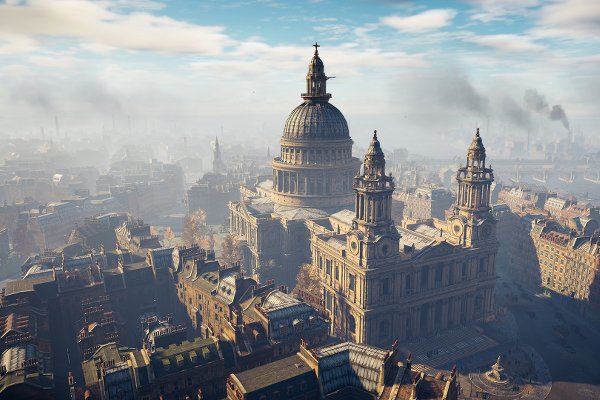
Going full-on in the opposite direction to the lush nature of Assassin's Creed IV, Unity and now Syndicate have decided to keep the focus of the games mostly in the city. When I spoke with Syndicate's game director Scott Phillips, he said that there will be no countryside in Syndicate, and that the design focus is to make London as captivating as possible. Naturally, Phillips told me that each of London's eight boroughs has a distinct character , but I took this statement with skepticism, and decided to feel every area of the Big Smoke out for myself. And boy does London live up to that monicker. Climbing up any factory, boat mast or landmark gives you a stunning view across the whole city, which is 30% bigger than Unity's Paris. Looking out over London, you can see giant factory chimneys in Southwark belching out their noxious fumes against a sky that's slightly hazed by smog, even when it's sunny. The Thames, meanwhile, is clogged up with so many cargo boats that you can get over to the other side by hopping between them. While it's a bit flattering to say that each area in London has it's own character (they are in the same city, after all), there are define marked distinctions between the areas. Westminster and the City are wide-open areas filled with Bobbies (police, American readers) and well-to-do types, while Whitechapel is filled with back-alleys, urchins and crime, without any law enforcement in sight. Head south of the river, and the area is decidedly less populous, with docks and factories hugging the riverside. Head further south still, and things look a bit more rural, with spacious roads, medieval-style houses, trees and dirt roads. Of course, it'd take hours to memorise all of London's nooks and crannies, but what I've seen has left me curious to explore more.

7. The Combat Is Tougher, And A Bit Better

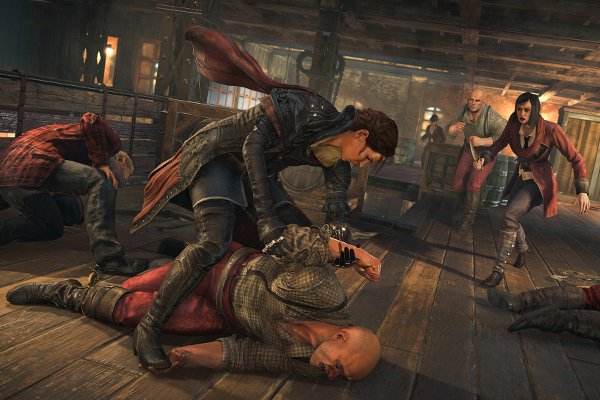
Combat in previous Assassin's Creed games made the player as mundanely unstoppable as The Matrix's Neo. No matter how many enemies were around you, you could essentially fend them off using your counter-attack, then fly - or briskly climb - away on the rare occasion that things got too hairy. I admit that I approached Syndicate with a bit of complacency based on my past AC experiences. So when some knife-wielding wench backed up by a bald-headed brute yelled at me to "piss off" out of their territory, I decided in my Victorian role-playing mind that I'd batter them to next Tuesday. But it quickly became apparent that things were no longer as simple as counter-attacking everyone to death. These London street hoodlums were tougher than the pirates, British redcoats and medieval soldiers of ACs gone by, and it caught me off-guard. Suffice to say I ended up being lifted up with one hand and repeatedly cleaved in the kidneys; a nasty way to go, and a lesson learned. Combat in Syndicate forces you to be more aggressive. It rewards attacking rather than just holding your guard up and waiting for counter-attacking opportunities. To this end, kill streaks are back and pistols are quicker to fire, making combat feel more rugged - in a good way. It was actually quite satisfying to have to do a runner from a group of four thugs who roughed me up good 'n proper after I thought I could take them single-handedly. With all that said, the fighting doesn't feel as varied, cinematic or satisfying as in comparable games like Arkham Knight and Shadow of Mordor. I'm still holding out hope that the combat in Syndicate will improve as you start levelling up and earning abilities from the substantial-looking skill tree.

6. The Protagonists Make A Good Team

After the forgettable what's-his-face Assassin's Creed: Unity, Ubisoft has to convince gamers that the series is still capable of producing solid, intriguing protagonists. From what I've seen of the storyline and their relationship so far, Syndicate's co-protagonists Jacob and Evie Frye complement each other nicely. Jacob is a rakish, wise-cracking hero in the Ezio Auditore (AC II) and Edward Kenway (AC IV) mould. He's your classic small fish in a big pond, excited to leave the small-town life and see what adventures await him in the city. He has a cheeky glint in his eye, and of course it's not long before he's talking about becoming the underground king of London and getting a gang together. Evie is the more reserved of the two, always shooting down the childlike Jacob when he goes off on rants about societal oppression. It's a nice dynamic, though I do hope that we get more insights into Evie's character. Intriguingly, there were signs in the hands-on that she might have a love interest in the game, which is an oddly rare occurrence for female protagonists in video games. However the characters develop, Syndicate has established a warm, talkative, and complementary relationship between these two contrasting characters, and has left me intrigued to find out more about them - which is more than Unity ever managed.

5. London Is Alive With Incredible Detail & Varied NPC Animation
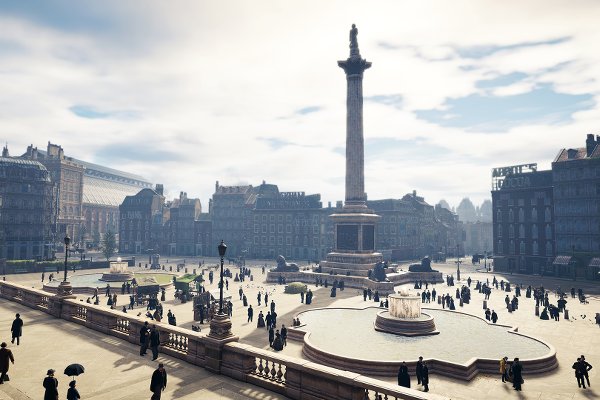
Everywhere you go in Syndicate's London, you'll witness something intriguing. Standing right next to an old couple overlooking the pond in Hyde Park, I eavesdropped in on their wholesome conversation about industrialisation's effect on the environment, before shoving them around, knocking the parasol out of the woman's hand, and moving on across the park to watch a game of cricket played by a bunch of well-dressed gents. To get across the Thames to south London, I decided to frogger my way across the boats clogging up the river rather than take the bridge like an ordinary dullard. Once I wove my way through the grimy docklands of Southwark - barely surviving a scrap with a meat-cleaver-armed brute who worked for the area's gang leader - I headed towards what appeared to be a large church in the area. As I jumped the wall into the grounds of the church, I discovered to my delight that it was a mental asylum (or should I say, in true Victorian fashion, 'Loony Bin'). People dressed in pyjamas wandered around the grounds of the asylum, rabbling to themselves inanely, but with just enough nuance for it to be convincing, rather than comical. There's a spontaneity to the city too, as I witnessed an urchin helping up an old lady who'd tripped over, and several people nearly get run over by speeding horse carriages. To my amusement, I managed to cause a traffic jam of around 10 carriages when I left my stolen one in the street for a few minutes. Who'd have thought Victorian horse traffic would be so orderly? The actual geography of the city is a bit less than accurate (Whitechapel is east of the City, not north of it), but that shouldn't bother anyone but the most fervent cartographers. London 'feels' great, whether you're wandering around markets or listening to a gentleman telling stories to a crowd in Trafalgar Square.

4. The Missions Were Varied, But Restrictive
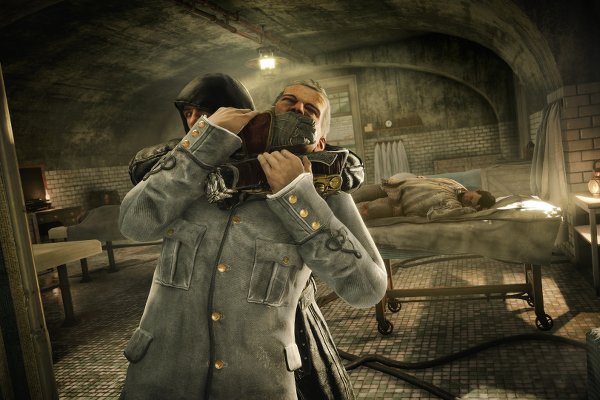
In the time that I wasn't trying in vein to explore all of London on foot, I managed to play through several of the missions in sequence 7. It all started off pretty generically, as I chased a thieving little urchin through the backstreets of Whitechapel, before racing Evie to the top of a nearby factory. But throughout the sequence, I managed to get caught up in a horse-and-cart chase (something we've already seen in previous hands-ons), as well as a decent little stealth mission in which I had to take out a target in a covered market. During this mission, I took control of the stealth-oriented Evie, and fulfilled the bonus objective of taking the guy out by detonating the explosive crates near him. It was satisfying and reasonably challenging, as enemies seem to become suspicious of your shifty actions quicker than in previous outings, and are much more dangerous if you get caught. Other than that, I had a few street scuffles in my bid to take over the Whitechapel territory from Frazer Butchers (or whatever his cockney-villain name was) and also earned some kudos with the aforementioned 10-year-old leader of a child gang. The mission she sent me on entailed saving kids from a squalid sweatshop, was best played stealthily (if the alarm was raised then you'd be 'taken to the cleaners' in no time), and while it was easy, was also reasonably satisfying. Of the missions I played, I didn't get the sense that there were alternative ways to approach them. There seemed to be only one way into the buildings they took place in, and each mission heavily directed you to approach it in either a stealthy or combative way, with little room to adapt it to your own play-style.

3. The Women Kick Ass

When Ubisoft announced that one of the protagonists in Syndicate would be a woman, many in the gaming community raised their eyebrow, thinking that the company was trying to make up for the gender-rep faux-pas surrounding Unity, when technical director James Therien said that adding a female protagonist would've "doubled" the workload on the game due to the way women dress, move and so on. Casting aside Ubisoft's past cock-ups, what I've seen of Syndicate so far does a great - even brave - job in depicting women. This is spearheaded by co-protagonist Evie, who's tough, spunky, and a good counterpoint to the childlike Jacob. The 'brave' part of gender representation in Syndicate is the fact that you can beat up women, and they can beat you up as well. Some may call that 'wrong', but I call it progressive. I can't deny that it felt a bit uncomfortable the first time I, playing as Jacob, punched a female gang member to death, but she'd have done the same to me (if I was in control of Evie at the time, would that have somehow made it better? Equality is the endgame, after all). But maybe such moments of discomfort and self-questioning are exactly what we need for the gaming medium to progress. Ok, perhaps Ubisoft overdid the female thug presence in Victorian London a little bit, with seemingly every other gang member being a woman, but better to do so than undercook it. Also, the majority of gang leaders in the city (four out of six) are women - with awesome names like Bloody Nora. So I tip my hat to Ubisoft. It took them a while to get here, but they've finally stepped up to play a progressive role in gender representation in video-games.

2. The Free-Running Isn't Actually That 'Free'

Don't panic, free-running isn't turning into a skill that's only unlockable as a paid micro-transaction (it's a few years before we reach that point yet). No, what I mean it not being free is that Syndicate seems to suffer from many of the same pitfalls as past Assassin's Creed games - if not worse due to the design of the city. Syndicate does a great job of capturing the unevenness of London architecture. A row of buildings in Whitechapel may be made up of several buildings of varying heights, meaning that long sprints across convenient flat rooftops are a rarity. Combine that with irrregular chimneys on tops of buildings, hanging signs in the streets, and the general higgledy-piggledy-ness of London, and you have yourself a pretty complex landscape to parkour about in. This would work fine if the free-running mechanics were adapted to the city, but unfortunately they're pretty much the same in Syndicate as in any previous Assassin's Creed game. This would create scenarios in which I'd find myself awkwardly perching on chimneys, apparently just too high to jump down onto a roof below, but also too far across from other things I could jump to. After a minute of pointless pointing in every direction in the hope of finding something to cling on to, I despondently had to climb back down the chimney - making me feel like a total amateur. Similar clumsy situations would happen in the back-alleys of London; if I tried to jump in a wall that wasn't at a perfect right angle to another wall, the mechanics would get confused about which I wanted to jump on, and ruin my parkour flow. Par for the course for the series, but it's a shame at this point that Ubi still haven't found a solution.

1. Climbing Is Still Way Too Easy

St. Paul's Cathedral is one of those buildings whose shape makes its size look pretty modest from a distance, but the closer you get to it the more you realise what a beastly building it really is. Syndicate captures this feeling brilliantly, and as I approached the iconic cathedral I felt more and more impressed by its size. By the time I reached the foot of St. Paul's, I felt more than a little daunted, and took a moment to brace myself before beginning what I thought would be a challenging ascent to its pinnacle. Next, I ran across the street, knocking one of those Victorian rain-or-shine parasols out of a bloated lady's hand, and grabbed onto a ledge on the side of the building. I began escalating the building like Spider-man, but it just seemed too easy, and this feeling was made worse when I realised that if I just held up on the analog stick and R2 (occasionally turning slightly), I'd be at the top of St. Paul's in a jiffy. Barely a minute later, I had reached the top. The view was great, but the journey to it felt trivial. Sure, there's little difference between this climbing mechanic and those of past Assassin's Creed games, and I'm grateful that Syndicate has cut down on those dreary moments when you slowly shuffling along ledges. But given the amount of time you spend scaling buildings in this series, it'd be nice to make the process a bit less mundane by making it more challenging. It looks like we'll have to wait a little longer, because Syndicate isn't the game to do it. Are you excited for Syndicate, or was Unity your last stop on the hype train? Let us know in the comments below!

Contributor
Contributor

Gamer, Researcher of strange things. I'm a writer-editor hybrid whose writings on video games, technology and movies can be found across the internet. I've even ventured into the realm of current affairs on occasion but, unable to face reality, have retreated into expatiating on things on screens instead.