Assassin's Creed: The Wasted Open-World
Recent Assassin's Creed titles missed the mark with their open worlds, but will Valhalla?

With the PlayStation 5 and Xbox Series X/Series S gearing up for launch, the gaming industry is under more pressure than ever to deliver truly jaw-dropping software. To push the boundaries of technology and really show us what they can do.
In the industry lately, open-world titles have been de rigueur. From The Legend of Zelda: Breath of the Wild to Red Dead Redemption 2 and Assassin’s Creed Odyssey, developers and publishers everywhere have been creating huge, elaborate playground for gamers to explore, rife with side-quests, secrets and all manner of distractions besides.
This is all well and good, but where will it end? If everyone tries to one-up everyone else with the ‘biggest and most impressive open-world yet,’ players will soon be unable to see the wood for the trees/uninspired sidequests.
Assassin’s Creed: Origins and Assassin’s Creed Odyssey both provided stunning visions of the ancient world, with expansive and highly detailed maps and campaigns absolutely chock-full of content. At the same time, Ubisoft may have gone too far in this regard, causing players to lose interest long before they saw everything that the games had to offer.
What could this mean for the much-anticipated Assassin’s Creed Valhalla? Have open-world games simply have gone too far?
The Skyrim Effect

But when did open-world adventures as we know them today really take off? A lot of that can be traced back to The Elder Scrolls V: Skyrim.
Originally launching in November 2011, Skyrim was far from alone in embracing the free-roaming concept (The Elder Scrolls was renowned for that long before Skyrim came around), but certainly popularized it. Buoyed along by marketing, word of mouth and silly memes about taking arrows to the knee, Skyrim became one of the most formidable phenomena in recent gaming memory.
The go-anywhere-do-anything concept became the game’s watchword, allowing players to roleplay and create all kinds of scenarios for themselves as they adventured across Skyrim. At the time, it was quite rare for a game to deviate from its central objectives and plot very much, and here was a game in which the optional content was perhaps even more engrossing than the main campaign!
This is a very tough thing to pull off, but it was easy to lose sight of the primary objective entirely for hours and hours on end. Sorry, everyone, the fate of Skyrim can wait because the Dragonborn has found some bigger fish to fry.
Needless to say, Skyrim inspired a wave of other titles to follow in its footsteps. And so open worlds began expanding!
Main Quest? Who Needs It?

When it comes to titles that defined what it meant to be open-world, Skyrim is certainly the first name that comes to mind. Almost a decade after its release, it continues to draw fans back for the umpteenth playthrough.
From the classic stealthy archer to the lumbering, heavily armoured orc, from the goodly law-abider to the villainous thief and rogue, there are countless approaches to a Skyrim run. Couple this with the great glut of quests available (several hefty updates later, the game is one heck of a package), and there’s always something that even the most avid fans haven’t seen or done before.
Importantly, though, simply throwing in a lot of content doesn’t make for a great open-world experience. Tying it in with the main story, making it feel important, interesting and worthwhile, that’s the key.
This is the factor that a lot of open-world experiences sometimes fall short on, especially in comparison with everything that Skyrim achieved.
One particular franchise that has begun to struggle with maintaining that balance is Assassin’s Creed, which has been growing at an alarming rate in terms of sidequests and dizzying map size.
Parkour, Treasure Hunts And Assassinations, Oh My!
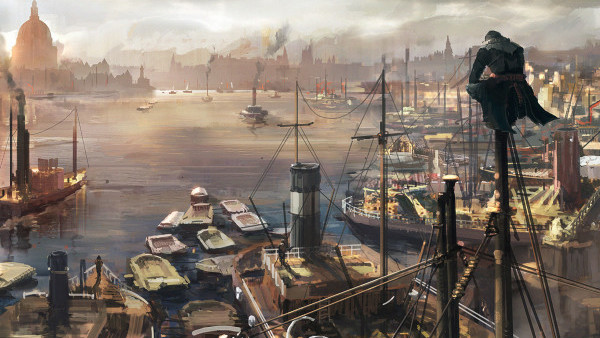
Fans of the Assassin’s Creed franchise will agree that the games just perfectly scratch that completionist itch. If gamers want to roam an expansive map, snatch up collectables and watch their 100% ranking creep ever closer --all while having a lot of fun-- these games have been at the forefront of that.
In Assassin’s Creed Syndicate, Victorian London was open to explore. In Assassin’s Creed IV: Black Flag, various islands around the Caribbean made for beautiful, varied backdrops for rewarding pillaging. These are just two examples of the series’ long-held tradition for liberating, high-octane, collectables-aplenty gameplay.
What was so important about these earlier adventures was that the player wasn’t simply running from waypoint to waypoint on an empty map to grab said secrets. Climbing, swinging and parkour-ing to the top of a building in order to activate that Synchronize spot felt enjoyable, like players were achieving something in the process.
At the same time, though, the fact that almost all these things were clearly marked on the map did devalue the hunt a little. As in Marvel’s Spider-Man, the sheer joy of controlling these nimble characters was undercut by the fact that players were simply going through the motions in order to tick a side-objective off a list.
The Perils Of The Open World
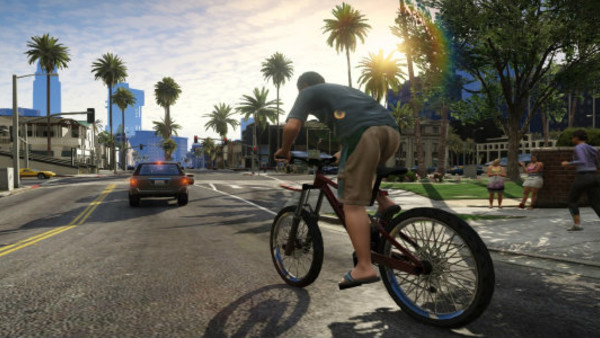
The issue with the whole open-world thing, though, is that each game has to progressively top what came before. This is where the cracks can start to show in the whole concept.
Grand Theft Auto V, the masterpiece that it is, offers a wonderful urban open-world environment in Los Santos. There are minigames to indulge in, a variety of optional quests, or players can simply enjoy driving/flying from place to place in the nicest cars and planes they can afford with their ill-gotten gains.
At the street level, though, the many NPCs going about their business are completely lifeless. Most can’t really be interacted with in any meaningful way; they exist to give the illusion of bustling streets and that’s about all.
Grand Theft Auto V has become such a content-laden package that its racing component alone is more robust than many fully-fledged racing titles, but other parts of the game seem to be there just because minigames and sidequests have become a prerequisite.
Filler has become a major issue in a lot of open-world titles. While travelling around Final Fantasy XV’s vast areas in the Regalia, sidequests pop up at an alarming rate. The same is true of Assassin’s Creed: Odyssey, Red Dead Redemption 2 and so on.
100% completion becomes a heck of an undertaking, and the reward often isn’t worth a lot of the busywork that comes with it. Odyssey, in particular, attracted quite a lot of criticism for this sort of thing, and it’s put a lot of doubt in fans’ minds as to what to expect from the new game, Assassin’s Creed Valhalla, which is set to launch on November 10.
What Will This Mean For Assassin’s Creed Valhalla?

The latest instalment will present a uniquely Assassin’s Creed take on the Vikings’ assault on Britain, set in the year 873 AD. While Viking warriors (as history tells it) weren’t exactly known for their subtle combat approach or stealthy assassinations, there’s something far more concerning about the game from a logistical point of view: just how big is the map going to be?
It's been confirmed that a PlayStation 5 edition will be releasing later down the line, so the team will really need to pull out all the stops here. It seems that they’re going to rise to the challenge too, with Ubisoft’s Julien Laferrière reporting back in June that “I would actually say in terms of range [Valhalla] is probably a bit larger than Assassins Creed Odyssey… I do not have the exact figures at this stage, but we have not only created the whole country, which is in this case England, but also to a good part of Norway too."
It's entirely understandable that open worlds will naturally grow and evolve as the industry itself does, but it’s all about what’s being offered.
The Legend of Zelda: Breath of the Wild is a fantastic game (and the upcoming sequel is sure to be too), but as breathtaking as its vision of Hyrule is, “open” and “empty” sometimes go hand in hand. Elsewhere in the series, The Legend of Zelda: The Wind Waker is often lambasted for its tedious sailing sections. The Great Sea is openly explorable (to an extent), but there’s just not enough to do there.
This is the warning that Valhalla hopefully took the time to heed: size isn’t everything. Players want to be wowed with an impressive new open world they can explore at their own pace, certainly, but if they can’t do anything more there than collect nigh-infinite numbers of dark Korok Seeds or sail into the wind on their crotchety anthropomorphic ship, they’re not going to be impressed.
When It Comes To Open-World Titles, How Big Is Too Big?

The underlying message here is a simple one: generally speaking, quality over quantity is the way forward. The best sidequests in open-world games are satisfying, offer mini-campaigns in their own right, reward the player for taking the time to complete them, or offer access to an entirely new area, mechanic or similar. The more of these elements a title can work into its bonus content, the better.
The worst ones, meanwhile, seem a little inconsequential and tacked on. Completionists will always be open to hunting each and every one down, if only to be able to say that they’ve done so, but would they enjoy themselves in the process? That’s what really matters.
The difficulty lies in balancing the size of an ambitious open world with the amount there is to do within it. Battle royale players will be familiar with those long periods in a match where they don’t catch sight of another player. Downtime is always welcome in these titles, as they become suddenly super hectic when the action kicks in, but imagine a vast, open-world map that felt like this almost all the time. It would make for a disaster of a game.
Fast travel options can negate a lot of this, but the ever-authentic Red Dead Redemption 2 made even this feature intentionally clunky. The hope, in short, is that Valhalla’s world will be as action-packed, vibrant, busy, dangerous and alive as the period of the British Isles’ history that inspired it.
Origins and Odyssey were both great games, but perhaps their ambition got the best of them at times. Feeling the need to fill those enormous maps with all manner of fetch quests and other unnecessary distractions did them no favours.
Watch Next
Assassin's Creed Quiz: How Well Do You Remember Ezio Auditore?
