Assassin's Creed Unity: 10 Past Mistakes It Must Avoid

Although Black Flag was something of a return to form, how does Ubisoft keep the series flying high?
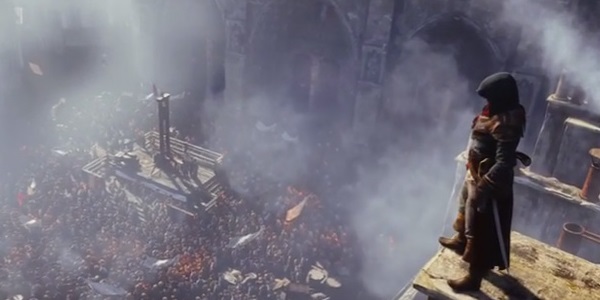
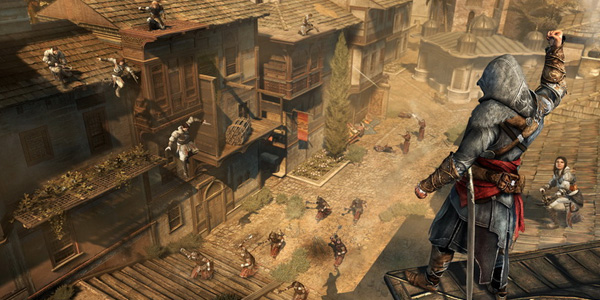
Since 2007, there have been seven main Assassin's Creed games. On top of that, there's been spinoffs for mobile platforms, tie-in comics, books and other media churned out to do with this massive franchise. That's a lot of jumping off buildings, killing people and wearing of hoods to stomach in just seven years. Although there's been many highlights in this time period, there's also been some instances where the series took massive missteps, turning many people off the series. It's still huge and one of gaming's biggest sellers, but - for some - there's been too many iterations to justify another purchase. This year, after a pretty good adventure in Assassin's Creed IV: Black Flag we're being whisked away to the French Revolution to join an as-of-yet unnamed assassin in a brand new time period. It's a transition again where Assassin's Creed might hit another misstep, much like when we switched from the Ezio trilogy (II, Brotherhood and Revelations) into AC 3's American setting. If Assassin's Creed: Unity is to succeed this year, it needs to learn from the past and make sure it avoids some pretty serious mistakes that were present in previous entries. If so, it may be time for the series to get excited again. If not...well, there's always next year.

10. Random, Pointless Mechanics

In a series with as many entries as this one, it's important to keep things moving and introduce new elements to keep the core experience fresh. By mixing up what we expect with new elements, the developers keep the attention of the fans even if not a whole lot actually changes. While certain innovations have improved the franchise significantly, other times have seen the developers trying to squeeze in elements that just had no business being in any AC game. By far the best introduction in AC history has to be the naval battles, whilst some of the worst include Revelations' tower defence game, as well as the pointless first-person interior Animus missions and - honestly - the completely unnecessary multiplayer component throughout. But seriously, that tower defence game. What on earth was that doing in an AC title? Why was it there? What did it bring to the table? We're really hoping that for Unity, Ubisoft doesn't just try to cram in utterly jarring mechanics that simply don't work for the sake of it. Keep things simple with plenty of exciting stuff to do, but for gods sake don't just chuck stuff in our faces in the hope that it'll stick there like a massive barnacle, becoming memorable for all the wrong reasons.

9. Dull Combat

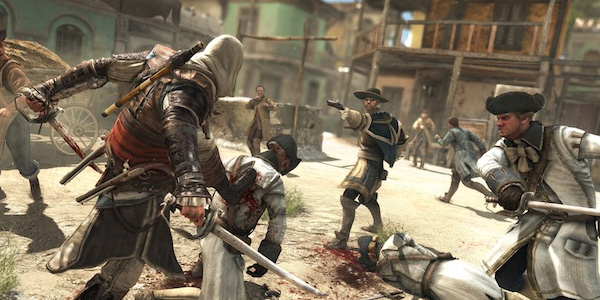
Although most Assassin's Creed games claim in some way they're advancing the combat system, it all still comes down to a simple game where the enemy AI tries to attack you, you dodge and then stab them in the face with your hidden blade. This is despite new mechanics such as bombs, rope darts and other stuff being introduced; at the end of the day, there's absolutely no reason to bother with all of this other than to complete challenges and get achievements. It's rapidly becoming repetitive and makes every fight - regardless of whether you're fighting two or sixteen enemies - seem like a slog. In a game that's built around being an assassin (i.e. a person who goes around killing things), making combat boring and repetitive makes the game worse. Ubisoft could do with taking a look at Rocksteady's Batman games to see how combat like this can be made more interesting; although they're similar, Batman's combat flows much more naturally than Creed's and feels more rewarding when you unleash other moves rather than dodging, countering and attacking. Here's hoping with the power of next-gen consoles, Ubisoft has also refined their combat this year for Unity.

8. Bizarre Futuristic Nonsense That Makes No Sense

Can any of you honestly remember why the Templars and the Assassins are at loggerheads in modern times? They just seem to like fighting each other and aspiring for world domination. Both organisations work in the shadows to try and save/overthrow the world, but this quickly becomes convoluted and nonsensical when each organisation is constantly finding justification to send someone into the Animus to live the history of an ancestor. This is usually in the vain hope they'll find out a tidbit of information that unlocks something, or sheds some more light on a modern day plot point... before opening up about sixteen thousand more questions. Due to all the different time periods of the franchise and the somewhat convoluted storytelling, the futuristic elements of Assassin's Creed are a jumbled mess. The whole Desmond thing was intriguing at first, but the futuristic sections of the series have rapidly become eclipsed by the historical settings. Most people would honestly probably be happy if we just played in the past at this point. In Unity, there's little doubt that the futuristic element will remain. What we're hoping is - given that series' protagonist Desmond gave up his life to save the human race at the end of part three - there's ample space for a new protagonist and some better writing/storytelling. We're still honestly trying to figure out if that stuff all over the wall in the original Assassin's Creed actually meant anything substantial.

7. Rubbish Stealth

For a series basically built around being discrete, stalking your targets and striking them down in a covert fashion, these games really makes it difficult. Stealth has never been particularly done well in Assassin's Creed; the AI is stupid, easy to outwit, and honestly there's not really any reason to bother using it. With countless games out there doing stealth better such as Batman Arkham, Dishonored, Metal Gear and even Ubisoft's own Watch Dogs, isn't it about time to step up to the plate and make sure that possibly the most sneaky of people are actually quite stealthy? You can try sneaking about if you want, but the games make it hard. The vast majority of the time stealth goes completely out of the window within seconds as an enemy spots you and you inevitably end up in the same repetitive combat sequence. Some of the best examples of stealth in the series take place within interiors; perhaps Unity could have an increased focus on these sections with improved stealth mechanics, more ways to take down enemies from afar and inventive killings that don't involve leaping off a high precipice and stabbing them on the way down? With the power of next-gen now at their disposal, Ubisoft has ample opportunity to refine the series' stealth. How about playing with dynamic lighting and shadows to help us remain concealed, or scaling down the mindless killing in favour of a more back-to-basics approach?

6. Clunky, Dated Controls

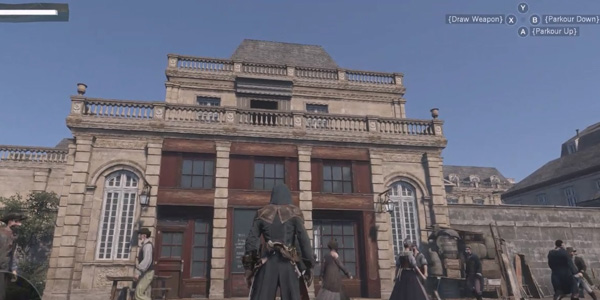
Before AC Unity was announced, a leaked screenshot appeared to show a new interface for the game, complete with button assignments for parkour up/parkour down. As the series has been built around the noble art of leaping up buildings like a demented gibbon, its aged systems and free-running design make it somewhat of a chore nowadays to climb things. It's amazing really that once felt awesome now feels a bit clunky and dated, but that's exactly what's happened. Half the time you try to climb things in these games, fail miserably and fall back to the ground pathetically thanks to an over-compensating animation system that often makes you cling to the wrong surface at the worst time. This whole clunkiness also extends to the controls in general, which always seem like they could be better. In Unity, there's no reason why the series can't be revamped to take advantage of next-gen's increased power. This should hopefully lead to a much more smooth experience, one where the new protagonist glides over the environment and free-running actually feels awesome and flows naturally. Hopefully the leaked screenshot shows promise for such a system.

5. Lack of Mission Variety

Part of the beauty of Black Flag was it was set on the open waters of the Caribbean, letting you do what you want, when you wanted. The ability to steer your own ship around the world, hop off onto islands, attack random merchants and other activities freshened up the experience slightly, but the core missions during the game ultimately always follow the same formula of tail someone, kill some people and occasionally set off some explosions. With Unity, it's worrying that the freedom aspects established by IV may be somewhat dampened. Given that it's set at least partially in the French Revolution, it seems unlikely that we'll be in a ship for most of the game. The new city, or cities, should be full of interesting missions that differ from the Assassin's Creed norm in order to stop this shift from being as jarring. It's next-gen now, and hopefully a new chapter for the series. What better time to freshen things up and play with what we expect from the missions?

4. Random Narrative Time-Jumps

In more recent years, AC has really taken to cramming a load of history into one game, thus making it necessary to randomly jump ahead narratively in the timeline to advance the plot substantially. This transition usually takes place during the bridge between the end of a sequence and are often punctuated by a brief stint out of the Animus. When you return, you'll be told the date of the next sequence, but chances are this is at least two years after what you've just done and you don't have a clue it's just happened unless you'd been noting down the date of each sequence leading to this point. Such jumps make it hard to follow the storyline and leave big gaps in what characters have been up to, making it frustrating. We have to feel as if Assassin's Creed would work a lot better if it focused on a specific time period and saw it through to completion, giving the story an extra layer of cohesion and helping us keep track of what's going on. It does make sense in the context of reliving an ancestor's memories, but it's hard not to feel as if we're not getting the full picture here. Either do away with this nonsense or make it clearer that it's taking place at a time later in the life of the protagonist.

3. Unsatisfying Endings/Poor Storyline

Unfortunately, most of the games in the Assassin's Creed series seem to squander their interesting settings in favour of poor writing and confusing storytelling. The conclusion to Assassin's Creed III in particular sticks in the memory; it basically ends with series hero Desmond deciding to just randomly kill himself. Other examples would be Assassin's Creed 1's totally open-to-interpretation crazy map on the wall of the Abstergo facility and Edward Kenway literally just giving up his entire life of piracy and running off to England at the end of Black Flag. Just because. Perhaps the best story moment in the series was in Brotherhood when Desmundo got controlled by evil forces and killed Lucy. Elements such as this story event are great, but it all hinges on having a good storyline throughout that's coherent, makes sense and somehow ties together the futuristic and historical aspects of the series. The writing can be there; anyone's who has read the accompanying book to Assassin's Creed III that tells the story of Connor's father, Haytham Kenway, was treated to a much better tale than the one we got in the game. Let's just hope Unity's new setting and extensive development time will make it a much better satisfying experience on the narrative front.

2. The Horrible Activity Known As Eavesdropping
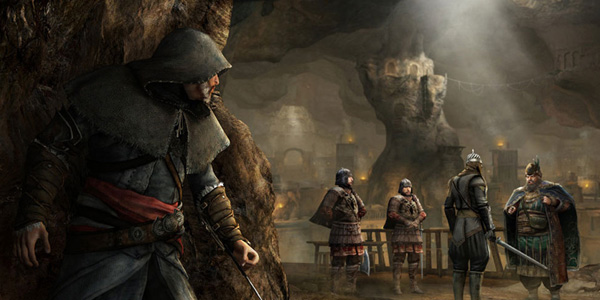
Despite absolutely everyone in the known universe shouting at them, Ubisoft is quite content to stick their fingers in their ears and hum loudly whenever anybody mentions eavesdropping missions and how much we really don't like them. A stalwart of the Assassin's Creed series for years now, eavesdropping on randoms from afar has been irritating ever since its first introduction. These missions usually end in spectacular failure as you manage to jump off a roof by accident into the eyesight of the people you're following, leading to it starting all over again. These missions are designed mainly as a reason to keep control with the player while story exposition is dragged out by the characters you're following. Unfortunately most of the time you're too busy trying to navigate the environment and constantly reading messages telling you you're too close or too far away to pay much attention to what's going on or being said. In Unity, these missions need to go away forever. It isn't fun to follow people doing nothing and - despite their insistence that it remains in the series - Ubisoft really need to scrap these pointless missions altogether.

1. Protagonists With The Personality Of A Sponge

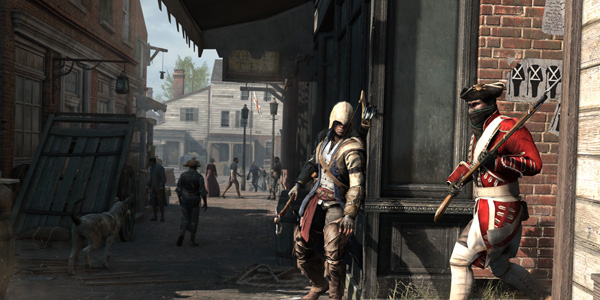
AC III had an interesting premise, backed up by years of bloody history with the native Indians and colonial Americans. On top of that it had a large, expansive open world to explore, filled with plenty of stuff to do ranging from taking to the high seas in your trusty boat to leaping off of trees and stabbing beavers. Unfortunately all of this is mainly forgotten about due to the series' worst protagonist, Connor. Poorly voice-acted, with little motivation for his actions and hurtling through the years at such a breakneck pace his story was too hard to follow, Connor stuck out like a sore thumb (particularly after stellar series protagonist Ezio finally hung up his cowl and kicked the proverbial bucket at the end of Assassin's Creed Revelations). Thankfully Black Flag largely fixed Connor's dullness by chucking him out of the picture and focusing instead on his grandfather, Edward Kenway. If Unity is to succeed, it needs to adopt a strong new protagonist who we actually care about, rather than the poor excuse for an Assassin that was Connor. Nobody wants to play as someone who is inherently unlikable for hours on end; with some strong writing and some great adventures in the French Revolution, our new Assassin chum should be brimming with personality and - hopefully - can be another Ezio who is strong enough to star in multiple titles. What else really grinds your gears when it comes to Assassin's Creed? What would you like to see new in Unity? Let us know your thoughts in the comments!

Contributor
Contributor

Dan Curtis is approximately one-half videogame knowledge, and the other half inexplicable Geordie accent. He's also one quarter of the Factory Sealed Retro Gaming podcast.