Crash Bandicoot: Wrath Of Cortex Is A Hidden Gem You ALL Missed
Hope you like chase and vehicle levels in your Crash game...

If the release of Crash Bandicoot N.sane Trilogy back in June 2017 showed anything, it's that most of the gaming community still see the original Crash Bandicoot era as a trilogy of games, despite there actually being four major titles released throughout the late 1990s and early 2000s, aka. Crash's heyday.
And, to be fair, why wouldn't they? The first three Crash games were all absolute classics, with their introduction of one of the most widely recognised mascots in the gaming world and unique take on both 2D and 3D platforming. Crash Bandicoot, Cortex Strikes Back and Warped have sold around fifteen million units between them, they all hold a Metacritic rating in the high 80s and all have a unique charm that roll seamlessly into each release.
However, such praise for the trio of games has led to plenty of other games in the franchise being unfairly judged and overlooked. Twinsanity had its moments, but it is the fourth entry in the series, Wrath of Cortex, that really hasn't had the rub of green when it comes to building out the legacy it deserves. Here's the full rundown on why Wrath of Cortex is so quickly dismissed by Crash fans, all the things going on in its development and it's actually a gem of a game that everyone has missed out on.
Trouble Brewing Behind The Scenes

Crash Bandicoot: Wrath of Cortex is, undoubtedly, the black sheep of the Crash series. Released in October 2001 for the PS2 and then in April and September 2002 for the Xbox and Nintendo GameCube, the game follows the story of Dr. Neo Cortex and his new superweapon, Crunch Bandicoot, teaming up with the dreaded Elementals of the world to take down Crash. Players take control of Crash and his sister Coco Bandicoot across a series of vibrant platforming worlds, running away from natural disasters and taking control of more vehicles than ever before to collect 25 crystals which act as Crunch's source of power.
The game featured an improved colour palette, better visuals for the characters and an abundance of new vehicles to take for a spin, but holds a mixed approval rating due to various technical issues and an apparent samey feel compared to the rest of the series.
In fact, Toys for Bob and Activision, were seemingly so keen to distance themselves from Wrath of Cortex that they even named their 2020 release: Crash Bandicoot 4: It's About Time., despite it obviously not being the fourth game in the series. It's a game that has either been laughed away by fans or forgotten about entirely by the community.

But does that mean it's right to just pretend an entire game just didn't happen? Is Wrath of Cortex even that bad?
The truth is that, whatever complaints someone might have, they might not necessarily be the developer's fault. Lead designer Mark Cerny, who had designed the first three games in the franchise, had plans to take the game in a new route with the project, originally called Crash Bandicoot Worlds, supposedly meant to revolve around Crash free-roaming through vibrant open worlds and solving puzzles to progress, a bit like Twinsanity teased a couple of years later on.
Disagreements between Universal, Sony and Mark Cerny eventually led to the original project being forced to restart from scratch, with Travellers Tales being given just twelve months to roll everything out. Maybe goes some way in explaining why things felt a bit rushed and reused.
Nevertheless, for a certain generation of gamers, Wrath of Cortex was still their first introduction to the adventures of Crash, Coco, Dr. Neo Cortex, Aku Aku and co., so for those gamers, it's still one of the iconic games from their childhood. There are an abundance of good things about the game that have been unfairly overlooked over the years, and a plethora of features introduced that even the series now is borrowing from.
Worth It For The Atlaspheres
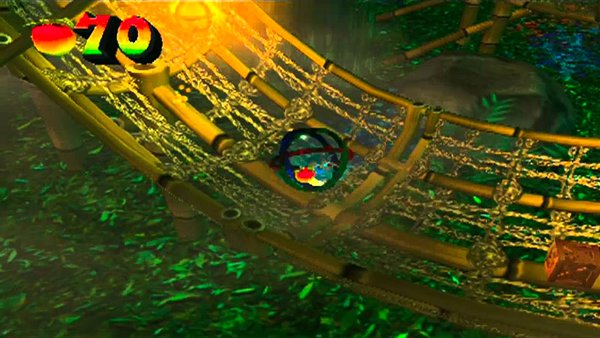
One of the biggest reasons why Wrath of Cortex is such an underrated gem that more people need to know about is the addition of the atlasphere levels, a feature that has yet to make their return to the franchise but are long overdue another rollout.
The levels feature Crash being dumped into a glass ball, which players have to navigate around various platforms and obstacles all the way to the end goal.
One of the key themes from the very first stages of Cerny's initial vision for the game was a sense of realism to the levels and their design, opposed to the wacky fantastical settings across the previous three titles. It's with the atlasphere levels that this vision really comes closest to being fulfilled, with the sphere's realistic physics allowing for a slower, more exploration-friendly pace and puzzles that really match what the original game was meant to be all about.
Louis Bedigian from Gamezone claimed that these levels were so good that: "Traveller's Tales could develop a whole game based on the sphere levels alone". These levels really just go a long way in illustrating the potential the game had behind its original vision, and how good it really could have been if the developers had the chance to build things out from this solid foundation.
Nevertheless, these are still some of the most unique and fun levels anywhere in the Crash series and deserve more appreciation.
Looking fresh
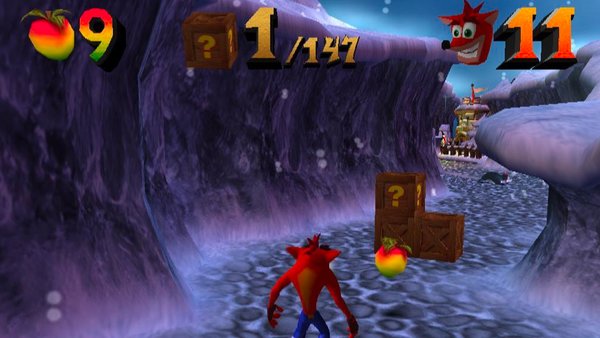
As undeniably great as the first three Crash Bandicoot games are, there's no denying that they all look pretty similar to one another. With all three games coming out in the space of fewer than three years, it's hardly surprising, but with exception to a few of the more notable levels in each of the games, there's no real way of a player being able to tell their Cortex Strikes Backs from their Warpeds.
That all changes with Wrath of Cortex, however. Despite it only being released two years after Warped, Wrath of Cortex benefitted from the technical capabilities of a shiny new generation of consoles, and it really shows in the vibrant colour palette, more flashy animations and far more detailed visuals.
Whilst the PS2 version is obviously a big step up from its PS1 counterparts, the Xbox version of the game (released six months after the PS2 version) is where these visuals really stand out. The detail in Crash and the levels really is an underrated step up for the series and one that deserves more attention on it.
Of course, visuals don't, and definitely shouldn't, save a game that is lacking gameplay substance, but Wrath of Cortex is perhaps the first game in the series after the original to really establish an actual identity for itself. Whilst the other games in the original franchise struggle to stand out for themselves, any player can take a look at any level from Wrath of Cortex and instantly name the game it's from.
Baddies To Die For
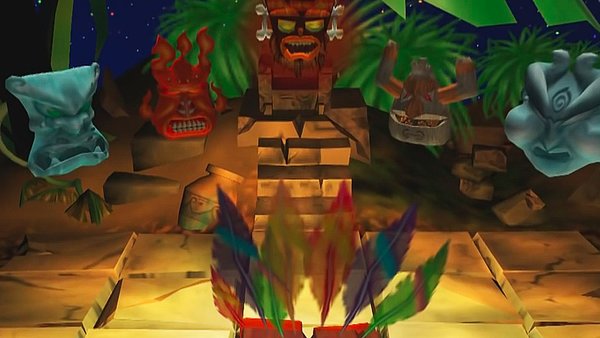
For the Wrath of Cortex generation of Crash fans, the game's elemental baddies introduced were the first baddies they had ever seen. And, even today, they remain some of the best antagonists created for the genetically enhanced Bandicoot to take on.
Clancy Brown returned from the previous games to provide his perfect bad guy vocals for both Dr. Neo Cortex and Uka Uka, and once again is standout in his role, and the game introduces players to Crunch Bandicoot for the first time as well as four elemental other baddies at the end of each hub stage for Crash, Coco and Aku Aku to tussle with.
Each of these four elementals has a different personality and power and help make every showdown with Crunch feel like a unique boss battle and a fitting end to a hub world. And, for those fans and critics complaining about the supposed easy difficulty of the game, the boss battles in Wrath of Cortex are always on hand to deliver hours of frustrating moments that have become a staple with the Crash series.
An Underrated, If Imperfect Game

Overall, there's a whole lot to enjoy in Crash Bandicoot: The Wrath of Cortex, certainly more than enough to warrant at least a replaying for those gamers out there that have dismissed it from their memories. The music is great, the visuals are a step up and there are a handful of levels and boss battles that honestly deserve to be stacked up alongside any of the best moments from the acclaimed three games that came before it.
The formula is rehashed from the games previous, but Wrath of Cortex rarely ever feels like a blatant rip off when it's played through. At worst, it's a rushed out game with a safe formula the developers knew they could actually push out, and at best it's... another Crash Bandicoot game. Some levels are easy, some are ridiculously difficult, some are original and memorable and some are a torrid time throughout, however, they all manage to fit under the 'infuriating but still fun' that the Crash Bandicoot franchise has built its legacy on.
What will always hang over Wrath of Cortex however is that sense of what could have been. If the original plans are to be believed, there was so much potential on the cards with the vibrant colours and puzzling elements standing out as the game's best parts and reminding players that they should have been at the very centre of the release had Mark Cerny had his way.
Nevertheless, this is the game that introduced a lot of players to the Crash Bandicoot series and deserves far more respect than it's given. Its flaws might be present for all to see, but that is all part of the charm of the game and what gives it it's own sense of identity.
Flawed and imperfect doesn't mean unenjoyable after all.