Dragon Age 3: 10 Ways Bioware Must Improve On Dragon Age 2
 May as well come clean about this right away; it is the opinion of this author that Dragon Age 2 is a very decent game - it could even be quite good at times, such as during the stellar final boss batlle - however, there can be no denying the game's glaring flaws. For every step it took the Dragon Age franchise forward, it seemed to take an additional three steps back. Bioware recently announced that the third game in the series is in full development, and is currently scheduled for a late 2013 release, so given the opportunity for evolution, here is how Bioware can knock it out of the park with Dragon Age 3: Inquisition, and restore the Dragon Age name as a top-tier RPG franchise...
10. Don't Re-Use Environments So Much
 Arguably, Dragon Age 2's greatest flaw was the blatant replication of interior settings across the game's landscape. The game had a huge number of side quests that sent you to various locations both in and around the city of Kirkwall. As the game progressed, you would find yourself in a cave, saying to yourself "this looks familiar", and it turned out that you were correct, because you had actually been there before. Only now, instead of it being a bandit hideout like it was previously, it was now the lair of a monster that had to be slain. OK, not a big deal, right? Where it really got bad was when you would find yourself returning to this same location a third, fourth, and possibly even a fifth time. Back in Kirkwall, it was a similar story. Every home or mansion in the city seemed to have the same two or three architectural designs. Same thing for the warehouses. Sewers? Well, sewers have a better excuse, but isn't it odd that the underground tunnels beneath Lowtown have a door in the exact same spot that the the tunnels under the docks do? This is simply inexcusable. Was it due to developer laziness? Was it a result of forced development timelines imposed on Bioware by their publisher, Electronic Arts? We may never know. But this much is clear; in a game where a core element of the gameplay is using side quests to not only develop character stats, but to flesh out the lore of the game world, questing should never feel like a chore. By limiting the environments to a handful locations that you visit over and over and over again, Bioware walked dangerously close to the line of tedium, and for many of its fans, actually crossed that line. They need to make sure that this never happens again, not only in Dragon Age 3, but in any of their future RPGs.
9. Let Players Customize Their Characters' Armor
 Dragon Age 2 introduced single-use, character-specific armor upgrades that granted a specified stat bonus and changed the appearance of a character's armor head to toe. While this certainly fell in line with the general streamlined design that hung over much of Dragon Age 2's interfaces, it didn't sit well with many RPG veterans. One of the joys of playing these types of games, including Dragon Age 2's predecessor Dragon Age: Origins, is the ability to choose what specific types of armor your characters will wear, and how they will appear on screen. Do you want to go heavy, medium, or light? Take the gloves off of one character and put them on another? Make the leader of your party run around without a shirt? Having these options has been a trademark of this game genre for a long time, and it would be great to see the option for armor customization return in Dragon Age 3.
8. Bring Back The Ability To Choose Race
 Dragon Age 2 tells the story of Hawke, the Champion of Kirkwall. Hawke was a human, and thus, players only have the option of playing the game as a male or female human. This would normally not be a big deal, yet why did it still feel like something was missing? The answer to that is Dragon Age: Origins. After the brilliant way character selection was handled in Dragon Age: Origins, it's somewhat inevitable that not having the ability to choose to play as a non-human felt like a bit of a letdown in Dragon Age 2. In Dragon Age: Origins, not only did you have the option to choose between human, elf or dwarf, but you got to play through your character's own unique origin story, which was specific to the race and class you chose. As the game progressed, people around the world of Ferelden would treat you differently according to what race you were, giving the game world of sense of depth and real-world relevance None of this was present in Dragon Age 2, and it made your character feel much more one-dimensional. It may have made sense withing the context of the story Dragon Age 2 was trying to tell, however, it made for a game world that didn't feel quite as rich. Being able to not only choose your character's class in Dragon Age 3, but also his/her race, would be quite refreshing.
7. Create Larger, More Expansive Environments
 While the environments in the Dragon Age games have never felt particularly constrictive, there has always been a sense that there could be more. The cities and towns were handled well in Dragon Age: Origins, however, many of the outdoor environments and dungeons felt somewhat linear with little room for exploration. In Dragon Age 2, when you weren't within the city limits, you were out in the surrounding mountains and coasts. These areas didn't fare much better than the first game's environments, and were made even worse by the constant backtracking to the same locations that had to be done over and over again. With Dragon Age 3, Bioware should seize the opportunity to create the biggest and most diverse game world they have ever made. Give us huge environments that beg to be explored! Make gamers want to search every nook and cranny of the game's world for secrets, loot, and quests. And always surprise us with something new every time we reach a new area. This is by no means implying that Dragon Age 3 should switch to the open world/sandbox format. On the contrary, the system they use now, which incorporates an overworld map with marked fast travel destinations, works quite well. It's just time for those destinations to evolve to the next level, which leads into the next item on the list..
6. Take Full Advantage Of Frostbite 2
 If you have ever played or seen footage of Battlefield 3 on a high-end PC, then chances are you were in awe of the capabilities of Frostbite 2, a proprietary video game engine owned by Electronic Arts. Superb lighting and shadow effects, enhanced environmental interactivity, and advanced physics are a few hallmarks of this amazing piece of technology. Dragon Age 3 is being developed using Frostbite 2, and after the somewhat monochromatic-looking Dragon Age 2, Dragon Age 3 should shine in the visuals department. This is something the series has lacked, particularly on consoles. Recent rumors abound that Dragon Age 3 will be appearing on next-generation consoles, machines that should be much better suited to running Frostbite 2 in all its glory, much like high-end PCs are doing now. Provided this is true, not only would the developers be able to take full advantage of the more powerful hardware, but a brand new Dragon Age 3 being effortlessly powered by Frostbite 2 is enough to make any Dragon Age fan salivate. But regardless of whether it releases on current or next-gen consoles, the tools are all in place. Now Bioware just needs to bring it.
5. Decisions Brought Forward From Previous Games Must Be Consistent
 A key feature of Bioware's single-player games over the last 5 years has been the ability to import your existing game saves into the next title in the series, essentially carrying over all your actions and decisions from game to game, to form one continuous narrative arc. While this has worked to much success across the Mass Effect trilogy, Dragon Age 2 didn't fare quite as well. A key character who died in my original Dragon Age: Origins game, was actively referred to as still being alive in my Dragon Age 2 playthrough. Even more incredibly, a character whom I assassinated in Origins actually showed up in Dragon Age 2 and requested my party's help. This type of inconsistency not only makes no narrative sense, but it greatly dampens the immersive qualities of the game and rudely reminds the player that they are, in fact, only playing a video game. This would not be tolerated in a series of books or films, and it should not be tolerated in a series of video games. Dragon Age 3 has the chance to set things right and bring the multiple-game narrative flow that worked so well for Mass Effect into the Dragon Age series, setting the stage for future installments.
4. Bring Back The Banter
 Do you remember the different things that your party members in Dragon Age 2 talked about as you strolled around Kirkwall? Neither do I. One of the joys of Dragon Age: Origins was constantly rotating the game's playable characters in and out of your party so that you could hear them talk to one other. The dialogue was incredibly well-written. Long after putting the game down, it is difficult to forget Oghren trying to convince Alistair to relieve tension by "polishing the ol' weapon." Or Shale and Leliana debating the existence of a "Maker". Or Sten and Morrigan's somewhat disturbing discussions regarding Qunari sex. No matter who you brought along for the ride, there was always an entertaining exchange of words in store. All that seemed to go out the window in Dragon Age II. The banter between your party members was shallow and forgettable. Like many other parts of Dragon Age 2, it seemed hastily made. Here's hoping that the game's writers bring back witty and surprising party banter for Dragon Age 3.
3. Focus On The Over-Arching Conflict
 Dragon Age 2 deserves credit for its somewhat experimental way of approaching video game narrative. Where as Dragon Age: Origins was like an epic fantasy film, Dragon Age 2 felt more like a season of well-written television. The game followed the Bioware formula of telling a story in three acts, but as the game takes place over a period of 10 years, each act of Dragon Age 2 felt distinct in its focus. There existed an overarching conflict in the game (mage vs. templar) that is referred to throughout, but it never really becomes the sole focus of the game until the third and final act. This episodic way of storytelling was definitely interesting, but whether it worked for a single-release video game is up for debate. Many in the community seem to feel that it made the game's story feel fragmented and disjointed. While Bioware deserves applause for daring to be different with Dragon Age 2's narrative structure, going back to a single core conflict for a more tightly-focused Dragon Age 3 seems like it would be the right thing to do. Not only to win back those who felt jaded by Dragon Age 2's multiple episodes, but to present something whole and cohesive for the new fans who will be taking their first steps into Thedas.
2. Provide A Gathering Place For The Game's Characters
 Character relationships are a central theme of not only Dragon Age, but of all Bioware games in general. This is why it was very strange that in Dragon Age 2, Bioware removed a central gathering place for your party of characters. After having the wonderful convenience that was the Camp in Dragon Age: Origins, they for some reason scrapped the concept. Instead, you have to travel to Lowtown to talk to Anders, to the Elvish ghettos to talk to Merrill, to the tavern to talk to Isabela, etc. It is understandable that in relation to the game's narrative, it made more sense for characters to be in separate locations for the events of Dragon Age 2, but would it have been so difficult to give Hawke the ability to perhaps call a meeting somewhere, and have all the characters show up? Having all your characters in a single place emphasizes what is arguably the greatest strength of Bioware's games, and that is relationships. It allows the player to take time out from questing and exploring to spend some time getting to know the other member of his/her party. It gives sense that the relationship-building element of the game is a quest unto itself. Didn't it always feel like somewhat a relief to head back to camp after a huge battle in Dragon Age: Origins? You could walk around and check on members of your party, just to see how they're all feeling and what they were thinking. The same applied to the star ship Normandy in the Mass Effect games. Bioware should allow the player to bring everyone together in Dragon Age 3. Oh, and please throw in a particular dwarf who loves Enchantment. Just for good measure.
1. More Tactical Combat
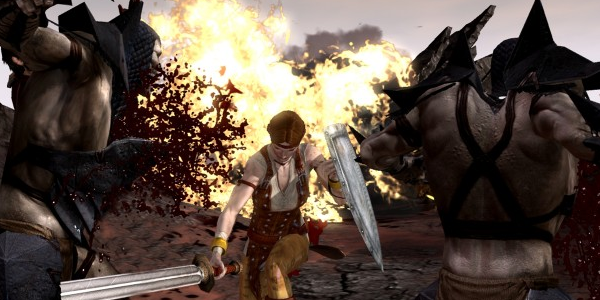
 One area where Dragon Age 2 really stepped it up was with its combat. It was louder, more visceral, and just felt really good. In making the combat more accessible with 1:1 controls while still retaining a sense of variety across character skills, it was a refreshing change. It made combat more exciting, while still keeping options open for tactical engagement. Unfortunately, rarely were you afforded the opportunity to see this tactical side of the combat due to the way the enemy AI behaved. Rather than having enemies positioned across the battlefield that attack strategically, most of the time the enemies would just directly rush at you, wave after wave. This resulted in more button-mashing and less reliance on character battle tactics (at least on console versions of the game). If Bioware can retain the in-your-face style of Dragon Age 2's combat for Dragon Age 3, while opening up the battlefield for further tactical possibilities, Dragon Age 3's combat could be the best to ever appear in a Bioware game. Whether it releases for current or next-gen consoles Dragon Age 3 is surely set to be one of the most anticipated, and watched, video games of whatever time period it releases. Since the release of Dragon Age 2, games like Skyrim, The Witcher 2, and Dark Souls have made game-changing marks on the RPG landscape. Internally, Bioware has also gone through its fair share of challenges with the Mass Effect 3 ending debacle, the lukewarm reception to their Star Wars MMO The Old Republic, and the departure of the founding fathers of Bioware, Doctors Ray Mzuyka and Greg Zeschuk. Dragon Age 3 will have a heavy cross to bear, but it will also have the opportunity to set a new standard and pave the way for everything that comes after. As long as Bioware learns from the mistakes of Dragon Age 2, and builds upon the strengths that both the studio and the Dragon Age IP so clearly possess, Andraste willing, we could be getting an RPG for the ages next year.