E3 2018: Assassin's Creed Odyssey - 7 Ways It Changes The Franchise Forever
The Assassins and Templars, but not as you know them...
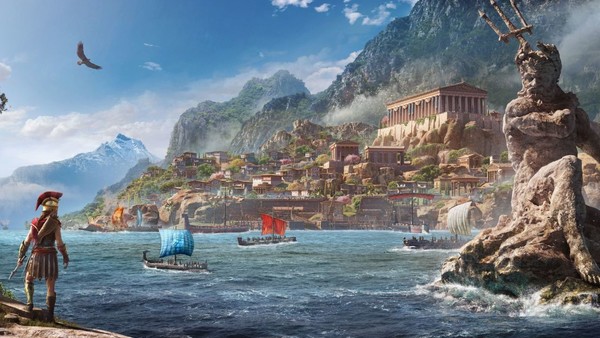
Although Assassin's Creed managed to take a two year hiatus between AC: Syndicate and last year's Origins, it would appear as though the franchise is back to old habits. Odyssey, having been officially announced at this year's Ubisoft conference at E3, will release later this October, but there's more to this entry than meets the eye.
For the better part of five years, the Assassin's Creed series has undergone slow but extensive change. Mechanically, yes, there may have been little to distinguish titles like AC: Unity from Syndicate, but changes were being made. With Origins already representing quite a big departure for the franchise, boasting a new combat model and an ancient setting, the prospect of further, more drastic changes perhaps didn't feel all that likely.
And yet, Odyssey is already gearing up to be the boldest Assassin's Creed yet. Much of what was shown at E3 depicted what looked to be a massive departure for the franchise, with Odyssey taking a decidedly more RPG-like focus and taking place in an era where neither Assassins nor Templars were common place.
It's a whole new era. Here's why that's a good thing.
7. Full Control Over Who You Play
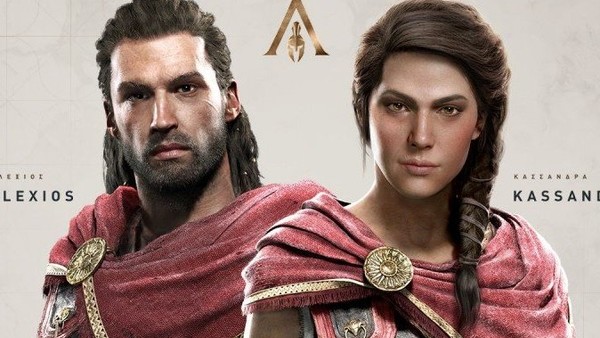
Although past Assassin's Creed titles have featured multiple protagonists before (Syndicate with the Frye twins, Origins with Aya and Bayek), never before have they followed a Bioware-style framework.
For the first time in the series' history, Odyssey will allow players to play as either a male or female Spartan, with the former referred to as Alexios, and the latter as Kassandra. Both characters will embark on the same journey, will have the same customisation to choose from and the same abilities, with the only differences being the voice actor and the title character's gender.
It's a welcome change though, and one that makes plenty of sense for the time period in which the game takes place. With Odyssey's protagonist being the son/daughter of King Leonidas too, Ubisoft have the chance to have a lot of fun with the setting, especially so, given the amount of freedom they're affording to players.
6. It Takes Place 400 Years Before Assassin's Creed: Origins
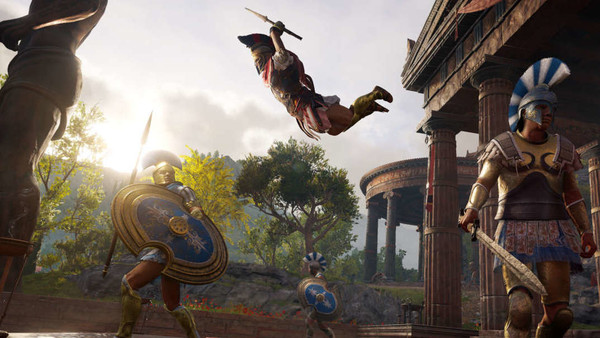
Huh, bet Ubisoft are pinching themselves over that title now...
Though yes, Ancient Egypt did originally look to be the entry that would tell the story of how the Assassins came to be, it later transpired that there were some that came before. Ancient Greece should, barring Ubisoft somehow finding a way to travel even further back in time, represent the start of how the Order came to be.
That's an exciting prospect for fans eager to leave their own mark on the order. If this truly is the place where it begins as well, then the RPG elements only make even more sense.
It might represent a massive departure in terms of era, but if they find a way to make the formation of the Assassins interesting, combined with all the transnational elements Ubi included in Origins, it could be one of the best AC stories yet.
Just ditch the modern day, yeah?
5. Islands (And New Environments) Aplenty

Although there most definitely is something to be said about open worlds and how they can either inhibit or enhance a particular title, Odyssey's size is set to be impressive.
Depicting all the isles of Ancient Greece, players will get to see the Athenian and Spartan Empires in all their glory - and in all their misery. The title is set during the Peloponnesian War where Athens and Sparta fought against each other, and with both civilisations boasting a great many differences, on a visual level, it's unlikely players will get bored.
Among the islands confirmed thus far are Delos, Mykanos, Melos and Crete - the latter of course most famous for having the mythical Minotaur, also teased at the end of Ubisoft's conference.
There's no word on how much the studio are looking to incorporate Greek Myth into the story, but given how experimental Origins got at times, don't be surprised if Medusa shows up either.
4. Dialogue Wheels
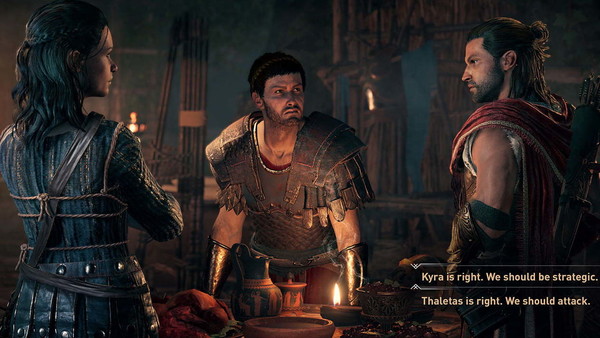
Emphasising Odyssey's RPG elements further is the addition of dialogue options. Now, in certain cutscenes, players will be given the option to influence how the game progresses. How much influence is exerted varies from cutscene to cutscene, but one example given in the showfloor demo at E3 involved the player siding with one character and taking a more direct approach, or with Kyra, and infiltrating a camp by cover of night.
For those of the Bioware school of romance, yes, Assassin's Creed Odyssey will include plenty of love-interests. Ancient Greece was famed for its romantic traditions, so rest assured that your Assassin will be able to romance plenty of supporting characters.
Pleasantly surprising is the fact that these different choices will genuinely both the gameplay and overarching narrative of the title, so be careful and think before you speak this time - lest you invoke the ire of a former friend.
3. You're Not Really An Assassin (Yet)
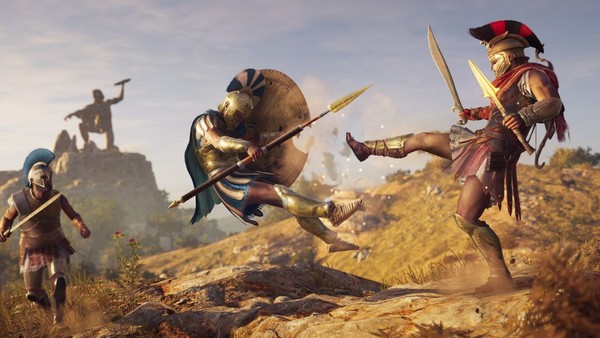
Although all the alterations to the classic AC formula are really interesting, it's the narrative departure that's actually Odyssey's most interesting element.
The aforementioned four-hundred year shift from Origins brings with it its own challenges, and while both that game and Assassin's Creed: Black Flag featured sections where the protagonist wasn't an actual Assassin, it's possible that Odyssey will lack the order entirely up until the last third.
Depending on how much you like the Assassins, this could prove to be an issue. Black Flag was rightly lauded for its reinvigorating take on the mythos, but some of the hardcore AC audience didn't take to the fact that Edward Kenway never officially joined the Assassins.
Odyssey obviously has an excuse for that, but it'll be interesting to see if fans rally behind a title that could potentially lack the iconic white garments of the franchise.
2. Greater Customisation Than Ever Before

Assassin's Creed has never had a shortage of outfits in recent years, but Odyssey is still set to bring the greatest amount of customisation the series has seen thus far.
Players can expect to be able to customise their entire wardrobe top to bottom, and with the series keeping in with the theme of its RPG style, each item will have its own value and bonuses.
From the beginning, it looks as though both Kassandra and Alexios will be donning some rather Spartan-looking outfits. This makes sense in light of the Leonidas connection, but with other factions set to influence the game as well, it's likely that Athenian armour and more will be usable at some stage too.
1. Side Quests Intersect With The Main Story

One of the most interesting aspects of Odyssey, however, has to be the way in which side quests influence the main story. Whereas before they only boasted a minor influence, potentially granting the player a new array of abilities to choose from, now they can actually impact the game in a massive way.
One example given during E3 involved an imprisoned rebel. The player, if they so choose, can follow the advice of Socrates and free him, with the added caveat being that they're a loose canon. From that point on, the player can either assassinate the rebel, ignore him entirely or release them if they choose to do so. The consequences of actually following through with the quest aren't revealed until the final story mission in that particular act however and, in the event that either Alexios or Kassandra freed him, the rebel ends up murdering an ally.
Doing so then fractures some of the relationships the player has developed up until that point, which adds a whole new layer of depth to the title's side-missions. Obviously with the game being as large as it is it's unlikely that every distraction will impact heavily upon the overarching narrative, but still, from the looks of things, side quests have never been so important to a mainstream AC title.
It's a huge change, and though there are others to note, this particular one exemplifies Ubisoft's new approach to the series. Everything matters, and in attempting to immerse players in their version of Ancient Greece, ensuring every act has its consequence could be where Odyssey finds real success.